
If you are weighing a career in the mechanical trades, one question comes up again and again: do pipefitters need to weld? The short version is that welding is not legally required to fit pipe, but the tradespeople who can do both are the ones employers chase hardest. A skilled pipefitter welder sits at the center of almost every industrial, commercial, and energy project, and that combination of skills is what separates a steady paycheck from a premium one. For anyone exploring hands-on pipefitting training in Philadelphia, understanding how fitting and welding fit together is the first real career decision you will make. This article breaks down what pipefitters do, whether you truly need welding to succeed, why the fitter-welder combo pays more, what it earns in the Philadelphia region, the certifications that matter, and how to build both skills. By the end, you will know exactly where this path can take you and how to start.
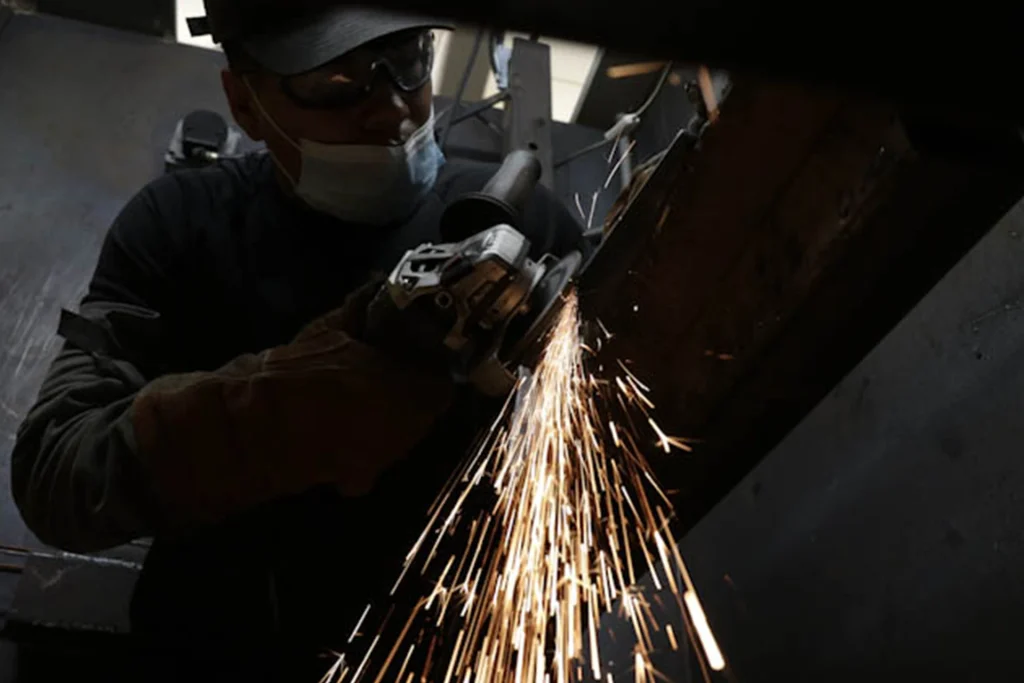
A pipefitter lays out, assembles, installs, and maintains the piping systems that move steam, water, gas, chemicals, and compressed air through industrial and commercial facilities. Unlike a residential plumber, a pipefitter usually works on high-pressure process systems in plants, refineries, power facilities, hospitals, and large construction sites.
The day-to-day work involves reading isometric drawings and weld maps, measuring and cutting pipe, beveling the ends, fitting sections together at precise angles, and securing everything so it holds under pressure. The fit-up has to be exact, because a poorly aligned joint produces a weak weld no matter how skilled the welder is. That is the core reason fitting and welding are so tightly linked on a job site: one feeds directly into the other. Many of the welding techniques pipefitters use exist specifically to join pipe cleanly in tight, awkward positions.
Do pipefitters need to weld to build a career? Not strictly. Welding is not required to work as a pipefitter, but in practice the answer is more nuanced. Many pipefitters focus purely on layout and assembly, while others weld the joints themselves. The tradespeople who can do both are called combo welders, and they are consistently the most employable and the best paid in the field.
On a job site, roles often split into two camps: fitters who measure, cut, and assemble, and welder-fitters who do all of that plus join the pipe permanently. When a fitter can only fit, they wait on a welder to finish the joint. When a welder can only weld, they wait on a fitter to set it up. A single worker who can do both keeps the whole process moving, which is exactly why employers value that person more. If you are deciding whether to add welding to your skill set, the practical reality is that learning to weld as a pipefitter opens doors that pure fitting alone does not.
So while you can build a solid career as a fitter without ever striking an arc, choosing to weld dramatically widens your options. For most people entering the trade today, the smarter long-term move is to train for both.

A combo welder, sometimes called a welder-fitter or pipe welder, is a tradesperson who can both fit pipe and weld it. Rather than specializing in a single task, this worker controls the full joint from layout to finished weld. This is the role that commands the strongest pay premium in the mechanical trades.
The reason comes down to simple job-site economics. Employers pay more for workers who eliminate handoffs and solve more than one problem. A worker like this does not stand idle waiting for someone else to finish a step, and crews built around them run leaner and faster. In shipyards, refineries, and large mechanical contracting projects, the pipefitter welder who can read a drawing, fit the joint, and lay a sound weld is the person foremen want on the schedule first.
The fitter-welder combination pays more because it combines two skills that each carry value, then adds the efficiency of having them in one person. A pipefitter salary already tends to run higher than a general welder’s, and layering verified welding ability on top pushes earnings higher still.
Here is how typical earnings compare across the related roles. Figures are national ranges that vary by experience, employer, certification, overtime, and region:
| Role | Typical Annual Range |
| Entry-level welder | $45,000 – $52,000 |
| Experienced / certified welder | $55,000 – $65,000 |
| Pipefitter / combo welder | $60,000 – $75,000 |
| Senior / union steamfitter-pipefitter | $80,000 – $105,000+ |
According to the U.S. Bureau of Labor Statistics, the median annual wage for plumbers, pipefitters, and steamfitters was $62,970 in May 2024, with the top 10 percent earning more than $105,000. General welders sit lower, with a national median closer to $50,000. That gap is a large part of why a pipefitter welder who holds advanced welding certifications lands at the top of the scale. The value of stacking multiple in-demand skills is not a marketing claim; it shows up directly in the paycheck.
It is worth being realistic, though. Nobody walks out of a short program earning six figures. Those top numbers reflect years of experience, union membership, specialty certifications, and overtime. What training gives you is the foundation to start and a clear path to climb, and a strong pipefitter salary rewards the full breadth of what you can do.
In the Philadelphia region, a pipefitter welder generally earns competitive wages driven by the area’s union presence, active shipbuilding and ship repair, and ongoing commercial and energy construction. Entry-level pay typically starts in the range of other skilled trades, while experienced welder-fitters and union steamfitters earn well above the regional median, lifting the typical pipefitter salary across the metro.
Several local factors push pipefitter salary higher in and around Philadelphia. The city has a strong organized building-trades sector, a maritime industry that constantly needs pipe welders, and large institutional construction in healthcare and higher education. Because the credential and skills are portable, a worker trained here can also take that earning power across Pennsylvania, New Jersey, and Delaware, including communities like Camden, Cherry Hill, Drexel Hill, Lansdowne, and Darby. Staying current with the most in-demand pipefitting skills is one of the clearest ways to keep moving up that regional pay scale.
To weld pipe professionally, a pipefitter needs command of the core processes and, ideally, verified certifications that prove it. The most valued processes for pipe work are TIG (GTAW) for precise root passes, stick (SMAW) for strong structural joints, and MIG and flux-cored for production speed. Welding certifications are what turn skill into provable, portable credibility.
The credential employers respect most for structural and pipe work comes through the American Welding Society and, for code piping, ASME Section IX qualification. The AWS Certified Welder program is performance-based, meaning an inspector verifies an actual weld rather than a written exam. Within pipe welding, the 6G position test, done on a fixed pipe at a 45-degree angle, is widely considered the benchmark; a welder who passes 6G can typically weld any position below it. Earning these welding certifications is a direct investment in earning potential, and strong welding technology training is built specifically to prepare you for them.
Beyond the welding itself, employers expect blueprint and isometric reading, accurate measurement and fit-up, safe use of personal protective equipment, and the discipline to follow welding procedure specifications exactly. These are the competencies that separate a hire-ready tradesperson from someone who still needs supervision.
Educational note: Certification requirements and renewal rules are set by AWS, ASME, and employers. Verify current standards directly with those bodies, as they can change.
Yes. Demand for pipefitters, steamfitters, and the welder-fitters who serve both functions is steady and projected to hold. The U.S. Bureau of Labor Statistics projects employment of plumbers, pipefitters, and steamfitters to grow 4 percent from 2024 to 2034, about as fast as average, with roughly 44,000 openings each year across the decade. Much of that demand comes from replacing experienced workers who retire.
The work is also hard to automate. Fitting and welding pipe happens in the field, in confined spaces, and in positions that machines cannot easily reach, which protects the role from the automation pressure facing some manufacturing jobs. In the Philadelphia region, aging infrastructure, energy upgrades, shipbuilding, and large commercial projects reinforce that demand year after year. A fitter-welder who keeps skills and credentials current rarely struggles to find work.
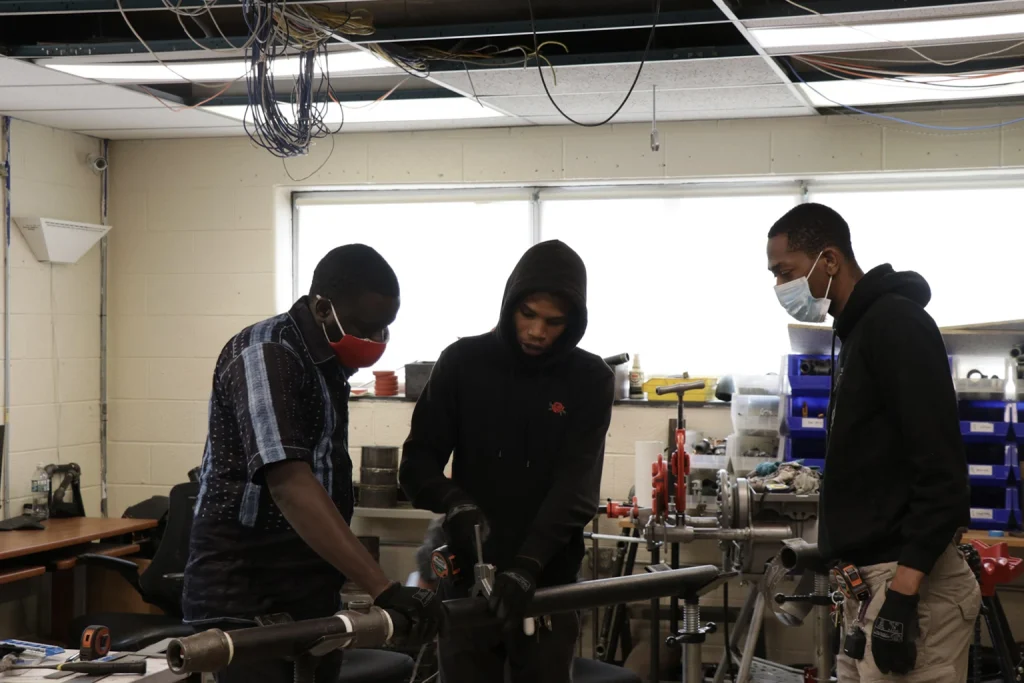
The most direct way to build this career is to train in both disciplines through focused, hands-on programs rather than hoping to pick up the second skill later on the job. Philadelphia Technician Training Institute (PTTI) offers two programs that map directly onto the combo path: a Steam, Sprinkler, and Pipe Fitting program and a Welding Technology program, each built around real lab time on industry-standard equipment.
There are two common routes into the combo role. The first is to start as a fitter, learn layout and assembly, then add welding to become a full pipefitter welder. The second is to start in welding, get job-ready and begin earning, then build pipefitting skills on top. Both paths lead to the same valuable destination. The right pipefitting training emphasizes blueprint reading, fit-up accuracy, and safety alongside hands-on practice, while welding training focuses on the processes and positions employers actually test for. Because employers increasingly reward stacked credentials, pursuing multi-certification trade training is one of the smartest moves a new tradesperson can make.
What matters most is choosing pipefitting training and welding instruction with genuine shop time, instructors who have worked in the field, and a curriculum aligned with current employer expectations. That combination is what turns classroom learning into job-site readiness.
This career suits a wide range of people who want stable, hands-on work without a four-year degree:
If you enjoy solving mechanical problems, working with your hands, and seeing a finished system you helped build, the fitter-welder combo is one of the strongest career bets in the trades today.
So, do pipefitters need to weld? Not by rule, but the data and the job market both point to the same conclusion: the tradespeople who can fit and weld pipe earn more, work more consistently, and control their own careers. The combo welder role sits at the intersection of two in-demand skills, and in a region like Philadelphia, with its shipyards, construction, and energy work, that combination is a genuine advantage. With focused pipefitting training and the right welding certifications, you can build toward one of the most resilient, well-paid paths in the skilled trades.
If you are ready to explore this career, schedule a visit to PTTI’s campus to see the welding and pipefitting labs and talk through the training path that fits you best.
Not strictly. You can work as a pipefitter focused only on layout and assembly. However, pipefitters who can also weld, known as welder-fitters, are more employable and earn more. For most people entering the trade, learning both skills is the smarter long-term choice.
A combo welder, or welder-fitter, is a tradesperson who can both fit pipe and weld it. Instead of handing the joint off, this worker controls the full process from layout to finished weld, which is why the role commands a pay premium on most job sites.
A pipefitter salary generally runs higher than a general welder’s. The BLS reported a median of $62,970 for plumbers, pipefitters, and steamfitters in May 2024, with top earners above $105,000. A pipefitter welder with advanced welding certifications typically sits near the higher end over time, and your pipefitter salary rises further with experience, specialty skills, and overtime.
For pipe welding, the 6G position test is the recognized benchmark, and AWS Certified Welder or ASME Section IX qualification carries the most weight with employers. These welding certifications are performance-based, meaning an inspector verifies your actual weld.
PTTI offers both a pipefitting program and a welding program with hands-on labs, making it possible to build the full combo skill set. You can connect with admissions to learn which path fits your goals and schedule.