
Walk onto any construction site in Philadelphia where interior walls are going up, and you’ll notice drywall work happens in stages rather than all at once. Three different specialists usually touch the same wall before it is ready for paint: the drywall hanger, the drywall taper, and the drywall finisher. Understanding how these roles differ matters if you are deciding where you fit in the trade, or whether a hands-on Drywall, Framing & Finishing program is the right first step toward a steady paycheck.
This guide breaks down the hanger vs taper vs finisher question in plain terms: what each role actually does day to day, the skills and tools involved, what the work pays, and how the three fit together on a real job. You will also see how demand looks across the Philadelphia region and the fastest route into the trade for high school graduates, career changers, and veterans. By the end, you will know which drywall role matches your strengths and how to start building toward it.
A drywall hanger installs the panels, fastening them to the framing. A drywall taper applies joint tape and the first coats of compound over the seams and fasteners. A drywall finisher then smooths, sands, and textures those coats into a flawless, paint-ready wall. Together, the three move a space from bare studs to finished surface.
On smaller jobs, one skilled worker may do all three tasks. On larger commercial projects across Philadelphia, the work is usually divided so each specialist can move fast and focus on quality. That division is why it helps to understand each role on its own before deciding where you want to start. The taper and finisher roles, in particular, overlap so often that the U.S. Bureau of Labor Statistics groups them together as “tapers,” while treating the drywall installer, or hanger, as a closely related but separate job.
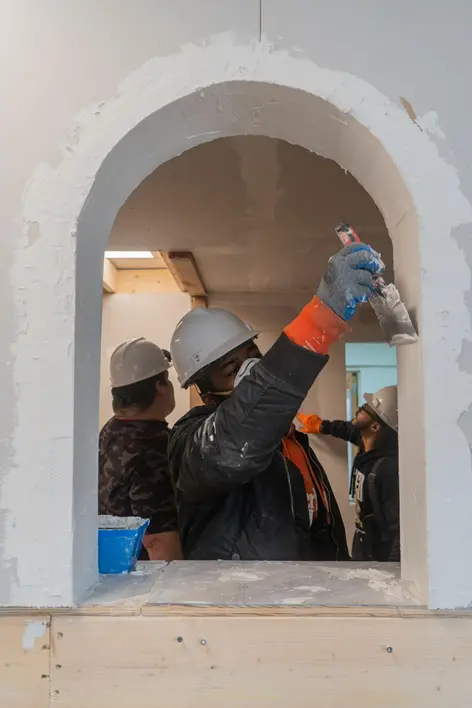
The hanger is the first specialist on the wall. This is the person who takes measurements, cuts sheets of drywall to size, and fastens them securely to the wood or metal framing. Hangers work from blueprints and layouts, planning where each panel goes so seams fall in the right places and material waste stays low. Because a single sheet can be heavy and awkward, the role is physically demanding and often involves lifts, scaffolding, and overhead work.
Good hanging sets up everything that comes after it. If a drywall installer leaves uneven joints, loose fasteners, or sloppy cuts around outlets and corners, the taper and finisher inherit those problems. Strong hangers are valued for speed combined with accuracy, and employers across the region look for workers who can read a layout, handle power tools safely, and keep a job moving.
Once the panels are up, the drywall taper takes over. Taping is the bridge between rough installation and a smooth finish. The taper embeds paper or mesh joint tape into a first layer of joint compound over every seam, then covers screw and nail heads so they disappear. This stage is less about muscle and more about consistency, because the quality of the taping largely determines how much sanding and correction the finish will need later.
A skilled taper knows how to mix compound to the right consistency, apply it evenly, and avoid trapping air bubbles under the tape. Many tapers use specialized tools such as banjos, flat boxes, and automatic taping tools on larger commercial jobs to work faster without sacrificing quality. On residential work in neighborhoods across North Philadelphia and South Philadelphia, hand taping is still common and remains a foundational skill worth mastering.
The drywall finisher is the detail specialist who turns taped walls into a flawless surface. After the taper’s first coat, the finisher applies and feathers out additional coats of compound, then sands each layer smooth so no seam, screw, or ridge shows through the paint. On high-end projects, a finisher may be asked to produce a Level-5 finish — a skim coat over the entire surface that creates the most uniform result and is often required under critical lighting.
Finishing rewards patience and a trained eye. A drywall finisher has to judge when a coat is dry, where a surface is still slightly high or low, and how to texture a wall to match the rest of a building. Because this is the last drywall stage before paint, the finisher’s work is the most visible, and poor finishing is immediately obvious once the lights go on. That visibility is exactly why experienced finishers are in demand and why the role tends to sit at the higher end of the drywall pay scale.
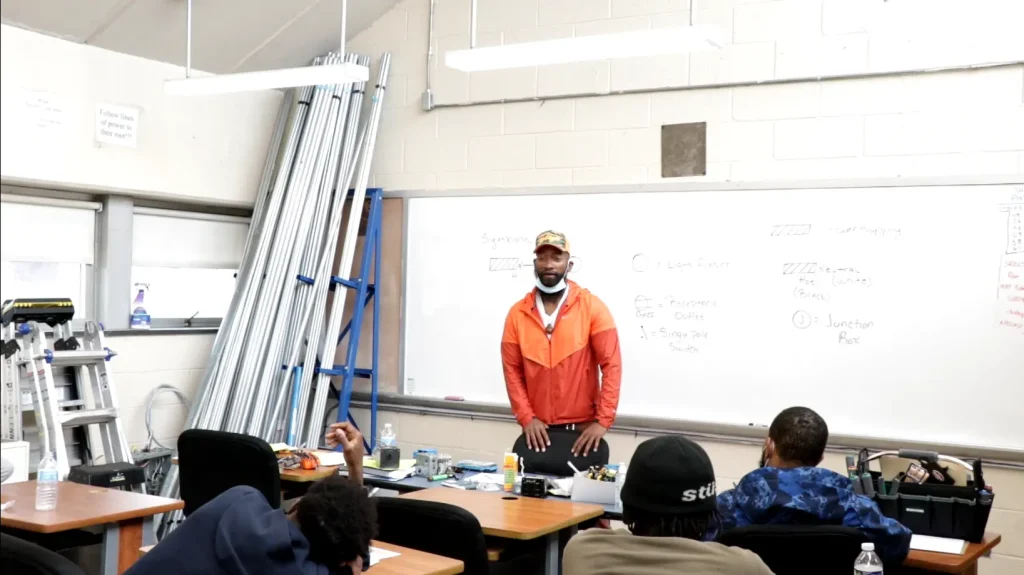
The table below sums up how the three roles compare across the parts of the job that matter most when you are choosing where to start.
| Factor | Hanger (Installer) | Taper | Finisher |
| Main job | Installs and fastens panels | Tapes and mud-coats seams | Smooths, sands, and textures |
| Stage on the wall | First | Second | Third (final before paint) |
| Physical demand | Highest | Moderate | Moderate |
| Precision demand | Moderate | High | Highest |
| Key tools | Screw gun, knife, lifts | Tape, banjo, flat boxes | Knives, sanders, skim tools |
| Best fit for | Strong, fast, layout-minded workers | Steady, consistent hands | Patient, detail-driven workers |
No single role is “better” than the others. They reward different strengths, and many drywall professionals learn all three over time, which makes them more valuable and more flexible on any job site.
Drywall pay is competitive for a trade you can enter without a degree. According to the U.S. Bureau of Labor Statistics, as of May 2025 the median annual wage was $58,930 for drywall and ceiling tile installers and $68,270 for tapers, the category that includes finishing work. Actual earnings vary by experience, employer, specialization, overtime, and union status, so treat these figures as benchmarks rather than guarantees.
A few patterns are worth knowing. Finishing skill tends to command a premium because it is the hardest stage to do well, which is one reason the taper and finisher category reports higher median pay than installation. Commercial work and union roles in the Philadelphia area often pay more than small residential jobs, and workers who can hang, tape, and finish competently can keep themselves busy year-round by filling whichever role a crew needs. For a wider view of how earnings differ by role and region, PTTI’s breakdown of what drywallers actually make in a year is a useful companion to this guide.
This salary information is educational and not a promise of pay. Earnings depend on experience, employer, location, certifications, and market conditions.
Yes. Drywall jobs remain steady across the Philadelphia region, driven largely by constant replacement demand. The Bureau of Labor Statistics projects about 7,600 openings each year nationally for drywall installers and tapers over the decade, with most coming from workers who retire or move into other roles. Because nearly every building project, from apartments to hospitals to offices, needs interior walls finished, the work does not disappear when one sector slows.
Philadelphia’s mix of residential renovation, commercial construction, and institutional projects keeps demand broad across West Philadelphia, the Spring Garden corridor, and surrounding communities, as well as into South Jersey towns such as Camden and Cherry Hill. A trained drywall installer or finisher is rarely tied to one employer, which adds stability. If you want to see the kinds of roles local employers post, PTTI tracks drywall finisher jobs across Philadelphia and the skills those openings ask for.
You can enter drywall work with no prior experience and no college degree. Most employers ask only for a high school diploma or equivalent, and the BLS notes that on-the-job training typically lasts up to 12 months. Focused drywall training in Philadelphia can shorten that ramp by teaching hanging, taping, and finishing in a hands-on lab before you ever reach a paid job site.
A structured program is the most direct path because it builds all three skills in sequence. In practice, that means learning to measure and hang panels, then to tape and coat seams, and finally to finish and texture a wall to a professional standard. PTTI’s drywall curriculum is designed as a course that takes beginners to a Level-5 finish, so graduates can step into whichever role a crew needs first. Training also covers job-site safety, blueprint reading, and the professional habits — punctuality, teamwork, and clean work — that employers consistently reward.
For high school graduates weighing their options, drywall training in Philadelphia offers a faster, lower-cost alternative to a four-year degree while still leading to skilled, well-paid work. No state license is required to work in drywall, though strong craftsmanship and reliability are what move you up the pay scale.
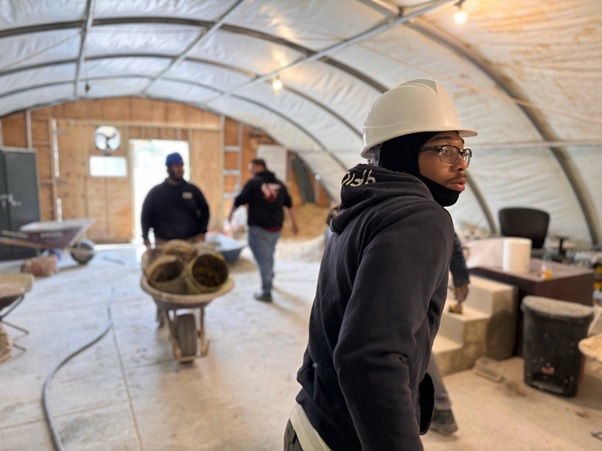
Choosing a starting role comes down to honest self-assessment. If you are strong, like steady physical work, and enjoy layout and problem-solving, hanging is a natural entry point and a fast way onto a crew. If you are consistent and methodical, taping suits you. If you are patient and detail-obsessed and take pride in work that looks perfect under bright light, finishing is where you will shine — and where pay often climbs fastest.
The good news is you do not have to pick permanently. Many successful drywall professionals begin as a hanger or taper and grow into finishing as their eye and hand improve. Learning all three widens your opportunities and your income, and a quality program helps you launch a drywall career without piling up college debt. Whichever role you start with, the trade rewards people who show up, keep learning, and do clean work.
The drywall hanger vs taper vs finisher comparison comes down to three connected crafts: one installs, one seals, and one perfects. Each rewards a different set of strengths, each plays a real part in demand across the Philadelphia region, and none requires a four-year degree to begin. Whether you see yourself hanging panels, taping seams, or finishing walls to a flawless standard, the trade offers a stable, skill-based career you can grow into over time.
If you are ready to build those skills, explore PTTI’s Drywall, Framing & Finishing program and reach out to the admissions team to find the next start date.
They overlap but are not identical. A drywall taper applies joint tape and the first coats of compound, while a drywall finisher smooths, sands, and textures later coats to a paint-ready surface. Because the tasks run together, the BLS groups both under “tapers,” and one worker often does both.
Finishing-related work tends to pay the most because it is the hardest stage to master. The BLS reports a higher median wage for tapers and finishers than for drywall installers. Pay still varies by experience, employer, specialization, and whether the work is union or commercial.
No. There is no state license required to work as a hanger, taper, or finisher, and no college degree is needed. Most employers prefer a high school diploma or equivalent, and skill is proven on the wall rather than on a transcript.
On-the-job training typically takes up to 12 months, according to the BLS. Focused drywall training in Philadelphia can prepare you for entry-level work faster by teaching hanging, taping, and finishing in a hands-on lab before you start earning.
Yes. On smaller jobs, a single skilled worker often hangs, tapes, and finishes. Learning all three roles makes a drywall installer far more employable, because they can fill whatever a crew needs and stay busy across different kinds of projects.