
For years, students often heard one familiar message after high school: go to college and earn a four-year degree. Today, many young people are exploring more career paths. Gen Z is showing growing interest in careers that offer practical skills, hands-on experience, technology, and clear pathways into the workforce. Skilled trades fit many of these interests.
From welding and HVAC to automotive technology, electrical work, construction, and manufacturing, technical careers give young people opportunities to build valuable skills. In PA, a trade school in Philadelphia can provide practical training while helping students prepare for the demands of modern workplaces.
Gen Z entered adulthood during a period of rapid economic and technological change.Many young people now think carefully about the time, cost, and career outcomes associated with education. They also want learning experiences that connect directly with real-world work.
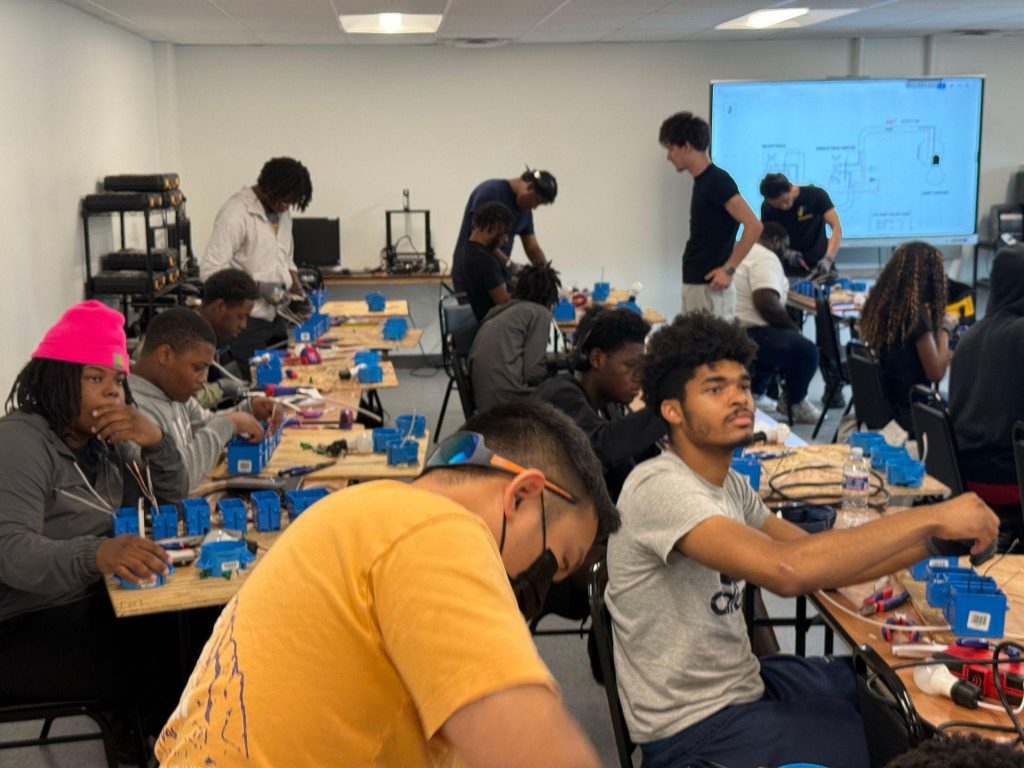
A technical education can provide another route for students who prefer learning through practice. Rather than spending most of their time reading textbooks, students in technical programs can work with tools, equipment, machines, vehicles, electrical systems, and other workplace technologies. For students who enjoy building, repairing, installing, or troubleshooting, this learning style can feel more connected to their interests.
One major attraction of skilled trades for Gen Z is the opportunity to learn by doing. A student studying HVAC, for example, can learn how heating and cooling systems operate before applying that knowledge during practical training. An automotive student can study vehicle systems and then practice diagnostics.
A welding student can learn safety procedures and welding techniques before applying those skills in a controlled training environment. Students do not simply learn what a tool does. They also learn how to identify problems, follow safety procedures, communicate with instructors, and complete tasks accurately.
The modern skilled trades look very different from the outdated image some students may have. Today’s technicians can work with advanced equipment, computerized systems, diagnostic software, automation, sensors, and digital tools.
That technology creates new learning opportunities for young workers.For example, automotive technicians increasingly interact with sophisticated vehicle electronics and diagnostic systems. HVAC technicians work with increasingly advanced controls and connected equipment. Manufacturing professionals may interact with automation and robotics.
Therefore, students who enjoy technology do not necessarily need to choose an office-based career. Technology exists throughout the skilled trades.
Another reason young people explore technical careers involves skill development.A student can enter training with limited experience and gradually develop specialized abilities.
That process can build confidence. At first, a student may struggle to use unfamiliar equipment. With instruction and practice, the same student can learn to complete increasingly complex tasks. This progression gives students something tangible to measure. They can see their skills improve.
They can identify mistakes, correct them, and try again. Over time, that practice can create a foundation for employment and continued professional development.
Trade careers can offer multiple directions. If you work in drywall, you may also need to know concrete technician tasks, since these tasks often go side by side on a construction site.
Technical careers can develop in different directions within different skilled trade programs. A technician may eventually take on more complex responsibilities. With experience, some workers move into supervisory, estimating, inspection, sales, training, or business ownership roles.Similarly, an automotive technician could continue developing diagnostic expertise or move toward management.
Gen Z has grown up surrounded by digital information. A student can watch a video showing someone repairing an engine, installing an HVAC component, or performing a welding technique within seconds.
However, watching someone perform a task is not the same as performing it. That difference makes skilled trades training valuable. Students need opportunities to handle equipment, practice procedures, make mistakes safely, and receive feedback.
Instructors can demonstrate a technique and then allow students to perform it themselves. This creates a learning cycle: Learn → Practice → Receive Feedback → Improve → Apply . That cycle can help students turn information into usable skills.
Philadelphia has a long history of technical work, construction, manufacturing, transportation, building services, and infrastructure.Students interested in these fields can explore career-focused education without automatically leaving the city.
A trade school in Philadelphia can give students access to structured technical instruction and practical learning. PTTI offers programs in areas such as welding, HVAC, automotive technology, electrical technology, plumbing, pipefitting and steam systems, construction, concrete masonry, drywall and framing, sterile processing, and manufacturing and automation.
Students can therefore explore different technical fields based on their interests.
Young workers also need more than technical knowledge.
Employers expect workers to communicate clearly, arrive prepared, follow safety requirements, work with others, solve problems, and adapt to changing situations. That combination creates a stronger foundation for career development.
Soft skills help them work effectively in the workplace. Together, they create a more complete set of job-ready skills. Students should therefore treat attendance, communication, teamwork, punctuality, and professionalism as part of their career preparation.
Younger workers can also contribute fresh perspectives to technical workplaces. Gen Z has grown up with digital technology and rapid access to information. Many young workers are comfortable learning through online resources, digital platforms, and technology-based tools.
That familiarity can complement traditional trade knowledge. An experienced technician may bring years of practical knowledge. A younger technician may bring familiarity with newer digital systems. When workers learn from each other, both perspectives can contribute to a stronger workplace. This creates opportunities for mentorship and knowledge sharing.
. Students need training to turn that interest into practical ability.
PTTI provides hands-on programs designed to help students develop technical skills in different career areas. For Gen Z students, that practical environment can provide an opportunity to move beyond watching and start doing. A student who likes to fix everything, a student who is very much interested in automobiles,like he is a car lover and loves to deal with auto diagnostic systems. Some students are passionate about Automation and manufacturing. All these interests and skills are considered for the long run.
Industries cannot depend on yesterday’s workforce forever. They upgrade machines and install modern equipment. Similarly, this is required in terms of professionals and Gen Z. Experienced workers eventually retire, technology changes, and businesses need new technicians who can learn modern systems.
Students can explore careers based on their interests, strengths, goals, and preferred learning styles. For some, that path may involve a university. For others, it may involve technical training.
For many students, the most important step is discovering which environment allows them to learn, grow, and build a meaningful career.
Technology is changing the work. Employers need new skills. Training environments are becoming more connected to modern equipment and workplace expectations.
By choosing skilled trades training, young people can develop practical abilities while preparing for careers in industries that rely on skilled workers.
For Philadelphia students, exploring a trade school in Philadelphia can be a practical first step. The future of the trades will need workers who can think, troubleshoot, communicate, adapt, and work with technology. Gen Z has the opportunity to bring those abilities into the trades—and build careers around skills that matter.
Gen Z students don’t want job loss, so they value hands-on learning, practical skills, technology, career pathways, and opportunities to enter the workforce.
Yes, students who enjoy practical work, technology, problem-solving, and hands-on learning may find skilled trades worth exploring.
Yes, modern trade programs can introduce students to digital tools, diagnostics, automation, equipment, and technical systems.
Yes, workers can build experience and pursue specialized, supervisory, technical, or entrepreneurial opportunities depending on their field.
A trade school in Philadelphia can give students access to focused technical education and hands-on career preparation.
Read More: