
Starting a career in construction does not always require years of experience or a college degree. Many construction companies hire beginners for roles that provide on-the-job training and opportunities to develop practical skills. If you enjoy working with your hands, solving problems, and seeing the results of your work, construction could be a good career path.
Philadelphia offers opportunities across residential, commercial, and infrastructure projects. These projects need workers for concrete work, drywall installation, painting, carpentry, and general site support. As a result, people exploring entry-level construction jobs in Philadelphia can find several ways to enter the industry.
However, knowing which jobs to look for is only the first step. You should also understand the basic qualifications, workplace safety requirements, expected wages, and training options that can help you get started.
Entry-level construction jobs are positions designed for people with limited or no previous construction experience. Employers may provide basic training while workers learn how to complete tasks safely and follow instructions.
These jobs often involve physical work, teamwork, and the use of basic construction tools. Beginners usually work under the supervision of experienced workers, forepersons, or site supervisors.
Some common responsibilities include:
Many workers begin in general labor roles and later move into specialized trades. With experience and additional training, they can pursue positions in carpentry, drywall installation, concrete work, welding, or construction supervision.
Several construction jobs are great for beginners who want to gain experience and build practical skills. The right role depends on your interests, physical abilities, and long-term career goals.

Construction laborers support different activities on residential and commercial job sites. Their duties may include moving materials, preparing work areas, removing debris, and assisting skilled workers.
This role offers beginners a chance to understand how construction projects operate. It can also help them identify which trade they would like to pursue.
Carpenter’s helpers assist carpenters with measuring, cutting, assembling, and installing building materials. They may also organize tools and prepare materials before work begins.
This position is suitable for people interested in learning carpentry. It can provide a starting point for developing skills in framing, repairs, and building construction.
Concrete laborers help prepare, pour, spread, and finish concrete. They may assist with mixing materials, setting up forms, and cleaning equipment after a job.
People interested in this field can build a foundation through practical training. PTTI’s Concreting, Masonry, and Framing Program covers concrete work, construction safety, blueprint reading, and related building skills.
Drywall installer helpers support workers who install and finish interior walls and ceilings. Their tasks may include carrying drywall sheets, measuring materials, preparing surfaces, and assisting with installation.
This role can lead to more specialized work in drywall installation and finishing. Beginners interested in learning these skills can explore PTTI’s Drywall Framing and Finishing Program, which offers hands-on instruction in framing, drywall installation, and finishing techniques.
Painter’s helpers prepare surfaces before painting. They may clean walls, cover floors, apply primer, organize supplies, and assist experienced painters.
The job requires attention to detail and an understanding of basic safety practices. With experience, workers can learn surface preparation, painting methods, and finishing techniques.
Some construction companies hire beginners for trainee positions involving equipment operations. Workers may initially assist experienced operators, inspect work areas, and learn basic equipment safety.
Operating heavy machinery requires proper training and authorization. Beginners should never operate equipment without the necessary instruction and supervision.
Most entry-level construction jobs do not require a four-year college degree. However, employers may expect candidates to meet certain basic requirements.
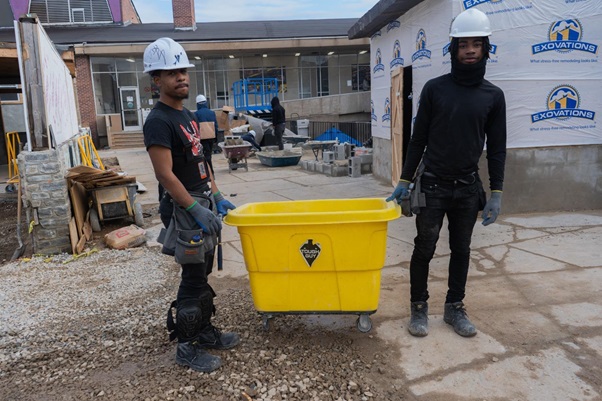
These commonly include:
Some employers may also prefer candidates with a valid driver’s license, previous labor experience, or basic safety training.
You do not need to know every construction technique before applying. However, understanding common tools, materials, and workplace practices can help you feel more prepared.
Construction sites involve several potential hazards. Workers may encounter falling objects, electrical equipment, uneven surfaces, heavy machinery, and materials that require careful handling.
For beginners, understanding safety procedures is especially important. You should know how to use personal protective equipment (PPE), recognize common hazards, and follow instructions from supervisors.
Some important safety practices include:
OSHA 10-Hour Construction training can help workers understand common construction hazards and basic safety responsibilities. Philadelphia also has specific OSHA 10 training requirements for workers performing certain permit-regulated construction and demolition activities. Check the City of Philadelphia’s construction safety requirements and the OSHA construction training guidelines for details.
Employers look for more than physical strength when hiring beginners. Good communication, reliability, and a willingness to learn can make a difference.
Here are some useful skills to develop:
Learn how to identify and handle common tools such as hammers, measuring tapes, drills, levels, and screwdrivers. You should also understand basic tool safety before using any equipment.
Construction work involves accurate measurements. Basic knowledge of inches, feet, fractions, and simple calculations can help you complete tasks correctly.
Construction projects involve several workers performing different tasks. You must communicate clearly, follow instructions, and coordinate with others to keep work moving.
Unexpected issues can occur on construction sites. Workers who can identify problems, ask questions, and follow the correct procedures become valuable team members.

Learning a specific trade can help you prepare for more focused job opportunities. For example, PTTI’s Welding Technology and Training Program provides hands-on instruction in welding processes, equipment, and workplace safety.
Pay for entry-level construction jobs in Philadelphia depends on the position, employer, project, and previous experience. General laborers may earn differently from workers who have specialized skills or safety certifications.
The U.S. Bureau of Labor Statistics (BLS) reports wage information for construction laborers and helpers across the country. These figures can help beginners understand the broader earning potential of the occupation, although they do not represent a guaranteed starting salary in Philadelphia.
You can review the latest available figures on the BLS Construction Laborers and Helpers page.
Your earnings may increase as you gain experience, learn additional skills, and take on more responsibilities. Workers who develop expertise in areas such as concrete work, drywall installation, welding, or equipment operation may qualify for more specialized positions.
Finding your first construction job takes preparation. Instead of applying randomly, focus on employers and positions that match your current skills and interests.
Here are a few practical steps:
Look for job titles such as construction laborer, general laborer, carpenter helper, concrete laborer, and drywall helper. Read the job descriptions carefully to understand the required experience and qualifications.
Your resume should highlight relevant skills, previous work experience, education, and safety training. If you have worked in a warehouse, handled tools, completed maintenance tasks, or performed physically demanding work, include those details.
You do not need extensive construction experience to create a useful resume. Focus on reliability, teamwork, practical abilities, and your willingness to learn.
Philadelphia has workforce development resources that can help job seekers explore training and employment options. You can review the City of Philadelphia’s Rebuild training programs for information about construction-related workforce opportunities.
Basic training can help you understand construction tools, materials, measurements, and safety procedures. It can also give you more confidence when speaking with employers.
PTTI offers career preparation and employment support to help students prepare for opportunities after training.
Yes. Many people enter construction without previous industry experience. Employers may hire beginners for laborer and helper positions because these roles allow workers to learn through supervised tasks.
However, having no experience does not mean you should apply without preparation. Learning basic safety practices, understanding common tools, and developing practical skills can make your application stronger.
You can also use your first construction job to explore different trades. For example, someone who starts as a general laborer may discover an interest in drywall installation, concrete work, or carpentry.
Over time, this experience can help you decide whether to pursue specialized training or move into a more skilled position.
On-the-job experience is valuable, but structured training can help beginners develop skills before entering the workforce. It introduces students to tools, materials, safety practices, and techniques used in specific trades.
For example, people interested in interior construction can explore drywall and framing. Those who prefer outdoor and structural work may consider concreting and masonry. Welding can also open up opportunities in construction, fabrication, and manufacturing.
At Philadelphia Technician Training Institute, students can explore practical construction training programs in Philadelphia that match their interests and career goals.
Hands-on learning helps students understand how tasks are performed in real work environments. It also gives them opportunities to practise techniques, improve their accuracy, and become more comfortable using tools and equipment.
Before choosing a program, review its curriculum, duration, practical training components, and admission requirements. You should also ask about career preparation and employment support.
Construction offers several opportunities for workers who are willing to learn and develop their skills. Your first job may involve basic tasks, but it can become the starting point for a long-term career.
With experience and additional training, you may move into positions such as:
Career growth depends on your chosen trade, work experience, qualifications, and employer requirements. Some positions may require additional certifications or specialized training.
The important thing is to keep building your skills. Learning new techniques and gaining experience with different materials and equipment can help you qualify for more responsibilities over time.
Starting a career in construction can be a practical option for people who want to develop hands-on skills and enter a growing industry. Philadelphia offers opportunities in several areas, including general labor, carpentry, drywall installation, concrete work, and welding.
If you are exploring entry-level construction jobs in Philadelphia, begin by understanding the requirements of different roles. Build basic tool knowledge, learn workplace safety practices, and consider practical training to improve your skills. With consistent effort and experience, you can move from an entry-level position to a specialized trade or supervisory role.
The right preparation can help you take your first step toward a rewarding construction career.
Construction laborer and general laborer positions are common starting points for beginners. These roles usually involve preparing work areas, moving materials, cleaning job sites, and assisting skilled workers. Employers may provide basic on-the-job training.
No. Most entry-level construction positions do not require a college degree. Employers generally look for reliability, physical ability, basic communication skills, and a willingness to learn. Some positions may require a high school diploma or GED.
Pay depends on the job, employer, experience, and skills required. General laborers and helpers may earn less than experienced workers in specialized trades. Check current Philadelphia-area wage information and individual job listings to understand available pay rates.
Yes. Practical construction training can help beginners understand tools, materials, safety procedures, and trade-specific techniques. It can also help them build confidence before applying for jobs. Programs in areas such as drywall, concreting, and welding provide opportunities to develop useful hands-on skills.
Read more blogs