
Two people want the same welding job. One spent several months in a structured program, logging booth hours, earning safety credentials, and preparing for a weld test. The other picked up skills informally, helping out at a shop and learning whatever the day happened to teach. Both can start a bead. Only one walks in with a portfolio an employer can verify on day one.
That gap is the real question behind trade school vs. learning a trade on the job. For high school graduates, career changers, and adult learners across Philadelphia, choosing between a structured in-demand skilled trades path and informal workplace learning shapes how fast you get hired, how much you earn early, and how far you can advance. This guide compares both routes on the factors that actually matter, cost, time, pay, certifications, and job security, so you can decide which one moves your career further, faster, in the Philadelphia region.

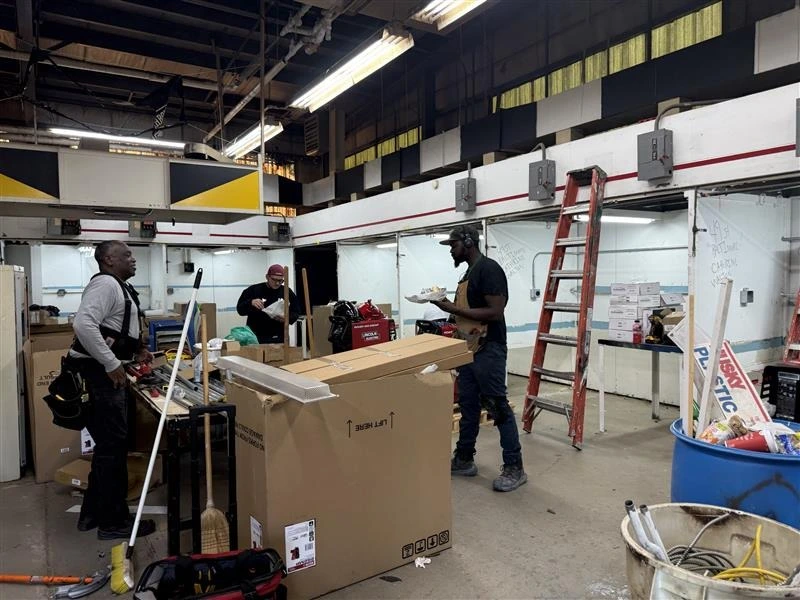
Learning a trade on the job means building skills directly at a workplace, usually as a helper, laborer, or informal trainee, rather than in a classroom or lab first. You earn while you learn, but your progress depends on what tasks your employer assigns and how much teaching happens between deadlines.
Workplace learning comes in a few forms, and they are not equal. The most structured form of workplace learning is a registered apprenticeship, where you work under a journeyman, earn a rising wage, and complete required hours plus related classroom instruction. The least structured version is informal, pick it up as you go, which can leave real gaps in safety knowledge, code understanding, and the specific techniques a certification exam tests. Many people assume learning on the job is the free, fast option. Sometimes it is. Often, it simply moves the cost from tuition to time, and time is the one resource you cannot refund.
A trade school is a postsecondary institution that trains students for a specific skilled occupation through hands-on instruction, short programs, and certification preparation. “Vocational school” means essentially the same thing; the terms are used interchangeably, though “vocational school” also describes high-school-level career-technical programs.
The defining feature of this path is focus. Instead of general-education requirements, your time goes into the trade itself, reading blueprints, running equipment, practicing to standard, and rehearsing the exact skills employers test. A quality vocational school compresses what might take years to absorb informally into a concentrated, hands-on training curriculum. For students comparing options, that focus is why a hands-on trade school in Philadelphia can turn a complete beginner into a job-ready candidate in months. The trades covered usually include welding, HVAC, automotive repair, pipefitting, masonry, manufacturing, and sterile processing, fields where demonstrated ability matters more than a diploma.
Most programs take roughly six months to a year to complete, while learning a trade informally on the job can take two to four years to reach a comparable, verifiable skill level. Structured programs are faster because they teach the full scope of a trade in sequence instead of in whatever order daily work happens to present it.
This is where the “which gets you further” question gets concrete. On the job, you learn what the work in front of you requires. If a shop never runs a certain process, you never learn it, and that gap follows you to your next interview. A focused program covers the trade systematically. At a program like PTTI, students move through foundations, core techniques, and test preparation on a predictable timeline, which is why many finish their welding technician program and start applying for jobs inside a year. Registered apprenticeships land in the middle: more structured than informal work, but typically multi-year commitments. For adults who need to retrain and start earning quickly, the shorter classroom-to-career timeline is often the deciding factor.
| Path | Typical Time to Job-Ready | Structure | Earn While Learning? |
| Trade school / vocational school | ~6–12 months | High (sequenced curriculum) | No, but short duration |
| Registered apprenticeship | 2–5 years | High (hours + classroom) | Yes |
| Informal on-the-job training | 2–4+ years (varies widely) | Low (depends on employer) | Yes |
Tuition varies by program and length, but it is generally far cheaper than a four-year degree and designed to get you earning quickly. Because the skilled trades pay well without a bachelor’s degree, many graduates recover their training investment within their first year or two of work.
Cost is where learning on the job looks most attractive, and sometimes genuinely is: you draw a paycheck instead of paying tuition. But the honest comparison includes time and ceiling. Informal learning can stall at a helper’s wage if you never gain the credentials that unlock higher-paying roles. Tuition at a vocational school buys a faster, more complete path to those credentials. Prospective students worried about affordability should review financial aid and funding options before assuming a program is out of reach, since grants and aid change the real number significantly. The goal is not the cheapest path on paper; it is the path with the best return once you factor in how soon, and how much, you start earning.
Both paths can lead to strong pay, but structured training usually reaches higher wages sooner because it produces the certifications employers reward. These careers are consistently among the trades that pay well without a degree, and credentialed workers tend to out-earn uncredentialed peers in the same field.
A few examples relevant to Philadelphia-area programs:
The pattern holds across trades: the worker who can prove skill through a recognized credential negotiates from a stronger position than the worker who only has informal experience. That is the quiet advantage of structured hands-on training, it produces evidence, not just ability.
The single biggest difference between trade school and informal workplace learning is how each prepares you for certification. Credentials such as AWS welding certifications, EPA 608 for HVAC refrigerant handling, and recognized sterile processing certifications are often what separate an applicant who gets interviewed from one who gets passed over.
Structured programs are built backward from these exams. The curriculum, the practice standards, and the equipment all aim at helping you pass and perform. Informal on-the-job training rarely does this on purpose; you may become skilled without ever being positioned to prove it on paper. In regulated trades especially, that matters. Pennsylvania and local jurisdictions attach licensing or code requirements to much of the higher-paying work, and employers lean on certifications to confirm a new hire meets them. A program that aligns with automotive technology and repair training standards, for instance, prepares students for the credentials shops actually ask about. Certification does not guarantee a job, but in the skilled trades it is frequently the key that opens the door.
Educational information only, not legal or licensing advice. Verify current certification and licensing requirements with the relevant authority, such as the American Welding Society, the EPA, or the Pennsylvania licensing boards.
For students weighing community college, a trade institute, or simply trying to get hired and learn as they go, a direct comparison helps clarify the trade-offs.
| Factor | Trade School / Vocational School | On-the-Job Training |
| Time to job-ready | Shorter, predictable (often under a year) | Longer, variable |
| Cost | Tuition up front; aid often available | Low tuition, but slower earning growth |
| Skill coverage | Full trade, taught in sequence | Only what the employer does |
| Certification prep | Built into curriculum | Rarely structured |
| Earn while learning | No, but brief | Yes |
| Best for | Fast entry, career changers, credential seekers | Those who must earn immediately |
Neither path is wrong. The question is which fits your situation. If you can commit to a short, focused program, structured training generally gets you further, faster, because it front-loads the credentials and complete skill set that unlock the better jobs. If earning immediately is non-negotiable, a registered apprenticeship captures much of that hands-on training while paying you, and it beats purely informal learning for exactly that reason.
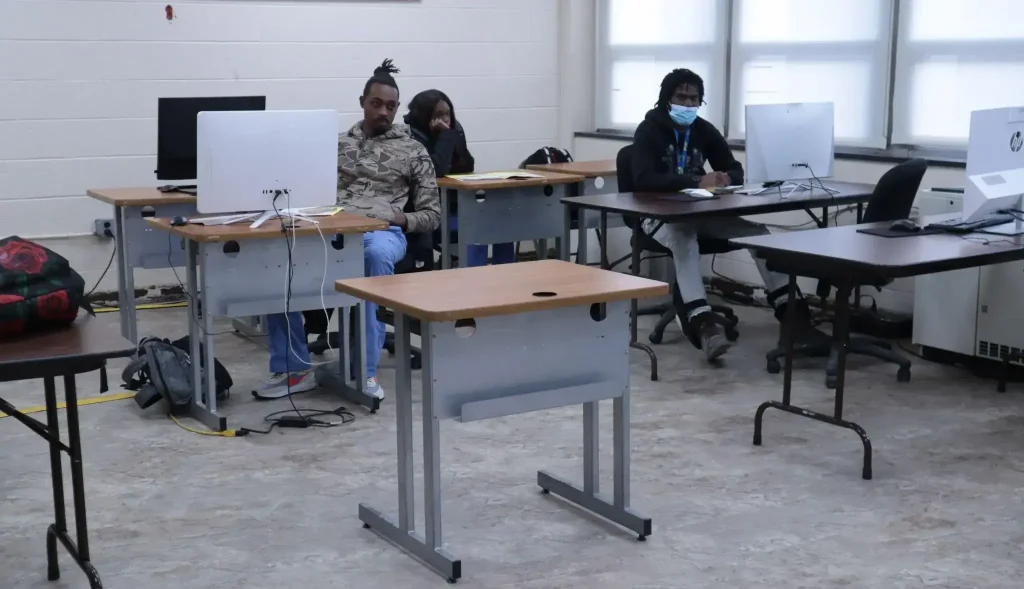
Philadelphia and its surrounding counties have a deep, varied base of skilled trades employers, from fabrication shops and mechanical contractors to hospitals that depend on sterile processing technicians. That hiring demand reaches well beyond the city into South Jersey communities like Camden, Pennsauken, and Cherry Hill, and nearby Pennsylvania towns such as Darby, Lansdowne, and Drexel Hill. Training centrally means your credential travels with you across the region.
For a high school graduate who wants to become a technician rather than a traditional college student, or an adult moving out of warehouse or retail work, the local picture is encouraging. Students who want to understand how to switch careers with focused trade training often find that a short program fits around real life better than a multi-year path. The trades also remain one of the clearest routes to a stable, well-paid career for people who learn by doing, including women and career changers who have historically been underrepresented in these fields and are increasingly entering them.
Choosing between trade school and on-the-job training comes down to four honest questions:
For many Philadelphia students, the strongest answer is not either/or. It is a sequence: complete a focused program, earn your first credentials, then step into a paid trade role or entry-level job where you keep learning, now from a position of strength.
Trade school vs. learning a trade on the job is not really a contest between education and experience, because the best trades careers use both. The difference is sequence and leverage. A focused program front-loads the complete skill set, the certifications, and the job-ready portfolio that employers can verify, which is why structured training so often gets you further, faster, especially in a region as rich in trades work as Philadelphia. On-the-job training has a real place, particularly through a registered apprenticeship, but informal learning alone tends to move the cost from tuition to time while leaving credential gaps that cap your earning power.
If you are ready to compare specific programs, timelines, and funding, explore PTTI’s hands-on trade programs and talk with admissions about the path that fits your goals.
It depends on your timeline and goals. A program is usually better if you want faster, verifiable skills and certification readiness, while learning on the job suits people who must earn immediately. Many successful tradespeople do both, starting with a program, then a registered trade role or entry-level job.
Most programs take about six months to a year, depending on the trade and schedule. That is significantly shorter than a four-year degree and often shorter than reaching the same skill level through informal workplace learning alone.
Yes. Welding, HVAC, pipefitting, automotive repair, and sterile processing are among the trades that pay well without a bachelor’s degree. Pay rises with experience, specialization, and certifications, and credentialed workers typically earn more than uncredentialed peers.
It teaches a full trade through hands-on training on a short, sequenced timeline, usually before you are employed in the field. An apprenticeship is paid on-the-job training under a journeyman, more structured than informal learning but typically a multi-year commitment.
Yes. The skilled trades are increasingly open to women and career changers, and structured programs offer a supportive, beginner-friendly way to build credible skills. Hands-on training lets people from any background prove ability through demonstrated competence rather than prior experience.