
Skilled workers are retiring faster than new ones are entering the workforce, and employers across the Philadelphia region feel it every week. That gap is exactly why the most in-demand skilled trades offer some of the clearest, fastest paths to a stable paycheck in 2026 and 2027. If you are weighing your options and want real information rather than hype, choosing one of the in-demand skilled trades careers can put you on a job site or a shop floor far sooner than a four-year degree would. Across Pennsylvania, New Jersey, and Delaware, fields like HVAC, welding, pipefitting, and sterile processing are hiring, and many roles reward you well without the debt that comes with traditional college. This guide breaks down which trades are growing, what they pay, how long training takes, and how to decide which one fits you. Whether you are a high school graduate, a career changer, a veteran, or an adult learner exploring a trade school in Philadelphia, you will leave with a clear, honest picture of where the opportunities are.
HVAC leads the pack: HVAC mechanics are projected to grow 11% from 2025–2035, among the fastest of all skilled trades careers.
Replacement demand is huge: Even slower-growing trades like welding see tens of thousands of annual openings as older workers retire.
Strong pay without a degree: Many high-paying trades offer median wages above $60,000, with experienced and certified workers earning more.
Short training, fast entry: Focused trade programs in Philadelphia can prepare you for work in months, not years.
Healthcare support is rising: Sterile processing technician roles are expanding alongside hospital and surgical demand.
Local demand is broad: Philadelphia’s construction, manufacturing, and infrastructure activity keeps skilled trades in demand region-wide.
Training is the differentiator: Hands-on training on real equipment is what turns a beginner into a job-ready, employable technician.
Skilled trades are in high demand because a large share of the experienced workforce is retiring while fewer young people enter technical fields, creating a steady stream of openings employers struggle to fill. At the same time, aging infrastructure, new construction, and modern manufacturing all require trained hands. The result is real opportunity for anyone willing to learn a trade.
This shortage is not a short-term blip. For years, high schools pushed most students toward four-year college, which thinned the pipeline of new tradespeople. Now the bill is coming due. Nationally, the U.S. Bureau of Labor Statistics projects strong, above-average growth for several technical fields through 2035, and most openings also come from the need to replace workers who retire or change careers.
For prospective students, that dynamic matters. It means the most in-demand skilled trades are not only hiring today but are likely to keep hiring across 2026 and 2027. It also means employers increasingly value candidates who arrive job-ready, which is where focused skilled trades careers and quality training give you an edge over someone learning on their own.
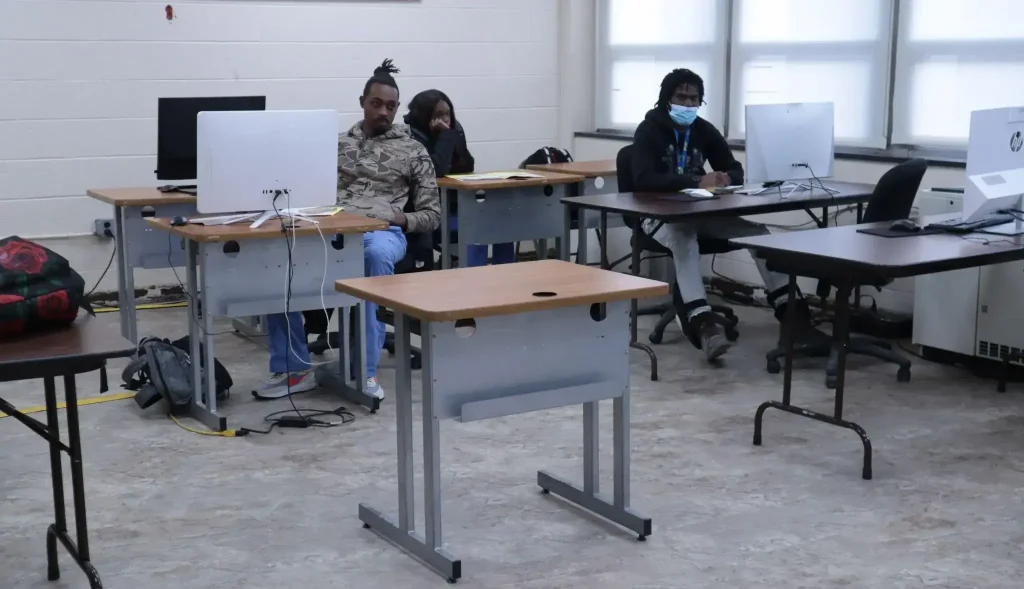
Below are the trades showing the strongest demand signals heading into 2026 and 2027, with a focus on fields you can train for locally. Each reflects current labor data and real regional hiring patterns.
HVAC is one of the fastest-growing skilled trades careers. The Bureau of Labor Statistics projects employment of heating, air conditioning, and refrigeration mechanics and installers to grow about 11% from 2025 to 2035, much faster than average, with roughly 40,600 openings each year and a median wage of about $61,010. Demand is driven by new construction, equipment replacement, and tighter energy-efficiency standards.
HVAC work blends mechanical, electrical, and diagnostic skills, and modern systems increasingly rely on smart controls and refrigerant regulations that require trained technicians. For students who like problem-solving and variety, HVAC training in Philadelphia is one of the most practical entries into the high-paying trades.
Welding remains a cornerstone trade. While national growth is modest, the field still generates roughly 45,000 openings a year, driven largely by retirements and by the nation’s need to repair bridges, pipelines, ships, and buildings. In the Philadelphia area, shipbuilding, fabrication, and infrastructure work keep skilled welders busy.
Welding also rewards specialization. Pipe welders and certified welders typically out-earn entry-level peers, and credentials from the American Welding Society are transferable across employers and states. For many students, welding technology training is the fastest way into a hands-on career with room to grow.
Plumbers, pipefitters, and steamfitters are projected to grow about 7% from 2025 to 2035, faster than average, with roughly 42,000 annual openings and a median wage near $63,800. These mechanical trades install and maintain the piping, steam, and fire-suppression systems that commercial buildings, hospitals, and plants depend on.
The work is technical and well-paid, and fire sprinkler fitting in particular is tied to strict safety codes that keep demand steady. Training that combines classroom theory with real lab time, like PTTI’s steam, sprinkler, and pipe fitting program, prepares students for a field where licensed, experienced workers are consistently in short supply.
Cars are not going away, and they are getting more complex. Automotive service technicians who can diagnose modern electronics, hybrid systems, and advanced driver-assistance features are in demand even as the overall field grows at a steadier pace. Replacement openings are substantial as experienced mechanics retire.
Today’s shops need technicians comfortable with computerized diagnostics, not just wrenches. That shift rewards students who train on current tools and systems. Hands-on training in automotive repair technology helps new technicians meet the expectations of dealerships and independent shops across the region.
American manufacturing is modernizing, and that is reshaping the skilled trades. As plants adopt robotics, programmable controls, and automated lines, they need technicians who can run, troubleshoot, and maintain that equipment. These roles sit at the intersection of mechanical skill and technology, and they are among the more future-proof skilled trades careers.
For students drawn to machines and problem-solving, manufacturing and automation training opens doors to industrial maintenance and production-technician roles that many employers find hard to fill.
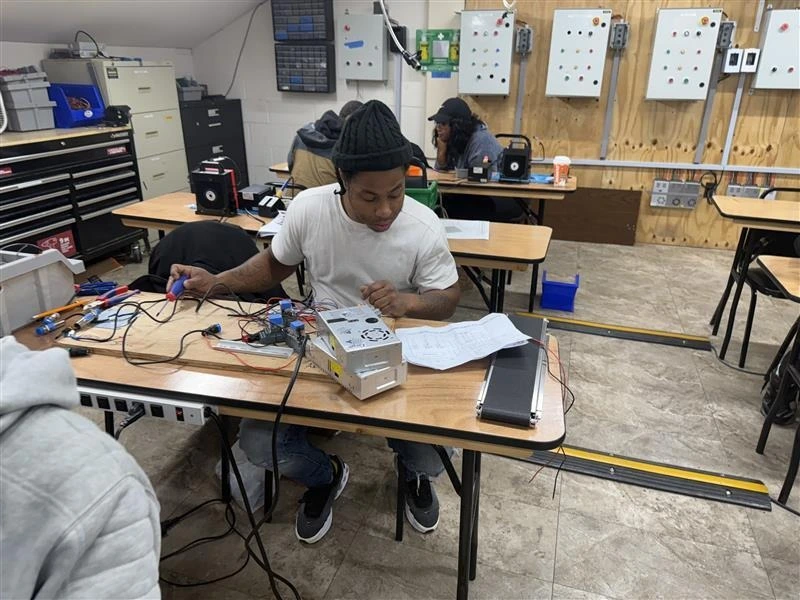
Not every in-demand trade is on a construction site. Sterile processing technicians clean, sterilize, and prepare the surgical instruments hospitals and outpatient centers rely on, and demand is rising alongside healthcare overall. It is a strong option for students who want a clean, climate-controlled environment and a role tied to patient safety.
Training is typically short, and the work offers a stable entry point into the medical field without years of schooling. A focused central processing and sterile services program prepares students for certification and entry-level hospital roles through hands-on training and externship experience.
Construction trades remain foundational to the region’s growth. Masonry, concrete, and framing workers build the structures everything else depends on, and skilled crews are in steady demand as commercial and residential projects move forward across Philadelphia and its surrounding counties.
These trades reward precision, physical capability, and job-site discipline. Students who want to build things they can see and point to often find masonry and framing training a direct route into construction careers.
Drywall is one of the most accessible building trades to enter, and finishers who do quality work stay busy. Every renovation and new build needs hanging, taping, and finishing, and skilled drywall workers are a reliable part of the construction pipeline. For students seeking a quick, practical start in the trades, it is a sensible first step.
| Trade | Demand Signal (2025–2035) | Typical Draw |
| HVAC technician | ~11% growth, ~40,600 openings/yr | Fast growth, strong pay |
| Welder | Modest growth, ~45,000 openings/yr | Retirements, infrastructure |
| Pipefitter / steamfitter | ~7% growth, ~42,000 openings/yr | High pay, steady codes-driven demand |
| Automotive technician | Steady growth, large replacement need | Rising vehicle complexity |
| Manufacturing & automation | Technology-driven demand | Future-focused, tech-blended |
| Sterile processing tech | Healthcare-driven growth | Short training, medical setting |
| Masonry / concrete / framing | Construction-driven demand | Foundational building work |
| Drywall finishing | Steady construction demand | Accessible entry point |
Figures reflect U.S. Bureau of Labor Statistics projections for 2025–2035; local conditions vary. Wages depend on experience, employer, certification, and overtime.
Among the common trades, electricians, pipefitters, and specialized welders tend to sit at the top for pay, with median wages in the low-to-mid $60,000s and experienced or certified workers earning well beyond that. HVAC and automotive technicians also reach strong earnings with experience and certifications.
It is worth being realistic: the highest-paying trades usually pay more because they demand specialized skill, certification, or hazardous or precise work. A pipe welder, an industrial electrician, or a licensed steamfitter earns a premium for exactly that reason. The encouraging news is that these are learnable skills. The path to the high-paying trades runs through training, certification, and on-the-job experience, not through a four-year degree.
Overtime matters too. Many skilled trades offer substantial overtime, which can push annual earnings well above base figures. And because credentials are portable, the earning power you build in a Philadelphia program travels with you across Pennsylvania, New Jersey, and Delaware.
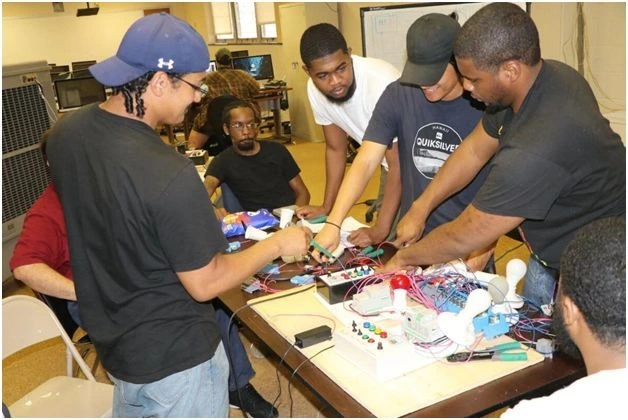
Most focused trade programs take several months to about a year, far shorter than a four-year degree, and typically cost a fraction of college tuition. Exact timelines and costs vary by trade and school, but the appeal of the trades is real: you train, you certify, and you start earning quickly.
Because skilled trades are performance-based, training concentrates on the specific abilities employers test for rather than on unrelated coursework. That focus is why trade programs in Philadelphia can move a complete beginner to job-ready in a single year. Many students also value that a trade school in Philadelphia often offers multiple start dates and schedules designed around working adults.
When comparing options, look past the sticker price to total value: program length, quality of hands-on training, equipment, certification preparation, and the support a school provides as you move toward employment. Those factors determine whether your investment actually leads to a career in the high-paying trades rather than a certificate that sits unused.
For many students, the honest comparison between a trade school and a four-year college comes down to time, cost, and outcome. Both paths have value, but they serve different goals.
| Factor | Trade School | Four-Year College |
| Time to start earning | Months to about a year | Around four years |
| Cost | Lower, focused tuition | Often significant debt |
| Training | Hands-on, job-specific | Broader, more theoretical |
| Demand | Strong across skilled trades | Varies widely by major |
| Credential | Industry certifications | Academic degree |
If your goal is a stable, well-paid career without years of debt, the trades are not a fallback; they are a smart first choice. That is especially true given how many skilled trades careers are growing while demanding exactly the kind of practical skill the best trade programs in Philadelphia build.
The Philadelphia region is an unusually good market for the trades, and the best trade programs in Philadelphia are built around that local demand. The city combines active construction, a maritime and manufacturing base, a strong union presence, and a dense network of hospitals that need sterile processing and mechanical technicians. That diversity means graduates are not tied to one employer or one industry.
Demand also reaches well beyond the city limits. Graduates find work across neighborhoods from North and South Philadelphia to West Philadelphia and Mantua, and throughout nearby communities in Pennsylvania and South Jersey, including Camden, Cherry Hill, Darby, Lansdowne, and Drexel Hill. Training centrally at a trade school in Philadelphia positions students to take the best opportunity in any direction, which is a major advantage of pursuing the in-demand skilled trades here rather than somewhere with a narrower job market.
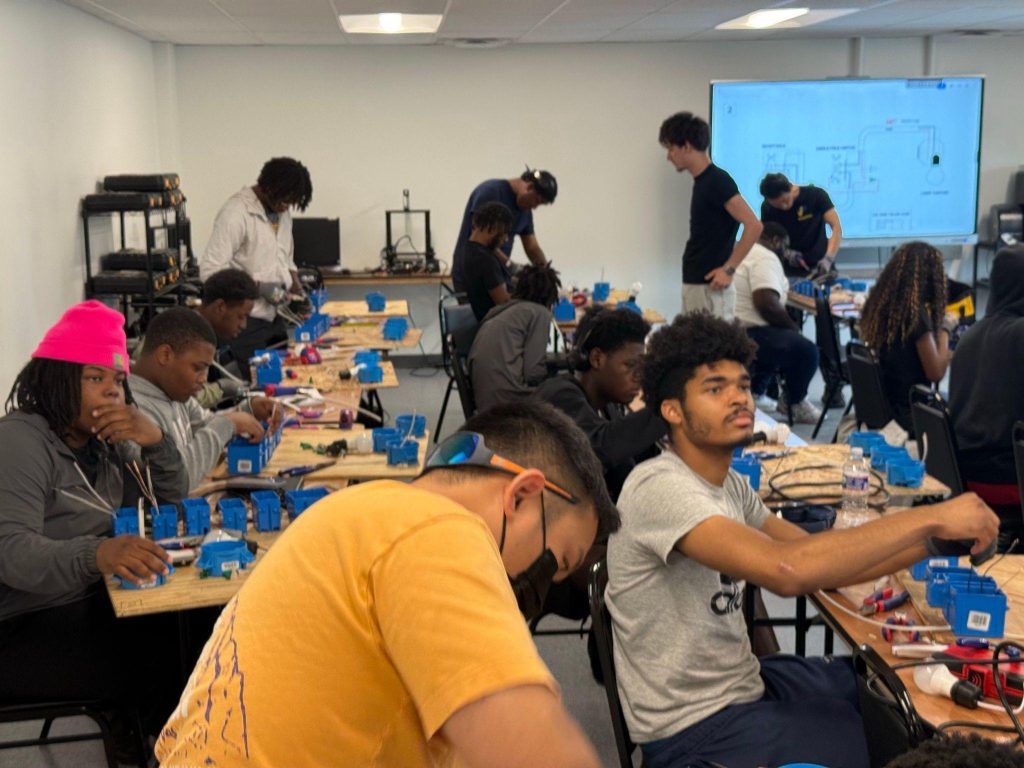
With so many in-demand skilled trades to consider, the right choice comes down to fit. Ask yourself a few honest questions:
There is no single best trade among the skilled trades careers available, only the best trade for you. The strongest move is to tour a trade school in Philadelphia, talk to instructors, and see the hands-on training environment before you commit. Comparing a few trade programs in Philadelphia in person tells you far more than any brochure, and a good school will welcome those questions rather than rush you to enroll.
The skilled trades are no longer a backup plan; they are one of the most dependable ways to build a career in 2026 and 2027. With retirements accelerating and the region’s construction, manufacturing, and healthcare sectors all hiring, the most in-demand skilled trades offer short training, strong pay, and real stability, without the debt of a four-year degree. For students near the city, a hands-on trade school in Philadelphia turns that demand into a genuine career head start. The hardest part is simply choosing a direction and starting.
If you are ready to explore the in-demand skilled trades and see where you fit, schedule a campus tour or contact PTTI admissions to talk through your options and find the program that matches your goals.
HVAC, electrical, pipefitting and steamfitting, welding, automotive service, manufacturing and automation, and sterile processing are among the most in-demand skilled trades heading into 2026 and 2027. Demand is driven by retirements, infrastructure needs, construction, and modern manufacturing.
Specialized and licensed trades tend to pay the most, including industrial electricians, pipe welders, and steamfitters, with median wages in the low-to-mid $60,000s and higher for experienced or certified workers. Overtime and specialization raise earnings further across the high-paying trades.
Most focused trade programs take several months to about a year, far shorter than a four-year degree. Because the trades are performance-based, training concentrates on the specific, job-ready skills employers need, which is why trade programs in Philadelphia can prepare beginners quickly.
Yes. Skilled trades are built around demonstrated ability and certifications, not academic degrees. A high school diploma or GED plus quality hands-on training is the standard entry point into most skilled trades careers, and many of these roles pay well.
For students who want to start earning quickly without heavy debt, a trade school in Philadelphia is often the smarter path. The trades offer strong demand, shorter training, and clear certification routes, while college suits careers that require a four-year degree.