
Want to explore what an HVAC training program includes in its curriculum? The complete HVAC training courses that actually take you somewhere? This trade builds skill in stages, starting with refrigeration basics and working up to advanced commercial systems. However, most people don’t realize how much ground this training actually covers. Below, we walk through the full course progression, step by step, so you know exactly what to expect from day one to graduation.
HVAC systems typically vary from a simple home AC unit to complex commercial refrigeration setups in warehouses. Managing heating and ventilation systems in a big store to handling HVAC unit maintenance of a single townhome. Each HVAC skill level builds directly on the last, so jumping around without a foundation rarely works.
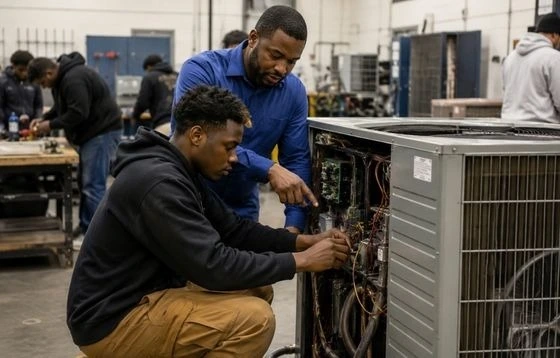
Here’s why this structured approach matters:
Therefore, complete HVAC training courses are designed to build technicians methodically, not randomly.
HVAC Training starts with the basics: careers, safety, tools, and customer service. The course covers basic math and physics theories of heating and cooling. How to install digital thermostats . Moreover, this course also introduces resume and interview skills early, so professional readiness builds alongside technical knowledge.
This HVAC course also covers the core principles behind how cooling systems actually work. Therefore, everything that follows, from home refrigerators to commercial systems, builds directly on these fundamentals. The basic theories are also explained alongside equipment study.
Electricity in HVAC Systems is the main topic taught in the curriculum.HVAC systems rely heavily on electrical components. Additionally, this course covers wiring, circuits, and electrical troubleshooting, skills that apply across nearly every system students will work on later.
Students apply refrigeration fundamentals to residential cooling systems. Fisrt they are taught basic refrigeration configurations installed at commercial and residential buildings. This hands-on stage also builds real troubleshooting confidence before students move into more complex systems.
course also covers installation and repair techniques for both residential and light commercial cooling systems. The hvac units of storage houses are inspected and maintained, and their configuration is checked by the HVAC technician. HVAC mentors also teach this process. Students then see how refrigeration principles scale up in complexity.
Beyond temperature control, HVAC technicians also manage air quality and ventilation. ALong with this, the course also covers indoor air systems that affect comfort and health in any building.
Cooling isn’t the whole picture. This course covers furnace and boiler repair, rounding out a technician’s ability to handle year-round system needs.
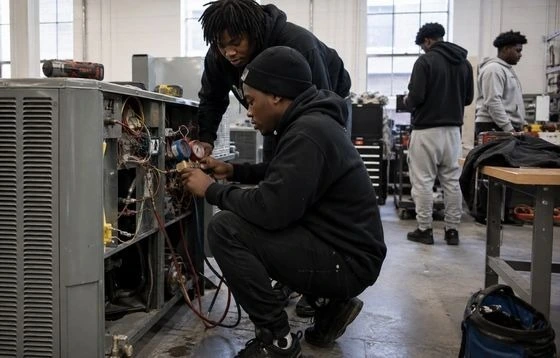
This course shifts focus toward efficiency-focused system design. Therefore, students begin thinking beyond basic repair, toward optimizing how systems perform over time.
Students transition into commercial-scale systems, depending on how gradually they adapt these to basic installation techniques, starting with foundational commercial refrigeration principles. This stage also marks a real shift in complexity and scale.
Building on the basics, this course covers hands-on installation techniques for commercial refrigeration equipment.
The final technical course covers commercial system design, the most advanced stage of HVAC training. As a result, students finish training capable of handling complex, large-scale refrigeration projects.
This course rounds out training with resume building, interview preparation, and workplace readiness coursework.
Externship is important during the training program. As it make the student well aware of the tools and equipments. Along with how the system works. They also gain real job experience at the work site. They also learn the techniques and procedures for troubleshooting issues and faults. Finally, students apply everything they’ve learned in a real, hands-on work environment before graduation.
HVAC training program is all about about 30% classroom instruction, 45% hands-on lab work, and 25% real-world externship experience. That’s roughly how balanced training time looks across this complete HVAC training course sequence.
| Training Stage | Focus Area | Skill Level |
| Foundation | Safety, refrigeration basics, electrical fundamentals | Entry-level |
| Application | Residential systems, air quality, heating | Intermediate |
| Specialization | Energy management, commercial refrigeration | Advanced |
| Employment Prep | Job application skills, externship | Career-ready |
Overall, this progression takes students from zero HVAC knowledge to commercial-level competency.
Strong HVAC training programs include certification directly within the coursework, at no extra cost. These certifications also become part of graduates’ resumes before they even start job hunting.
The most valuable Certifications in skilled trade education typically include:
Moreover, these certifications assure owners that technicians are professionally aware of safety procedures and equipment. These certifications also set the hiring level. Chances of getting hired are increased. They give graduates who are ready to join industry the real, verifiable proof of the skills built throughout the progression and strength.
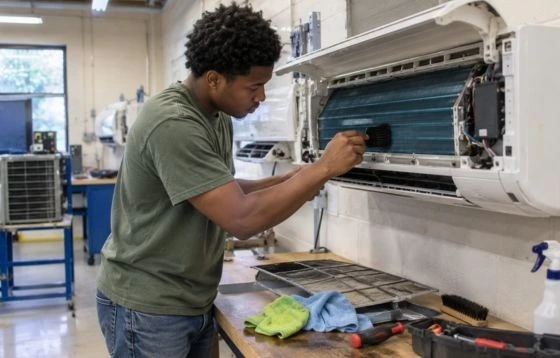
Moving from refrigeration basics to commercial systems enhances technical skills and opens doors to higher-paying specialization. This includes checking the vent, inspecting the system, and carrying out maintenance activities. Therefore, technicians who complete the full progression, rather than stopping at basic residential repair, tend to access stronger long-term pay.
Here’s how this progression connects to career growth:
According to the U.S. Bureau of Labor Statistics, employment for heating, air conditioning, and refrigeration mechanics is projected to grow steadily over the next decade, driven by construction activity and equipment replacement needs nationwide.
Therefore, completing the full training progression positions graduates well for this ongoing demand.
Philadelphia Technician Training Institute (PTTI) offers the full HVAC course sequence, from Introduction to HVAC through Commercial Refrigeration Systems 3. The program also includes free EPA Section 608 certification and free OSHA 30 certification, both built directly into the coursework.
Here’s how enrollment works:
Finally, PTTI reports a placement rate near 92%, meaning most graduates actually land jobs in the field.
The HVAC curriculum is designed to offer students the basic knowledge and practical experience they need. The Complete HVAC training courses take students on a real journey, from refrigeration basics to commercial system design. The training is not just limited till basics and experience . Students also gain real-world job externship experience. However, this progression only works when each stage builds properly on the one before it. Between structured coursework, hands-on labs, and included certifications, this path gives students genuine, well-rounded technical competency. Overall, finishing the full progression sets graduates up for stronger specialization and long-term career growth.
Get Ready to start your complete HVAC training journey? Contact PTTI career service team for more information like Curriculam and financial aid. at 215-381-9403 or info@ptt.edu to speak with an advisor.
No. Thats not needed. You can Complete HVAC training courses start with refrigeration basics, requiring no prior experience.
This depends on theHVAC program’s pacing, but commercial coursework typically comes toward the end of training.
Yes. Programs like PTTI’s include EPA Section 608 and OSHA 30 certification at no extra cost.
Yes. Technicians specializing in commercial systems often out-earn residential-only technicians.
Yes. PTTI accepts FAFSA applications under school code 042213.
Read More: