
Here’s something most people are unaware of that plays a very important role in skill development. Real learning is not mugging up a few theories and implementing them. It is more about how your brain works and develops problems. That is problem-solving with focus and understanding. Therefore, the best Trade school doesn’t just teach you a skill. It teaches the way your brain works. Specifically, a problem-solving attitude does not focus on theory; rather, it emphasizes mental processes.
How trade school builds analytical thinking and spatial reasoning is one of the most underappreciated things about vocational education. While everyone’s busy debating college vs. trade school, something quiet and powerful is happening inside PTTI’s programs in Philadelphia. That is building cognitive learning among high scholars rather than just getting them theory-ready. Theory is important for passing exams, and it’s better to know a few key terms. But knowing how to implement those at real job sites is way more important. Students aren’t just learning to weld, wire, or repair engines. They’re sharpening the exact cognitive skills that employers pay a premium for.
Explore PTTI’s Trade Programs in Philadelphia →
In this guide, you will understand how trade school helps students build analytical thinking and spatial reasoning, which rewire your brain and provide problem-solving skills beyond existing knowledge.
Analytical thinking is the ability to break a problem down, identify its causes, and solve it step by step. It’s what a sterile processing technician uses when they trace contamination back to a single instrument. The step-by-step guide to using tools; therefore, this analytical thinking plays an important role in surgical treatment . It’s what a welder uses when a joint isn’t fusing right, and they have to figure out why.
Spatial reasoning is the ability to see how things fit together in space. It’s what a pipefitter uses when reading a blueprint and imagining a 3D pipe system from a flat drawing. These readings are very important in understanding the pipeline 3D layout. These layouts are also used in the automotive and Manufacturing setups to understand vehicle features. It’s what a drywall installer uses to calculate how panels need to be cut and placed across a ceiling, with no wasted material.
When you’re in a trade school lab, you’re not reading about how to diagnose an engine misfire. You’re actually diagnosing it on a real engine, with real tools, with real consequences if you get it wrong. Your brain has to be fully present. There’s no skimming and moving on.
Training and workshop sessions using the tools and equipment used at the actual job site strengthen hands-on experience and improve mental agility.
The kind of skills that hands-on learning builds is something textbooks can never build; they can only summarize for you. Moreover, in skilled trades, the real job involves using tools that teach practical skills, because this field requires hands-on experience that will help your brain understand the process in the real world. cognitive muscle memory. Every time you solve a real problem under real conditions, your brain gets better at solving the next one. That’s not just trade knowledge. That’s mental sharpening that carries everywhere.
Think about what a pipefitter actually does. They figure out what happens if one measurement is off by a fraction of an inch.
That’s spatial reasoning at a professional level. Trade school is essentially a full-time workout in spatial reasoning. Whether you’re framing a wall, wiring an electrical panel, or assembling a sterile instrument tray, every task requires you to think spatially, constantly.
Here’s the thing about analytical thinking. You can’t learn it by listening to someone talk about it. You build it by solving real problems repeatedly, under pressure. Every trade teaches analytical thinking differently. But the pattern is the same across all of them.
In automotive repair, don’t just replace or repair car parts; you systematically diagnose every vehicle issue. the fuel injectors, the engine, and the compression. You rule out causes one by one until you find the root problem.
In sterile processing, an instrument arrives with visible contamination. You trace it back through the decontamination process, identify where the protocol broke down, and fix it before any surgical case is compromised.
Students are solving real-world challenges, creating muscle memory, building confidence, and developing problem-solving skills instead of memorizing. That’s problem-solving in the skilled trades in Philadelphia, and it looks like analytical thinking at a professional grade, built trade by trade, day by day.
This one doesn’t get talked about enough.
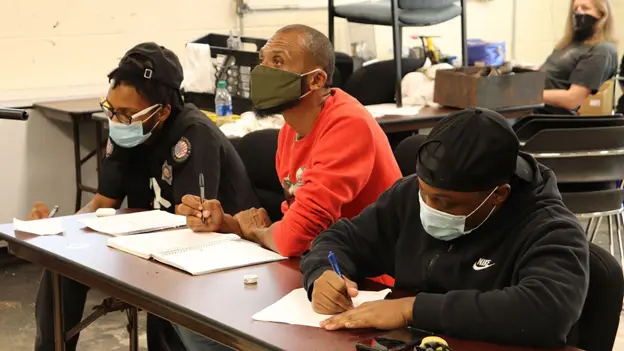
In a traditional school environment, students sit through lectures they may or may not connect with. Attention drifts. Phones come out. The brain disengages.
Confidence grows through practice, not just exams. Many learners struggle in lecture-heavy environments. Trade education flips that model. That daily demand for focus — real, sustained, task-driven concentration builds a level of mental discipline that carries into every part of your life. Students who struggle to sit still in a classroom often thrive in a trade environment because the work itself keeps them locked in.
This is one of the most important, yet least-discussed, cognitive skills in vocational training. And it’s something PTTI builds into every single program, every single day.
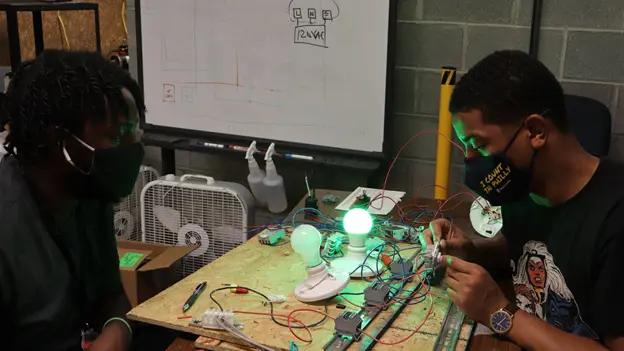
PTTI — the Philadelphia Technician Training Institute — builds all of these cognitive skills directly into its programs. And it does it through the way it teaches, not just what it teaches.
Cognitive learning in trade schools is quietly building one of the best talent ecosystems in the country for the future — focusing not just on what young people learn, but on how they learn and who they become along the way. Here’s how PTTI trade programs’ cognitive development shows up in practice across different programs:
| PTTI Program | Cognitive Skill Being Built |
| Welding Technology | Spatial reasoning, hand-eye coordination, precision focus |
| HVAC Technology | Analytical diagnosis, systems thinking, problem sequencing |
| Automotive Technology | Analytical troubleshooting, pattern recognition, logical elimination |
| Sterile Processing | Attention to detail, protocol analysis, contamination tracing |
| Pipefitting and Steam | Blueprint spatial reasoning, measurement accuracy, 3D visualization |
| Drywall Framing | Spatial layout, precision cutting, structural problem-solving |
Every program is different. But every program trains the same underlying cognitive engine: think clearly, work precisely, solve problems under pressure.
Additionally, Here’s the part that most people miss when they think about trade school. The analytical thinking, spatial reasoning, and focus you build in a trade program don’t stay in the shop. They go everywhere with you.
Students may begin training focused on employment. They often leave with discipline, problem-solving skills, and pride in a sense of craftsmanship. Those are life skills. And they’re the kind of skills that no job can take from you, even if the industry changes, the technology evolves, or you eventually start your own business.
The cognitive development that happens inside PTTI trade programs is one of the most overlooked benefits of vocational education. And it’s real. It’s measurable. And it directly affects your earning power, your career growth, and your ability to lead.

Let’s bring this all home. How trade school builds analytical thinking and spatial reasoning isn’t a theory. It’s what happens every single day inside PTTI’s programs — in every lab session, every blueprint exercise, every diagnostic problem, every precision task.
You don’t go to PTTI just to learn a trade. You will become sharper, more focused, and better able to solve complex problems in real-world conditions. Those cognitive skills in vocational training are what separate good workers from great ones and great ones from those who get promoted and eventually run the shop. Philadelphia needs people who can do this work. PTTI builds people who can do it well.
Q1. How does trade school build analytical thinking in students?
Trade school programs builds analytical thinking through actual job site issues by solving problems, not textbook memorization. Every day, students diagnose real issues, causes and apply solutions under actual conditions.
Q2. What is spatial reasoning and why does it matter in trade careers?
Spatial reasoning is the ability to visualize and mentally manipulate objects, layouts, and measurements in three-dimensional space. In trade careers, it’s essential. Pipefitters read 2D blueprints and construct 3D pipe systems. .
Q3. Does PTTI specifically focus on cognitive skill development in its programs?
Yes, though not always by that name. PTTI’s programs are built around 80% hands-on learning, which naturally develops analytical thinking, spatial reasoning, focus, and problem-solving. The curriculum requires students to engage mentally and physically with every task, building the cognitive discipline that employers value. Q4. Can someone who struggled in traditional school still succeed at PTTI?
Absolutely — and many of PTTI’s most successful graduates are people who struggled in lecture-heavy classroom environments. Trade school is built differently. The hands-on format engages students who learn by doing rather than listening.Q5. How do I get started at PTTI in Philadelphia?
All you need is a high school diploma or GED to enroll. PTTI accepts FAFSA (school code: 042213), and federal grants, loans, institutional financing, and veterans’ education benefits are available for qualifying students.
Read More Blogs :