
Choosing between two closely related trades can feel confusing, especially when both involve pipes, tools, and steady paychecks. If you are weighing plumber vs pipefitter as a career move, you are asking a smart question. Both trades are hands-on, in demand, and open to people without a four-year degree. Still, they lead to different work environments, licensing paths, and daily tasks. This guide breaks down the real pros and cons of each, so you can decide which fits your goals and how to start a plumbing career or a pipefitting career right here in Philadelphia.
A plumber installs and repairs water, drainage, and gas systems in homes and businesses, while a pipefitter installs and maintains high-pressure piping that moves steam, chemicals, or gases in industrial settings. Both trades join and repair pipe, but plumbers focus on everyday water systems and pipefitters focus on mechanical and industrial systems.
The overlap is real, which is why people mix the two up. Both read blueprints, cut and join pipe, follow strict codes, and often weld. The difference shows up in where they work and what flows through the pipe. If you want a deeper breakdown, PTTI explains how pipefitting differs from plumbing in plain terms.
Plumbers keep water moving where people live and work. They install sinks, toilets, water heaters, and drain lines, then track down leaks and clogs when systems fail. Much of the work is residential and commercial, so plumbers travel between homes, offices, and job sites. Because water emergencies do not wait, plumbers are often on call during evenings and weekends. A plumbing career rewards people who enjoy problem-solving, customer interaction, and variety from one job to the next.
Pipefitters work with the piping that powers industry. They lay out, assemble, and maintain systems that carry steam, chemicals, gases, and coolant through power plants, refineries, factories, and large commercial buildings. This work leans industrial and mechanical, and it frequently involves welding, high-pressure systems, and precise blueprint reading. A pipefitting career suits people who like technical challenges, larger-scale projects, and working as part of a crew on plant or construction sites.

Every trade comes with trade-offs. Here is an honest look at plumbing.
Independence is one of plumbing’s biggest draws. Once you earn a master plumber license, you can pull permits, manage jobs, and even build a company of your own. That autonomy is a major reason people pick plumbing over other skilled trades.
Pipefitting appeals to people drawn to industrial work and technical systems.
A pipefitting career can pay very well once you specialize. Pipefitters who master welding, high-pressure systems, and industrial blueprints become hard to replace, which supports strong long-term wages across the skilled trades.

When you compare plumber vs pipefitter pay, the two trades sit close together, and both land well above the national median for jobs that skip a bachelor’s degree. The U.S. Bureau of Labor Statistics reports these roles as one group, with a median wage of about $63,800 and the top 10% earning more than $105,000 a year.
In the Philadelphia area, plumbers earn competitive wages, and experienced, licensed professionals earn more. A pipefitter salary often climbs higher in industrial and union settings, where overtime during shutdowns adds a lot to annual pay. Put simply, a strong pipefitter salary usually comes from specialization and overtime, while plumbing income tends to grow fastest through licensing and business ownership. You can dig into the numbers in PTTI’s guide to how much plumbers make.
| Factor | Plumber | Pipefitter |
| Typical setting | Homes, businesses | Plants, factories, refineries |
| Median pay (grouped, BLS) | ~$63,800 | ~$63,800 |
| Top earners | $100k+ (master, business owner) | $100k+ (industrial, union overtime) |
| Main pay-growth driver | Licensing, self-employment | Specialization, overtime |
| Philadelphia demand | Steady residential/commercial | Strong industrial/mechanical |
A realistic pipefitter salary in the Philadelphia region reflects both experience and how much overtime a worker takes on. Neither trade wins on pay alone, so the better question is which work environment fits you.
Both trades offer stability. Nationally, the BLS projects employment of plumbers, pipefitters, and steamfitters to grow about 7% over the coming decade, faster than the average for all occupations, with roughly 42,000 openings each year. Many of those openings come from retirements, since more than one in five workers in the field is over 55.
Philadelphia and the wider Pennsylvania market add local strength. Aging water and gas infrastructure keeps plumbers busy, while the region’s manufacturing, energy, healthcare, and commercial construction sectors drive pipefitting demand. For anyone entering the skilled trades near Philadelphia, that mix means real hiring opportunities across Camden, Cherry Hill, Drexel Hill, Lansdowne, and the surrounding counties.

Here is where plumber vs pipefitter paths diverge the most. One trade is licensed at the local level; the other usually is not.
Pennsylvania licenses plumbers at the local level rather than statewide. In Philadelphia, the city’s Department of Licenses and Inspections issues plumbing licenses in three tiers: apprentice, journeyman, and master. You start by training and working under a licensed plumber, then test for journeyman status, and eventually qualify for a master license with enough verified experience. Good pipefitting training or plumbing coursework helps you enter as an apprentice who is ready to learn. For a full walkthrough, see PTTI’s guide on how to become a certified plumber in Pennsylvania.
Pennsylvania does not require a statewide pipefitter license, so many pipefitters enter through apprenticeships or trade-school training paired with on-the-job experience. Strong pipefitting training builds the welding, layout, and safety skills that industrial employers and unions expect from day one. From there, pipefitters often pursue union membership or specialized certifications to raise their pipefitter salary over time. PTTI’s pipefitter career overview maps out the roles and steps in detail.
In Skilled Trades Hands-on practice matters in both paths. Reading blueprints, joining pipe safely, and understanding pressure systems are skills you learn best in a real lab, not from videos. That is why practical pipefitting training with industry-standard equipment gives new workers a genuine head start in the skilled trades.
So, plumber vs pipefitter, which one actually wins? The honest answer is that it depends on the life and work you want. Choose plumbing if you value independence, customer variety, and a clear route to running your own business. Choose pipefitting if you are drawn to industrial settings, technical systems, and high overtime earning potential.
Ask yourself a few questions. Do you prefer homes and small job sites, or large plants and construction projects? Do you want to own a business someday, or specialize deeply in one technical area? Would you rather build a plumbing career with steady residential demand, or a pipefitting career with industrial scale? Your answers point you toward the right trade.
Many students do not decide until they try the work. A strong pipefitting training program lets you build core piping skills first, then choose a lane. Both trades belong to the same family of skilled trades, so early training often applies in either direction.
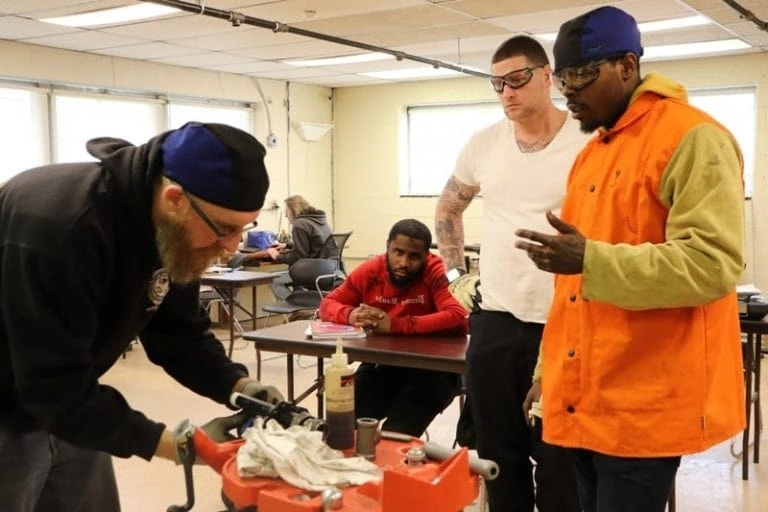
You do not have to settle the plumber vs pipefitter debate alone. At Philadelphia Technician Training Institute (PTTI), the Steam, Sprinkler and Pipe Fitting program gives you hands-on experience with real equipment, blueprint reading, and safety training that prepare you for either a plumbing career or a pipefitting career. Graduates can apply for an apprentice plumber’s license and step into the region’s growing skilled trades workforce. For students exploring pipefitting training in Philadelphia, an applied, employer-aligned program shortens the distance between the classroom and a real paycheck.
Both trades reward practical people who like solving problems with their hands. When you compare plumber vs pipefitter, plumbing leans toward homes, licensing, and business ownership, while pipefitting leans toward industry, specialization, and overtime pay. Neither is objectively better; the winner is the one that matches your goals. If you want a fast, hands-on route into a stable plumbing career or a rewarding pipefitting career, the right pipefitting training program in Philadelphia is the smartest first step. Explore your options, ask questions, and choose the path that fits the future you want in the skilled trades.
Explore PTTI’s Steam, Sprinkler and Pipe Fitting Technician Program and take the first hands-on step toward a plumbing or pipefitting career in Philadelphia.
Neither trade is universally better. A plumbing career offers independence and business ownership, while a pipefitting career offers industrial work and strong overtime pay. The right choice depends on whether you prefer residential variety or industrial specialization.
In the plumber vs pipefitter pay comparison, the two are close. The BLS reports a median around $63,800 for both roles. A pipefitter salary can climb higher with industrial overtime, while master plumbers grow income through licensing and self-employment.
Entry-level training can take under a year, followed by apprenticeship hours. Full plumber licensing, or journey-level pipefitting experience, usually takes several years of supervised, paid work.
Pennsylvania does not require a statewide pipefitter license. Many pipefitters enter through apprenticeships or pipefitting training plus on-the-job experience, and some pursue union or specialty certifications.
Both are in demand. Plumbers benefit from aging infrastructure and steady residential work, while pipefitters benefit from the region’s manufacturing, energy, and commercial construction sectors within the skilled trades.
Yes. Many core skills overlap, so one program can prepare you for a plumbing career or a pipefitting career. Starting with shared piping fundamentals lets you choose a specialization later.
Beginning pipefitters earn less than experienced journeymen, but pay rises quickly with skill and overtime. A strong pipefitter salary usually reflects specialization, certifications, and industrial or union work.