
Wondering about the best and worst states for concrete technicians? Location can make or break your paycheck in this trade. Some states pay concrete technicians well over $80,000 a year, while others barely clear entry-level averages. However, most workers never compare these numbers before deciding where to build their career. Below, we break down where pay stands out, where it falls short, and how to get started in this trade.
Concrete technician pay in Philadelphia varies by shift and is based on cost of living, construction demand, and how much infrastructure and commercial building happens in a state. Union presence and project type also play a major role in shaping wages.
Here’s why location matters so much:
All this helps in selecting the best skilled trade training program. Therefore, picking the right state can significantly change your earning potential in this trade.
Before Analyzing the concrete technician salary for individual states, here’s a general national snapshot:
| Entry-Level Hourly | $17 – $23 |
| Mid-Career Hourly | $26 – $34 |
| Experienced Hourly | $36 – $48+ |
| National Annual Average | $52,000 – $72,000 |
Overall, experienced technicians in the right state can earn well above that national average.
| Illinois | $41 – $54 | $85,000 – $112,000 |
| New York | $39 – $52 | $81,000 – $108,000 |
| California | $38 – $50 | $79,000 – $104,000 |
| Washington | $33 – $43 | $69,000 – $89,000 |
| New Jersey | $32 – $42 | $67,000 – $87,000 |
| Massachusetts | $31 – $40 | $64,000 – $83,000 |
Moreover, these states benefit from heavy infrastructure investment and strong union presence, both of which push pay upward.
The listed states are the worst states for concrete technicians. Due to lower population . Not every state offers strong pay in the skilled trade. Therefore, it’s worth knowing where wages tend to lag before relocating for work. The lifestyle factor in every state affects salaries, so income can fluctuate regardless of cost of living.
| Mississippi | $14 – $18 | $29,000 – $37,000 |
| West Virginia | $15 – $19 | $31,000 – $40,000 |
| Arkansas | $15 – $19 | $31,000 – $40,000 |
Additionally, these states typically have lower construction volume, weaker union presence, and a lower overall cost of living, which together keep wages down. Because of lower population, demand is lower,r, which leads to lower income.
Pennsylvania sits in a solid-growth tier, offering steady demand without reaching the highest national pay tiers. These states have opportunities for concrete technicians, especially in Philadelphia. Th e rise in infrastructure this states require concrete technicians.
| Pennsylvania | $27 – $35 | $56,000 – $73,000 |
As a result, Pennsylvania remains a strong entry point, with Philadelphia’s ongoing construction and infrastructure work keeping demand for concrete technicians steady.
The Entry-level concrete technicians earn near $20/hour, if a technican is in mid-career technicians around $30/hour, and experienced technicians push past $42/hour. Working hours and wages also matter. That steady climb shows why staying in the trade pays off over time, regardless of which state you start in.
| 0–2 Years | $17 – $23 |
| 3–7 Years | $26 – $34 |
| 8+ Years | $36 – $48+ |
Overall, in the skilled trade industry, experience narrows the gap between high- and low-paying states, though location still matters significantly. Along with location, skills and experience also matter in getting good pay.
Several consistent factors explain why some states pay far more than others:
Additionally, technicians willing to relocate or travel for infrastructure projects often see the biggest pay jumps.
The concrete technician job outlook in the United States varies by location. According to the U.S. Bureau of Labor Statistics, the official agency that tracks employment for cement masons and concrete finishers, the field is projected to grow steadily, driven by ongoing construction and infrastructure investment nationwide. Developing infrastructure demands plenty of hard-working workers.
Therefore, even in lower-paying states, demand for trained concrete technicians remains fairly consistent, even if wages lag behind higher-cost regions.
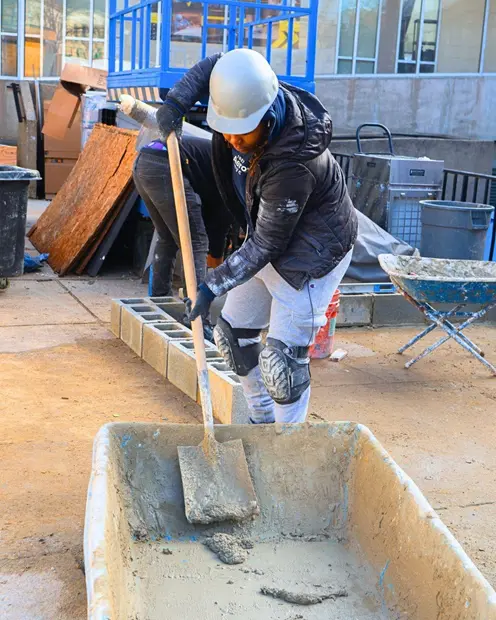
Getting into this trade doesn’t require years of school. Here’s the basic process:
Philadelphia Technician Training Institute (PTTI) offers a Concreting, Masonry, and Framing program that runs for 26 weeks and 900 hours total. This includes 200 hours of lecture, 500 hours of hands-on shop training, and 200 hours of real externship experience. The program also includes free OSHA 30 certification and a diploma upon completion.
Here’s how enrollment works:
But before enrolling, you must ensure placement assistance, which is above 90 percent at PTTI. Before touching the institutes. Also, once you enroll, you will be guided towards better career opportunities. With experienced mentors . Concrete training requires strong physical stamina and an urge to work outdoors at construction sites.
The best and worst states for concrete technicians reflect how demand for this skilled trade varies across the United States. Population also determines the worst and best states. The number of developing jobs varies. However, the trade itself remains stable nationwide, with steady demand even in lower-paying regions. Overall, selecting the right concrete training program sets technicians up for stronger, more predictable earning potential over time.
Ready to start your concrete technician career with PTTI ? Contact us at 215-381-9403 or info@ptt.edu to speak with an advisor.
Illinois, New York, and California currently offer the highest pay ranges for concrete technicians.
Mississippi, West Virginia, and Arkansas currently rank among the lowest-paying states.
Yes, it works, though location still plays a significant role even for experienced technicians.
No. Most positions require trade training rather than a four-year degree.
Yes. PTTI accepts FAFSA applications under school code 042213.
Read More