
Both careers put you inside the surgical world without a four-year degree, yet they are not the same job, and choosing between them shapes your training, your paycheck, and your day-to-day work for years. If you are weighing sterile processing vs surgical technologist, this guide breaks down the real differences in duties, pay, training time, certifications, and Philadelphia job demand so you can decide with clear eyes. It is written for high school graduates, career changers, veterans, and adult learners who want a stable healthcare role fast.
Here is the short version before we go deep: a sterile processing technician cleans, inspects, sterilizes, and assembles the surgical instruments that make every operation possible, working behind the scenes in the sterile processing department. A surgical technologist works in the operating room itself, setting up the sterile field and handing instruments to the surgeon during procedures. One role is faster to enter; the other pays more but takes longer to train for. The rest of this article helps you figure out which trade-off fits your life.
| Factor | Sterile Processing Technician | Surgical Technologist |
| Main workplace | Sterile processing department (behind the scenes) | Operating room (at the surgical table) |
| Core job | Clean, sterilize, inspect, assemble instruments | Set up sterile field, pass instruments to surgeon |
| Typical training time | About 6 months to 2 years | About 12 to 24 months (accredited program) |
| Common credential | CRCST (HSPA) or CSPDT (CBSPD) | CST (NBSTSA) |
| National median pay | ~$47,700/year (BLS, 2025) | ~$60,000–$64,650/year (BLS) |
| Job growth (2024–2034) | ~10% (much faster than average) | ~5–7% (faster than average) |
| Patient contact | Minimal | Direct, in the OR |
A sterile processing technician makes surgery safe by making sure every instrument that touches a patient is clean and sterile. The Bureau of Labor Statistics tracks this role under “medical equipment preparers,” and the work happens in the sterile processing department (SPD), often called central sterile or central processing.
The daily workflow usually moves through clear stages. First, used instruments arrive in the decontamination area, where the technician cleans and disinfects them. Next comes inspection, where each tool is checked for damage and function. Then instruments are assembled into trays according to precise set lists, wrapped, and run through sterilizers such as steam autoclaves. Finally, sterile sets are stored and delivered to the operating room on schedule.
This role rewards people who are detail-oriented, organized, and comfortable with process and documentation. A single missed step can delay a surgery, so accuracy matters more than speed. Because most of the work is behind the scenes, a sterile processing technician has minimal direct patient contact, which appeals to people who want a healthcare career without bedside care.
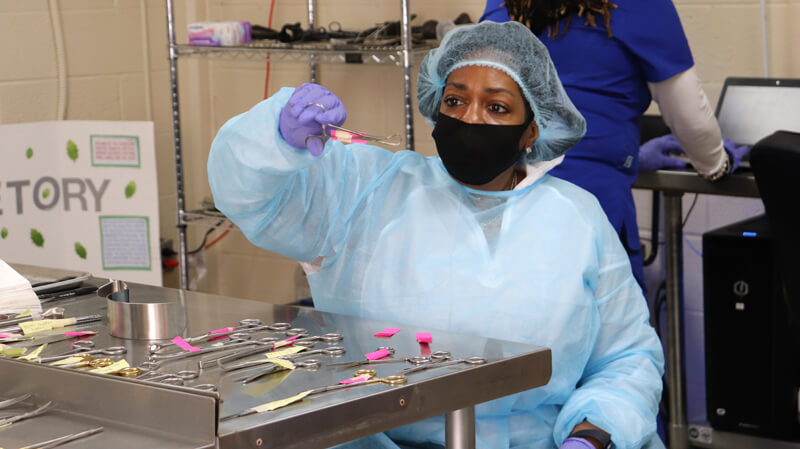
A surgical technologist, sometimes called a surgical tech or operating room technician, works inside the operating room as part of the surgical team. Before a procedure, the surgical tech prepares the OR, arranges sterile equipment, and helps set up the sterile field. During surgery, the surgical technologist passes instruments and supplies to the surgeon, anticipates needs, and helps maintain a sterile environment.
The pace is different from sterile processing. A surgical tech is in the room while the operation happens, which means direct involvement in patient care, real-time pressure, and close teamwork with surgeons and nurses. This role suits people who want to be at the center of the action and who stay calm under stress.
The trade-off is a longer, more structured education path. Surgical technology typically requires completing an accredited program before you can sit for certification, which is why it takes more time to enter than sterile processing.
The difference between a sterile processing technician and a surgical technologist comes down to location and timing: the sterile processing technician prepares and sterilizes instruments before and after surgery in the SPD, while the surgical technologist uses those instruments during surgery in the operating room. Both protect patients from infection, but only the surgical tech is in the room when the incision is made.
Understanding that distinction is the foundation for every other decision, from how long you will train to how much you will earn.
Pay is often the deciding factor, so let’s look at the numbers honestly. Nationally, a sterile processing technician earns a median of about $47,700 per year, roughly $22.93 an hour, according to 2025 federal wage data, with top earners approaching $70,000. Surgical technologists earn more, with a national median in the range of $60,000 to $64,650 per year and top earners above $90,000.
In the Philadelphia market, both roles tend to pay above the national median because of the region’s dense hospital network and strong demand. Reported figures for a Philadelphia sterile processing technician salary commonly land in the low-to-mid $50,000s, while experienced and certified technicians reach higher. Surgical technologists in the Philadelphia area frequently report totals from the mid-$60,000s upward at major health systems.
| Role | National Median | Philadelphia Range (reported) |
| Sterile Processing Technician | ~$47,700 | ~$50,000–$58,000 |
| Surgical Technologist | ~$60,000–$64,650 | ~$64,000–$76,000+ |
A few honest caveats. These are estimates that vary by employer, shift, certification, and experience. Sterile processing runs around the clock, so evening, night, and weekend shift differentials can raise take-home pay meaningfully. Certification also moves the needle: certified technicians typically out-earn uncertified peers in both fields. So while the surgical tech role carries a higher median, the sterile processing technician salary climbs with credentials, specialties, and shift work, and the path to that first paycheck is shorter.
Both careers are growing, but sterile processing is growing faster. The Bureau of Labor Statistics projects employment of medical equipment preparers to grow about 10 percent from 2024 to 2034, much faster than the average for all occupations, with roughly 10,900 openings each year. Surgical technologist employment is projected to grow around 5 to 7 percent over the same period, with about 7,000 openings annually.
Two forces drive demand for both. An aging population means more surgeries, and every surgery requires both sterilized instruments and a prepared operating room. Because surgery cannot happen without clean instruments, the sterile processing technician role is unusually recession-resistant, which is a real advantage for anyone seeking long-term stability.
For prospective students in the Philadelphia region, that stability is not abstract. The city and its suburbs are home to major hospital systems, surgical centers, and specialty facilities that hire steadily for both roles.
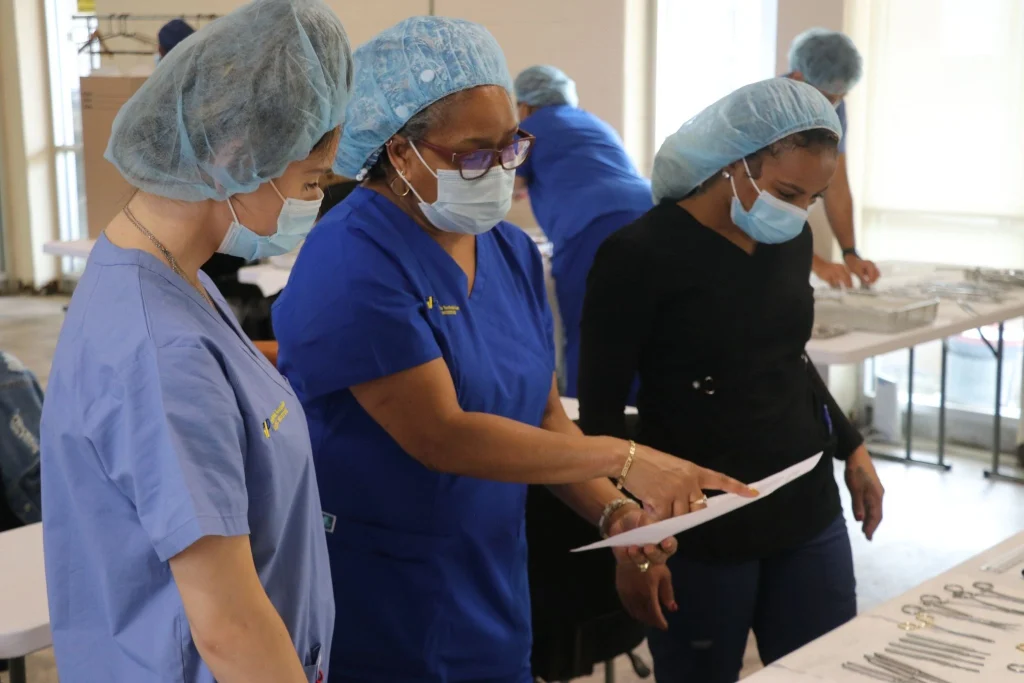
This is where the two paths separate most clearly, and where your timeline to a paycheck is decided.
Training to become a sterile processing technician is comparatively short. Most people complete a certificate program in roughly a few months to two years, and no college degree is required. A strong sterile processing program combines classroom instruction on infection control, instrumentation, and sterilization science with hands-on lab practice and, ideally, a hospital externship.
Certification is the key to employment. The two recognized credentials are the CRCST (Certified Registered Central Service Technician) from the Healthcare Sterile Processing Association (HSPA) and the CSPDT from the Certification Board for Sterile Processing and Distribution (CBSPD). Many employers require certification within a set window after hire, so exam readiness should be built into any quality sterile processing program.
Becoming a surgical technologist takes longer and is more tightly regulated. You generally need to complete an accredited surgical technology program (accredited by CAAHEP or ABHES), which usually runs 12 to 24 months as a certificate or associate degree. After graduating, most techs sit for the Certified Surgical Technologist (CST) exam through the National Board of Surgical Technology and Surgical Assisting (NBSTSA).
The practical takeaway is simple. If your priority is entering healthcare quickly with lower upfront cost, sterile processing is the faster on-ramp. If you are set on working directly in the operating room and can commit to a longer accredited program, surgical technology is the route.
There is no universally “better” choice; there is only the choice that fits your goals, timeline, and temperament. Use these decision factors.
A helpful way to decide is to picture your ideal shift. Do you see yourself methodically building perfect instrument trays and running sterilizers, confident that surgery cannot start without your work? That is the sterile processing technician path. Do you see yourself gowned up beside the surgeon, anticipating the next instrument? That is the surgical tech path.
Many people also use sterile processing as a launch point. Because it opens the door to hospital employment quickly, some technicians later move into surgical technology, nursing, or SPD management once they are inside the system and understand the environment.
Philadelphia is one of the strongest healthcare job markets in the country, anchored by large academic medical centers, community hospitals, children’s hospitals, and outpatient surgical centers across the city and nearby counties in Pennsylvania and South Jersey. That concentration creates steady, ongoing demand for both sterile processing technicians and surgical technologists.
For local students, the appeal is practical. These are jobs you can train for regionally and work regionally, at recognizable employers, without relocating. Demand extends well beyond Center City into North, South, and West Philadelphia and out to surrounding communities, giving graduates real flexibility in where they work.
The region’s hospitals also value candidates who arrive job-ready, with hands-on training, safety awareness, and certification readiness already in place. That is exactly the profile a focused sterile processing program is designed to produce.
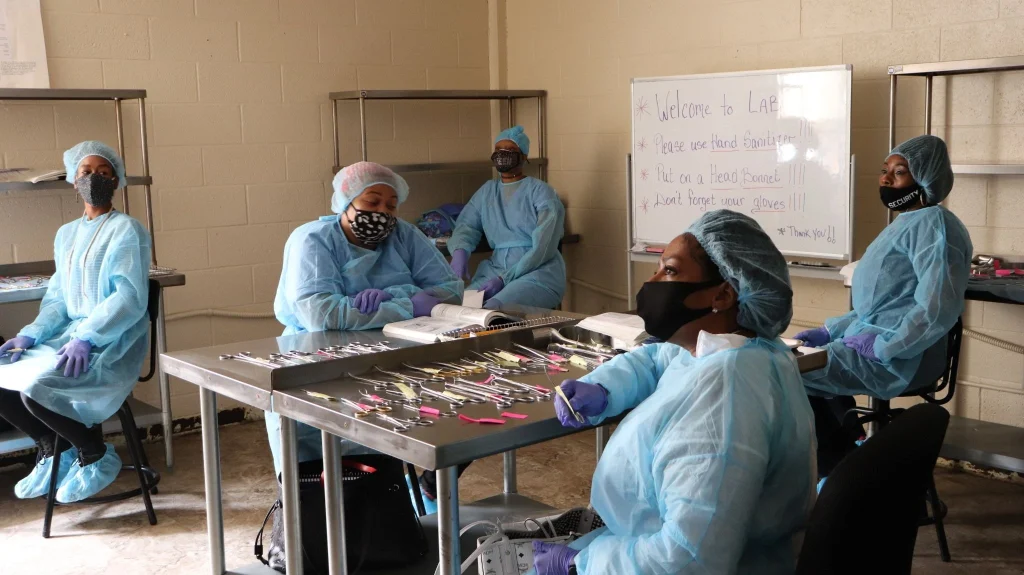
For students who decide that speed of entry, stability, and lower cost matter most, Philadelphia Technician Training Institute (PTTI) offers a hands-on pathway into healthcare through its Sterile Processing and Central Services Technician program. The training emphasizes applied, real-world skills, from decontamination and instrument identification to sterilization science and documentation, using the kind of equipment and processes found in working hospital departments.
Just as important, the program is built around certification readiness, preparing students for credentials that Philadelphia-area employers expect. Combined with career support and a location inside one of the nation’s busiest healthcare regions, this focus helps graduates step into the workforce as a job-ready sterile processing technician rather than starting from scratch. If your goal is a stable healthcare role you can begin quickly, a structured sterile processing program is a direct and affordable place to start.
While PTTI’s healthcare training centers on sterile processing rather than surgical technology, students exploring the surgical field often find that this route gets them inside a hospital fastest, where further advancement becomes possible over time. To compare it with other options, you can also explore PTTI’s full range of skilled trades and technical programs.
Choosing between sterile processing vs surgical technologist is really a choice about trade-offs, not about which career is “better.” A surgical technologist earns a higher median salary and works at the surgical table, but the path takes longer and requires an accredited program. A sterile processing technician enters healthcare faster and more affordably, enjoys strong job security and much faster projected growth, and plays an essential role that keeps every operation safe. Both are respected, in-demand careers across the Philadelphia region.
If you want a stable, job-ready healthcare career you can begin quickly, hands-on sterile processing training is a smart, practical first step. Take the next step and explore PTTI’s Sterile Processing and Central Services Technician program to see how you could start building your future in healthcare.
No. A sterile processing technician cleans, inspects, and sterilizes surgical instruments in the sterile processing department, while a surgical technologist works in the operating room passing instruments to the surgeon during procedures. Both protect patients from infection, but the roles, settings, and training paths differ.
Surgical technologists earn more on average, with a national median around $60,000 or higher, compared with roughly $47,700 for a sterile processing technician. However, the sterile processing technician salary rises with certification, specialties, and shift differentials, and the training is shorter and less expensive.
Sterile processing is faster to enter. A sterile processing program can often be completed in a matter of months, while a surgical technology program typically takes 12 to 24 months and must be accredited. That makes sterile processing the quicker on-ramp into a healthcare career.
No. Neither role requires a four-year degree. A sterile processing technician needs a certificate plus certification such as the CRCST, and a surgical technologist needs an accredited program plus the CST credential. A high school diploma or GED is the typical starting point.
Yes. Employment for sterile processing technicians is projected to grow about 10 percent through 2034, much faster than average, and the work is recession-resistant because surgery depends on sterilized instruments. For many Philadelphia students, it is one of the most accessible and stable healthcare entry points.
PTTI offers a hands-on Sterile Processing and Central Services Technician program in Philadelphia focused on applied skills and certification readiness, preparing students for entry-level roles at area hospitals and surgical centers.