
If you’re in the skilled trades or are thinking about joining, you’ve probably wondered where the real money sits in the piping world. Honestly, it’s a fair question. Some roles pay a normal wage, but others? They’re at the top of the pay chain. The difference between standard paychecks and the top high paying pipefitter jobs is a must-know towards decoding your way into a high-paying career.
But the real twist? Not all high-paying roles are prominent. And not all require decades of experience. As the pipefitter job demand keeps rising, thanks to infrastructure expansion, refinery upgrades, new energy plants, and a growing skilled labor shortage, the number of in-demand pipefitter roles is higher than ever.

Refinery pipefitting pays well for one simple reason: danger plus precision equals big money. Refinery pipefitter job demand is always high. These professionals install and maintain high-pressure piping systems, manage chemical flow lines, and ensure safe fuel processing.
It pays well because of the following factors:
This is considered one of the top paying pipefitter jobs, simply because the work involves a lot of details and can’t tolerate mistakes at all.
Nuclear facilities demand perfection. A nuclear pipefitter deals with specialized reactor piping, coolant loops, steam systems, and strict federal safety protocols.
This falls under pipefitting trade high income careers because the industry requires:
Even entry-level workers often earn more than in other sectors because safety comes first — and mistakes cost millions.
Shipyards operate under tight deadlines, constant retrofitting, and high-stakes pressure testing. A shipyard pipefitter installs piping on military vessels, cargo ships, tankers, and offshore structures. The work environment is physically intense, but the pay reflects that.
What boosts pay:
Power plants rely on massive boilers, turbines, and miles of mechanical lines carrying steam, heated water, chemical fluids, and fuel gases.
This role is one of the high paying pipefitter careers because:
Workers often move into supervisory roles later due to the technical nature of the job.
This one surprises many.
A process plant pipefitter handles the piping systems in chemical factories, food-processing plants, and pharmaceutical facilities. The wide variety of fluids — from corrosive chemicals to sanitary liquids — demands specialized knowledge.
Pay increases due to:
With the rise in pharmaceutical manufacturing, this is now one of the fastest-growing in-demand pipefitter roles nationwide.
Pairing pipefitting with welding is one of the smartest moves anyone can make in the trade. A pipefitter welder can fabricate on-site, work shutdown jobs, take on custom industrial installs, and command higher hourly rates everywhere from refineries to shipyards.
This falls solidly under specialized pipefitter jobs because welders with pipe skills are rare — and companies know it.
Better yet, welders often take travel jobs that offer overtime and bonus benefits.
If you want a direct path into this role, welding programs like this give a perfect head start:
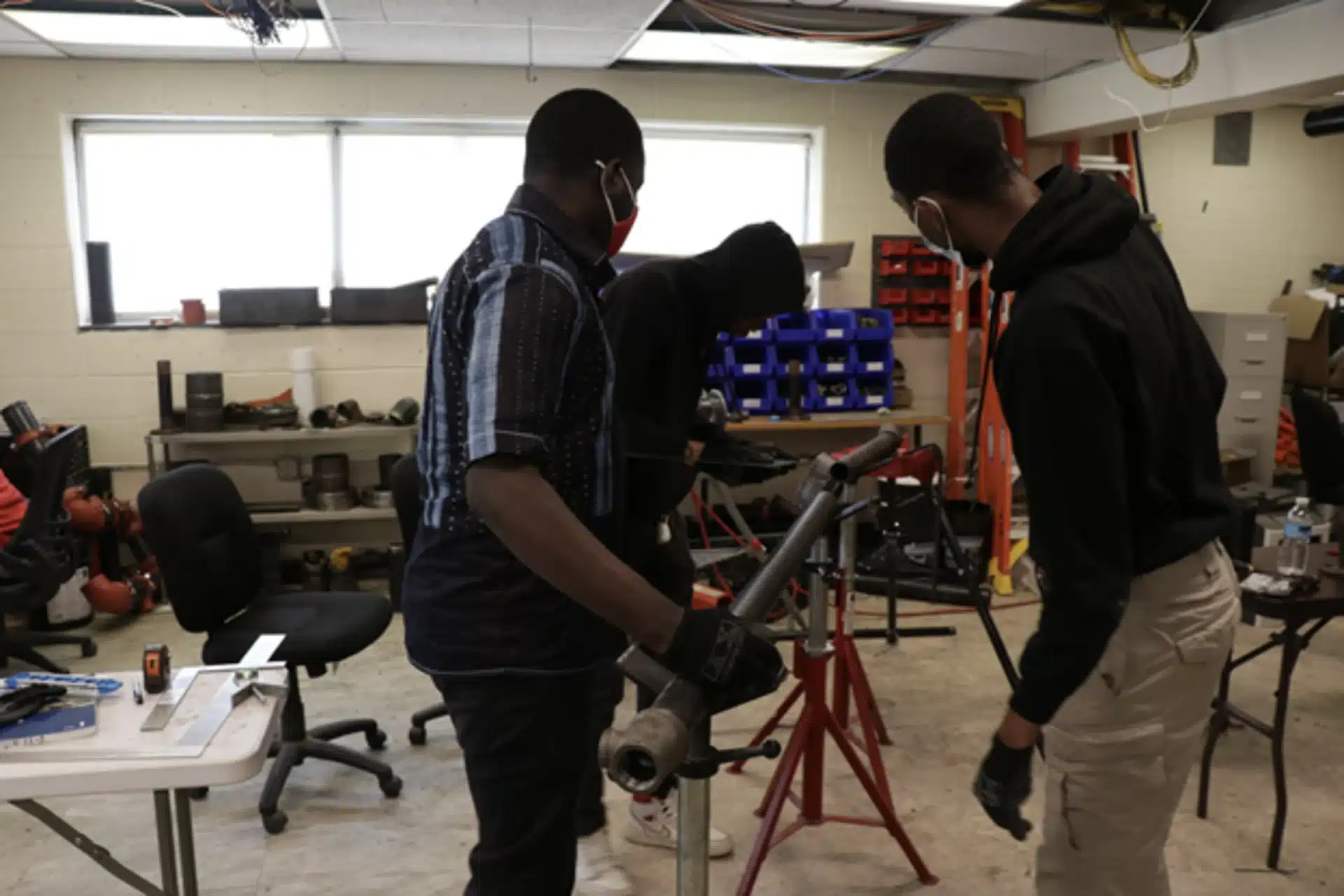
Oil & gas isn’t just a high-pressure environment. It’s an industry with constant demand and even bigger budgets. Workers travel to:
This is one of the top high paying pipefitter jobs simply because of the scale of operations. Overtime is standard. Shutdown work is constant. Hazard bonuses are common.
Many tradespeople jump into oil & gas because it offers some of the fastest income growth in the trade.
Steam systems require a mix of advanced welding, threading, blueprint reading, and safety training. This role blends steamfitter vs pipefitter pay advantages, often pushing salaries up because high-pressure steam is genuinely dangerous.
Pay is boosted by:
This job is not for beginners, but with enough hands-on training from programs like PTTI’s Mechanical Trades, workers can bridge into it over time.
After 5–10 years of field experience, pipefitters often move into project management. This comes with:
Because project managers must understand welding, drafting, pressure systems, and workflow, their salaries match that expertise. This is considered a well paying pipefitter position for those looking to step out of purely physical work without leaving the trade entirely.
Here’s a role many pipefitters don’t consider.
A welding inspector in piping often earns as much as industrial pipefitters, sometimes more, especially when working shutdowns or refinery audits.
Why is the pay high:
This is one of the top highest paying pipefitter jobs without requiring you to stay in physically demanding roles.

Across all 10 jobs above, a pattern emerges:
Because of all these factors — especially the shortage of trained workers — the pipefitter high salary careers category keeps expanding year after year.
For an external reference on national wage trends, the U.S. Bureau of Labor Statistics outlines annual earnings and national demand for pipefitters.
Here’s the honest truth: the skilled trades aren’t slowing down. In fact, with aging infrastructure, new industrial plants, and a wave of retirements hitting the workforce, the top high paying pipefitter jobs are becoming more accessible than they were 10 years ago.
Whether you want refinery work, steam systems, nuclear facilities, shipyards, or project management, there’s a path — and the demand is real. With strong training, hands-on experience, and the right certifications, you can move into some of the top paying pipefitter jobs in the entire industry.
Join PTTI and ace your dream of becoming a pipefitter technician.
Read More: