
There is a stubborn myth that skilled trades are only about physical strength and that “real” thinking happens in an office. The reality is the opposite. A welder reading a blueprint, an automotive technician diagnosing an electrical fault, or a sterile processing tech following precise sterilization protocols is solving complex problems every single shift. If you learn best by doing and want skilled trades careers that challenge your mind as much as your hands, a focused trade school in Philadelphia can give you both.
This guide answers a question many smart, hands-on people ask before choosing a path: which trades actually use both your hands and your brain? You will learn how modern trades combine math, diagnostics, blueprint reading, and judgment with real craftsmanship, which trades fit curious problem-solvers, what these trades pay according to current labor data, and how the job market looks across Philadelphia and the surrounding region. Whether you are a high school graduate, a career changer, a veteran, or an adult learner, this is a clear look at trade careers that reward thinking.
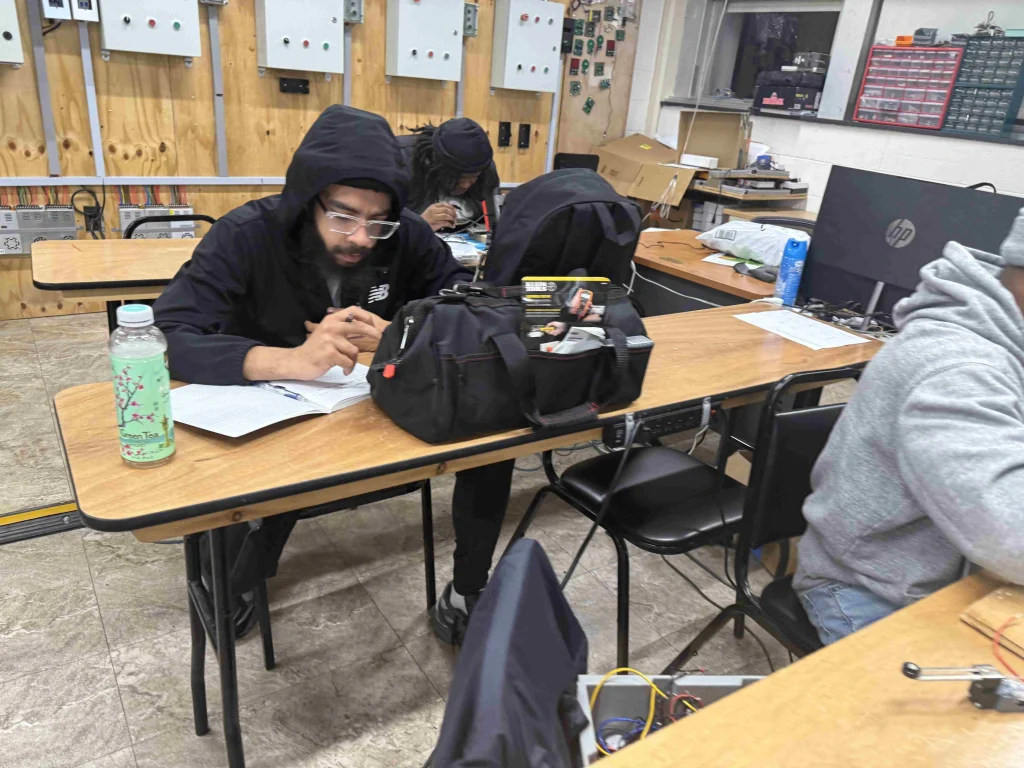
The idea that trades are mindless labor is outdated. Today’s skilled trades training blends technology, safety science, and applied problem-solving with physical craft. A technician who cannot read a schematic, calculate a load, or troubleshoot a fault cannot do the job, no matter how strong they are.
Consider what actually happens on the job. An HVAC technician measures refrigerant pressures and interprets the readings to find a hidden leak. A pipefitter reads isometric drawings and calculates pipe runs before cutting a single length. A manufacturing technician programs and adjusts automated equipment on a production line. These are analytical tasks wrapped in hands-on work, which is exactly why hands-on trade jobs appeal to people who think fast and like tangible results.
This matters for a specific kind of learner. Many people absorb information far better by doing than by sitting through lectures, yet the traditional system pushes everyone toward four-year degrees. Skilled trades careers offer those learners a path where curiosity, pattern recognition, and mechanical reasoning are assets, not afterthoughts.
The trades that use both your hands and your brain are those requiring diagnosis, measurement, and planning alongside physical skill. Welding, pipefitting, automotive repair, manufacturing automation, HVAC, masonry, drywall, and sterile processing all demand technical reasoning. Below is how each one challenges the mind while keeping your hands busy.
Welding is far more than joining metal. Welders interpret symbols and blueprints, choose the right process for each material and position, and judge heat, speed, and angle in real time. A sound weld is the result of constant micro-decisions. The Welding Technology program teaches those decisions through structured practice, which is why welding remains one of the most respected hands-on trades for problem-solvers.
Pipefitters and steamfitters plan before they cut. They read isometric drawings, calculate angles and offsets, and understand pressure, flow, and safety codes. Mistakes are costly, so the mental work is as important as the physical. Training in steam, sprinkler, and pipe fitting builds the spatial reasoning these high-paying trade jobs require.
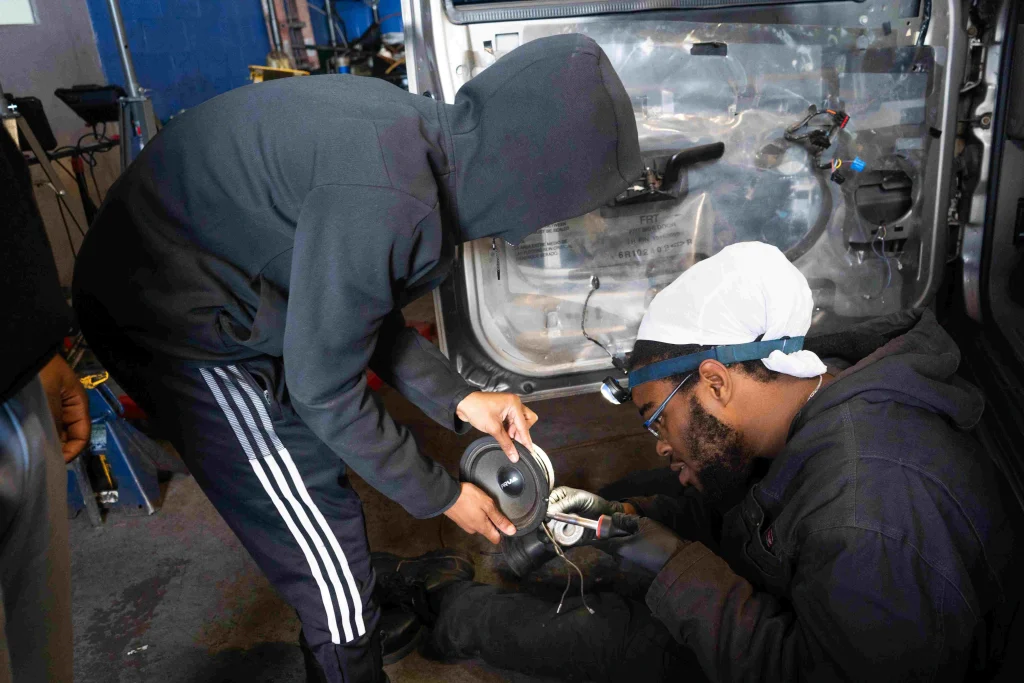
Modern vehicles are computers on wheels. An automotive technician connects a scan tool, reads diagnostic codes, and reasons backward from symptoms to root cause across electrical, mechanical, and software systems. The Automotive Repair Technology program develops that diagnostic thinking, which makes it one of the most intellectually demanding trade careers available.
Factories now run on robotics, sensors, and programmable logic. A manufacturing and automation technician sets up, monitors, and troubleshoots automated systems, blending electrical knowledge with mechanical skill. The Manufacturing & Automation program prepares students for exactly this kind of modern, technology-driven skilled trades training.
HVAC work is applied physics. Technicians calculate heating and cooling loads, interpret pressure and temperature data, and diagnose faults across electrical and refrigeration systems. Hands-on HVAC training turns that science into practical skill, and strong demand makes HVAC one of the steadier hands-on trade jobs.
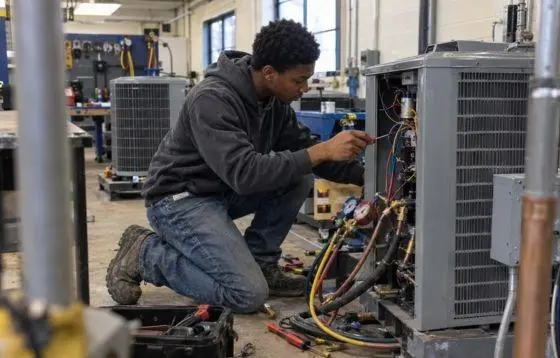
Concreting, Masonry & Framing
Construction trades demand precise math and planning. Masons and framers read plans, calculate materials, manage layout and tolerances, and solve structural puzzles on site. The Concreting, Masonry & Framing program combines that planning discipline with the physical craft of building.
In hospitals, sterile processing technicians decontaminate, assemble, and sterilize surgical instruments under strict protocols. The work requires focus, memory, and precision, because patient safety depends on it. The Central Processing & Sterile Services program opens a healthcare path for detail-oriented people who want skilled trades careers indoors.
Drywall is deceptively technical. Finishers judge surfaces, plan layouts, match textures, and work to exacting standards for a flawless result. The drywall framing and finishing path rewards an eye for detail and spatial planning, rounding out a strong set of trade careers for hands-on thinkers.
Skilled trades require measurable mental skills: reading technical drawings, applied math, systematic troubleshooting, and safety judgment. Employers hire technicians who can think through a problem, not just follow orders. The table below maps the brain work behind the craft.
| Cognitive Skill | How It Shows Up on the Job |
| Blueprint & schematic reading | Interpreting symbols, drawings, and specifications before building |
| Applied math & measurement | Calculating loads, angles, materials, and tolerances |
| Diagnostics & troubleshooting | Reasoning from symptoms to root cause in complex systems |
| Safety judgment | Assessing hazards and following codes and protocols |
| Spatial reasoning | Visualizing how parts, pipes, or structures fit together |
| Communication & teamwork | Coordinating with crews and explaining technical issues clearly |
These are the same analytical skills colleges claim to teach, applied to real objects and real stakes. Quality skilled trades training builds every one of them, which is why strong programs pair lab practice with technical theory rather than one or the other.
Yes. Many hands-on trade jobs pay competitive, middle-class wages without requiring a four-year degree. According to the U.S. Bureau of Labor Statistics, several skilled trades report national median annual wages well above the figure for many entry-level office roles, and experienced or certified technicians often earn more.
| Trade (BLS occupation) | Median Annual Wage (May 2025) | Projected Growth 2025–2035 |
| Plumbers, pipefitters & steamfitters | $63,800 | +7% |
| HVAC mechanics & installers | $61,010 | +11% |
| Welders, cutters, solderers & brazers | $53,750 | +2% |
| Automotive service technicians & mechanics | $50,620 | +5% |
| Medical equipment preparers (sterile processing) | $47,700 | Growing |
Figures are national medians from the U.S. Bureau of Labor Statistics and vary by experience, employer, location, specialization, overtime, and certification. They are provided for education and are not a promise of any salary, job, or outcome.
The takeaway is that high-paying trade jobs are not a consolation prize. Pipefitting and HVAC, in particular, show both strong median pay and healthy projected growth, and overtime and specialty certifications can lift earnings further. For many people, skilled trades careers offer a faster, lower-debt route to solid income than a traditional degree.
Skilled trades are in steady demand across Philadelphia and the wider region, driven by aging infrastructure, healthcare growth, and manufacturing. The Bureau of Labor Statistics projects tens of thousands of annual openings nationwide in these occupations, many created as experienced workers retire. That replacement demand keeps trade careers stable even when the economy shifts.
Locally, the picture is strong. Philadelphia’s hospitals need sterile processing and HVAC technicians, its construction sector needs welders, pipefitters, masons, and framers, and its manufacturers need automation technicians. Because these skills travel, graduates find work not only in North, South, and West Philadelphia but across nearby communities such as Camden, Cherry Hill, Drexel Hill, Lansdowne, and Darby. Because skilled trades careers like these exist across many employers, a hands-on program backed by responsive admissions support helps students connect that training to real regional opportunity.
Demand also favors people who keep learning. As automation and diagnostics spread, employers increasingly want technicians who can think, adapt, and troubleshoot, which rewards exactly the hands-and-brain mindset these trade careers attract. Several of these skilled trades careers also rank among the region’s high-paying trade jobs, particularly for certified technicians.
Start with how you like to think and work. If you enjoy diagnosis and electronics, automotive or manufacturing may fit. ke planning and precision, pipefitting or masonry could suit you. If you prefer detailed indoor work, sterile processing is worth a look. The best skilled trades training matches your natural strengths to a trade’s daily brain work.
Timeline matters too. A common question is how long is trade school, and the answer is encouraging: many focused programs prepare you for entry-level work in well under a year, far faster than a four-year degree. That speed is a major reason career changers and adult learners choose a trade school in Philadelphia over a traditional campus, and it is why many compare high-paying trade jobs favorably against years of tuition.
Finally, look at the learning environment. Hands-on trades demand hands-on preparation, so prioritize programs with real labs, industry-standard equipment, and instructors who have worked in the field. Visiting a campus and talking with current students is one of the smartest ways to judge whether a program delivers genuine hands-on learning.
For someone who learns by doing, trade school often beats a four-year degree on speed, cost, and relevance. A focused trade school in Philadelphia concentrates on the exact technical and problem-solving skills employers test for, so you spend time building ability rather than accumulating unrelated credits and debt. College still suits some goals, but it is not the only path to a thinking career. For hands-on thinkers, skilled trades careers are often the smarter long-term investment.
The deeper point is that choosing a trade is not choosing against intelligence. It is choosing to apply your intelligence to physical, high-stakes, satisfying work. That is the real promise of modern skilled trades careers: a trade school in Philadelphia can turn how you naturally think into a marketable, well-paid skill.
Which trades use both your hands and your brain?
Nearly all skilled trades do. Welding, pipefitting, automotive repair, manufacturing automation, HVAC, masonry, drywall, and sterile processing all require technical reasoning, measurement, diagnostics, or blueprint reading alongside physical craft. These trade careers reward people who like to solve problems with their hands.
Are skilled trades mentally challenging?
Yes. Modern skilled trades training involves applied math, system diagnostics, safety judgment, and reading technical drawings. Technicians make constant decisions on the job, so the work engages the mind as much as the body, especially in diagnostic trades like automotive and HVAC.
Do hands-on trade jobs pay well without a degree?
Many do. According to the U.S. Bureau of Labor Statistics, trades such as plumbing and pipefitting and HVAC report national median wages above $60,000, and other hands-on trade jobs pay competitive wages. These are genuinely high-paying trade jobs, not entry-level dead ends. Earnings vary by experience, certification, and location, and training takes far less time than a four-year degree.
Which trade is best for someone who learns by doing?
Any of the hands-on trades can fit a doer, but diagnosis-heavy trades like automotive and manufacturing automation suit people who love figuring things out, while precision trades like pipefitting, masonry, and sterile processing suit careful planners. The best choice matches your strengths to a trade’s daily brain work.
How long is trade school in Philadelphia?
Many focused programs prepare students for entry-level work in well under a year. The exact length depends on the trade and schedule, but skilled trades training is designed to get you job-ready quickly, which is why a trade school in Philadelphia appeals to career changers and adult learners.
Skilled trades are not a fallback for people who cannot think; they are a home for people who think with their hands. From welding and pipefitting to automotive diagnostics, manufacturing automation, HVAC, and sterile processing, the trades that use both your hands and your brain offer stable demand, strong pay, and work that stays interesting because no two problems are identical. For hands-on learners, that combination is hard to beat.
If this sounds like how you are wired, explore the hands-on programs at PTTI and contact our admissions team to take the first step toward a skilled trade that challenges your mind.