
Most people picture only a handful of jobs when they hear “skilled trades” — usually electrician, plumber, or welder. That narrow view hides a whole set of careers that are hiring steadily, pay competitively, and rarely show up in a high schooler’s guidance session. These overlooked skilled trades keep hospitals sterile, buildings standing, factories running, and water and fire-protection systems working, yet most career-seekers never think to consider them. For anyone weighing their options around Philadelphia, that gap is an opportunity.
This guide walks through seven overlooked skilled trades that deserve a serious look, what each one actually involves, what the work pays according to current federal data, and how long training really takes. It is written for high school students, recent graduates, career changers, veterans, and adult learners who want practical, hands-on work without years of college debt. If you have been searching for a hands-on career path or a trade school in Philadelphia that trains for real jobs, you will find grounded, no-hype information here to help you decide what fits.
An overlooked skilled trade is a hands-on career with steady demand and competitive pay that rarely gets promoted to students or career changers. These roles are essential, but they lack the visibility of jobs like welding or auto repair, so qualified people never consider them, even when the work is stable and the training is short.
The pattern is consistent. A trade becomes “overlooked” not because it pays poorly or lacks openings, but because it happens behind the scenes. The sterile processing team works in a hospital’s back-of-house department, not the operating room spotlight. A steamfitter installs the systems hidden inside a building’s walls and mechanical rooms. Because the public never sees the work, few people think to train for it, which keeps the talent pool small and employers eager to hire. For someone willing to look past the obvious, that dynamic is exactly what makes these skilled trades worth considering.
These trades are worth considering because they combine three things that are hard to find together: steady hiring, competitive pay, and short training. Many are also trades that pay well without a degree, which means you can enter the workforce and start earning far sooner than a four-year college path allows.
Two forces make this especially true heading into 2026. First, an aging skilled workforce is retiring across construction, manufacturing, and facilities maintenance, opening roles faster than younger workers are filling them. Second, the work in most of these fields is hands-on, judgment-based, and site-specific, which makes it difficult to automate away. The result is a group of skilled trades in demand that quietly reward the people who train for them. Around Philadelphia, hospitals, commercial construction, shipbuilding, and manufacturing all draw on this same pool of talent, keeping these skilled trades in demand locally, so regional opportunity tends to track national hiring closely.
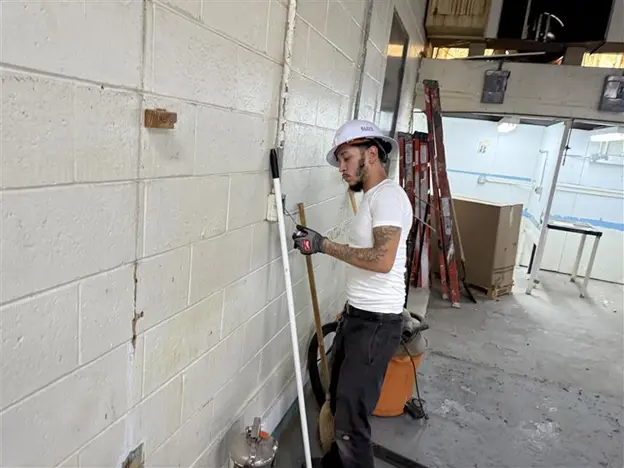
Below are seven overlooked trades that offer genuine career stability, each matched to the kind of hands-on training that prepares you for it.
A sterile processing technician cleans, inspects, assembles, and sterilizes the surgical instruments and medical equipment that operating rooms depend on. It is one of healthcare’s most overlooked skilled trades, and it offers a way into a hospital career without years of schooling or direct patient care.
The role sits at the intersection of healthcare and precision technical work. Technicians follow strict decontamination protocols, track instrument trays, operate autoclaves and sterilizers, and document everything to meet safety and compliance standards. According to the U.S. Bureau of Labor Statistics, medical equipment preparers (the federal category that includes sterile processing) earned a median wage of about $47,700 in May 2025, with employment projected to grow roughly 11% through 2035, faster than the average for all occupations. Certification through recognized bodies strengthens hiring prospects, and demand is steady because every hospital and surgical center needs this function. PTTI’s sterile processing and central services technician program is built around the hands-on skills and certification readiness these employers expect.
Pipefitting and steamfitting involve installing and maintaining the high-pressure piping systems that move steam, water, gas, and chemicals through commercial buildings, hospitals, power plants, and industrial facilities. These are among the best-paid overlooked trades, and they rank high among trades that pay well without a degree.
Pipefitters and steamfitters read blueprints, cut and thread pipe, weld and join sections, and test systems for pressure and leaks. The precision matters: a steam or chemical line that fails is a serious safety issue, which is why trained technicians are valued. BLS reports a median annual wage of about $63,800 for plumbers, pipefitters, and steamfitters in May 2025, with 7% projected growth and roughly 42,000 openings each year through 2035. Many of these roles feed directly into union apprenticeships and long-term careers. For students in the region, steam, sprinkler, and pipe fitting training provides the applied foundation that employers and apprenticeship programs look for.
Fire sprinkler fitters install, inspect, and maintain the fire-suppression systems that protect commercial buildings, warehouses, schools, and apartments. It is a specialized branch of pipefitting and steamfitting, and because it is tied to life-safety codes, the work is both regulated and dependable.
The appeal of this overlooked trade is stability. Fire protection is legally required in most commercial structures, so sprinkler systems must be installed in new construction and inspected and serviced for the life of the building. That creates ongoing demand that does not disappear when one construction cycle slows. Sprinkler fitters learn pipe layout, system hydraulics, code compliance, and the hands-on installation skills that keep these systems reliable. Because it shares a technical core with steam and pipe work, it is a natural specialization for students entering the broader pipefitting and steamfitting field.
Masons and concrete finishers build and shape the structures that hold up our cities, laying brick and block, pouring and finishing concrete, and framing the foundations of commercial and residential projects. Masonry is one of the oldest overlooked skilled trades, and skilled hands remain hard to replace.
The work rewards craftsmanship. Masons read plans, mix materials, lay units to precise lines and levels, and produce results that must last for decades. BLS reports a median wage of about $62,120 for brickmasons and blockmasons in May 2025, with roughly 18,400 annual openings projected across masonry occupations through 2035, largely to replace an aging workforce. That retirement wave is exactly why employers struggle to find trained masons. Concrete, masonry, and framing skills also transfer across residential and large commercial construction, giving graduates flexibility. PTTI’s concreting, masonry, and framing program teaches these skills in a job-site-style environment.
Manufacturing and automation technicians keep modern production lines running, setting up equipment, troubleshooting automated systems, performing preventive maintenance, and working alongside robotics and controls. As factories modernize, this has become one of the most future-focused overlooked skilled trades.
This field has shed its old image. Today’s plants rely on programmable controls, sensors, and automated cells, and they need technicians who can bridge mechanical skill with modern technology. These workers diagnose faults, maintain millwright-style industrial equipment, and minimize costly downtime, which makes them valuable to any manufacturer. Because the role blends electrical, mechanical, and automation knowledge, it is harder to offshore or fully automate, and that supports long-term stability. Training that combines electrical fundamentals with automation is the entry point, and PTTI’s manufacturing and automation training is designed around the competencies these plants actually hire for.
Drywall and finishing specialists hang, tape, mud, and finish the interior walls and ceilings of nearly every building, and the best finishers command real respect because clean, level surfaces are a visible mark of quality. It is a steady, in-demand trade that most people overlook entirely.
The craft is more technical than it looks. A skilled finisher understands framing, moisture-resistant and soundproof drywall options, multiple levels of finish, and texturing techniques that separate professional work from amateur patching. Because drywall is part of virtually all residential and commercial construction, the skill travels and the work is consistent. Specialists who master higher finish levels and framing become especially valuable on commercial projects. For students who want a construction trade they can learn quickly, the drywall, framing, and finishing program covers both the installation and finishing sides employers need.
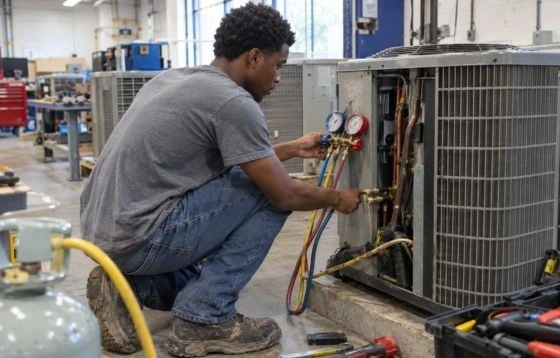
HVAC/R technicians install, maintain, and repair the heating, ventilation, air conditioning, and refrigeration systems that keep homes, hospitals, and businesses comfortable and safe. While more familiar than sterile processing, it remains underappreciated as a career given how essential and year-round the demand is.
The work combines mechanical repair, electrical troubleshooting, refrigerant handling, and increasingly, smart-system diagnostics. Because climate control is a necessity rather than a luxury, HVAC/R technicians stay busy across seasons and economic cycles, and the aging-workforce pattern that affects other trades applies here too. Technicians who understand both residential and commercial systems have the widest options. Students exploring this path can look at PTTI’s heating, ventilation, and air conditioning program for hands-on, equipment-based training.
Yes. Many overlooked trades are genuinely trades that pay well without a degree, offering median wages that compete with or exceed many jobs requiring a bachelor’s. Federal data shows several of these fields paying between roughly $47,700 and $63,800 at the median, with experienced and specialized workers earning more.
Here is how the verified national figures compare, drawn from the U.S. Bureau of Labor Statistics (median wages, May 2025):
| Overlooked Trade | BLS Occupation Category | Median Annual Wage | Outlook (2025–2035) |
| Sterile Processing Technician | Medical equipment preparers | ~$47,700 | ~+11% (faster than average) |
| Pipefitter / Steamfitter | Plumbers, pipefitters, steamfitters | ~$63,800 | +7%, ~42,000 openings/yr |
| Mason | Brickmasons and blockmasons | ~$62,120 | ~18,400 openings/yr (masonry) |
A few things matter when reading these numbers. Medians are national; pay varies by experience, employer, specialization, overtime, union status, and local market, and larger metro areas like Philadelphia often trend higher for construction and mechanical trades. Entry-level wages start lower and rise as you add certifications and experience. These are also fields where skill compounds: the more processes, systems, or finishes you master, the more you are worth. Importantly, none of this is a guarantee of a specific salary or job, but the data does show why these skilled trades in demand reward the people who train for them.
Most of these overlooked skilled trades can be learned through focused programs that take less than a year, far shorter than a traditional degree. Because trade training concentrates on job-ready skills rather than general education, students reach the point of employability in months, not years.
The reason is simple: employers in these fields hire on demonstrated ability. A sterile processing technician needs to prove they can follow sterilization protocols and pass a certification exam; a pipefitter needs to show they can read a drawing and build a sound joint; a mason needs to lay accurate, durable work. Hands-on programs are built around exactly those competencies. That is the core advantage of a focused trade school in Philadelphia over a four-year path — you train on real equipment, practice the actual tasks, and move toward the workforce quickly. Some students also start with a short credential and stack additional skills or certifications later, which lets them grow their earning power over time without pausing their career.
Choosing well comes down to matching the program to the career. When you evaluate any trade school in Philadelphia, look for hands-on lab time on industry-standard equipment, instructors with real field experience, certification preparation where relevant, and support moving from training into work. Those factors matter far more than marketing.
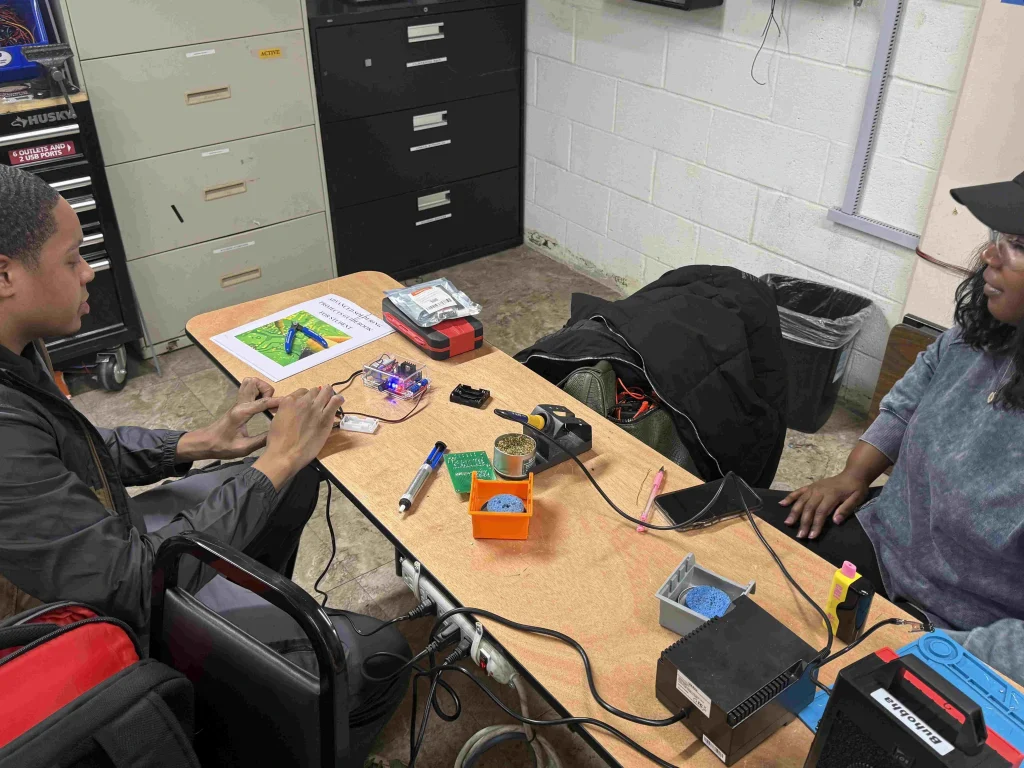
A few practical questions help you compare options honestly. Does the program give you real booth, bench, or job-site practice, or mostly lectures? Does it prepare you for the certifications employers in that specific trade expect? What does the complete cost look like, including tools and fees, and what financial aid options exist? And does the school support you with resume help, interview prep, and employer connections after you finish? PTTI focuses on hands-on training across welding, manufacturing and automation, automotive, steam, sprinkler and pipe fitting, masonry, sterile processing, HVAC, and drywall, and its admissions team can walk you through which overlooked trades fit your goals, schedule, and budget.
What are the most overlooked skilled trades?
Some of the most overlooked skilled trades include sterile processing technician, pipefitter and steamfitter, fire sprinkler fitter, mason and concrete finisher, manufacturing and automation technician, drywall finishing specialist, and HVAC/R technician. These roles hire steadily and pay well but rarely get promoted to students.
Which trades pay well without a degree?
Several overlooked trades are strong examples of trades that pay well without a degree. Federal data puts pipefitters and steamfitters near a $63,800 median and masons near $62,120, while sterile processing roles sit around $47,700, all without requiring a four-year degree.
What does a sterile processing technician do?
A sterile processing technician decontaminates, inspects, assembles, and sterilizes surgical instruments and medical equipment so operating rooms can function safely. It is a hospital-based technical role that typically requires a high school diploma plus focused training and certification rather than a college degree.
How long is trade school for these careers?
Most of these skilled trades can be learned in less than a year through focused, hands-on programs. Trade school concentrates on job-ready skills, so students reach employability in months, though exact length varies by program, schedule, and the specific trade.
Are these skilled trades in demand around Philadelphia?
Yes. Philadelphia’s hospitals, commercial construction, shipbuilding, and manufacturing create steady local demand for these skilled trades in demand, and an aging workforce is opening roles faster than they are being filled across the region.
The careers most people never think about are often the ones with the clearest path to stable, well-paid work. From sterile processing to pipefitting and steamfitting, from masonry to manufacturing and automation, these overlooked skilled trades hire consistently, reward hands-on ability, and let you start earning without years of debt. For students, career changers, veterans, and adult learners around the region, they represent real opportunity hiding in plain sight.
If any of these paths sparked your interest, explore PTTI’s hands-on programs to see which overlooked trade fits your goals and schedule.