
Every Sunday night in Philadelphia, thousands of office workers feel a crushing weight settle upon them. It’s the fear of unending virtual meetings, unclear digital performance measures, and a stack of unopened emails. So, skilled trade jobs could be the key to reclaiming your professional life if you’re always seeking a way out of this loop.
Recent evidence suggests that about 77% of workers globally are suffering from severe occupational burnout, leaving them feeling depleted, detached, and utterly fatigued.
A lot of people are sick of chasing imaginary goals in a corporate atmosphere. They understand that the standard nine-to-five desk job no longer ensures personal happiness or financial freedom. Instead, more young people are opting to walk away from the computer screen and develop a steady, reliable hands-on career. Skilled trade jobs are increasingly becoming the occupation of choice for professionals wanting to take back control of their time, their mental health, and their financial freedom.
TL;DR: The Short Version
So, a skilled trade jobs path is any career that involves specialised, practical knowledge and manual abilities that are learned through targeted training, rather than a typical four-year college degree. These areas include essential skilled trade jobs like precision welding, advanced vehicle repair, industrial automation, and complicated pipefitting.
High school pupils had been told for years that the only way to find success was to get a university degree. Today the reality is completely different. On the other hand, we are a generation of high-education debt, stuck in office jobs that frequently feel unrewarding or unsafe.
Young, hungry workers in Philadelphia are looking for another way. They seek obvious, reliable paths to independence without years spent. Hands-on careers give you real-world skills that local employers are actually looking for right now.
The changed economic climate is making manual trades quite attractive to people totally fed up with the usual office setting. Let’s take a closer look at why these skilled trade jobs are winning over today’s workforce.
In many corporate organisations, it is easy to feel that your daily effort doesn’t really count. Workers spend hours filling out spreadsheets or sitting in strategy sessions without any real-life results. This lack of clarity is one of the chief causes of mental fatigue.
In competent, skilled trade jobs, you see your progress. For instance, it’s the strong weld that holds a structural beam together at the end of each work shift. It’s a completely repaired vehicle engine. It’s an automated assembly line humming along smoothly. That sense of real accomplishment brings a deep everyday satisfaction that a digital workspace simply doesn’t have.
One of the main problems with current office culture is that the job never really stops. Even when they’re away from their desks, workers are continually being plagued by late-night Slack alerts, emails in the evenings, and nagging anxiety about looming quarterly targets.
If you operate in a mechanical or industrial skilled trade job, your work stays where it belongs: on the job site. Once you clock out and put your tools down, your time is your own. There are no surprise weekend messages or assignments looming over your head, which means you get to experience a real work-life balance.

Generative artificial intelligence and digital automation are advancing rapidly, and many entry-level desk jobs are undergoing huge changes or disappearing altogether. Software can now quickly produce simple marketing copy, analyse basic financial spreadsheets and manage routine administrative tasks.
But you can’t bring technology to a job site to diagnose a malfunctioning industrial equipment or to install sophisticated pipe systems in tight walls. Industrial skilled trade jobs involve active problem-solving and physical coordination on the job site.
One fairly widespread belief is that you’ll earn less money if you work with your hands. But in truth, incomes for these positions have seen a sharp increase nationwide because of the ongoing shortage of skilled people. They offer some of the highest-paying career options.
| Trade Specialty | Key Areas of Career Focus | Outlook for Philadelphia Industry |
| Welding | Structural steel, pipe welding, industrial manufacture | Strong local demand in cargo ports and commercial construction. |
| Industrial Automation | Programming of robots, electrical circuits, maintenance of machines | Rapidly expanding industry as manufacturing plants upgrade their technologies. |
| Pipefitting & Piping | Safety systems, high-pressure steam valves, layout assembly | It is critical for renovations to urban infrastructure and for large commercial constructions. |
If you’re looking for how to change careers, then researching the highest-paying trades is a great place to start. Highly skilled specialists in advanced specialties can make compensation well above what they would make in an entry-level corporate job. Also, because these services are always needed, the skilled trade jobs are stable and secure even in times of economic distress.
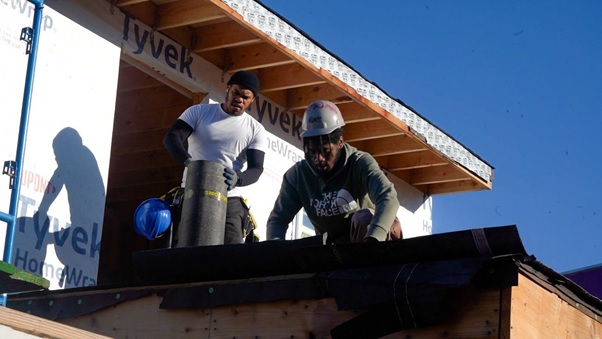
Switching careers can be a big transition and scary if you don’t have a clear path to follow. Fortunately, learning how to change careers and step into industrial and mechanical skilled trade jobs is clear and lays out the path to your success rapidly.
It’s worth spending a little time looking into other industries to see which best aligns with your own abilities. Do you want to learn how mechanical systems work? Or do you want to work on exact, visible projects? The first step to a rewarding future is finding an area of focus you really enjoy.
If some people try to enter the labour market without experience, the fastest method to move ahead is to go to a specialised, technical trade school program. Quality trade school programs teach you the specific technical rules, safety procedures, and practical skills local businesses want. You don’t have to spend four years studying general education; you can concentrate totally on your chosen trade and graduate and get to work in less than a year.
Accredited certifications are confirmation of your skills in the skilled trade jobs industry. If you wish to get specialised welding certifications or an industrial automation certificate, these credentials will make your resume stand out and earn you greater starting pay rates.
One important benefit of graduating from a recognised technical school is access to their direct career connections. If your school has strong connections with local Philadelphia firms, they can assist you with your transfer from the classroom into a wonderful full-time skilled trade job.
If you’re in the Philly region and ready to make a move, you don’t have to sort it all out on your own. At the Philadelphia Technician Training Institute (PTTI), we provide specialised, intensive programs that will transform you from a complete novice to a confident professional in just 6 to 8 months.
At PTTI, the curriculum is all hands-on, practical experience. Students work in huge workshops that replicate a real-world industrial setting and train on the same equipment, tools, and blueprints as the leading businesses.
Whether you’re interested in the Welding Technology and Training Program, the Manufacturing and Automation Program, or learning commercial systems with the Steam, Sprinkler and Pipe Fitting course, PTTI has the expert instructors and financial aid help to get you started on your new path.
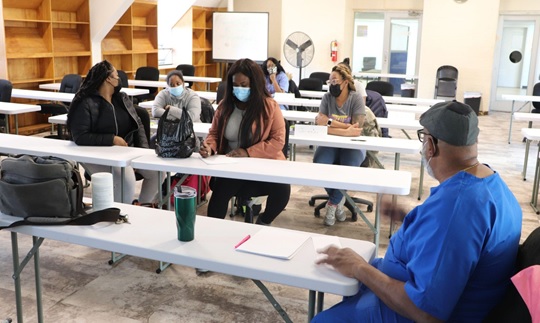
Corporate burnout doesn’t have to be the end. If you’re weary of staring at a computer screen all day and want to create a solid, wealthy future on your own terms, there’s a hands-on career for you.
Don’t let another month slip away in an unfulfilling professional atmosphere. Call a local admissions representative now to discuss your career aspirations, see a state-of-the-art workshop, and learn how professional trade school programs may change your future for the better.
A: The majority of full-package programs at institutions like PTTI are designed to be quick and efficient, generally lasting between six and twelve months. This gets you your credentials and into the workforce, generating a salary considerably quicker than a traditional four-year college path.
A: Yes, of course. High-quality technical programs are built on the premise that you are starting from the ground up. Instructors guide you step-by-step through the basic safety standards, how to use the tools, and basic concepts before going on to more sophisticated technical projects.
A: There are several areas like welding, pipefitting, and factory automation that can come into well-paying specialties. Moreover, your earning potential is substantially enhanced as you gain more field experience with mentor or higher-level certifications.
A: For students who meet the requirements, financial help is typically an option. To ensure that you are able to devote yourself entirely to your training, specialised finance departments within specialised technical colleges will assist you with grants, loans, and flexible payment options.
Read more: