
The math on skilled trades has rarely looked this good. A generation of experienced tradespeople is retiring, construction and manufacturing investment is climbing, and employers across the country are struggling to fill roles that pay well and cannot be shipped overseas or handed to software. The result is a hiring environment where trained, certified workers hold real leverage. Associated Builders and Contractors has estimated the construction sector alone needs hundreds of thousands of additional workers in 2026 just to keep pace with demand.
For students, recent graduates, career changers, veterans, and adult learners weighing their options, this skilled trades labor shortage is an opportunity. The most in-demand skilled trades reward hands-on ability, and many are high-paying trade careers in 2026 you can enter without a four-year degree. Throughout, we point to where, when practical, employer-aligned training exists locally, so the path from interest to income is clear.
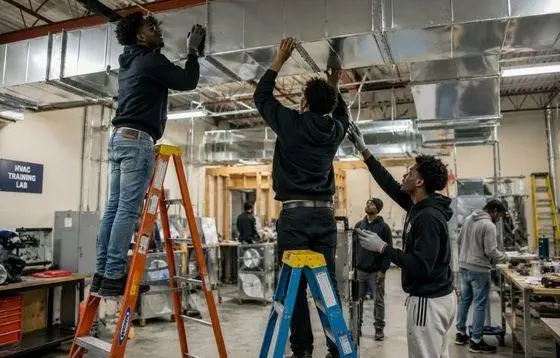
Skilled trades are in demand because the workforce is aging out faster than it is being replaced, while construction, manufacturing, and healthcare all expand at once. Meanwhile, infrastructure funding, domestic manufacturing growth, and building electrification are creating new roles on top of replacement demand, which is why the skilled trades job outlook for 2026 is one of the strongest in years.
This is the core reason the most in-demand skilled trades offer such strong security. Demand comes from two directions simultaneously: growth in the work itself and the constant need to replace people leaving the field. Even trades with modest headline growth generate tens of thousands of openings each year because their existing workforces are large and turnover is steady. For a prospective student, that means a trained, certified worker rarely struggles to find work.
There is also a technology angle. Rather than eliminating trades, automation is reshaping them. Modern welders run advanced power sources, automotive technicians diagnose software-driven systems, and manufacturing technicians program and maintain robots. The trades that combine hands-on skill with technical literacy are precisely the ones employers compete hardest to hire.
Curious which field fits you? Browse PTTI’s hands-on training programs to see where your interests line up with real hiring demand.
The high-paying careers in 2026 are listed below. Also below are the ten trades with the strongest 2026 demand signals, drawn from U.S. Bureau of Labor Statistics wage and projection data. Each reflects a solid skilled trades job outlook backed by real hiring numbers. Figures are national medians; pay in the Philadelphia region and in union or specialized roles often runs higher.
| Skilled Trade | Median Pay (National) | Projected Growth | Annual Openings |
| Electricians | ~$62,350 | 9% (fastest of major trades) | ~81,000 |
| Plumbers, Pipefitters & Steamfitters | ~$62,970 | 4% | ~44,000 |
| HVAC-R Technicians | ~$59,810 | 8% | ~40,100 |
| Welders, Cutters & Fabricators | ~$48,000–$54,000 | 2% | ~45,600 |
| Manufacturing & Automation (Mechatronics) | ~$70,760 | Steady, high wage premium | Strong |
| CNC Machinists | ~$58,750 | Openings from retirements | ~34,200 |
| Automotive & EV Service Technicians | ~$50,620 | 5% | ~66,200 |
| Sterile Processing Technicians | ~$47,700 | 10% (much faster than average) | ~7,600 new jobs |
| Masons, Concrete & Construction | ~$58,360 (construction avg.) | Steady with infrastructure demand | High |
| Drywall, Framing & Finishing | Competitive construction wages | Steady | Consistent |
Electricians top nearly every 2026 demand ranking. The field is projected to grow about 9% through 2034 with roughly 81,000 openings each year, the fastest pace among the major traditional trades. Median pay sits near $62,350, and top earners clear six figures. Data centers, EV charging infrastructure, solar and grid tie-ins, and a wave of retirements all drive the need.
For students in the region, electrical skills are also embedded in industrial work. PTTI’s Manufacturing, Automation & Electrical Technician program builds the electrical and controls foundation that modern plants and facilities depend on, which is one reason it remains among the most in-demand skilled trades pathways locally.
Welding remains a cornerstone trade because bridges, ships, pipelines, buildings, and manufacturing lines all depend on it. The BLS projects about 45,600 welding openings each year through 2034, driven largely by retirements. National median pay runs roughly $48,000 to $54,000, but the Philadelphia market — with active shipbuilding, union work, and structural fabrication — trends higher, and certified pipe welders earn well above that.
Welding is also difficult to automate at the skilled, site-specific level, which supports long-term stability. Students who want a fast, credential-focused route can explore PTTI’s Welding Technology program, and those weighing options may find the comparison in pipefitter vs. welder useful before committing.
Pipefitting is one of the highest-paid trades in this group. Plumbers, pipefitters, and steamfitters share a national median near $62,970, with roughly 44,000 openings each year and 4% projected growth. These workers install and maintain the piping systems, steam lines, and fire-suppression systems that every commercial building, hospital, and industrial facility requires.
Because the work spans mechanical, commercial, and safety-critical systems, it offers strong specialization and earning potential. PTTI’s Steam, Sprinkler & Pipe Fitting program trains students for exactly these roles, which continue to rank among the most in-demand skilled trades across Pennsylvania and South Jersey.
Heating, ventilation, air conditioning, and refrigeration is one of the fastest-growing mechanical trades, projected to grow about 8% through 2034 with roughly 40,100 openings each year and a median near $59,810. Climate control is not optional, systems constantly need service, and the shift toward heat pumps and data center cooling is adding fresh demand.
HVAC-R overlaps heavily with mechanical and piping skills, so students drawn to this space often build a strong foundation through mechanical-systems and pipefitting training before specializing. The durability of the work — every building needs it, in every economy — is what keeps it near the top of the demand list.
Advanced manufacturing has become one of the highest-paying skilled trade categories. Electro-mechanical and mechatronics technicians — the workers who keep automated production lines and robots running — earn a median around $70,760, with industrial machinery mechanics close behind near $64,520. Manufacturers report that workforce skills are a top concern as they invest in automation, analytics, and smart factories.
This is a trade built for the technology era, blending mechanical repair, motor control, and programmable logic. PTTI’s manufacturing and automation training prepares students for these roles, and the broader case for the field is laid out in this look at why manufacturing and automation jobs are booming.
CNC machinists turn raw metal into precision parts for aerospace, medical devices, and defense. The median wage is about $58,750, and while overall employment is projected to hold roughly flat, retirements alone generate around 34,200 openings each year. The Manufacturing Institute has projected that millions of manufacturing jobs could go unfilled by 2030, and machining is among the hardest to staff.
The earnings ladder is clear: operators move up to machinists, then to setup and programming roles that command the highest pay. Machinists who add CAM programming and multi-axis skills separate themselves quickly, making precision manufacturing a durable place within the most in-demand skilled trades.
Cars are not going away, and modern vehicles are more complex than ever. Automotive service technicians earn a median near $50,620 and the field is projected to grow about 5% through 2035, with roughly 66,200 openings each year. The rise of hybrid and electric vehicles is reshaping the work, rewarding technicians who understand diagnostics, electronics, and battery systems.
That shift toward software-driven vehicles makes trained, certification-ready technicians more valuable, not less. Students can start with PTTI’s Automotive Repair Technology program, which is built around the hands-on diagnostic skills employers now expect from day one.
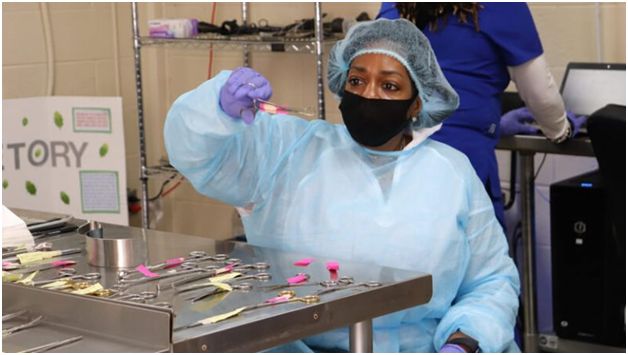
Not every in-demand trade wears a hard hat. Sterile processing technicians — the professionals who clean, sterilize, and prepare surgical instruments — are projected to grow about 10% through 2034, much faster than average, with a median near $47,700. Surgery cannot happen without sterile instruments, which makes this one of the most recession-resistant entry points into healthcare.
The role rewards precision, accountability, and certification, and it opens a stable hospital career without years of schooling. PTTI’s Central Processing & Sterile Services program trains students for this fast-growing field, a strong example of how the most in-demand skilled trades now stretch well beyond construction.
Masonry and concrete work anchor the built environment.Skilled masons and concrete technicians who can read plans, form and pour accurately, and finish to spec remain consistently employable.
The work is physical, tangible, and resistant to offshoring or automation. Students interested in building careers can explore PTTI’s Concreting, Masonry & Framing program, which teaches the job-site skills contractors across the region actively hire for.
Every construction and renovation project needs framing and finishing. It is an accessible entry into the building trades with clear advancement toward foreman and contractor roles.
For students who want a fast, practical route into construction, PTTI’s Drywall, Framing & Finishing program rounds out its construction offerings and reflects how broad the most in-demand skilled trades really are.
The best-paying skilled trades without a degree include electrical work, pipefitting and steamfitting, manufacturing automation, and specialized welding. Median pay in these fields ranges from roughly $59,000 to over $70,000, and experienced specialists with certifications and overtime frequently reach $80,000 to $120,000 or more — proof that these are genuine high-paying trade careers in 2026.
What separates high earners is rarely a diploma. It is certification, specialization, and reliability. A certified pipe welder, a mechatronics technician fluent in PLCs, or a licensed journeyman electrician commands premium pay because those skills are scarce and verified. That is what makes so many skilled trades without a degree competitive with, and often ahead of, jobs that require one. This is why employer-aligned training that prepares students for real certifications matters more than years spent in a classroom. For a fuller picture, PTTI’s overview of high-paying trade jobs without a degree is a useful starting point.
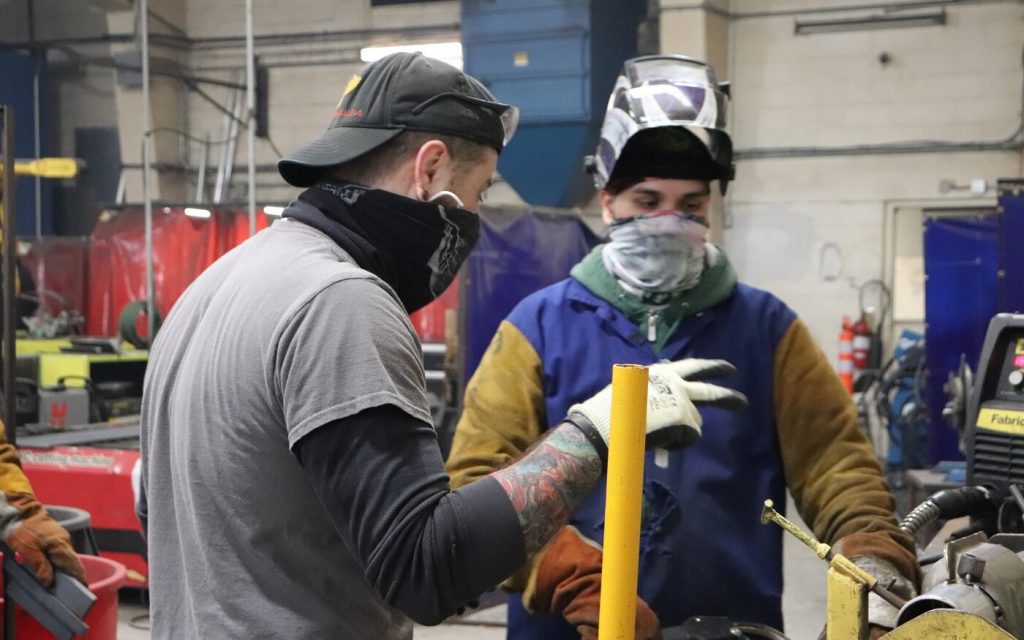
The trades most resistant to automation are those requiring hands-on judgment in unpredictable, physical environments — welding in the field, pipefitting in tight mechanical rooms, electrical troubleshooting, and automotive diagnostics. Machines struggle with the variability, dexterity, and problem-solving these jobs demand every day.
This durability is a genuine advantage in 2026. While automation reshapes many office roles, skilled tradespeople increasingly work alongside technology rather than being replaced by it. T
Many skilled trades let you begin earning in under a year. Because most trades are performance-based, employers care about demonstrated ability and relevant certifications rather than lengthy degrees. A focused, hands-on program can prepare a complete beginner for entry-level work in months, not years.
However,That speed is what makes the trades so attractive to career changers, veterans, and adult learners who cannot afford to step away from income for four years. A student can train, certify, and enter the workforce while peers are still accumulating tuition debt. PTTI’s guide to landing a skilled trade job in Philadelphia in six months walks through exactly how that accelerated timeline works.
For many careers, the trade-school route is not a fallback — it is the smarter financial decision. Here is how the two paths compare for someone entering an in-demand trade.
| Factor | Skilled Trade Training | Four-Year Degree |
| Time to earn | Often under a year | About four years |
| Cost and debt | Lower, focused tuition | Frequently significant debt |
| Hands-on skill | Core of the program | Often limited |
| Job-specific demand | High and shortage-driven | Varies widely by major |
| Path to income | Start earning quickly | Typically delayed |
Moreover,None of this means college is wrong for everyone. But for the trades on this list, employers want proven skill, and a focused program delivers it faster and at far lower cost. Students weighing the decision can read PTTI’s breakdown of trade school versus a traditional college path to think it through clearly.
Philadelphia is one of the stronger regional markets for the trades, which is part of what makes choosing a trade school in Philadelphia such a practical decision. Shipbuilding, healthcare and commercial construction, manufacturing, and a deep union presence all sustain steady hiring.
Opportunities extend across nearby Pennsylvania communities including Yeadon, Lansdowne, Darby, Drexel Hill, and Ardmore, and into South Jersey towns such as Camden, Pennsauken, Collingswood, Cherry Hill, Maple Shade, Cinnaminson, and Haddonfield, as well as Delaware. Because trade certifications are portable, training centrally in Philadelphia positions graduates to take work in whichever direction the best opportunity appears. PTTI’s look at Philadelphia’s rising in-demand careers reflects how broad that regional demand has become.
Skilled trades fit a wide range of people:
If you prefer solving real problems with your hands over sitting at a desk, one of the most in-demand skilled trades is worth serious consideration.
The 2026 labor market has tilted toward people who can build, fix, and maintain the physical world. The most in-demand skilled trades pay competitively, resist automation, and reward hands-on ability over expensive degrees — and the skilled trades labor shortage means employers are hiring. With a skilled trades job outlook this strong, these high-paying trade careers are a rare and timely opportunity for students, career changers, veterans, and adult learners alike.
The fastest way to convert this demand into a paycheck is focused, employer-aligned training built around the certifications hiring managers actually look for. Whether your interest is welding, automation, automotive, pipefitting, construction, or healthcare sterile processing, there is a direct local pathway into the workforce.
Take the next step. Explore PTTI’s programs, request information, or schedule a campus tour to see the labs for yourself. Ready to begin? Contact admissions and start building an in-demand skilled trades career this year. Veterans can also review available veterans education benefits.
The most in-demand skilled trades in 2026 include electricians, plumbers and pipefitters, HVAC-R technicians, welders, manufacturing and automation technicians, CNC machinists, automotive and EV technicians, sterile processing technicians, masons, and drywall and framing technicians. All face strong hiring demand driven by retirements and expanding construction, manufacturing, and healthcare needs.
Among the fields on this list, manufacturing and automation (mechatronics) technicians and electricians lead on pay, with medians around $70,760 and $62,350 respectively. Pipefitters and steamfitters are close behind near $62,970. Experienced, certified specialists in any of these trades can reach $80,000 to $120,000 or more.
Yes. A persistent labor shortage, an aging workforce, and steady infrastructure and manufacturing investment have created strong, durable demand. Most trades pay above the national median, require no four-year degree, and resist automation, making them a stable choice for 2026 and beyond.
Nearly all of them. Welding, pipefitting, automotive repair, manufacturing and automation, sterile processing, masonry, and drywall all require hands-on training and certification rather than a bachelor’s degree.
Many trades allow entry in under a year. Fields like welding, sterile processing, and automotive repair are performance-based, so once you can demonstrate the required skills and pass relevant certifications, you are employable — often within months of starting training.
Philadelphia Technician Training Institute (PTTI) is a trade school in Philadelphia offering hands-on training for six of the ten trades on this list
Why AI cant replace skilled trade jobs
Skilled Trade careers: Finding Purpose beyond the Paycheck
Required Qualifications for skilled trade job