
Imagine working as a sprinkler and pipefitter technician for 3-4 years. You must be thinking, “How should I increase my 5-figure salary?” What certification and classes should I complete to achieve that pay? While experience certainly matters in this industry because hands-on with tools is the real experience, it is not the only factor that influences your income. The good news is that you can take several practical steps to increase your Sprinkler and Pipefitter Technician Salary and build a rewarding career in the skilled trades.
The good news is that you can take several practical steps to increase your Sprinkler and Pipefitter Technician Salary and build a rewarding career in the skilled trades.
Whether you are just starting a pipefitter training program or already working in the field, making smart career decisions today can help you earn more tomorrow.
Your earning potential starts with the right education. Employers prefer candidates who already understand pipe installation, blueprint reading, safety regulations, and sprinkler systems.
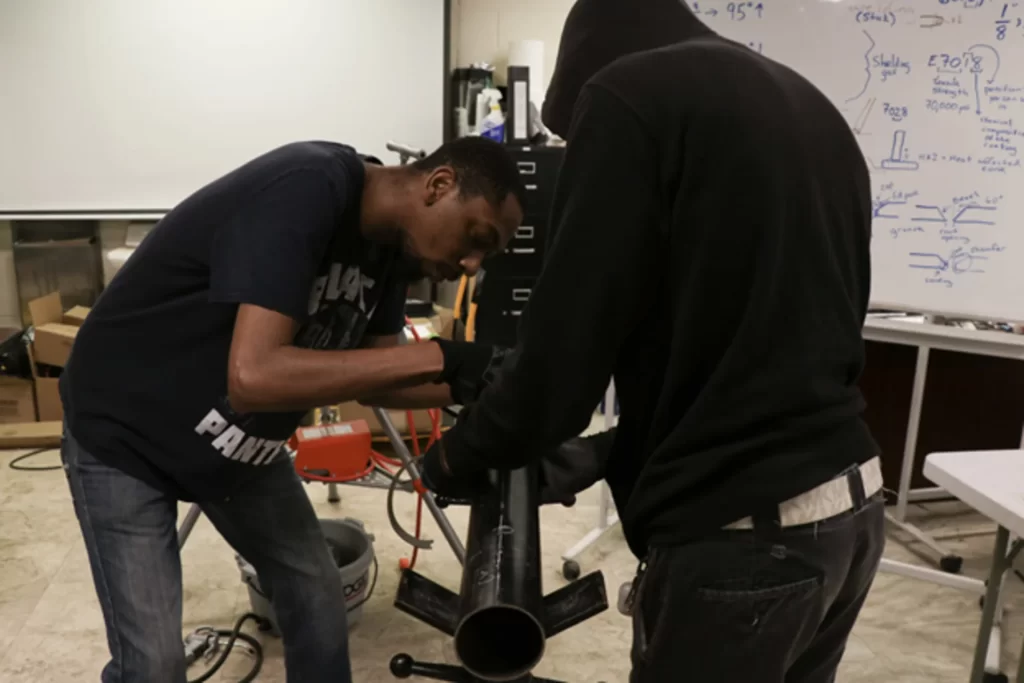
A hands-on pipefitter training program gives you practical experience before you enter the workforce. More importantly, it helps you build confidence as you work with industry-standard tools and equipment.
Students who graduate from the best pipefitters training program in Philadelphia with real job-site skills often stand out during the hiring process.
Explore PTTI’s Steam, Sprinkler, and PipeFitting Program →
Year 1: Complete PTTI’s 26-week Steam, Sprinkler, and PipeFitting program. Enter the workforce as a trained apprentice at $33,000–$45,000 annually. Begin accumulating the on-the-job hours required for journeyman licensing.
Years 2–4: Join a union local if possible. Union apprentice scales increase every 6 months — by year 4 or 5, apprentices are earning 80–90% of the journeyman scale. Add pipe welding training during this phase.
Years 5–8: At this stage, reach journeyman status. Industrial employers. With union membership and journeyman status in a top-paying state, $75,000–$90,000 is quite achievable.
Years 8–12: when you become a foreman from a reputed pipefitting trade school, then pursue master certification in this skilled training stream or transition to industrial pipefitting in petrochemical or power generation facilities. This step will definitely help you in achieving your career goal . However, at this stage, $90,000–$120,000+ is realistic in top markets.
Beyond 12 Years: Consider starting your own contracting business. You do not need a university degree. Instead, you enter a vocational trade school or an apprenticeship program sponsored by a union or contracting company. This path is debt-free and pays you from day one. Business owners in established plumbing and pipefitting firms often clear $140,000–$200,000+ annually in major metro areas.
Experience remains one of the biggest salary boosters in this profession.
After developing your core skills, consider working in industries such as:
These sectors often offer competitive pay, overtime opportunities, and long-term career stability.
You don’t need a four-year degree to enter this trade. You need focused, hands-on training — and PTTI’s program is built exactly for that.
PTTI’s Steam, Sprinkler, and PipeFitting program runs just 26 weeks — six months. Here’s what the curriculum covers:

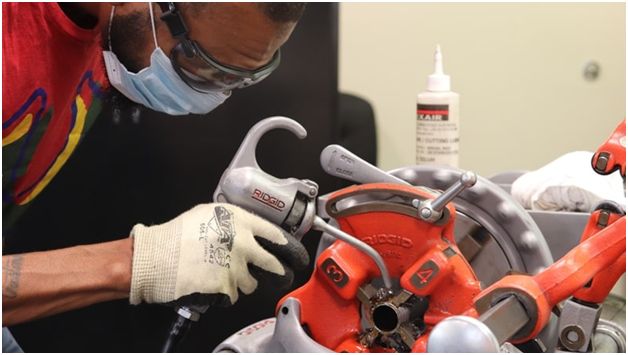
The program is 80% hands-on. You’re not reading about pipe installation. You’re doing it — with real tools, in conditions that mirror actual job sites. Additionally, PTTI’s Career Services team begins working with students around 700 hours into the program. Resume writing, interview coaching, employer introductions, and career identification — all before you even graduate.
How to become a pipefitter in Philadelphia looks like this:
PTTI’s overall placement rate for pipefitting and related programs stands at approximately 92%. Many students receive job offers before they even complete the program — because Philadelphia’s demand for trained pipefitters and sprinkler fitters is that consistent. Financial aid is available through FAFSA, Pennsylvania’s PA-TIP state funding, grants, federal loans, and veterans’ education benefits.
The sprinkler and pipefitter technician salary in USA rewards trained, certified professionals with income that starts competitive and grows significantly over time. From apprentice wages of $33,000–$44,000 to journeyman pay of $75,000–$105,000+ and industrial specialist earnings that clear six figures — this career delivers financially at every stage.
The pipefitter salary by state 2026 data is clear. Top states like Illinois, Washington, Alaska, and New Jersey pay pipefitters and sprinkler fitters some of the highest trade wages in the country. And Philadelphia’s position between New Jersey and New York puts PTTI graduates in the middle of one of the strongest regional markets for this trade.
PTTI’s pipefitting and sprinkler technician program gets you there in six months. Career services gets you hired. And the demand across construction, industrial facilities, and fire protection makes this one of the most stable, well-paying trades you can enter right now.
PTTI Mentors will help you learn tools practically during sessions. From pie charts to graphs and measurements to installed pipe and utility outlets in residential homes. Instead of focusing only on one area, learn both sprinkler installation and industrial piping systems. They will teach you both aspects in plumbing certifications. Employers value technicians who can work across commercial, residential, and industrial projects. The more versatile you become, the more opportunities you can pursue.

Here comes the most important part: how to maximize your sprinkler. The trade school certifications from PTTI will demonstrate your commitment to professional growth. They also show employers that you understand current safety standards and installation practices. Many companies are willing to pay higher wages to certified technicians because they require less on-the-job training.
Experience remains one of the biggest salary boosters in this profession. After developing your core skills, consider working in industries such as:
Construction technology continues to evolve. Therefore, learning new installation methods, digital tools, and fire protection systems can make you even more valuable to employers. These sectors often offer competitive pay, overtime opportunities, and long-term career stability.
Technical knowledge alone will not maximize your salary. Employers also promote workers who communicate well, solve problems, and lead teams effectively. As you gain experience, you can move into positions such as:
Increasing your Sprinkler and Pipefitter Technician Salary requires more than simply spending time on the job. Along with doing a few certifications, whether you are new or already a technician, it will matter most to you. Therefore, in this journey, the PTTI sprinkler and pipefitting training program will help you build the future. By completing a quality pipefitter training program, earning certifications, expanding your technical knowledge, and developing leadership skills, you can position yourself for long-term success.
The demand for skilled technicians continues to grow across the country. As a result, professionals who invest in continuous learning and hands-on experience often enjoy better career growth, higher earning potential, and greater job security. Therefore, if you really want to maximize your salary and advance your career, you must enroll in PTTI’s program.
If you’re ready to build a rewarding sprinkler fitter career, the perfect time is to strengthen your skills and take the next step. Moreover,these certifications improve your chances of securing higher-paying pipefitter jobs in the USA, especially on large commercial and industrial projects. Especially in bigger states like Washington, New York, Illinois, and more. This guide is beneficial for beginners and professionals in the industry who want to upskill to earn a 6-figure salary. The decision you make today determines where you are twelve months from now.
Contact PTTI to learn about enrollment, financial aid, and career placement →
The average salary for a Sprinkler Fitter is $61,920 per year or $30 per hour nationally in 2026. The typical pay range sits between $51,154 at the 25th percentile and $75,561 at the 75th percentile. Top earners — experienced journeymen in union markets — report making up to $90,116 annually.
Illinois leads the country for pipefitters when adjusted for cost of living — with average annual wages of $87,900–$96,200. Washington, Alaska, New York, and Massachusetts round out the top five highest-paying states. Union presence, industrial density, and active construction markets are the three factors that consistently push state wages into the top tier.
Significant. In major metropolitan areas, union pipefitters’ total compensation packages — wages, health insurance, and pension contributions — can exceed $100,000 annually. Non-union pipefitters doing equivalent work in the same market typically earn 15–25% less in base pay and receive fewer or no benefits. The hourly wage alone for union journeyman pipefitters often ranges from $45 to $60+ in top-paying markets like Chicago, New York, and Seattle.
PTTI’s Steam, Sprinkler, and Pipefitting Program runs for 26 weeks, with 80% hands-on training. Students will learn industrial pipefitting fundamentals, along with valve installation, pipe fabrication, blueprint reading, pipe welding basics, and OSHA-aligned safety procedures.
Yes. PTTI accepts FAFSA (school code: 042213). Federal grants, including the Pell Grant, federal loans, Pennsylvania’s PA-TIP state funding, institutional financing plans, and veterans’ education benefits are all available for qualifying students. The program costs a fraction of the cost of a four-year degree — and since it runs just 26 weeks, graduates enter the workforce and start earning in the trades long before traditional college students even complete their first year.
Plumber/Pipefitter in 6 months – steam program from the Top Trade School in Philadelphia .Become a Pipe-fitter with PTTI’s short-term pipe fitting, sprinkler and steam program providing technician skills required for the plumbing industry.
Read More :