
Smart thermostats, connected sensors, and self-diagnosing equipment are everywhere now. That raises a fair question for anyone eyeing the trade. Will smart systems replace the people who install and repair them? The short version is reassuring. Automation is changing the work, but it is not erasing it. In fact, smart technology is making skilled HVAC technician jobs more valuable, not less.
This guide explains what smart HVAC systems actually change on the job. It covers the real automation risk, the current demand, what technicians earn, and the exact skills that keep you employable. It is written for students, career changers, veterans, and adult learners across Philadelphia who want a stable trade with a future. If you like solving problems with your hands and your head, keep reading.
No, HVAC will not be fully automated. Smart systems automate monitoring and adjustment, not physical installation or repair. A connected system can flag a fault, but it cannot climb into a crawlspace, replace a compressor, or braze a line. Skilled hands and judgment still do that work, which is why HVAC technician jobs remain in demand.
Automation in this trade is a tool, not a replacement. It handles the routine and the repetitive. Meanwhile, the complex, physical, and safety-critical parts stay firmly human. This pattern shows up across the trades, and PTTI explores it further in its look at why AI can’t replace skilled trades jobs.
Smart HVAC systems shine at data and control. They watch temperatures, track energy use, and adjust settings automatically. Here is what they typically handle on their own:
These features improve comfort and efficiency. However, they still depend on a trained technician to install, connect, calibrate, and fix them.
HVAC work is physical, variable, and situational. Every building is different. Ductwork, wiring, refrigerant lines, and airflow all shift from one job to the next. A robot cannot diagnose a strange noise in an attic unit. It cannot decide whether a part needs cleaning or replacing. That kind of judgment defines the trade. PTTI makes a similar point in its piece on future-proof trade jobs that can’t be automated.
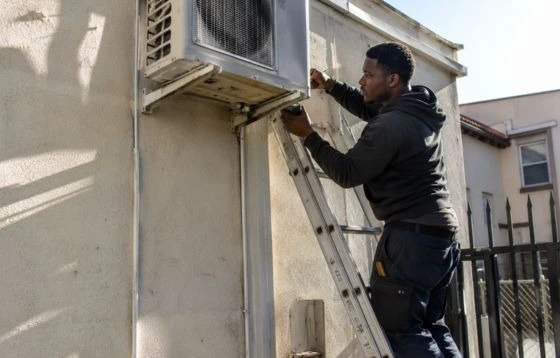
Smart HVAC systems change the technician’s toolkit, not the technician’s importance. Today’s systems add sensors, software, and connectivity to traditional heating and cooling. As a result, the modern HVAC technician career now blends mechanical skill with digital know-how. That combination is exactly what employers want, and it is harder to automate than either skill alone.
The work is shifting from purely manual to hybrid. Technicians still turn wrenches. Now they also read data, connect controls, and troubleshoot software-driven faults. This makes the role more interesting and more secure.
Connected controls are the most visible change. Smart thermostats and building management systems now run many properties. Someone has to install them correctly. Someone has to wire them, configure them, and integrate them with existing equipment. That someone is a trained technician. These systems also break, glitch, and need updates, which keeps skilled hands busy.
Modern equipment reports its own health. Sensors track pressure, temperature, and airflow in real time. Remote monitoring lets technicians spot problems early. This does not remove the technician. Instead, it changes how they work and often makes them more efficient. PTTI covers this broader shift in its overview of how AI is changing automation and manufacturing careers.
The smart-era technician is part mechanic and part diagnostician. They interpret data, then act on it. Consider the new day-to-day:
This blended role is far more automation-resistant than routine manual labor alone.
HVAC technician jobs stay in demand because buildings always need climate control. According to the U.S. Bureau of Labor Statistics, employment of heating, air conditioning, and refrigeration mechanics is projected to grow 8% from 2024 to 2034. That rate is much faster than the average for all occupations.
Demand comes from many directions at once. New construction needs systems installed. Aging buildings need systems replaced. Climate extremes push heating and cooling harder. Energy rules drive upgrades to efficient equipment. None of that slows down because a thermostat got smarter.
The federal data tells a clear story about this trade. Here are the key figures worth knowing:
| Metric | Figure (BLS, 2024–2034) |
| Projected job growth | 8% (much faster than average) |
| Openings per year | About 40,100 |
| Median annual pay (2024) | $59,810 |
| Jobs held (2024) | About 425,200 |
| Typical entry education | Postsecondary nondegree award |
Much of that yearly opening total comes from replacement demand. Experienced workers retire, and employers need trained people to fill the gap.
Philadelphia offers strong ground for an HVAC technician career. The region has aging housing, dense commercial buildings, and active construction. All of it needs climate systems installed and maintained. Hot summers and cold winters keep both heating and cooling in constant use. Employers across Philadelphia, plus nearby communities like Camden, Cherry Hill, Drexel Hill, Lansdowne, and Darby, all draw from the same regional labor pool. That gives trained technicians real mobility. PTTI’s related read on heat pump installation training shows how demand is shifting toward efficient, electric heating skills.
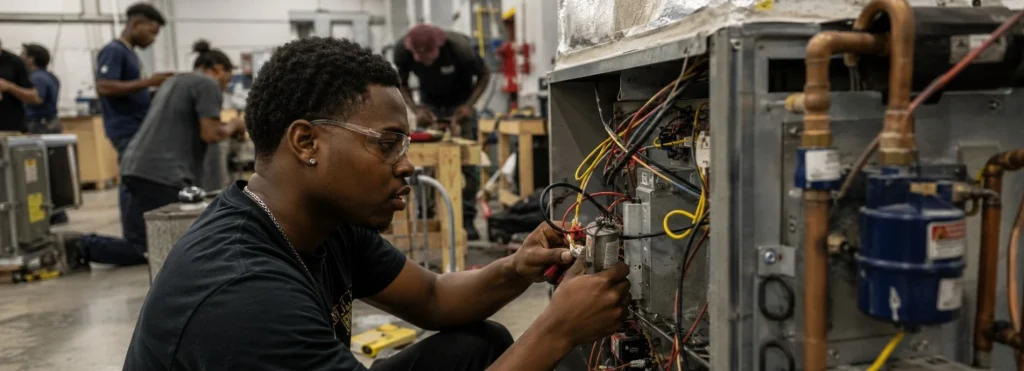
An HVAC technician career offers solid pay without a four-year degree. The national median wage reached $59,810 in 2024, per BLS data. Top earners and specialists can earn well above that. Pay rises with certifications, experience, and specialization in commercial or industrial systems. For a trade you can enter in months, that return is hard to beat.
Earnings also climb with overtime during peak seasons. Summer and winter both create surges in demand. That means more hours and more pay for those who want it.
Pay varies by experience, employer, and specialty. Still, the trajectory is encouraging. Here is a simple view of the earning path:
Smart-system skills add value at every stage. Employers pay more for people who can handle connected controls.
HVAC is not a dead-end trade. It opens doors. Experienced technicians move into commercial and industrial work, controls specialization, project supervision, or business ownership. Others branch into related mechanical fields. Because the work overlaps with electrical and piping systems, cross-skilled technicians become especially valuable. This is why many students explore PTTI’s Steam, Sprinkler & Pipe Fitting program and its Manufacturing, Automation & Electrical program for mechanical and controls foundations that support HVAC work.
The most automation-proof HVAC technician blends physical skill with digital ability. Machines handle data. People handle diagnosis, installation, and repair. When you combine mechanical craft with controls knowledge, you become hard to replace. That blend is exactly what a strong hands-on program builds.
Employers today want technicians who adapt. They want people who understand both the wrench and the software. Building that mix is the smartest career move in this field.
Mechanical skill is the foundation. You cannot fake it, and software cannot replace it. Core skills include:
These skills only come from real practice on real equipment. That is why applied training matters so much.
Modern HVAC runs on electricity and controls. Technicians need to wire safely and understand circuits. They also need to connect and configure smart systems. This overlap with electrical work is a major advantage. It makes technicians more flexible and more valuable across the Philadelphia skilled trades market.
Troubleshooting is where value concentrates. A smart system reports a fault. The technician must find the true cause and fix it. That takes logic, experience, and hands-on ability combined. It is the single hardest part of the job to automate.
Here is a clear path from beginner to job-ready:
A structured, hands-on program compresses this roadmap into months, not years.
To start an HVAC technician career in Philadelphia, enroll in a hands-on training program that teaches mechanical, electrical, and controls skills together. Practice on real equipment, prepare for certification, and connect with local employers. A focused trade program can make you job-ready far faster than a traditional degree.
Getting started does not require years of school. It requires the right training and real practice. That is the fastest route into a stable, well-paid trade. To compare options, prospective students can explore all PTTI programs or reach out to admissions with questions about HVAC and mechanical systems training.
You cannot learn HVAC from a screen alone. The trade is physical and situational. Online-only courses teach theory, but they skip the reps that build real skill. Self-teaching leaves dangerous gaps in safety and certification readiness. Hands-on training solves all of that. It gives you booth time, tool time, and instructor feedback. It also prepares you for the certifications employers expect. PTTI reinforces this in its discussion of why a skilled trades career makes sense in 2026.
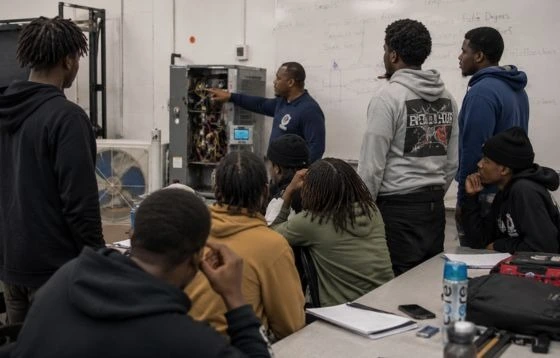
A strong program mirrors the job site. Students train on real equipment in applied labs. They learn safety, diagnostics, and repair by doing. They also build the electrical and controls skills that smart systems demand. Just as importantly, good programs support the transition to work. PTTI’s career and job opportunities resources reflect that focus on real outcomes, not just a certificate.
HVAC is one strong option among several great trades. The right choice depends on your interests. Some people love engines. Others love metalwork or building systems. The good news is that all these trades share one trait. They resist automation because they demand physical skill and judgment.
Here is a quick comparison to help you decide:
| Trade | Core Appeal | Automation Resistance |
| HVAC / mechanical systems | Climate systems, controls, steady demand | High |
| Welding | Metal fabrication, hands-on craft | High |
| Automotive repair | Diagnostics, modern vehicle systems | High |
| Pipefitting | Mechanical systems, infrastructure | High |
If you are still weighing options, PTTI’s guide on skilled trade jobs that face less risk of automation is a helpful next read. You can also explore related fields like Welding Technology or Automotive Training and Repair to compare.
Smart systems are reshaping HVAC, but they are not replacing the people who run them. The technicians who thrive will blend hands-on skill with digital know-how. That is a career you can build, and you can start sooner than you think.
If a stable, automation-resistant trade appeals to you, take the next step now. Explore your financial aid options, review veterans’ benefits if they apply to you, or schedule a campus tour to see the labs in person. When you are ready, contact admissions to find the training path that fits your goals. Your skilled trades career in Philadelphia can start this year.
No. Smart systems automate monitoring and control, not physical installation or repair. HVAC technician jobs stay in demand because someone must install, wire, calibrate, and fix these systems. Hands-on training, like the kind PTTI emphasizes, keeps you job-ready in this evolving field.
Yes. HVAC offers strong demand, solid pay, and no four-year-degree requirement. BLS projects 8% job growth through 2034, much faster than average. With hands-on HVAC training in Philadelphia, you can become job-ready in months and enter a stable, well-paid trade.
The national median wage was $59,810 in 2024, according to BLS. Pay rises with experience, certifications, and specialization in commercial or smart systems. Overtime during peak heating and cooling seasons can raise earnings further, making HVAC a rewarding skilled trades career.
Modern technicians need mechanical, electrical, and controls skills combined. They install equipment, handle refrigerant safely, and troubleshoot smart systems. This blend of hands-on and digital ability is exactly what employers want, and it is what quality applied training programs are built to develop.
Enroll in a hands-on program that teaches mechanical, electrical, and controls skills on real equipment. Prepare for certification and connect with local employers. Prospective students can explore PTTI’s programs or contact admissions to ask about HVAC and mechanical systems training options.