
A career in healthcare doesn’t always mean becoming a doctor or a nurse. In fact, many professionals work behind the scenes to ensure patients receive safe, high-quality care every day. One of the most important among them is a sterile processing technician.
If you’re considering this career path, choosing from the many sterile processing technician programs in Philadelphia is one of the first and most important decisions you’ll make. However, not all programs offer the same level of training. While classroom instruction provides the knowledge you’ll need, an externship allows you to apply those skills in a real healthcare environment.
As a result, you’ll graduate with practical experience, increased confidence, and a better understanding of workplace expectations. Whether you’re starting your first career or making a career change, selecting a program that offers hands-on training can help you get off on the right foot.
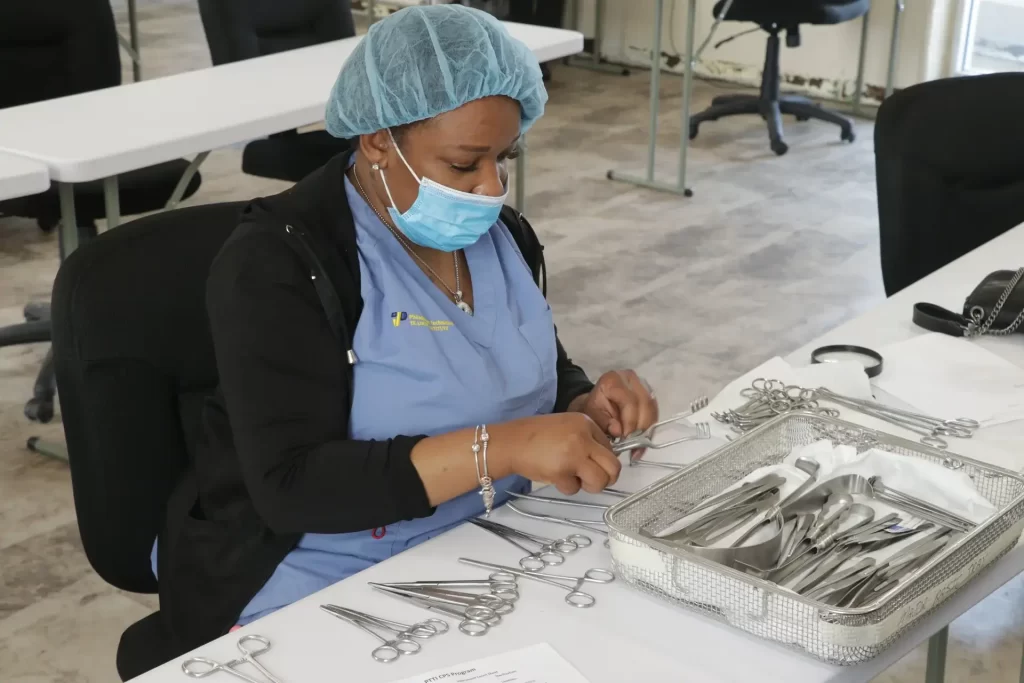
Learning the theory behind sterilization is essential. However, healthcare is a hands-on field, and practical experience is just as valuable.
An externship allows students to work in hospitals or other healthcare facilities under the guidance of experienced professionals. During this time, you’ll see how sterile processing departments operate, learn workplace procedures, and understand how different healthcare teams work together.
Moreover, you’ll have the opportunity to apply classroom concepts in real situations. Instead of simply reading about sterilization techniques, you’ll gain experience using industry-standard equipment and following infection prevention protocols.
Most importantly, an internship helps build confidence before entering the workforce. Many employers appreciate candidates who already understand clinical environments, making practical experience a valuable addition to your resume.
Although every school has its own curriculum, most sterile processing technician programs in Philadelphia focus on the skills employers expect from entry-level technicians.
Students typically learn how to:
Clean and decontaminate surgical instruments
Inspect instruments for damage and functionality
Assemble surgical trays correctly
Operate sterilization equipment safely
Package and store sterile supplies
Together, these skills prepare students to support surgical teams while maintaining patient safety.
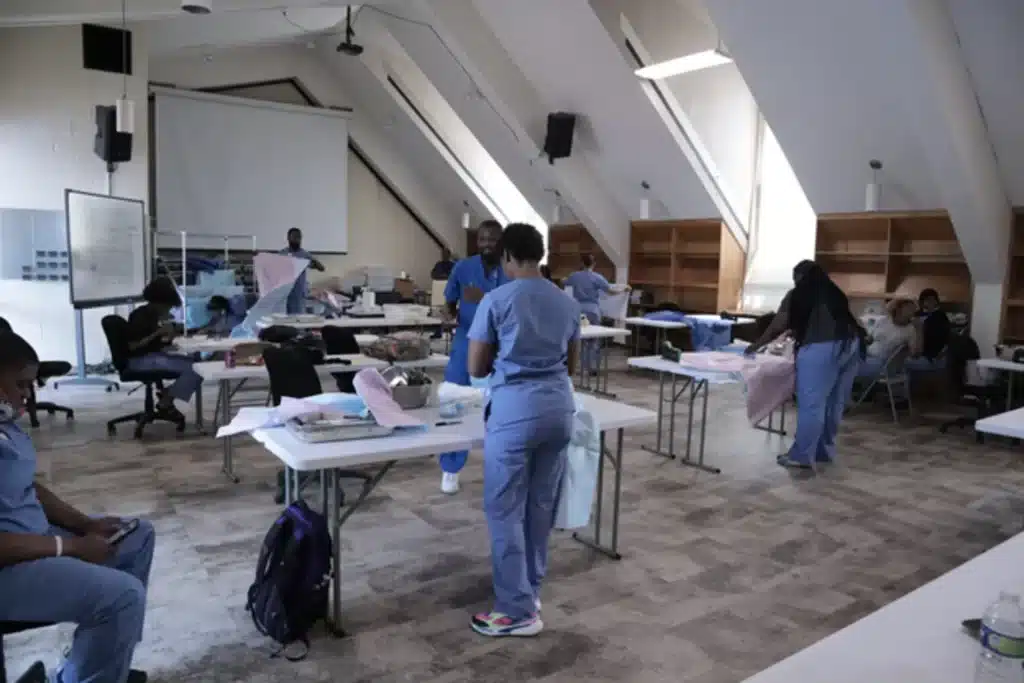
With several training options available, it’s important to compare programs carefully rather than making a decision based on tuition alone.
When researching schools, look for programs that offer:
Hands-on laboratory training
Structured externship opportunities
CRCST certification preparation
Experienced instructors
Additionally, ask whether the school arranges the externship or whether students are responsible for finding their own placement. This can make a significant difference in your overall learning experience.
Classroom education provides you with the knowledge needed to understand sterile processing. But it is in the practical training that many students gain confidence.
You will be working with experienced technicians who will help you get familiar with the hospital routines. You will also improve your technical skills and understand the importance of accuracy in each task.
You will also learn to handle responsibilities in a fast-paced healthcare environment with strict safety standards. These experiences can smooth the transition from student to employee.
Many employers prefer candidates who are prepared to earn the Certified Registered Central Service Technician (CRCST) credential.
For this reason, many sterile processing technician programs in Philadelphia include certification preparation in their curricula.
Students generally study topics such as:
Having this knowledge not only prepares you for certification but also helps you perform confidently on the job.
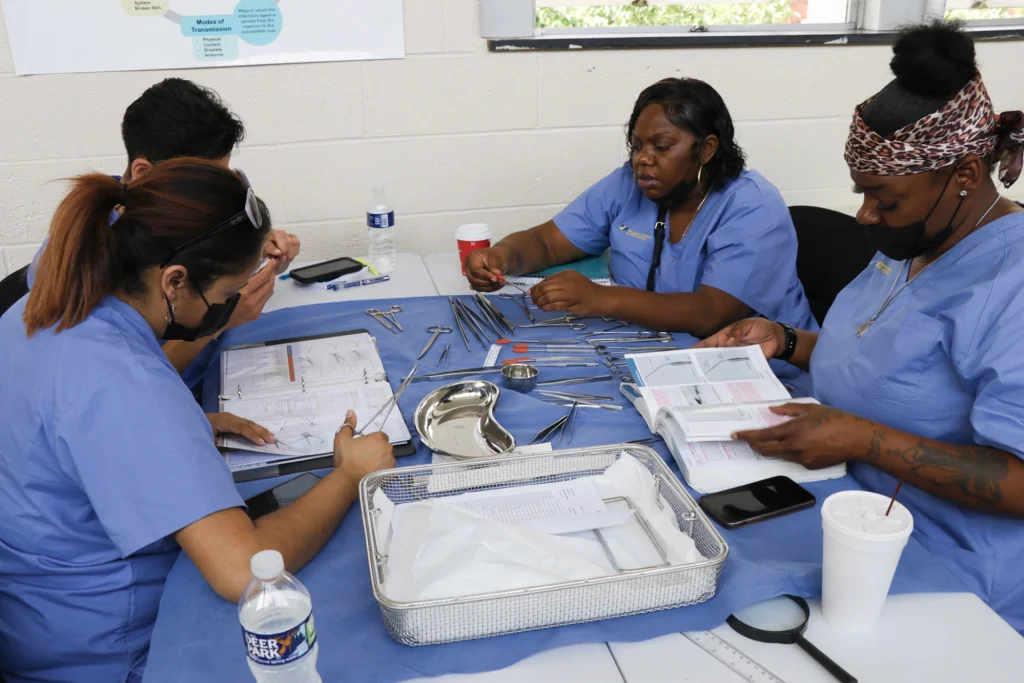
After completing your training, you’ll have the opportunity to work in a variety of healthcare settings.
These may include:
As you gain experience, you may also qualify for supervisory, quality assurance, inventory management, or leadership roles within sterile processing departments.
Before choosing a program, consider asking these questions:
Taking the time to ask these questions can help you choose a program that aligns with your career goals.
The U.S. Bureau of Labor Statistics projects continued employment growth for medical equipment preparers through 2034, according to its Occupational Outlook Handbook. In a market like Philadelphia, with its large hospital footprint, that demand translates into consistent hiring. To see how the field is evolving, PTTI’s overview of why sterile processing is a strong career choice in 2026 offers a helpful, current perspective.
More than schedules and tuition costs matter when choosing a sterile processing technician program in Philadelphia. Look for a program that has classroom instruction, hands-on lab practice, externship opportunities, and certification preparation.
After all, real-world experience can make a difference as you launch your healthcare career. Choosing a program that provides both knowledge and hands-on training will help you feel more prepared to get out into the workforce and help keep patients safe from day one.
Read More