
Every surgery that happens in a hospital depends on a set of instruments that are spotless, fully functional, and completely free of microorganisms. The person who makes that possible rarely stands in the operating room, and most patients never learn their title. That person holds a sterile processing tech job, and their full shift is one of the most consequential yet least visible workflows in modern healthcare.
If you have ever wondered what a sterile processing technician actually does between clocking in and clocking out, this article walks through a real hospital shift from start to finish. It follows the instruments as they move through the sterile processing department, explains what happens at each station, answers whether these technicians ever interact with patients, and shows why this quiet, detail-driven role has become one of the steadiest entry points into healthcare. It is written for career changers, high school graduates, veterans, and adult learners in Philadelphia and across Pennsylvania and New Jersey who want a clear, honest picture before deciding whether this path fits them.
Quick path in: Focused training with a hospital externship can prepare you for an entry-level role in months, not years.
A sterile processing tech decontaminates, inspects, assembles, packages, and sterilizes the surgical instruments and medical equipment that hospitals reuse. Working inside the sterile processing department, the technician ensures every tray sent to the operating room is complete, functional, and free of contamination, which directly protects patients from infection.
That single-sentence answer hides a surprising amount of skill. A sterile processing technician has to know hundreds of instruments by name and function, read detailed count sheets, operate industrial sterilizers, interpret chemical and biological test results, and document every step for traceability. It is precise, protocol-driven work where small errors carry real consequences, which is exactly why hospitals train and certify the people who do it.
If you want the fuller picture beyond a single shift, PTTI’s overview of the everyday life of a sterile processing technician is a useful companion to this walkthrough.
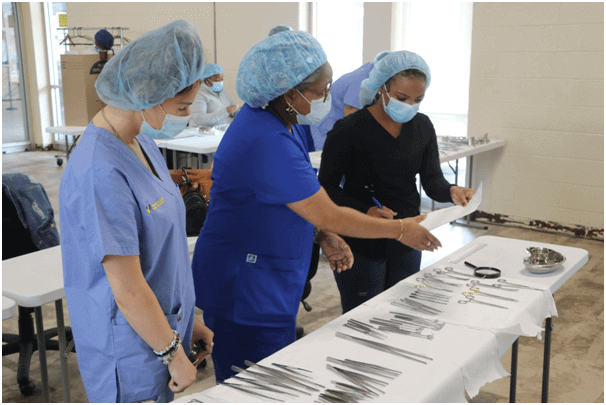
The sterile processing department, sometimes called central sterile processing or the SPD, is usually located near the surgical suites but sealed off from them. It is divided into distinct zones separated by physical barriers and airflow controls, and technicians move through those zones in a strict one-directional flow: dirty to clean, never the reverse. Understanding those zones is the key to understanding a full shift, because the layout of the room is essentially the layout of the day.
A typical hospital sterile processing department runs continuously, because surgeries and emergencies do not stop at 5 p.m. That is why the sterile processing tech job exists across day, evening, and overnight shifts, and why the pace and priorities shift depending on when you work.
💡 Want to see a real department up close? Schedule a campus tour to see the kind of equipment sterile processing technicians train on before their first shift.
The clearest way to understand a sterile processing tech job is to follow the instruments. Here is how a shift typically unfolds as trays travel from the operating room and back again
The shift usually begins on the decontamination side, where used, contaminated instruments arrive from surgery. This is the most physically demanding and safety-intensive part of the sterile processing department. Wearing full personal protective equipment, the technician:
Nothing can be sterilized if it is not first perfectly clean, so the standard here is exacting. A single retained particle can compromise a whole tray. This zone is where a sterile processing technician earns trust, because everything downstream depends on the quality of the cleaning done here.
Once instruments pass through the washers, they cross into the clean side. Here the work becomes methodical and detail-obsessed. The technician:
Assembling a single complex tray can involve dozens or even hundreds of pieces, each of which must be present and correct. This is where knowledge of instrumentation separates a capable sterile processing technician from a beginner, and it is a core focus of quality sterile processing training.
With trays assembled and wrapped or containerized, the technician moves them into sterilization. Different instruments require different methods:
The technician loads sterilizers correctly, runs the appropriate cycle, and, critically, verifies the result. Every load is monitored with chemical indicators and periodic biological indicators that confirm the process actually killed all microorganisms. If a test fails, the load is quarantined and reprocessed. This verification step is non-negotiable and heavily documented, forming the compliance backbone of central sterile processing.
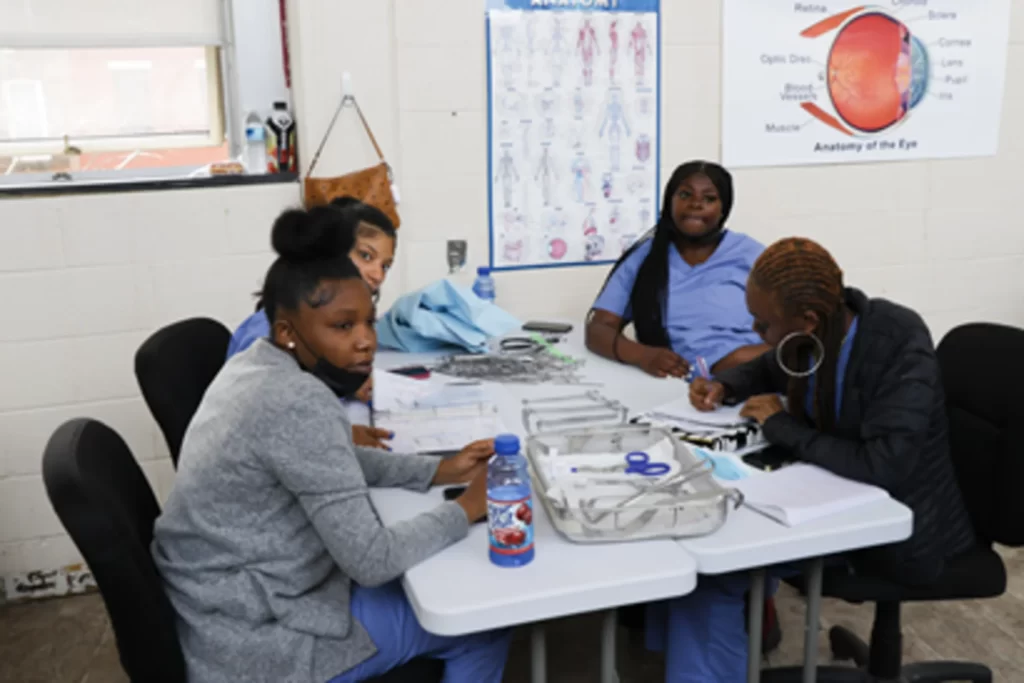
Finally, sterilized trays are cooled, checked, and moved to sterile storage. As surgeries are scheduled, the technician assembles case carts, the complete sets of instruments and supplies a specific procedure requires, and delivers them to the operating room. Throughout, the technician logs every tray in a tracking system so any instrument can be traced back to the exact load, cycle, and technician who processed it.
By the end of a shift, a single sterile processing technician may have moved dozens of trays through this entire cycle, often while triaging urgent requests from ongoing surgeries. The rhythm of the sterile processing tech job is this loop, repeated with precision, hour after hour.
No, sterile processing technicians generally do not see or treat patients. They work inside the sterile processing department, behind the scenes, and their “customer” is the surgical team rather than the patient directly. Patient safety is the entire point of the work, but it is delivered through instruments, not bedside contact.
For many people, this is a genuine advantage. If you want a meaningful role in healthcare that protects patients without the emotional intensity or direct clinical demands of bedside nursing, a sterile processing tech job offers exactly that balance. It rewards focus, consistency, and technical precision over the interpersonal, high-adrenaline pace of frontline patient care. Some technicians do eventually move toward roles with more OR interaction, and PTTI’s look at how sterile processing techs earn their pay explores how that behind-the-scenes value translates into a career.
Because hospital operating rooms run around the clock, the sterile processing department does too. The core workflow stays the same, but the character of the shift changes.
| Factor | Day / Evening Shift | Overnight Shift |
| Volume | High, tied to the scheduled surgery board | Lower steady flow, plus emergency cases |
| Pace | Fast, constant tray turnover | Quieter stretches punctuated by urgent requests |
| Team size | Larger, more support on hand | Smaller crews, more independence |
| Pay | Base rate | Base rate plus shift differential |
Overnight and evening shifts typically add a pay differential, which is one reason total earnings in a sterile processing tech job can climb well above the base hourly rate for technicians willing to work non-standard hours. The overnight role also tends to demand more self-reliance, since fewer colleagues are available to consult.
A shift in the sterile processing department calls on a specific mix of technical and personal skills. Employers hiring for a sterile processing tech job consistently look for:
These are learnable, trainable skills. That is why structured, hands-on preparation matters so much, and it is the foundation of PTTI’s approach to getting students ready for a real department from day one.

Sterile processing is one of the more resilient entry points into healthcare, and the numbers support that. According to the U.S. Bureau of Labor Statistics, employment of medical equipment preparers, the federal category that includes sterile processing technicians, is projected to grow 10% from 2024 to 2034, much faster than the average for all occupations, with roughly 10,900 openings each year nationwide.
The reasons are structural. Surgical volumes are rising with an aging population, every procedure requires reprocessed instruments, and staffing shortages have left many hospitals actively hiring. Because surgery simply cannot happen without sterile instruments, the role is unusually recession-resistant.
Pay varies by facility, shift, certification, and experience. Nationally, the BLS reported a median wage of about $47,700 per year for this occupation as of May 2025, with top earners exceeding roughly $69,950. In the Philadelphia market, reported averages tend to run higher, often equivalent to the mid-$50,000s and above once differentials and overtime are included.
| Level / Setting | Approximate Annual Range |
| Entry-level (new technician) | $37,000 – $45,000 |
| Experienced, certified technician | $50,000 – $60,000 |
| Night shift with differential / overtime | $56,000 – $65,000 |
| Lead, specialist, or supervisor | $60,000 – $90,000+ |
Nearby states also pay competitively, with New Jersey and Delaware median wages reported above Pennsylvania’s, which widens the local job market for technicians willing to commute across the tri-state area. For a broader view, PTTI maintains a detailed sterile processing technician salary by state guide.
💵 Curious what you could earn locally? Explore the Sterile Processing program and talk with an advisor about outcomes in the Philadelphia region.
Certification is not optional in Pennsylvania. The state is among the few that require sterile processing technicians to be certified, which makes credentialing central to landing and keeping a sterile processing tech job here. The dominant credential is the CRCST, the Certified Registered Central Service Technician certification, administered by the Healthcare Sterile Processing Association (HSPA).
Earning the CRCST involves passing a comprehensive exam and completing a set number of hands-on hours in the field, with a provisional pathway that lets you begin working while you finish your required hours. Many Philadelphia-area job postings explicitly require candidates to hold or obtain the CRCST within a set window after hire. Beyond entry level, technicians can stack advanced HSPA credentials, such as instrument specialist, endoscope reprocessing, and leadership certifications, each of which opens higher-paying and more specialized roles.
Certification does more than satisfy a state rule. It signals to employers that a technician can perform to standard, and certified technicians frequently earn more than their non-certified peers at the same facility. PTTI’s guide to why sterile processing certification matters breaks down how the credential shapes hiring and pay.
The path into this field is refreshingly direct. You generally need a high school diploma or GED, focused training that covers instrumentation, decontamination, sterilization, and infection control, and a hospital externship where you apply those skills in a real sterile processing department. From there you sit for the CRCST and step into an entry-level role.
That is precisely the model PTTI’s Sterile Processing and Central Services Technician program is built around: hands-on instruction on industry-standard equipment, certification preparation, and connections to the kind of employers who hire in Philadelphia and the surrounding counties. Because the training is concentrated on exactly what the job requires, motivated students can move from enrollment to a career-ready credential in months rather than years, making this one of the faster ways for adults and career changers to enter healthcare. You can review real careers and job opportunities to see where graduates land.
If you learn best by doing, this trade rewards you, because almost everything about a sterile processing tech job is practiced with your hands under expert guidance. PTTI’s perspective on how to excel in a sterile processing career offers a longer view of where the role can lead.
A full shift in the sterile processing department is a disciplined loop of cleaning, inspecting, assembling, sterilizing, verifying, and delivering, repeated with a level of precision that patient safety absolutely depends on. It is demanding, detail-driven, and largely invisible, and that is exactly what makes it dependable. A sterile processing tech job offers a stable, in-demand way into healthcare that does not require years of schooling or direct bedside care, with clear paths to specialize and advance.
If this behind-the-scenes work sounds like the right fit, the next step is straightforward: get trained on real equipment, earn your certification, and step into a department that needs you.
🚀 Ready to begin? Explore PTTI’s Sterile Processing program, request information, or schedule a campus tour to see where a sterile processing tech job could take you.
A sterile processing tech moves surgical instruments through a complete cycle: receiving and decontaminating used tools, inspecting and assembling them into trays, sterilizing the trays, verifying the results, and delivering sterile case carts to the operating room, documenting every step along the way.
A shift follows the instruments through the sterile processing department’s zones, from the dirty side to the clean side to sterilization and storage. It is precise, protocol-driven, physically active work, often at a steady pace with urgent requests from ongoing surgeries mixed in.
No. Sterile processing technicians work behind the scenes in the department and do not provide direct patient care. Their work protects patients through properly sterilized instruments rather than bedside contact, which appeals to people who want a healthcare role without frontline clinical demands.
Most shifts run about eight to twelve hours, and because hospital departments operate 24/7, technicians can work day, evening, or overnight schedules. Overnight and evening shifts usually include a pay differential.
Yes. Pennsylvania is among the states that require certification. The CRCST credential from HSPA is the standard entry-level qualification, and many employers require it within a set period after hiring.
Pay varies, but Philadelphia-area technicians commonly earn the equivalent of roughly $50,000 to $60,000 per year with experience, certification, and shift differentials, above the national median for the occupation.
Yes. With projected 10% national growth from 2024 to 2034, steady hospital demand, and a short training path, a sterile processing tech job is a stable, accessible entry into healthcare.
PTTI offers hands-on sterile processing training with certification preparation and externship experience, serving students across Philadelphia, Pennsylvania, and nearby New Jersey communities.