
Most people never think about heating and cooling until something breaks on the hottest or coldest day of the year. That is when an HVAC technician shows up, diagnoses the problem, and gets a home or business comfortable again. It is steady, hands-on, problem-solving work, and it pays well without requiring a four-year degree. If you are curious what the job actually involves, this walkthrough of a day in the life of an HVAC technician gives you the honest version, from the first service call to the real take-home pay at the end of the week.
We will cover what an HVAC technician does daily, what the hours are like, the tools and technology on a modern job, and the certifications that shape the work. Just as importantly, we will look at real pay in Philadelphia and across Pennsylvania and New Jersey, using current federal wage data rather than inflated marketing numbers. Whether you are a high school graduate, a career changer, a veteran, or an adult learner, understanding a day in the life of an HVAC technician is the best way to decide if this trade fits you.
An HVAC technician installs, maintains, diagnoses, and repairs heating, ventilation, air conditioning, and refrigeration systems. On a typical day, that means driving to scheduled service calls, troubleshooting units that stopped working, replacing worn parts, checking refrigerant and airflow, testing electrical connections, and confirming that equipment runs safely before leaving.
The work blends physical skill with technical problem-solving. One One hour you might be reading a wiring diagram, the next you are on a rooftop checking a compressor. That mix is exactly why so many people enjoy the trade: it rewards curiosity and hands-on ability rather than sitting at a desk. Understanding this rhythm is the heart of any honest day in the life of an HVAC technician.
Here is how a working day usually unfolds for a residential and light-commercial HVAC technician. Your exact schedule will shift with your employer, the season, and whether you focus on service or installation.
The day often starts early. You check your dispatch list, load parts and tools into the van, and review the first few service calls. Mornings in summer are frequently cooling failures; in winter, they are no-heat calls. Your first stop might be a homeowner whose air conditioner stopped blowing cold air. You inspect the system, measure temperatures and pressures, and trace the fault, often a failed capacitor, a dirty coil, or a refrigerant issue.
By midday you are deep into the technical side of the job. Good diagnostics separate a strong HVAC technician from an average one. You use gauges, multimeters, and increasingly, connected diagnostic tools to pinpoint problems quickly. You explain the issue to the customer in plain language, quote the repair, and complete it. Clear communication matters here as much as technical skill, because customers are trusting you with expensive equipment.
Afternoons often shift toward planned work: a maintenance tune-up, a thermostat upgrade, or assisting on a system installation. Installations are more physical, involving ductwork, refrigerant lines, electrical connections, and careful startup testing. Preventive maintenance visits are steadier and build the customer relationships that keep service calls coming. This variety is a big reason the day in the life of an HVAC technician rarely feels repetitive.
Before heading home, you close out work orders, note parts used, and flag any follow-up jobs. Some technicians rotate through on-call shifts, responding to after-hours emergencies during heat waves or cold snaps. Those calls can mean extra pay, which is one way HVAC technicians raise their take-home income.
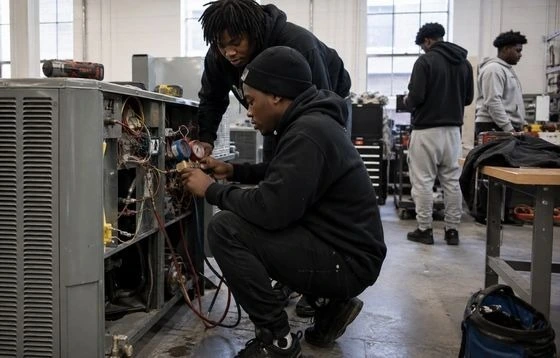
The work is active, hands-on, and problem-focused. An HVAC technician moves between homes and job sites, works in tight spaces like attics and crawlspaces, climbs to rooftops, and handles tools and equipment throughout the day. It can be physically demanding, and weather affects the workload, but many people find that far more satisfying than a desk job.
There are real trade-offs to know before you start. Summer and winter bring the busiest, hottest, and coldest conditions, since that is when systems fail most. You will lift equipment, work in awkward positions, and follow strict safety procedures around electricity and refrigerant. In exchange, you get variety, independence, steady demand, and the satisfaction of fixing something that matters to people. That balance is central to any realistic day in the life of an HVAC technician.
Most HVAC technicians work full time, roughly 40 hours a week, with overtime and on-call shifts during peak seasons. Schedules often include some evenings or weekends, especially in summer and winter when heating and cooling demand spikes and emergency service calls increase.
For new technicians, this seasonal pattern is worth planning around. Spring and fall tend to be steadier, while summer and winter can mean long, high-earning weeks. Overtime during these peaks is one of the most reliable ways an HVAC technician boosts annual pay, which brings us to the numbers.
HVAC pay is one of the strongest reasons to consider the trade, and the data backs it up. According to the U.S. Bureau of Labor Statistics, the national median wage for heating, air conditioning, and refrigeration mechanics and installers was $59,810 per year, or about $28.75 per hour, in May 2024. The lowest 10% earned under roughly $39,130, while the top 10% earned more than about $91,020.
Pennsylvania tracks slightly above the national median. Statewide, HVAC technician pay commonly runs a little higher than the U.S. midpoint, with entry-level technicians starting lower and experienced technicians reaching well into the $80,000s. In the Philadelphia market specifically, HVAC technician salary in Philadelphia is commonly reported in the high-$50,000s into the $70,000s once you gain experience, with union roles, commercial contracts, and overtime pushing the top of the range higher.
| Career Stage | Typical Annual Range (Philadelphia Area) |
| Entry-level HVAC technician | $40,000 – $52,000 |
| Experienced HVAC technician | $58,000 – $72,000 |
| Commercial / specialized / senior tech | $75,000 – $90,000+ |
A few honest notes on these figures. Overtime during peak seasons meaningfully raises take-home pay. Commercial and refrigeration specialists sit at the top of the wage scale because those skills are in short supply. And credentials matter: many technicians add income through advanced certifications and manufacturer training. When people compare an HVAC technician salary in Philadelphia to the cost and time of a four-year degree, the math often favors the trade.
For a broader view of local earning potential, PTTI’s guide to high-paying Philadelphia trade jobs without a degree puts HVAC pay in context alongside other skilled trades.
Today’s day in the life of an HVAC technician looks different than it did a decade ago. Technicians still rely on gauges, multimeters, vacuum pumps, and recovery machines, but connected diagnostics, smart thermostats, and app-based system controls are now part of everyday work. Reading data from a modern system is as important as turning a wrench.
The biggest current shift is refrigerant. Under a federal phase-down, older R-410A equipment is being replaced by systems using new lower-global-warming A2L refrigerants such as R-32 and R-454B. These refrigerants require updated safety training, new handling procedures, and specific tools. Technicians who train on current equipment and A2L procedures are more valuable to employers, which is exactly why hands-on, up-to-date HVAC training in Philadelphia matters so much for anyone entering the field in 2026.
The single most important credential in HVAC is EPA Section 608 certification. Federal law requires it for any technician who handles refrigerant, which covers nearly every HVAC job. Once you pass, the certification never expires, and it travels with you across state lines.
EPA 608 certification has four parts: Core (shared fundamentals), Type I (small appliances), Type II (high-pressure systems), and Type III (low-pressure systems). Passing Core plus all three types earns Universal certification, which qualifies you to work on the widest range of equipment. Quality HVAC training prepares you directly for this exam.
Two more points on credentials and local rules. Pennsylvania does not issue a statewide HVAC license, so employers hire based on demonstrated skill and EPA 608 certification. Philadelphia, however, has its own local permitting and mechanical requirements through the city’s Department of Licenses & Inspections, which matter more for contractors and business owners than for a technician working under an employer. For a student or career changer, that is freeing: you can focus on building real skill and earning EPA 608 certification rather than chasing paperwork.
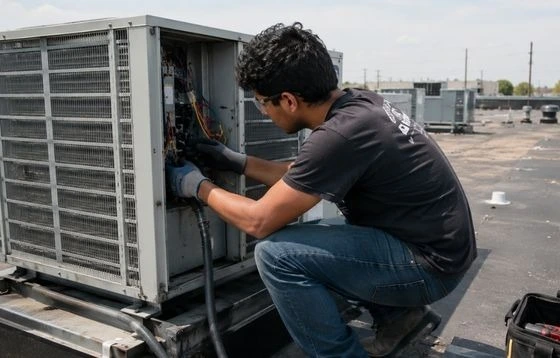
The job outlook for HVAC technicians is strong and durable. The Bureau of Labor Statistics projects 8% employment growth from 2024 to 2034, much faster than the average for all occupations, with about 40,100 openings each year. Much of that demand comes from replacing technicians who retire, so openings stay steady regardless of the wider economy.
Philadelphia adds its own local drivers. The region has a large stock of aging homes and commercial buildings that need system replacements, ongoing new construction, and rising demand for cooling as summers stay hot. Because EPA 608 certification and HVAC skills transfer anywhere, technicians trained here also find HVAC jobs across the tri-state area, from Camden, Cherry Hill, and Pennsauken in New Jersey to Drexel Hill, Lansdowne, Darby, and Ardmore in Pennsylvania. That geographic flexibility is a real advantage for a new HVAC technician.
If a day in the life of an HVAC technician sounds like work you would enjoy, the path in is shorter than most people expect. Rather than years of schooling, focused HVAC training in Philadelphia can prepare you for entry-level HVAC jobs in under a year. The most reliable route is hands-on training built around the skills and certifications employers actually test for.
Philadelphia Technician Training Institute (PTTI) built its HVAC program around that principle. Students train on industry-standard equipment, practice real diagnostics, learn safety and refrigerant handling, and prepare for EPA 608 certification. Just as important, PTTI focuses on career readiness: the communication, professionalism, and job-site skills that turn a certified beginner into a technician employers want to hire. That combination of hands-on training and workforce preparation is what gets graduates ready for real service calls from day one.
An HVAC career fits a wide range of people, which is part of its appeal:
If you like solving problems, working with your hands, and helping people in real situations, the day in the life of an HVAC technician may be exactly the career you are looking for.
🚀 Ready to explore the trade? Learn more about PTTI’s HVAC program, or contact admissions to talk through the timeline and your goals.
A day in the life of an HVAC technician is busy, varied, and genuinely rewarding. The strong demand across Philadelphia and the wider tri-state area. You do not need a four-year degree or years of debt. The need hands-on training, EPA 608 certification, and the willingness to learn a real skill.
If this kind of work sounds like a fit, the next step is simple. Explore PTTI’s HVAC training in Philadelphia, request information about the program, or schedule a campus tour to see the labs and equipment for yourself. Your HVAC career could start this year.
An HVAC technician spends the day on service calls, diagnosing and repairing heating and cooling systems, replacing parts, checking refrigerant and airflow, testing electrical connections, and installing or maintaining equipment. The daily mix of troubleshooting and hands-on work is the core of a day in the life of an HVAC technician.
The work is active, hands-on, and problem-focused. You move between homes and job sites, work in tight or high spaces, and follow strict safety procedures around electricity and refrigerant. It can be physically demanding, but many people prefer that variety and independence to a desk job.
Most HVAC technicians work full time, around 40 hours a week, with overtime and on-call shifts during peak summer and winter demand. Evenings and weekends can come up during busy seasons, and those extra hours often raise take-home pay.
The national median HVAC technician wage was $59,810 in 2024 (BLS). HVAC technician salary in Philadelphia is commonly reported from the high-$50,000s into the $70,000s with experience, with commercial work, union roles, and overtime pushing the top of the range higher.
Yes. EPA 608 certification is federally required for any technician who handles refrigerant, which covers nearly every HVAC job. It never expires once earned, and quality HVAC training prepares you directly for the exam.
With focused, hands-on HVAC training in Philadelphia, you can be job-ready for entry-level HVAC jobs in under a year, rather than spending years in school. From there, experience and certifications raise your pay and open specialized roles.
Yes. HVAC offers competitive pay, strong job security, and a short path to your first job. With 8% projected national growth through 2034 and steady local demand, HVAC jobs remain one of the more reliable skilled-trade choices.