
Most people ask one question before they train for a trade. Where does this actually lead? For heating and cooling work, the answer is clear and encouraging. This HVAC career roadmap shows you every rung, from your first day as a helper to a licensed, six-figure technician or business owner. It maps the exact certification that unlocks each stage. It also gives you honest pay ranges at each step, based on current federal wage data.
You will not find hype here. You will find a realistic path built for high school graduates, career changers, veterans, and adults across Philadelphia and the surrounding region. Heating and cooling is a trade you can start fast and grow for decades. Let’s walk the roadmap together.
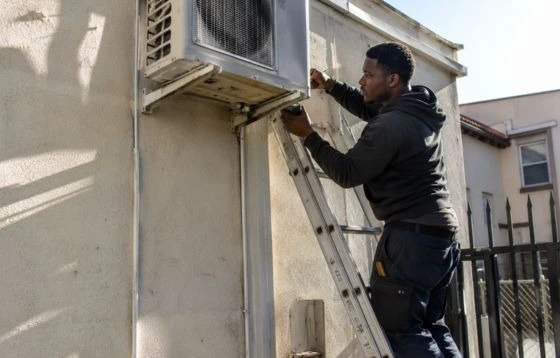
Heating and cooling systems keep homes, hospitals, schools, and businesses running every day. That makes HVAC one of the most reliable and rewarding skilled trades you can enter. Demand continues to grow, wages remain competitive, and training programs can be completed in a relatively short time. As more buildings rely on energy-efficient climate control systems, employers need qualified technicians. For anyone exploring career options in the region, this HVAC career roadmap begins with building a strong foundation through quality training and hands-on experience.
The numbers back up the opportunity. According to the U.S. Bureau of Labor Statistics, HVAC employment is projected to grow 8% from 2024 to 2034. That is much faster than the average for all jobs. The field also opens about 40,100 positions each year. Many of those come from retirements, so demand stays steady.
Philadelphia feels this demand directly. Aging buildings, hospitals, and new construction all need skilled technicians. Rising interest in heat pumps adds even more work, as our guide to heat pump installation training explains.
You do not need four years of college to start. Most people enter HVAC through a focused training program. That speed is a major reason many choose the trade over a degree, as covered in our look at high-paying jobs without a degree. The national median HVAC technician salary was $59,810 in May 2024. Top earners already pass $82,000. This is a trade where you start earning quickly and keep climbing.
Here is the short version. An HVAC career roadmap moves through five stages: helper or apprentice, EPA-certified technician, NATE-certified technician, commercial or refrigeration specialist, and finally master technician or business owner. Each stage is unlocked by a specific credential and rewarded with higher pay. Six figures is real, but it lives at the top rungs.
Think of the path as a ladder, not a leap. You start with basic skills and supervised work. Then you earn the credentials that let you work independently. With each credential, your pay and responsibility grow. The table below shows the full HVAC career path steps at a glance.
| Stage | Credential That Unlocks It | Realistic Annual Pay Range |
| 1. Apprentice / Helper | Program enrollment, entry training | $33,000 – $42,000 |
| 2. EPA-Certified Technician | EPA Section 608 | $45,000 – $54,000 |
| 3. NATE-Certified Technician | NATE + field experience | $55,000 – $68,000 |
| 4. Commercial / Refrigeration Specialist | Specialty skills and certs | $68,000 – $85,000 |
| 5. Master Tech / Business Owner | City license + business | $85,000 – $100,000+ |
These ranges are national estimates. Real pay varies by employer, overtime, and specialty. Philadelphia wages often track near or above the median because of strong local demand. Overtime during summer and winter peaks can push earnings higher. The key point is simple. Every rung has a clear entry requirement, so you always know your next move.
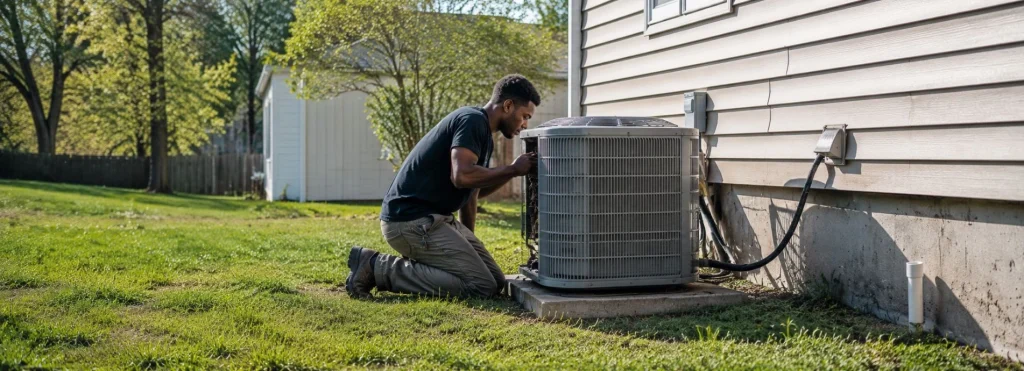
Every HVAC career roadmap begins here. As a helper, you support experienced technicians on real jobs. You carry tools, learn systems, and build safe habits. You earn while you learn. This stage is about foundation, not mastery.
Helpers do the groundwork that keeps a crew moving. You assist with installs, cleanings, and basic repairs. You learn how furnaces, air conditioners, and ductwork fit together. You also learn job-site safety and customer communication. These early habits shape your whole career.
Entry pay usually runs from the low $30,000s to the low $40,000s. Many helpers move up within a year. Your speed depends on skill and certification. Structured HVAC training in Philadelphia shortens this stage. It gives you skills that many helpers take months to gain on the job.
Foundational skills matter most at this stage. You learn to read gauges and measure airflow. You learn electrical basics and refrigerant safety. You also learn to work as part of a team. Employers value reliability as much as raw skill.
This is your first major credential. To handle refrigerant legally, you need EPA Section 608 certification. Federal law requires it for anyone who services cooling systems. This step turns a helper into a working technician. It also raises your pay.
EPA 608 certification proves you can handle refrigerants safely. It covers recovery, recycling, and disposal rules under the Clean Air Act. Without it, you cannot legally connect gauges to a live air conditioner. That is why every serious program includes it. Understanding HVAC certification requirements early keeps your path clear.
EPA 608 certification comes in four levels. Choose based on the systems you will service.
Most technicians aim for Universal. It gives you the widest range of work. The EPA 608 certification cost is low, often between $20 and $100. That makes it one of the best-value steps in the trade.
Once certified, your value rises fast. Entry technician pay often lands between $45,000 and $54,000. You can now work with less supervision. You also qualify for more service calls. This is where the HVAC career roadmap starts paying off.
NATE certification is the industry’s respected skill badge. It is voluntary, but employers value it highly. It proves deep, tested knowledge in a specialty. This stage separates capable techs from great ones.
NATE stands for North American Technician Excellence. It offers specialties like air conditioning, heat pumps, and gas heating. Passing a NATE exam signals real expertise. Customers trust it, and employers reward it. In a competitive market, it helps you stand out.
Experienced, NATE-certified techs often earn $55,000 to $68,000. Overtime and on-call work can push that higher. Philadelphia’s peak seasons create strong overtime demand. That is when skilled techs boost their yearly HVAC technician salary the most.
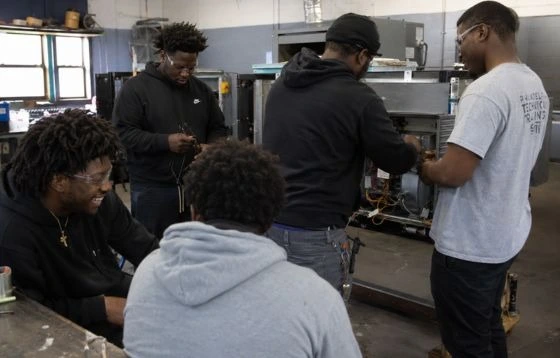
This is where the wage scale climbs steeply. Specialists work on large, complex systems in commercial buildings, industrial facilities, and refrigeration environments. Commercial and refrigeration work pays a premium because it requires advanced technical knowledge and hands-on experience.
Fewer techs can perform this specialized work, so demand stays high. As a result, experienced professionals often secure better job opportunities, higher earnings, and long-term career growth in this high-demand HVAC field.
Commercial systems are bigger and more demanding. You may service rooftop units, chillers, and building controls. Hospitals, schools, and offices all need this work. Philadelphia’s dense commercial base creates steady opportunity. Specialists here often earn $68,000 to $85,000.
Refrigeration is a top-paying niche. Grocery stores, warehouses, and food plants rely on it. The work requires precision and strong troubleshooting. Emerging fields add value too, like the geothermal technician career path. These specialties keep your skills in demand for the long term. To see how the local market rewards experience, review our HVAC technician job outlook breakdown.
This is the six-figure rung. It takes years, skill, and a business mindset. But it is a real destination on the HVAC career roadmap. Two main paths lead here.
Pennsylvania has no statewide HVAC license. However, Philadelphia requires a city mechanical license for certain work. That license usually needs several years of documented experience. It lets you pull permits and run larger jobs. This credential separates senior pros from entry techs.
Business owners can pass six figures. You control pricing, jobs, and your team. Owners handle sales and operations, not just repairs. The reward matches the risk and effort. Many owners start by mastering the field first, then building slowly. Our guide on why a skilled trades career makes sense in 2026 explains this long-term payoff.
Let’s clear up a common question. Do you need a license to be an HVAC tech in Pennsylvania? The answer is layered. There is no statewide HVAC license. But federal certification and local licenses still apply.
Pennsylvania does not issue a statewide HVAC license. Local cities set their own rules instead. Philadelphia and Pittsburgh both require city-level mechanical licenses. So your first task is federal certification. Your second is checking local rules where you plan to work.
Certifications drive your progress on this HVAC career roadmap. Here is how they stack.
Meeting HVAC certification requirements in order keeps your path smooth. Each credential builds on the last. Together, they turn a beginner into a licensed professional.

Direct answer: the fastest way to start is structured, hands-on training that prepares you for EPA 608 and real jobs. A focused program builds skill in months, not years. That is the launch point for the entire HVAC career roadmap.
You cannot learn HVAC from a screen alone. The work is physical and precise. Online courses can teach theory, but not tool skills. Self-teaching skips safety training and certification prep. Hands-on HVAC training in Philadelphia gives you real practice on real equipment. That is what employers expect on day one.
Good programs do more than teach. They prepare you for certification exams. They also help with job readiness and interviews. PTTI’s approach connects training to careers and job opportunities in the region. Support like financial aid and veterans’ benefits makes the path accessible too. For a sense of speed, see how students reach a skilled trade job in about six months.
An HVAC career roadmap turns a big question into a clear plan. You now know each stage, the credential that unlocks it, and the pay it brings. You also know that six figures is real, earned at the specialist and owner level. The trade is in demand across Philadelphia and the wider region. The path is short to start and long to grow.
The first move is training that gets you job-ready. Explore hands-on HVAC training programs, then request information or schedule a campus tour to see the labs. When you are ready to begin, apply through admissions or contact our team. Start your HVAC path today.
Start with hands-on HVAC training, earn your EPA 608 certification, then take an entry-level job. Build experience, add NATE certification, and pursue a Philadelphia mechanical license as you advance. Structured training in Philadelphia prepares you for this full HVAC career roadmap from day one.
Focused HVAC training often takes several months to about a year, far shorter than a four-year degree. What matters is that you finish ready to pass EPA 608 and meet employer expectations. Hands-on programs in Philadelphia are built around that job-ready standard.
The national median HVAC technician salary was $59,810 in May 2024, with top earners passing $82,000. Pennsylvania pay often tracks near this, and Philadelphia demand supports strong wages. Specialists, licensed pros, and business owners reach the highest, six-figure earnings.
Pennsylvania has no statewide HVAC license. However, EPA 608 certification is federally required to handle refrigerant. Cities like Philadelphia also require their own mechanical license for certain work. Always confirm local HVAC certification requirements before starting a job.
Six figures usually comes at the top of the HVAC career roadmap. Commercial and refrigeration specialists earn the most, as do licensed master technicians and business owners. Strong certifications, specialty skills, and ownership drive earnings past $100,000 over time.