
Ready to start an HVAC training program in Philadelphia? You’ve picked a smart, practical path into a stable career. Heating and cooling units require constant maintenance, which means trained technicians remain in demand. When the summer season ends, people generally ask HVAC technicians for vent cleaning and repair. They want to keep filters clean, as temperatures vary by season and most people don’t know exactly where to begin. Below, we walk through the full step-by-step process, from your first phone call to your first day of training.
Philadelphia, being an older city with a mix of older homes, modern construction, and commercial buildings, keeps HVAC technicians busy year-round. Additionally, every season brings new repair needs, from summer air conditioning breakdowns to winter heating emergencies.
Here’s why this career makes sense right now:
Therefore, starting now puts you ahead of a growing demand curve.
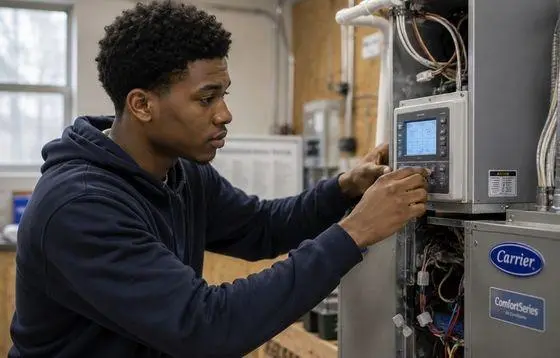
If you want to become an HVAC Technician, you should know what the job really involves. HVAC technician training, also known as a heating, ventilation, and air conditioning program, covers refrigeration, heating systems, electrical basics, installing digital thermostats, and indoor air quality. Moreover, technicians work hands-on with real equipment, not just theory.
A typical HVAC technician’s daily tasks include:
Not all training programs are built the same. Therefore, it’s worth checking what each program actually includes before enrolling. Look for hands-on lab time, included certifications, and a clear course sequence.
Here’s what to look for in a strong program:
Once you’ve found a program that fits, the next step is simple: reach out. Set up an appointment with career service department executives. Additionally, admissions advisors can walk you through program details, schedule options, and financial aid before you commit to anything.
Here’s what to ask to career service executives :
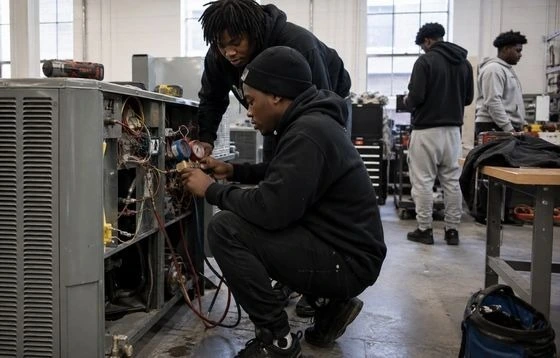
Before opting for the course, it’s important to know that tuition fees shouldn’t be the reason.. Moreover, most HVAC training programs, including PTTI’s, accept FAFSA applications to help cover tuition costs.
Here’s a quick breakdown of what to look into:
| FAFSA | Federal financial aid based on eligibility |
| Payment Plans | Spreads tuition cost over time |
| Scholarships | Program-specific or third-party funding |
Overall, exploring these options early makes the decision to enroll a lot less stressful.
Seeing a training facility in person matters more than most people expect. Therefore, ask for a tour before enrolling, so you know exactly what the hands-on labs look like.
During your tour, pay attention to:
Once you’re confident in the program, it’s time to pick a schedule. Additionally, most strong programs offer both day and evening class options, so working adults can keep their income while training. Therefore, picking the right schedule sets you up for consistent attendance and better results.
A full HVAC technician training program follows a clear sequence of courses. From basic refrigeration to maintaining and inspecting the HVAC system, HVAC training is 60% practical and 40% theoretical, though the split varies by subject. That’s roughly how balanced training time looks in a strong program.
| Classroom Instruction | Refrigeration, heating, electrical theory | Builds core technical knowledge |
| Hands-On Lab | Equipment repair and installation | Core daily skill for the job |
| Externship | Real job site experience | Bridges training and employment |
Overall, this structure prepares students for the exact environment they’ll work in after graduation.
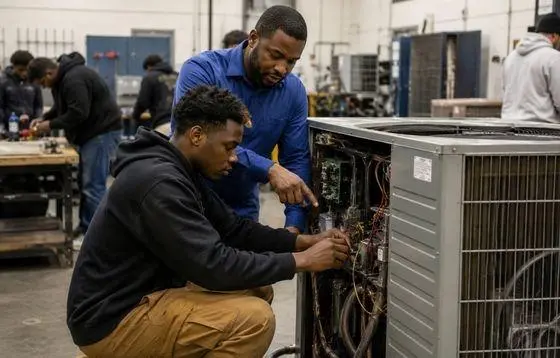
Strong HVAC training programs build certification directly into the coursework. Finally, these certifications matter to employers from day one on the job.
Common certifications include:
Many programs offer job placement support before graduation. Therefore, don’t wait until your last day of class to start applying for positions.
The data gives motivation and a clear idea regarding career growth. According to the U.S. Bureau of Labor Statistics, employment for heating, air conditioning, and refrigeration mechanics is projected to grow steadily over the next decade, driven by construction activity and equipment replacement needs.
Philadelphia Technician Training Institute (PTTI) offers a comprehensive HVAC training program that covers the full course sequence, hands-on labs, and included certifications. Additionally, PTTI offers both day and evening scheduling to fit different life situations.
Here’s the full enrollment process at PTTI:
Finally, PTTI reports a placement rate of nearly 92%, meaning most graduates land jobs in the field.
HVAC Technician training is one of the most in-demand skilled trade education programs in the United States. Starting an HVAC training program in Philadelphia guides you towards your career goals. However, taking the time to research programs, explore financial aid options, and tour facilities pays off once training begins. Between hands-on skill-building, included certifications, and flexible scheduling, this path offers a realistic route into a stable career. Overall, the hardest part is usually just making that first call.
Now let’s get ready to take the first step. Contact PTTI at 215-381-9403 or info@ptt.edu to speak with a Career Service executive..
Definitely,Program length varies, so confirm exact timing directly with your chosen school before enrolling.
No. Most programs, including PTTI’s, require no prior HVAC experience to enroll.
Strong programs typically include EPA Section 608 and OSHA 30 certifications.
Yes. Many programs offer evening classes designed for working adults.
Yes. Eventually, PTTI accepts FAFSA applications under school code 042213.
Read More