
Ask any contractor, facilities manager, or trade-school instructor what’s hard to find in 2026, and the answer comes back fast: skilled hands. Heating and cooling sits near the top of that list. HVAC technician demand has climbed steadily for years, and right now the pressure is sharper than usual. Buildings need more cooling, older systems need replacing, federal refrigerant rules just changed, and a large share of experienced technicians is heading toward retirement at the same time.
For anyone weighing a career move, that combination matters. Strong demand means steady work, real bargaining power on pay, and a clear path into a trade you can start without a four-year degree. This article explains what is fueling HVAC technician demand across the US, whether the job growth is real, how stable the career actually is, what technicians earn, and how someone in the Philadelphia region can move from beginner to job-ready. If you want proof that HVAC is a safe bet rather than a passing trend, the evidence below is a good place to start.
HVAC technician demand is being driven by four forces at once: a wave of retirements shrinking the workforce, a federal refrigerant transition that requires new skills, a nationwide push toward energy efficiency and heat pumps, and continued construction that keeps adding systems to install and service. Together, these create more open jobs than the trade can currently fill.
That is the short version. Each force deserves a closer look, because understanding the “why” is what tells you whether the demand will last.
The single biggest driver is demographic. The skilled trades skew older, and HVAC is no exception. Industry analyses point to a large portion of the current workforce being within about a decade of retirement. As those experienced technicians step away, employers scramble to replace them.
This is why the yearly opening figure is so high relative to raw job growth. Most of the roughly 40,100 annual HVAC openings exist not because the industry is adding jobs, but because it must constantly backfill positions as people retire or move on. For a new technician, replacement demand is the friendliest kind of demand. It means the door stays open year after year, regardless of the broader economy.
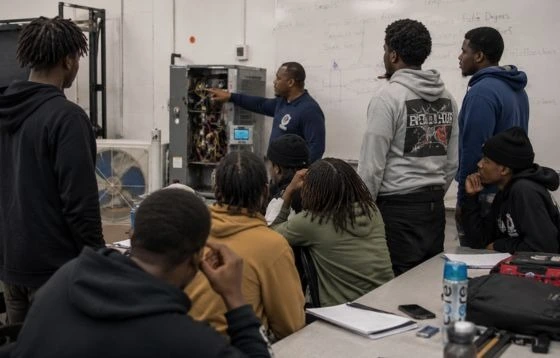
A major regulatory shift landed in 2026. Under the federal AIM Act, the industry is phasing down high-GWP (global warming potential) refrigerants such as R-410A in new equipment. Newer systems now use A2L refrigerants like R-32 and R-454B, which are classified as mildly flammable.
That change carries real weight for the workforce. A2L systems require updated safety procedures, different tools, and current EPA 608 certification knowledge. Technicians trained in the new refrigerants are more valuable, and employers are actively seeking people who understand them. In other words, the rule change did not slow trade down — it raised the skill bar and increased demand for properly trained HVAC technicians.
Across the country, older heating and cooling systems are being replaced with high-efficiency equipment. Heat pumps in particular are booming, driven by electrification, utility incentives, and homeowners looking to cut energy costs. Every one of those installations and service calls needs a qualified technician.
This shift also rewards ongoing learning. As systems get smarter and more efficient, HVAC careers increasingly reward technicians who can work with modern controls, diagnostics, and heat-pump technology. Programs that teach current systems, rather than only legacy equipment, produce the workers employers want. PTTI’s heat pump installation training reflects exactly this trend.
Finally, buildings keep going up, and existing buildings keep getting hotter to manage. As new homes, apartments, schools, hospitals, and commercial spaces are built, HVAC technicians are among the first trades on site to install climate-control systems. On top of that, rising temperatures are pushing cooling demand upward for decades to come, which means more systems to install, maintain, and eventually replace. That steady pipeline of work is a core reason HVAC jobs remain resilient.
Yes. HVAC jobs are growing faster than most occupations in the country. The U.S. Bureau of Labor Statistics projects employment of heating, air conditioning, and refrigeration mechanics and installers to grow 8% from 2024 to 2034 — described by the BLS as “much faster than average” and well above the 3% projected for all occupations.
Here is how the numbers break down:
| HVAC Job Outlook Metric | Figure (BLS, 2024–2034) |
| Projected job growth | 8% (much faster than average) |
| Average annual openings | ~40,100 per year |
| Jobs held (2024) | ~425,200 |
| Projected jobs (2034) | ~459,700 |
| National median wage | ~$59,810/year (BLS, May 2024) |
The takeaway is straightforward. This is not hype or a marketing claim; it is a federal labor projection. HVAC technician demand shows up clearly in the data, and the growth is backed by construction activity, equipment replacement, and the retirement wave described above.
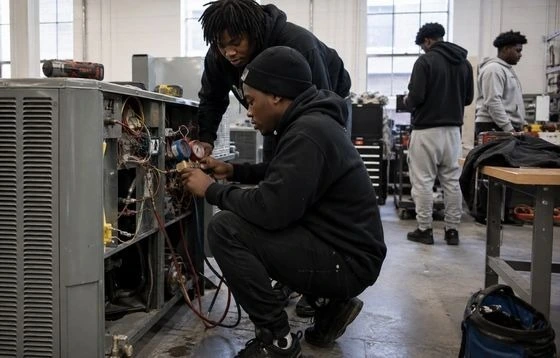
HVAC is one of the more stable skilled trades because its work is essential, local, and difficult to automate. Homes and businesses always need heating and cooling, service calls cannot be shipped overseas, and diagnosing a failing system in a cramped mechanical room still requires human judgment and hands. That combination protects the career from many forces that disrupt other jobs.
Consider what makes the trade resilient:
For students comparing options, this stability is a major reason a skilled trades career makes sense in 2026. HVAC technician demand is not a short-term spike; it reflects long-term structural needs in how buildings are built, powered, and maintained.
HVAC technician pay is competitive and climbs steadily with experience and certifications. Nationally, the BLS reported a median wage around $59,810 in May 2024, and Pennsylvania’s median sits above the national figure at roughly $62,400. In the Philadelphia market, HVAC technician salary commonly ranges from the high-$50Ks into the $70Ks as experience grows, with commercial specialists, union technicians, and business owners reaching higher.
| Career Stage | Approximate Annual Pay (Philadelphia / PA Region) |
| Entry-level / apprentice | $40,000 – $48,000 |
| Journeyman technician | $55,000 – $75,000 |
| Master / lead technician | $70,000 – $90,000 |
| Commercial specialist / owner | $90,000 – $100,000+ |
A few realities shape these numbers. Overtime and emergency service calls raise take-home pay, especially during peak heating and cooling seasons. Specialty skills — commercial systems, refrigeration, controls — command premiums. And because the credential travels, an HVAC technician trained in Philadelphia can carry that earning power across Pennsylvania, New Jersey, and Delaware. For a broader view, PTTI’s guide to high-paying trade jobs in Philadelphia without a degree puts HVAC pay in context with other trades.
Philadelphia is a strong market for HVAC careers. The region combines dense residential neighborhoods, aging building stock that constantly needs system upgrades, active commercial and healthcare construction, and cold winters plus hot, humid summers that keep systems running hard year-round. All of that translates into steady, local HVAC technician demand.
Graduates find work not only across city neighborhoods — from North Philadelphia and South Philadelphia to West Philadelphia, Southwest Philadelphia, and the Upper North Philadelphia area — but throughout the surrounding counties. Because an EPA 608 card and hands-on skills travel, technicians trained in Philadelphia routinely take jobs in nearby Pennsylvania communities such as Drexel Hill, Lansdowne, Darby, and Ardmore, and across the river in South Jersey towns like Camden, Cherry Hill, and Pennsauken.
One local note worth knowing: Pennsylvania has no statewide HVAC license, so employers hire on demonstrated skill and EPA 608 certification. Philadelphia does issue its own city mechanical license for certain work through its Department of Licenses & Inspections, so it’s smart to confirm local requirements for the specific role you’re targeting.
Employers hire HVAC technicians on two things: the right certification and the ability to do the work safely and well. The credential opens the door, and the hands-on skills keep it open.
Under the federal Clean Air Act, anyone who maintains, services, repairs, or disposes of equipment that could release refrigerant must hold EPA Section 608 certification. It is mandatory for nearly every HVAC job, and it does not expire once earned. The certification comes in four parts: Core, Type I (small appliances), Type II (high-pressure systems), and Type III (low-pressure systems). Passing Core plus all three earns Universal certification, which is what many employers prefer.
Quality HVAC training prepares students for this exam directly, so graduates arrive job-ready with the credential in hand rather than scrambling for it afterward. Some employers also value NATE certification, which is optional but often tied to higher pay.
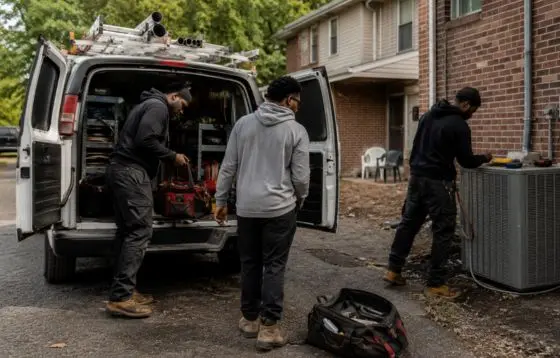
Beyond the credential, hiring managers look for practical competency:
These are exactly the skills that hands-on training is built to develop. Real lab time on industry-standard equipment, guided by instructors with field experience, is what turns classroom theory into job-site readiness.
You can enter HVAC faster than most people expect. Focused, hands-on HVAC training can prepare you for entry-level work in well under a year, after which you earn your EPA 608 certification and start building experience on the job. Unlike a four-year degree, HVAC training concentrates on the specific skills and safety knowledge employers need, so you spend your time learning the trade rather than sitting through unrelated coursework.
The typical path looks like this:
Philadelphia Technician Training Institute (PTTI) built its HVAC program around exactly what today’s market rewards: applied learning on industry-standard equipment, certification readiness, and preparation for the real expectations of employers. Students practice diagnostics, refrigerant handling, electrical fundamentals, and airflow on real systems, so they graduate able to demonstrate skill rather than just describe it.
Because HVAC technician demand is strongest for workers who are trained on current systems and ready to certify, that hands-on model matters. PTTI serves students across Philadelphia and nearby communities in Pennsylvania and New Jersey, and connects graduates to local hiring opportunities through its careers and job support resources. For career changers, veterans, adult learners, and recent graduates alike, it’s a direct route into a trade with real staying power.
Ready to move forward? Explore the HVAC training program, request information, or schedule a campus tour to see the labs before you enroll.
The evidence is consistent from every direction. Federal projections show HVAC jobs growing much faster than average, a retirement wave keeps openings flowing, a 2026 refrigerant transition is raising the value of trained technicians, and energy-efficiency upgrades keep adding work. That is why HVAC technician demand is not a passing trend but a durable feature of the labor market — and why HVAC is a genuinely safe bet for a stable, well-paying career.
For someone in the Philadelphia region ready to act on that demand, the fastest path is structured, hands-on training that leads straight to EPA 608 certification and real job-site readiness. If you want a career with steady work, room to grow, and no four-year degree required, HVAC deserves your serious attention this year.
Take the next step with PTTI. Explore the HVAC program, contact admissions, or apply now to start building a career in one of the country’s most in-demand trades.
HVAC technician demand is high because experienced workers are retiring faster than new ones enter, a 2026 federal refrigerant transition requires updated skills, energy-efficiency and heat-pump adoption is rising, and construction keeps adding systems. Together these create about 40,100 projected openings per year nationally.
Yes. The U.S. Bureau of Labor Statistics projects HVAC employment to grow 8% from 2024 to 2034, much faster than the 3% average for all occupations. That growth reflects both new positions and the constant need to replace retiring technicians.
HVAC is one of the more stable skilled trades. The work is essential, local, and hard to automate, so it holds up well even when the broader economy slows. Repair and replacement work continues regardless of new-construction cycles, which keeps HVAC technician demand steady.
Nationally, the BLS reported a median around $59,810 (May 2024), while Pennsylvania’s median is roughly $62,400. In Philadelphia, HVAC technician salary commonly ranges from the high-$50Ks into the $70Ks with experience, and commercial specialists, union techs, and owners can earn more.
EPA Section 608 certification is federally required to handle refrigerant, and nearly every HVAC job needs it. It never expires once earned. Pennsylvania has no statewide HVAC license, though Philadelphia requires a city mechanical license for certain work.
Focused, hands-on HVAC training can prepare you for entry-level work in well under a year. After training and earning EPA 608 certification, you begin building experience on the job and adding certifications that raise your pay.
Yes. Philadelphia’s aging buildings, active construction, and demanding seasonal climate keep HVAC technician demand strong across the city and surrounding Pennsylvania and New Jersey communities. Because skills and the EPA 608 card travel, trained technicians find work throughout the tri-state region.