
If you are researching how to become an HVAC technician, one credential comes up in almost every job posting: EPA Section 608 certification. It is short, it is federal, and it is non-negotiable. You cannot legally buy refrigerant, open a sealed cooling system, or service most air-conditioning and refrigeration equipment without it.
Yet the exam itself is widely misunderstood. Students often think it is a state license (it is not), that it expires (it does not), or that it is one long test (it is actually built in sections). Just as often, they are unsure when the certification fits into a training program — before enrollment, during class, or after graduation.
This guide explains exactly how EPA 608 test works, how the four certification types differ, what score you need to pass, and where the exam typically falls in a hands-on HVAC program. It is written for students across Philadelphia, South Jersey, and Delaware who want a clear, honest picture before they commit to a career in heating, cooling, and refrigeration.
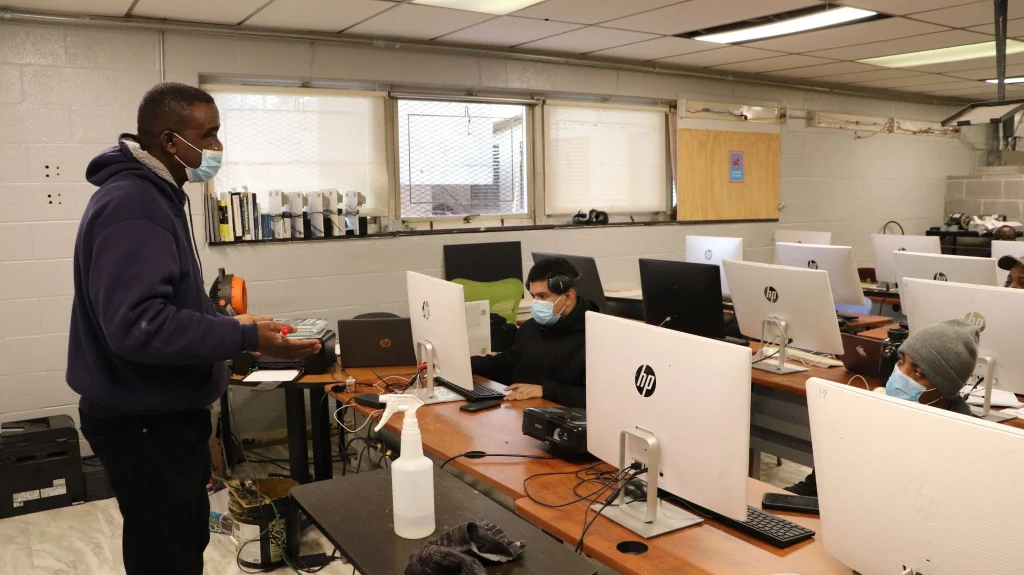
EPA 608 certification is a federal credential required under Section 608 of the Clean Air Act. Any technician who maintains, services, repairs, or disposes of equipment that could release refrigerant must hold it. It exists because refrigerants harm the atmosphere when vented, so federal law restricts who may handle them. Without it, you cannot legally open a refrigerant circuit — and suppliers cannot legally sell you refrigerant. HVAC Exam Master
That last point is what separates EPA 608 from every other credential in the trade. A certification like NATE looks good to employers, but EPA 608 is the law. Under 40 CFR Part 82 Subpart F, anyone who opens a refrigerant circuit for commercial purposes must be certified first — and “commercial purposes” is defined broadly enough to cover part-time side work and equipment your employer owns. Epa608practicetest
It is also worth clearing up a common myth: EPA 608 is not a California-specific or state license. It is a federal certification, and once earned, it does not expire. Brownson
If your work touches stationary refrigerant systems, you almost certainly need it. That includes technicians who:
One important distinction: EPA 608 covers stationary equipment. Motor-vehicle air conditioning falls under a separate credential, EPA 609, which we cover further down.
EPA 608 is not a single test. It is a Core section that everyone must pass, combined with one or more Type sections that match the equipment you plan to work on. Core alone authorizes no equipment; it must be paired with at least one type section. Epa608practicetest
| Certification | What It Covers | Typical Work |
| Core | Foundational rules for all technicians: ozone science, the Clean Air Act, safe recovery, the “three R’s” (recover, recycle, reclaim) | Required first — certifies nothing on its own |
| Type I | Small appliances containing five pounds of refrigerant or less | Household refrigerators, window AC units, vending machines |
| Type II | High-pressure refrigerants such as R-410A and R-134a in larger systems | Most residential and light-commercial AC and heat pumps |
| Type III | Low-pressure refrigerants such as R-11 and R-113 in centrifugal chillers | Large commercial and industrial chillers |
| Universal | All three types combined | Full flexibility across any stationary system |
For most HVAC technicians, the practical answer is Type II or Universal. Type II is what fills a normal service week because high-pressure residential and light-commercial equipment is where the bulk of the daily work lives. Universal is the strategic choice for anyone who wants maximum flexibility. Taking all four sections in a single Universal sitting can cost less than buying Core and three type sections separately, and you never have to schedule a second exam day when your job scope grows. Epa608practicetestEpa608practicetest
Callout — A smart career move: If you are unsure where your career will go, sit for Universal. Each additional section is only 25 more questions on the same day, and you future-proof yourself against ever needing to test again.
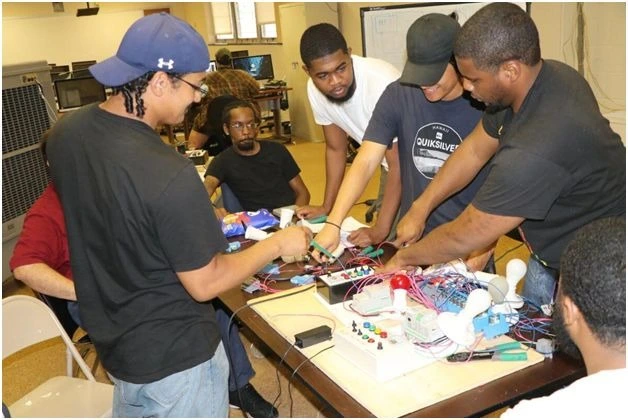
The EPA 608 exam is multiple choice, four answer options per question. Questions are randomly selected from an EPA-approved pool of roughly 350 questions, so no two exams are identical, but every question comes from the same standardized federal bank. Epa608exam
Here is how the mechanics break down:
That independent-grading rule matters more than students realize. If you pass Core and Type I but miss Type II on exam day, you keep the sections you passed and only re-sit the one you missed. It removes a lot of the “all or nothing” pressure that makes people anxious about certification testing.
The Type I section is available online in an open-book format, which is why many programs certify students at that level first. Type II, Type III, and Universal require a proctored, closed-book exam. That is the standard employers expect for anyone servicing residential and commercial systems. Mainstream Engineering
A frequent point of confusion: the EPA does not administer the test itself. EPA 608 exams must be administered by EPA-approved certifying organizations. Because it is administered by approved organizations rather than a state licensing board, you can take it at many HVAC training schools, community colleges, and online proctored testing centers. Epa608examVoltexam
For students, the most convenient path is testing through their training program, where the exam is proctored on-site by an approved organization and the material lines up with what they have been practicing in the lab. This is exactly why choosing a school that builds EPA 608 preparation into its curriculum saves both time and money.
This is the question the exam guides rarely answer clearly, so here is the honest, instructor’s-eye view.
In a well-designed HVAC program, EPA 608 certification is introduced after students have covered refrigeration fundamentals — usually in the middle-to-later stage of training. The sequencing is deliberate:
That order is the difference between a technician who “passed a test” and one who understands why the rules exist. Employers can tell the difference on day one.
Callout: You do not need EPA 608 test before enrolling in HVAC school. A quality program is built to take you from beginner to certified — the training is what prepares you to pass.
The exam itself is short — a single testing session that most students complete in a couple of hours, depending on how many sections they attempt. The certification never expires, and the overall process is straightforward once you have prepared. Epa608practicetest
Testing fees are modest, especially compared with the earning power the credential unlocks. When EPA 608 test is included in an HVAC program, HVAC certification program includes various EPA 608 certification types for students avoid hunting for a separate testing site and paying à la carte for each section.

No. EPA Section 608 certifications in HVAC certification,EPA 608 certification types do not expire and remain valid for life once earned. There is no renewal exam, no annual fee, and no continuing-education deadline attached to the credential itself. Best HVAC Reviews
That said, the regulations around refrigerants continue to evolve, and a professional technician stays current with them — which brings us to the biggest shift happening right now.
The refrigerant landscape is changing under the AIM Act, and it affects what appears on today’s exam and what employers expect.
The AIM Act is phasing out R-410A in favor of A2L refrigerants, mainly R-454B and R-32, but it created no new certification category. In practical terms: Epa608practicetest
Why does this matter for a new student? Because entering the trade like HVAC certification during this transition is an advantage. Technicians who train now learn A2L handling, mildly flammable-refrigerant safety, and modern equipment from the start — exactly the skill set the 2026 job market is competing to hire.
Students frequently mix these up. The distinction is simple as these are the EPA 608 certification types:
If your goal is HVAC/R work in homes and buildings, EPA 608 is the credential you need. Automotive-focused students pursue EPA 609 instead — and PTTI’s Automotive Repair Technology program is the relevant path there.
EPA 608 is the entry ticket to a trade with genuine, durable demand. According to the U.S. Bureau of Labor Statistics, the median annual wage for heating, air conditioning, and refrigeration mechanics and installers was $61,010 in May 2025, with the highest 10 percent earning more than $95,210. U.S. Bureau of Labor Statistics
The job outlook is equally encouraging. The BLS projects 8% employment growth from 2024 to 2034 — faster than the average for all occupations — with roughly 40,000 openings every year, many of them created as experienced technicians retire. PTTI
For students across the Philadelphia region, the local picture is strong. Pennsylvania’s median HVAC wage sits above the national figure at roughly $62,400. In the Philadelphia market, HVAC technician pay commonly ranges from the high-$50Ks into the $70Ks with experience, with commercial specialists and union technicians reaching higher. The region’s aging building stock, new construction, and heavy union presence in the building trades keep skilled technicians in steady demand — and the credential travels cleanly across Pennsylvania, New Jersey, and Delaware. TradeCareerPathPTTI
For a fuller breakdown, students can explore PTTI’s guide to HVAC technician salary in Philadelphia.
An HVAC certification proves you know the rules. Employers hire technicians who can do the work. That is where hands-on training decides your career.
At Philadelphia Technician Training Institute (PTTI),EPA 608 certification types along with EPA 608 preparation is built directly into a program centered on real equipment, not slideshows. Students train on actual HVAC systems — gauges, multimeters, recovery machines, ductwork, and diagnostic tools — so the certification content connects to muscle memory, not memorization. The program is structured to move motivated students from beginner to job-ready in months rather than years, and it pairs EPA 608 with additional employer-valued credentials like OSHA safety training.
That combination — a federal credential plus proven mechanical skill plus safety training — is what turns an entry-level applicant into a confident, employable technician. For students whose interests lean toward piping and mechanical systems, PTTI’s Steam, Sprinkler & Pipe Fitting program develops closely related skills that overlap heavily with HVAC/R work.
Ready to start? Request information about PTTI’s HVAC training, or schedule a campus tour to see the labs and equipment for yourself.
EPA 608 certification types is best understood as a doorway. It is a one-time, non-expiring federal credential that legally allows you to handle refrigerants — the baseline every HVAC employer expects. But the credential is only half of what makes a technician valuable. The other half is real mechanical skill, safe A2L-era handling, and the confidence that comes from hands-on repetition.
For students across Philadelphia, South Jersey, and Delaware who want a fast, practical path into a high-demand trade, the sequence is clear: get quality hands-on training, earn EPA 608, EPA 608 certification types and start building experience in a field that pays well and continues to grow.
Not for students who train properly. The exam is 25 multiple-choice questions per section with a 70% passing bar on proctored sections. When you have practiced recovery and refrigeration procedures on real equipment first, the material reinforces what you already know rather than testing you cold.
No. A quality HVAC program is designed to prepare you for the exam. You typically take it partway through training, after covering refrigeration fundamentals, so the certification confirms skills you have already built.
Four: Core (required first), Type I (small appliances), Type II (high-pressure systems), and Type III (low-pressure chillers). Passing all of them earns Universal certification. Core by itself does not certify you for any equipment.
Type II or Universal. Type II covers the high-pressure residential and light-commercial systems that make up most daily service work, while Universal gives you flexibility across every stationary system.
No. It is valid for life once earned — no renewal exam and no annual fee. Only the surrounding refrigerant regulations change over time, which professional technicians keep up with.
No. EPA 608 is a federal certification administered by EPA-approved organizations. Pennsylvania has no statewide HVAC license, though Philadelphia requires a city mechanical license for certain work — a separate matter from EPA 608 certification.
Yes. Approved certifying organizations administer the exam at training schools and testing centers across the region. Testing through an HVAC program that includes EPA 608 prep is the most efficient route for most students.
Vocational certification that can sky rocket your trade career
Best skilled trade certification in skilled trade
Certifications that get you hired