
Drywall finishing and framing work often looks simple from the outside. But this job involves very steady work; it involves focus and art . To cut a panel, attach it to the wall, add joint compound, sand the surface, and paint it. However, anyone who has worked on a construction site knows that quality drywall work requires patience, accuracy, and practice.
Many students also have misconceptions about the career. Some believe drywall work requires little training. Others assume the job only involves physical strength or offers limited opportunities.
Drywall finishing and framing require technical knowledge and the ability to resurface walls with texture, which involves leveling and layering, attention to detail, teamwork, and hands-on practice. For Philadelphia students considering construction careers, learning the facts can help them make a more informed career choice.
Let’s clear up some of the most common myths.

This is one of the biggest misconceptions. Therefore, let’s understand it very clearly . Anyone can hold a piece of drywall. However, producing a smooth, professional finish requires skill.
A drywall technician must measure accurately; it requires intellectual ability and skills like cutting panels correctly, positioning them properly, and securing them without creating unnecessary gaps. So that it looks even when it is layered .
Finishing requires another level of precision. Applying the mixture on the sheet requires measurement and precise estimation of the material needed. Workers apply compound, install tape, sand the surface, and prepare walls for painting. Small mistakes can become very visible once the wall receives paint. All these skills is important for drywall technician program enrollment.
Framing and drywall work are closely connected, but they are not identical. Framing creates the structure that supports walls and ceilings. Workers may install wood or metal studs, measure openings, and build the framework for doors, windows, and other features. Drywall workers install panels over that framework and create finished wall and ceiling surfaces. So basically, they are not the same but complement each other .However, the drywall framing jobs in Philadelphia is in high demand.
Both jobs require precision, but they involve different techniques. Students interested in construction can benefit from learning how these stages connect. Understanding framing can also help drywall workers identify potential problems before installation begins.
Construction work can be physically demanding, but physical strength alone won’t meet the demands of the job. However, strength alone will not make someone a skilled drywall professional.
Workers also need accuracy, coordination, patience, and problem-solving ability. The work involves construction, building homes, and getting houses ready for people. These should be well developed so physical strength does not fill the gap. Intellectual ability and cognitive skills must have a place.
For example, a worker may need to figure out how to fit a panel around an unusual opening. That task requires careful measurement and planning. Workers also spend time checking surfaces, reading measurements, following plans, and communicating with other members of the construction team.
Therefore, successful drywall finishing and framing involve both physical ability and technical thinking.
That’s a big misconception; in skilled trades, it’s practically not possible, as 70-80 percent of tasks require hands-on experience. Online videos can introduce you to drywall tools and techniques. However, watching someone complete a task is different from doing it yourself. Students need opportunities to handle tools, cut materials, install panels, and practice finishing techniques.
A student may apply too much compound or create an uneven seam. An instructor can point out the problem and show how to correct it. That kind of feedback is hard to replicate through videos alone.
For this reason, drywall training in Philadelphia can give students who want to enter the construction industry an important advantage.
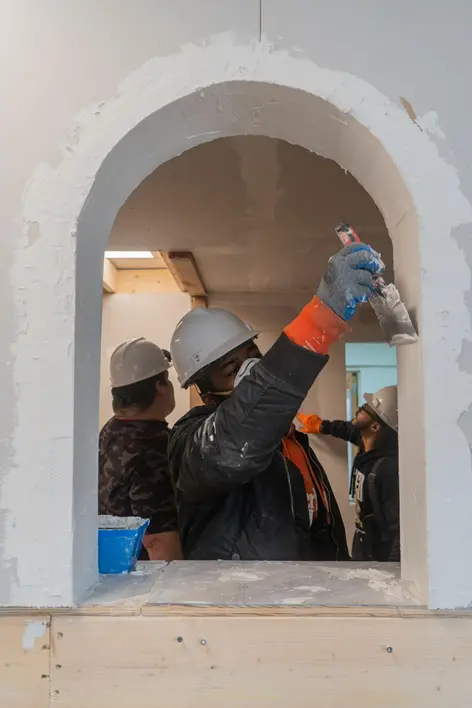
A finished wall can look simple. But in the past, it required a lot of dedication and hard work to make it ready for people. It is not just painting walls; it requires a different angle of building a house that is future-ready. To handle every extreme weather . Creating that finish is not. A professional drywall finisher must create smooth seams and corners while minimizing visible imperfections. Lighting can reveal even small flaws on a finished surface. Workers also need to understand drying times, compound application, sanding techniques, and surface preparation.
The work requires patience. Rushing can create more problems and require additional repairs later. With proper drywall finishing skills, however, students can learn to produce cleaner, more consistent results.
Some claim that drywall work only leads to entry-level construction positions. But that’s not true; the industry works differently. This drywall finishing program can build experience and move into specialized finishing, crew leadership, supervision, estimating, or project coordination. Those who understand drywall become more experienced and professional and also get good pay.
Experienced professionals may also take on independent projects or eventually operate their own contracting businesses, depending on licensing and local requirements. The skills learned in drywall can also complement other construction abilities.
Drywall projects depend on teamwork. Drywall workers regularly coordinate with framers, electricians, plumbers, painters, general contractors, and other professionals. For example, drywall installation may need to wait until electrical or plumbing work reaches the appropriate stage.
Workers must communicate about schedules and potential problems. Drywall workers work alone; this is extremely unlikely. No skilled trade field depends on a single person; it’s teamwork. They also need to follow instructions and respect other crews’ work.
Construction has changed significantly. Modern job sites use laser levels, advanced measuring tools, power tools, digital plans, and other technologies.
Workers still need traditional skills, but they may also use newer equipment to improve accuracy and efficiency. Students entering construction should expect the industry to continue evolving.
Technology makes the work more efficient. Drywall requires technical insight that also depends on the project. Learning how to use tools properly and adapt to new technology can help workers remain competitive.
This myth creates an unnecessary divide between education and skilled trades. Construction professionals need knowledge. They use measurements, geometry, technical drawings, safety standards, material specifications, and planning skills. All of this happens on construction sites, so any high school student interested in geometric technical drawing and layout is a perfect fit .
Students who enjoy practical learning may simply prefer a different educational environment. Instead of spending every class sitting behind a desk, they may learn by combining instruction with practical projects. That makes construction training a strong option for students who learn best by doing.
You dont need years of experience . Enroll in the PTTI drywall finishing program. PTTI also offers an externship during the training program, which depends on how quickly you learn. They can then develop their skills through supervised practice, entry-level employment, and continued education.
A drywall finishing training program can introduce students to tools, materials, safety procedures, framing techniques, and finishing methods before they enter a job site. This will give them a clear understanding of real job site experience . That foundation can make the transition into employment easier. For students interested in drywall framing jobs, practical training can provide a starting point for building experience.
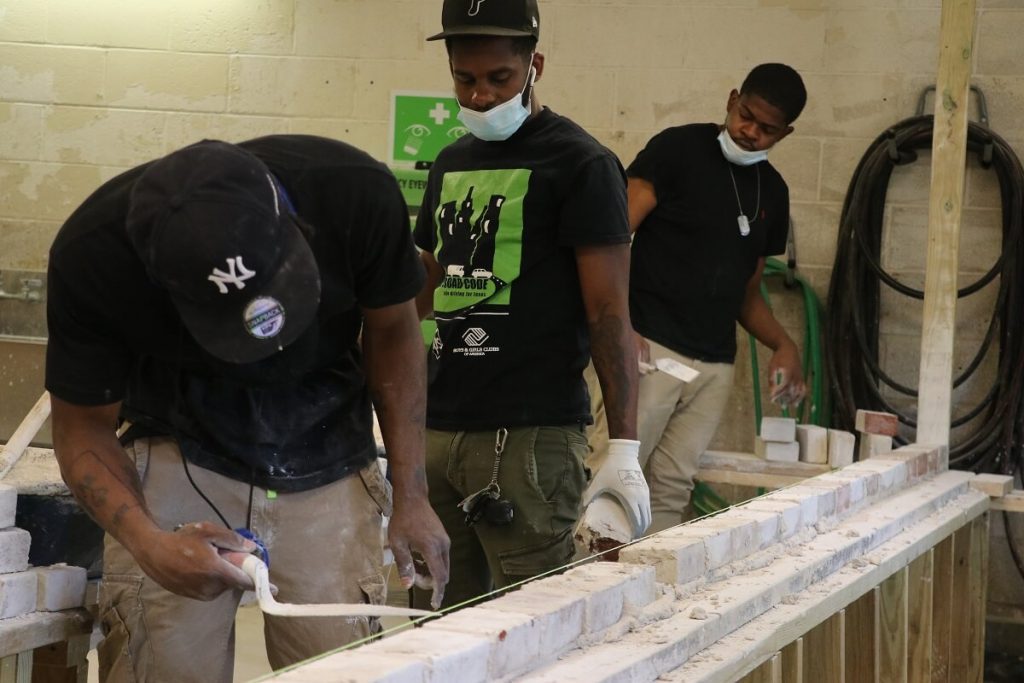
Philadelphia students have several options when exploring construction careers, especially in drywall finishing. If you enjoy building, repairing, measuring, and working with your hands, drywall and framing may be worth exploring.
Start by researching institutes that provide hands-on instruction, along with resume writing and financial aid. You should also explore the wider range of construction trade careers. Drywall is only one part of the construction industry. Other pathways include electrical, HVAC, plumbing, welding, masonry, carpentry, and construction technology. Finding the right fit may take some exploration.
Drywall work involves much more than attaching panels to a wall. Drywall finishing and framing require accuracy, patience, technical knowledge, and teamwork.
For Philadelphia students, learning the facts can help remove outdated ideas about construction careers. Quality drywall training in Philadelphia can provide practical experience, while developing drywall finishing skills can prepare students for real job-site responsibilities.
Students interested in drywall framing jobs can also explore broader construction trade careers as they gain experience. So if you are ready to enroll in a skilled trade career and build drywall framing skills, you, visit www.ptt.edu. With proper training, consistent practice, and a willingness to learn, students can turn practical ability into a real career path.
Read More: