
Every surgery, biopsy, and bedside procedure depends on instruments that are clean, sterile, and ready. The people who make that happen are sterile processing technicians, and one of the first questions prospective students ask is simple: where do these professionals actually work? The short answer is almost anywhere surgical instruments are used, but the largest share of roles sits inside hospitals, outpatient surgery centers, and clinics. If you are weighing this career and considering hands-on sterile processing training in Philadelphia, understanding these work settings helps you picture the job before you commit.
This guide breaks down exactly where these professionals work, what each environment is like day to day, how pay differs by setting, and how strong demand is across the Philadelphia region, Pennsylvania, New Jersey, and Delaware. You will also learn which skills and certifications travel across every workplace, so you can enter the field with a clear sense of your options and your next step.
Sterile processing technicians work in almost any healthcare setting that uses reusable surgical instruments. The largest employers are general medical and surgical hospitals, followed by ambulatory surgery centers, outpatient care centers, specialty hospitals, clinics, and dental offices. A smaller number work for device reprocessing companies and medical equipment suppliers.
The common thread across all of these workplaces is the central sterile processing department, often called the SPD or central service department. This is the behind-the-scenes hub where contaminated instruments are returned, cleaned, inspected, assembled into trays, sterilized, and sent back out ready for the next case. Whether the facility is a 500-bed hospital or a single-specialty surgery center, that core workflow stays the same. What changes is the scale, the pace, and the mix of procedures the department supports.
Hospitals employ more sterile processing technicians than any other setting. According to the U.S. Bureau of Labor Statistics, general medical and surgical hospitals account for the clear majority of these roles nationwide, far ahead of every other industry. If you are mapping your career, hospitals are where most of the sterile processing jobs are.
Inside a hospital, the sterile processing department supports a demanding and varied caseload: general surgery, orthopedics, cardiac procedures, labor and delivery, emergency cases, and more. That variety is exactly why hospitals are a strong training ground. Technicians handle a wide range of surgical instruments, learn multiple sterilization methods, and work closely with operating room teams. The volume is high, shifts can include nights and weekends, and the stakes are real, because the operating room cannot run without a steady supply of sterile trays.
Hospital roles also tend to offer the clearest advancement paths. Many departments have lead technician, educator, and supervisor positions, and larger systems often provide tuition support and structured on-the-job training. For someone who wants a stable healthcare career with room to grow, a hospital-based sterile processing job is a common and reliable starting point.
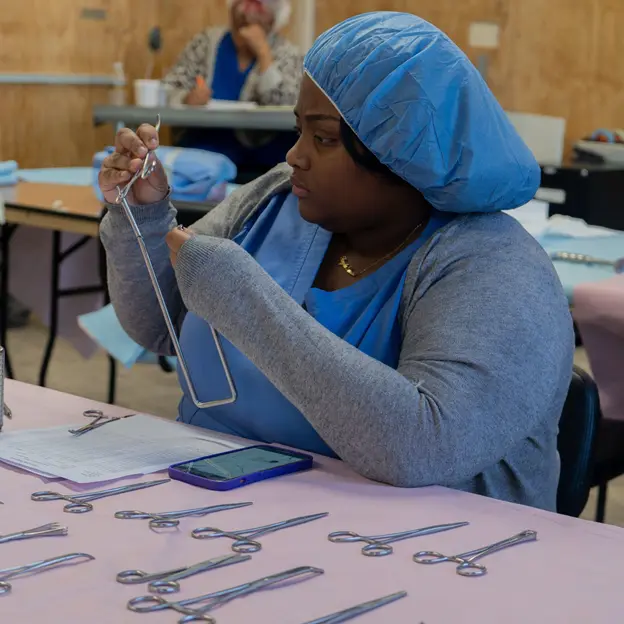
Ambulatory surgery centers, often called ASCs, are one of the fastest-expanding places where these technicians work. These outpatient facilities handle same-day procedures such as cataract surgery, orthopedic scopes, pain management, GI endoscopy, and ENT cases. As healthcare continues shifting routine surgeries out of hospitals and into lower-cost outpatient settings, the demand for sterile processing roles in surgical centers has grown alongside it.
The work environment in a surgery center differs from a hospital in meaningful ways. Caseloads are often more predictable, schedules may be more regular with fewer overnight shifts, and departments are smaller, so a single technician may handle the full cycle from decontamination through sterilization. That breadth can be appealing if you like owning the whole process rather than specializing in one station.
Pay is another reason ASCs attract attention. Federal wage data shows outpatient care centers reporting mean wages above the hospital average for this occupation, reflecting the specialized, high-turnaround nature of the work. For technicians who value schedule stability and competitive pay, outpatient surgery centers are worth serious consideration.
Beyond hospitals and surgery centers, these professionals also work in clinics, dental offices, physician group practices, and specialty settings. Plenty of sterile processing jobs exist outside the operating-room-heavy environment of a large hospital. Any facility that reuses instruments, from a periodontal practice to a dermatology or podiatry clinic, needs someone who can properly clean and sterilize equipment and manage the handling of surgical instruments safely.
These smaller settings can be excellent entry points. The pace is usually calmer, the environment is less overwhelming for a newcomer, and the role may be combined with other front- or back-office duties. The trade-off is pay and scope. Bureau of Labor Statistics data shows dental offices tend to report lower mean wages for this occupation than hospitals or outpatient centers, and advancement options are more limited in a small practice.
A few less obvious workplaces round out the picture. Some technicians work for third-party instrument reprocessing companies, medical device manufacturers, dialysis centers, and research or laboratory facilities. These niche roles are fewer in number, but they show how portable the core skill set really is once you hold recognized sterile processing training.
Regardless of setting, the sterile processing department is an indoor, physically active, detail-driven environment. Technicians spend their shifts on their feet, lifting instrument trays, operating washers and steam autoclaves, wearing personal protective equipment in the decontamination area, and documenting every load with care. It is climate-controlled and clinical, not glamorous, but it is central to patient safety.
The job follows a strict, repeatable workflow, and most sterile processing jobs are organized around three core zones.
Understanding this flow matters because it is identical whether you work in a hospital, an ASC, or a clinic. Master it once in quality sterile processing training, and you can apply it anywhere.
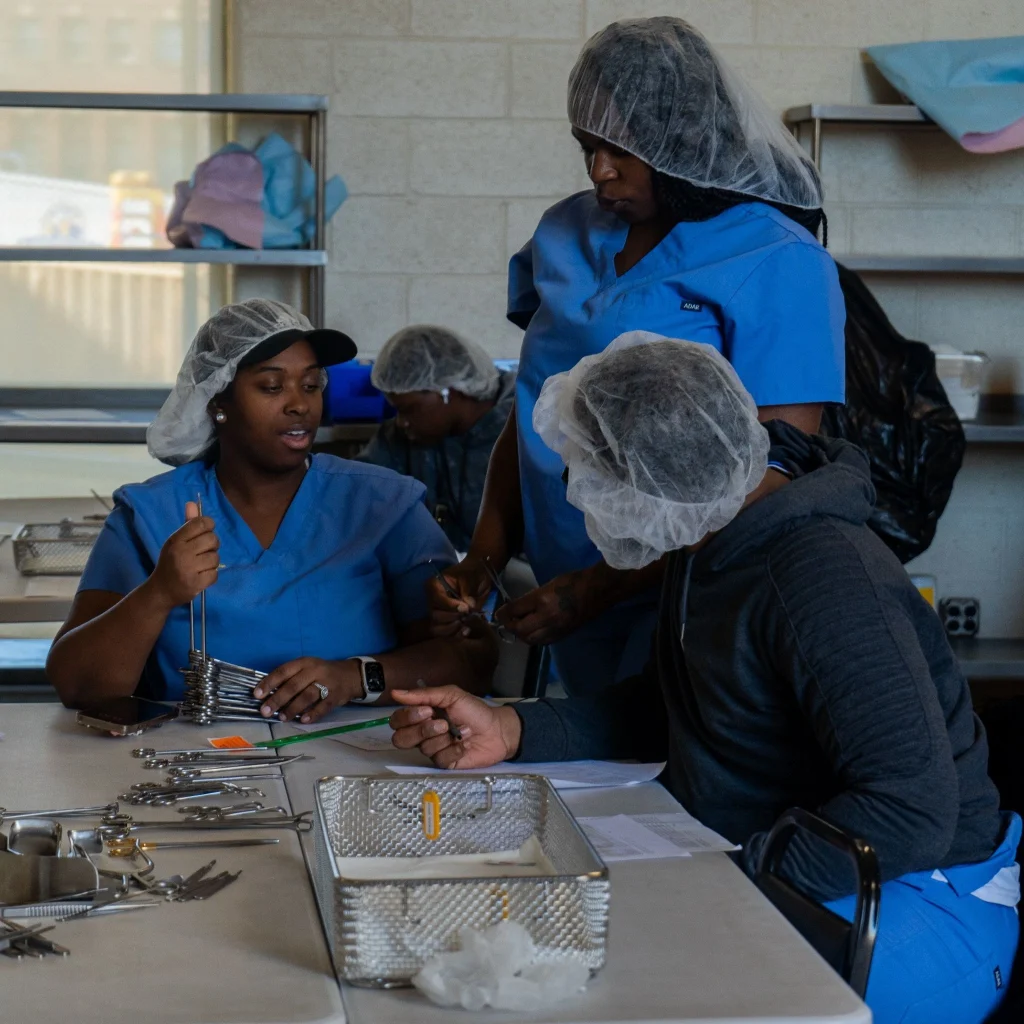
The reason these technicians can move between hospitals, surgery centers, and clinics is that the required skills and credentials are consistent across settings. Employers everywhere look for attention to detail, knowledge of sterilization science, familiarity with instrument identification, comfort with documentation, and a strong safety mindset.
The most recognized credential is the CRCST certification, the Certified Registered Central Service Technician, awarded by the Healthcare Sterile Processing Association (HSPA). It is widely treated as the entry-level professional standard, and because it is portable, it is valued whether you work in a large hospital or a small clinic. Earning the CRCST certification generally requires a high school diploma or equivalent, passing the HSPA exam, and completing 400 hours of hands-on experience in a sterile processing department, with a provisional pathway that lets candidates test first and finish the hours afterward. A second recognized credential, the CSPDT, is offered by the CBSPD.
One important regional note: Pennsylvania is among a growing group of states, including New Jersey and others, that have adopted certification requirements for this role. Because these rules and timelines change, this information is educational rather than legal advice, and you should confirm current requirements directly with the employer and the state board before relying on them. The practical takeaway is simple: a credential like the CRCST certification is increasingly expected, so building toward it early is a smart move.
Earnings vary by setting, experience, shift, and location, so where you work genuinely affects your paycheck. Nationally, the Bureau of Labor Statistics reported a median wage of about $47,700 per year (roughly $22.93 per hour) for this occupation in its most recent data, with the top 10% earning around $69,950. The table below shows approximate mean annual wages by common work setting, based on federal industry data.
| Work Setting | Approximate Mean Annual Wage | Notes |
| Outpatient / ambulatory care centers | ~53,000–54,000 | Often above the hospital average |
| Specialty hospitals | ~$55,000 | Among the higher-paying settings |
| General medical & surgical hospitals | ~$48,000 | Largest employer; broad experience |
| Offices of dentists | ~$36,000 | Lower pay; good entry point |
| National median (all settings) | ~$47,700 | Top 10% near $69,950 |
A few takeaways stand out. Outpatient and specialty settings tend to pay more, hospitals offer the widest experience and advancement, and dental and small-clinic roles trade lower pay for an easier entry. Because sterile processing technician salary varies by state and setting, it is worth researching local employers specifically. Earnings also grow with certification and experience, and none of these figures are guaranteed, since pay depends on the employer, region, and your qualifications.
Demand for these technicians is steady and healthy across the settings described above. The U.S. Bureau of Labor Statistics projects employment for this occupation to grow about 10% from 2024 to 2034, faster than the average for all jobs, with roughly 10,900 openings projected each year over the decade. An aging population, rising surgical volumes, and the continued expansion of outpatient care all feed that demand.
Two forces make this career particularly resilient. First, sterile instruments are non-negotiable for patient safety, so the role cannot simply be eliminated. Second, as procedures shift into surgery centers and clinics, new sterile processing jobs open in settings beyond the traditional hospital. If you want to understand how the field is evolving, the future of sterile processing jobs points to automation assisting technicians rather than replacing the hands-on judgment the work requires.
The Philadelphia region is a strong market for this career because of its dense concentration of healthcare facilities. Major hospital systems, academic medical centers, community hospitals, and a growing number of ambulatory surgery centers all operate central sterile processing departments across the city and suburbs. From North and South Philadelphia to West Philadelphia and neighborhoods like Spring Garden, Mantua, and Powelton Village, healthcare employers sit close to where many students live.
Opportunity extends well beyond the city line. Surgery centers, clinics, and hospitals across nearby Pennsylvania communities such as Darby, Lansdowne, Drexel Hill, Yeadon, and Ardmore, and across the river into South Jersey towns including Camden, Cherry Hill, Pennsauken, Collingswood, and Maple Shade, all rely on sterile processing teams. Because the credential and skill set transfer anywhere, training in Philadelphia positions you for roles throughout the tri-state area. Programs that reshape healthcare careers for students in Philadelphia are designed with this regional demand in mind, often connecting students to externships inside real clinical settings.
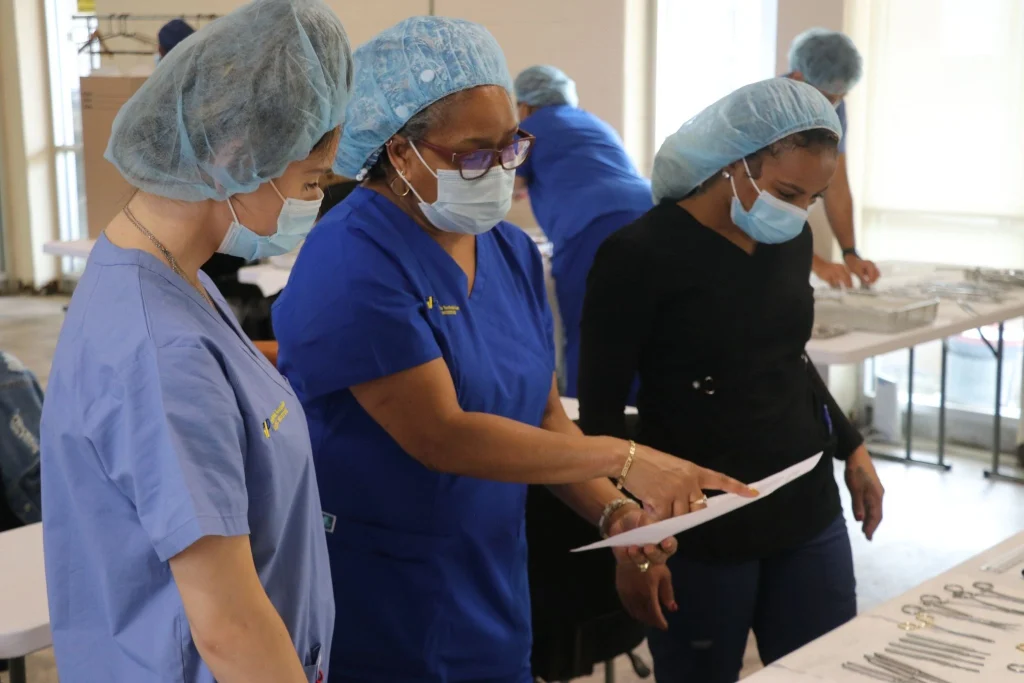
Entering this field follows a clear path. You complete focused training, build the hands-on experience the certification requires, and then apply to the hospital, surgery center, or clinic that fits your goals. Because the role is performance- and knowledge-based rather than degree-based, you can move from classroom to clinical setting relatively quickly compared with many healthcare careers.
Quality training is what ties it together. A strong program teaches instrument identification, decontamination, sterilization science, and documentation, and it builds the core skills sterile processing programs cover while preparing you for certification and an externship in a real facility. That combination, real lab time plus a clinical placement, is what turns a motivated beginner into a hireable candidate across every work setting.
Sterile processing technicians work wherever surgical instruments are used, and that reach is exactly what makes the career so stable. Hospitals employ the most people and offer the broadest experience, surgery centers are a fast-growing and well-paying option, and clinics and dental offices provide accessible entry points. Across all of them, the same skills, workflow, and certification apply, so the training you complete travels with you from one setting to the next. With steady demand projected through 2034 and a dense cluster of healthcare employers across Philadelphia and the surrounding region, the path from training to a real job is clear.
If you are ready to take the next step, explore PTTI’s Sterile Processing and Central Services Technician program or contact admissions to ask about start dates, externships, and how to begin your career in healthcare.
Most technicians in this field work in general medical and surgical hospitals, which employ the largest share of the occupation. Beyond hospitals, they work in ambulatory surgery centers, outpatient care centers, clinics, dental offices, specialty hospitals, and sometimes device reprocessing companies.
Not directly inside the operating room during surgery, but they work closely with OR teams. Sterile processing technicians prepare, sterilize, and deliver the surgical instruments and trays the operating room depends on, and they retrieve contaminated items afterward for reprocessing.
It depends on your goals. Hospitals offer the widest variety of cases, more advancement paths, and the most sterile processing jobs. Ambulatory surgery centers often offer more predictable schedules and competitive pay, and smaller clinics offer easier entry. Many technicians try more than one setting over their careers.
Requirements vary by state and employer, and several states, including Pennsylvania and New Jersey, have moved toward requiring certification. The CRCST certification is the most widely recognized credential and is valued across settings. Always confirm current requirements with the employer and your state board.
Philadelphia Technician Training Institute (PTTI) offers hands-on sterile processing training that prepares students for certification and connects them to externship opportunities in real clinical settings across the Philadelphia region.