
The pipe trades sound interchangeable from the outside, but they lead to different job sites, different certifications, and different day-to-day work. If you are weighing a steamfitter vs pipefitter vs sprinkler fitter path, the smartest move is to understand what each role actually installs and maintains before you commit to training. All three are skilled, well-paid, and in steady demand across the Philadelphia region, yet they are not the same job. This guide breaks down the duties, pay, job outlook, certifications, and training for each specialty so you can pick the one that fits your goals. For readers who already know they want this field, hands-on steam, sprinkler, and pipe fitting training is the most direct way to build the skills these jobs require. We will also look at how the roles overlap, why employers often value people who can cross between them, and what the work looks like in Philadelphia, Pennsylvania, New Jersey, and Delaware.

A pipefitter installs and maintains piping that carries liquids and gases under pressure, usually in industrial settings. A steamfitter is a pipefitter who specializes in high-pressure systems that move steam and heated fluids. A sprinkler fitter installs fire-suppression piping built to fire-protection codes. All three cut, fit, and join pipe, but the systems and standards differ.
Because the skills overlap heavily, many workers move between these roles over a career. The core craft — measuring, cutting, threading, bending, and joining pipe, then testing the system — is shared. What changes is the application: the pressures involved, the materials, the codes that govern the work, and the environments where the job happens. Understanding that shared foundation is the key to choosing well in any steamfitter vs pipefitter vs sprinkler fitter decision, because training in one specialty builds skills that transfer to the others.
| Role | Works mainly with | Typical settings | Signature focus |
| Pipefitter | High-pressure pipe carrying liquids and gases | Plants, refineries, power and process facilities, large commercial sites | Industrial process and mechanical piping |
| Steamfitter | High-pressure piping for steam and heated fluids | Power plants, hospitals, universities, high-rise buildings | Steam, heating, cooling, and boiler systems |
| Sprinkler fitter | Fire-suppression piping systems | Commercial buildings, schools, hospitals, apartments | Fire protection, governed by NFPA codes |
A pipefitter assembles, installs, and repairs piping systems that move liquids, gases, and chemicals under pressure, most often in industrial and large commercial facilities. The work includes reading blueprints, laying out pipe runs, cutting and threading pipe, welding or mechanically joining sections, and pressure-testing the finished system for leaks and safety.
Pipefitters tend to work where processes are complex: manufacturing plants, refineries, chemical facilities, power generation, and heavy commercial construction. The job rewards precision and problem-solving, since a single poorly fitted joint can shut down a system. If you want a fuller picture of the role, this overview of what a pipefitter does day to day covers responsibilities, pay, and the educational path in more depth.
The trade also tends to be physical. Expect lifting, working in tight spaces, and sometimes welding in awkward positions. In exchange, skilled pipefitters are consistently in demand and can grow into foreman, inspector, or estimator roles over time.
A steamfitter is a specialized pipefitter who works on piping systems that carry steam, hot water, and heated or cooled fluids at high pressure. These systems heat and cool large buildings, drive turbines in power plants, and run industrial processes, which means the margin for error is small and code compliance is strict.
Steamfitters are common in hospitals, universities, high-rise buildings, and power facilities — anywhere large mechanical systems move heat efficiently. The specialty demands strong knowledge of pressure, expansion, and metallurgy, because heated pipe behaves differently than a cold water line. For a closer look at how the specialties diverge, this breakdown of how steamfitters differ from pipefitters is a useful next read.
Because steam and high-pressure heating systems run in critical facilities, steamfitter work is often stable and year-round. The combination of specialized knowledge and essential infrastructure tends to support solid wages and long-term career security.
A sprinkler fitter installs, inspects, and maintains fire-suppression piping — the systems that protect people and property when a fire breaks out. The work involves laying out and installing sprinkler piping, mounting heads, connecting to water supplies, and testing systems against strict fire-protection standards set by the National Fire Protection Association.
Unlike general industrial pipefitting, sprinkler fitting is defined by life-safety codes, so documentation, inspection, and precision matter enormously. Sprinkler fitters work in commercial buildings, schools, hospitals, warehouses, and increasingly in residential construction as codes expand. The specialty blends hands-on piping skill with code knowledge, and understanding how sprinkler fitting compares to general pipe fitting helps clarify whether this is the right lane for you
Fire-protection work also offers a clear specialization ladder. Many sprinkler fitters pursue certification through NICET (the National Institute for Certification in Engineering Technologies), which is widely recognized across the fire-protection industry and can open the door to higher-responsibility roles.
Pay across these specialties is strong and closely grouped. The U.S. Bureau of Labor Statistics reports plumbers, pipefitters, and steamfitters together as one occupation — and it includes sprinkler fitters in that group — with a median wage of $63,800 in May 2025. Entry-level workers earn less while experienced, specialized, and union professionals earn well above the median.
| Metric (BLS combined occupation) | Figure |
| Median annual wage (May 2025 | $63,800 |
| Entry-level range (lowest 10%) | under $44,150 |
| Experienced range (top 10%) | over $108,420 |
| Employment (2025) | about 510,600 jobs |
| Projected growth (2025–2035) | about 7% (much faster than average) |
Two things stand out when you compare steamfitter vs pipefitter vs sprinkler fitter earnings. First, because the BLS groups them, headline pay looks similar across all three; real differences come from specialization, certifications, overtime, and union membership rather than job title alone. Second, the outlook is genuinely strong: the field is projected to grow much faster than average, driven by aging infrastructure, new construction, and the steady need to replace retiring workers.
In the Philadelphia region, a strong union building-trades presence, active hospital and university construction, and ongoing industrial maintenance all support demand. Specialized work — high-pressure steamfitting or code-driven fire-protection fitting — often commands a premium once you have the credentials to back it up.
Salary figures are national BLS estimates for the combined occupation and will vary by employer, specialty, certification, experience, overtime, and location. This article is educational and does not guarantee any wage, certification, or job outcome.

Most people enter the pipe trades with a high school diploma or GED, then build skills through hands-on training and an apprenticeship. A focused program teaches pipe layout, measuring, cutting, threading, welding basics, and blueprint reading — the exact skills that let you step into an apprenticeship or an entry-level role and earn while you learn.
The path into a steamfitter vs pipefitter vs sprinkler fitter career looks broadly similar across all three specialties, which is good news if you are undecided. You build a common foundation first, then specialize. Structured pipefitting training matters here because pipe work is unforgiving of bad habits, and employers want people who already understand safety, tools, and code basics. A guide to starting pipefitter training without prior experience walks through what beginners can expect, including union and direct-employment options.
Here is the typical route into the field:
Certifications separate hireable candidates from everyone else in the pipe trades. For pipefitters and steamfitters, welding credentials carry real weight, because much industrial and high-pressure pipe is joined by welding to code. Building those abilities early pays off, and the most in-demand pipefitting skills for 2026 reflect how much employers value welding, blueprint literacy, and precision fabrication.
Each specialty also has credentials of its own. Pipefitters and steamfitters often work to ASME pressure-piping codes and pursue AWS welding certifications. Sprinkler fitters frequently earn NICET certification in fire-protection systems, which is the industry’s recognized marker of competence. Across all three, OSHA safety training is essentially expected on modern job sites.
Licensing is where you need to be careful, because it varies by location. Pennsylvania does not issue a single statewide pipefitting license, and local rules differ — the City of Philadelphia, for example, licenses certain plumbing and mechanical work. Always verify current requirements with your municipality, your employer, or the relevant licensing authority before you assume what a specific job requires. This is educational information, not legal advice.
The soft skills matter too. Employers consistently value reliability, teamwork, clear communication, and the discipline to follow safety procedures every time. These are the traits that turn a trained beginner into someone who gets promoted.
When you line up steamfitter vs pipefitter vs sprinkler fitter roles side by side, choose based on the work you want to do, not just the paycheck, because the pay is similar and the day-to-day is not. Pick pipefitting if you like complex industrial systems and problem-solving. Pick steamfitting if high-pressure mechanical systems and critical facilities appeal to you. Pick sprinkler fitting if you want code-driven, life-safety work with a clear certification ladder.
There is also a strategic answer: start broad, then specialize. Because the foundational skills transfer, training that covers steam, sprinkler, and pipe systems together keeps your options open while you discover which work you enjoy. Many people also compare these roles against adjacent trades, and weighing pipefitting against a welding career is a common and worthwhile exercise, since welding skill strengthens every pipe specialty.
Finally, consider how you want to enter the workforce. Some graduates go straight into direct employment, while others target union apprenticeships for structured wage progression and benefits. The trade-offs between the union path and direct employment are worth understanding before you decide, because the right choice depends on your goals and the opportunities near you.
For students in the region, pipefitting training in Philadelphia offers a practical, debt-conscious route into a stable career. The city and its surrounding counties host hospitals, universities, high-rise buildings, and industrial facilities that need steamfitters, pipefitters, and sprinkler fitters year-round, which makes local training genuinely valuable.
Philadelphia Technician Training Institute (PTTI) delivers hands-on pipefitting training through its steam, sprinkler, and pipe fitting campus, using real labs and industry-standard equipment so graduates understand job-site expectations from day one. Because the program covers all three specialties, students build the shared foundation first and then lean into the lane that fits them — exactly the “start broad, then specialize” strategy that serves pipe-trades careers best.
Demand reaches well beyond the city limits. Graduates find work across North, South, and West Philadelphia and into nearby communities like Darby, Lansdowne, and Drexel Hill in Pennsylvania, and across the river in Camden, Pennsauken, Cherry Hill, and Collingswood, New Jersey. A portable skill set means pipefitting training in Philadelphia can take you wherever the strongest opportunity appears across the tri-state area.
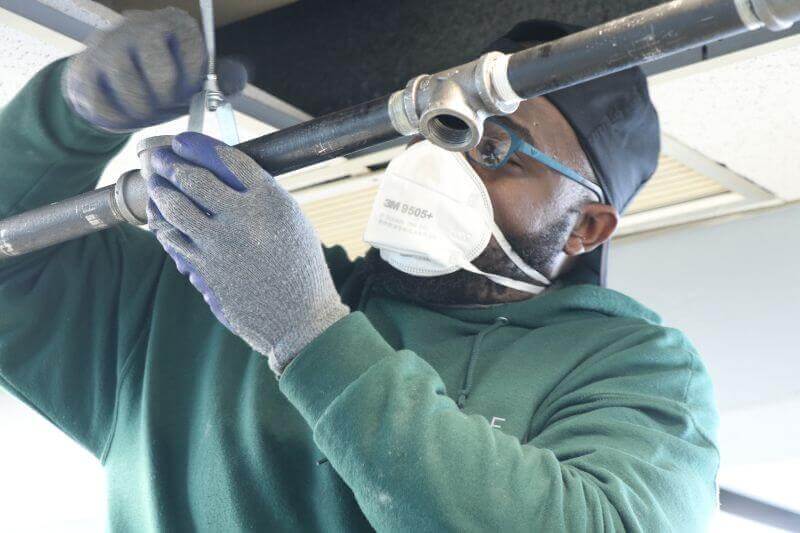
Choosing between a steamfitter vs pipefitter vs sprinkler fitter career comes down to the kind of work you want to spend your days doing, because the pay is comparable and the demand is strong across all three. Pipefitting offers complex industrial work, steamfitting offers specialized high-pressure systems, and sprinkler fitting offers code-driven fire protection — and the shared foundation means you can train broadly and specialize as you go. With the right hands-on pipefitting training and certifications, any of these pipe trades can lead to a stable, well-paid career in the Philadelphia region and beyond. To take the next step, explore PTTI’s steam, sprinkler, and pipe fitting program and connect with admissions to find out how quickly you could get started.
Not exactly. A steamfitter is a type of pipefitter who specializes in high-pressure systems that carry steam and heated fluids. All steamfitters are pipefitters by training, but not all pipefitters do steam work. The core craft is shared; the specialty and code knowledge differ.
Pay is similar because the BLS groups all three as one occupation with a $63,800 median wage (May 2025). Real differences come from specialization, certifications, overtime, and union membership rather than job title. High-pressure steamfitting and certified fire-protection work can both command premiums.
A focused training program builds core skills in months, after which many people enter an apprenticeship or entry-level role. Full apprenticeship-based mastery typically takes several years, but you can begin earning while you learn rather than waiting until the end.
Pennsylvania has no single statewide pipefitting license, but local rules vary and some municipalities, including Philadelphia, license certain plumbing and mechanical work. Always confirm current requirements with your local authority or employer. This is general information, not legal advice.
Yes, for people who want stable, code-driven, life-safety work. Fire-protection systems are required across commercial and many residential buildings, demand is steady, and NICET certification offers a clear path to higher-responsibility roles and pay.