
If you are drawn to construction work that pays well and does not require a four-year degree, the masonry trades are worth a close look, especially in a building-heavy region like Philadelphia. But “masonry” is not one job. Concrete finisher, cement mason, and bricklayer are three distinct careers with different materials, daily tasks, and earning paths, and choosing between them gets easier once you understand what each one actually does. If you are weighing a hands-on masonry trade school against a traditional college route, knowing these differences up front will save you time and money.
This guide breaks down all three roles side by side. You will learn what each job involves, how the work differs day to day, what each role earns, the job outlook for every path, the skills employers expect, and how to get started with masonry training in the Philadelphia area. By the end, you will know which of the masonry trades fits your strengths and goals, and what your first step toward a skilled construction career looks like.
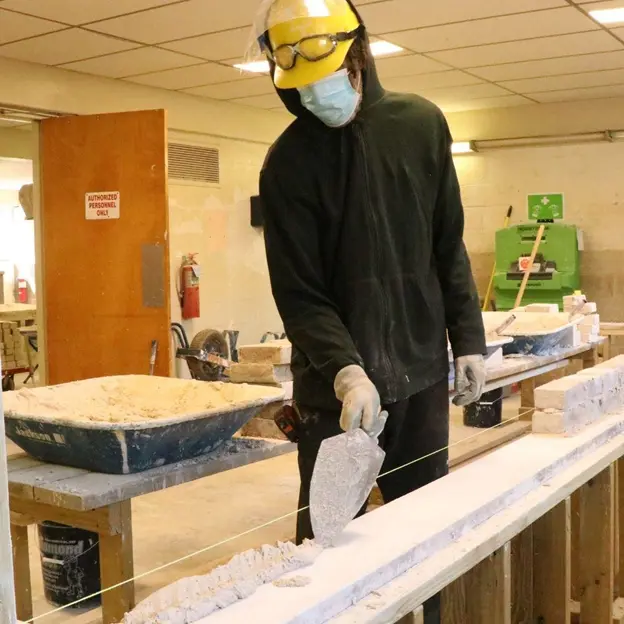
The masonry trades are the skilled construction crafts that build and finish structures using concrete, brick, block, and stone. A concrete finisher smooths and shapes poured concrete. A cement mason works with cement-based materials across a broader range of pours and surfaces. A bricklayer builds walls, chimneys, and facades from brick and block. All three are essential to nearly every construction project.
Because these roles overlap in the public mind, many people searching for a construction career do not realize how different the day-to-day work is. The material you enjoy, the finish quality you take pride in, and the physical nature of each job all point toward one path over the others. Sorting that out is the first real step in choosing a direction, and it is exactly what a quality concrete, masonry, and framing course is designed to help you explore through practice before you commit.
A concrete finisher places, levels, smooths, and finishes poured concrete surfaces such as floors, sidewalks, driveways, patios, and foundations. After concrete is poured, the finisher works quickly to screed, float, trowel, and texture the surface before it cures, producing the flat, durable, visually clean result the project requires.
The work is time-sensitive and physically demanding. Once concrete starts to set, the finisher has a limited window to get the surface right, which makes timing, consistency, and attention to detail critical. A skilled concrete finisher also understands curing, jointing, and how weather affects a pour. Finishers often apply surface treatments, stamp decorative patterns, or seal the concrete for appearance and longevity.
Concrete finishing rewards people who like fast-paced, results-driven work where the outcome is visible the same day. If you take satisfaction in a perfectly smooth slab or a clean decorative finish, this role likely fits you best.
A cement mason works with cement and concrete across a wider set of applications than finishing alone, including setting forms, pouring, finishing, and repairing concrete structures. In practice, it is often the broader job title, while concrete finishing is one of the core skills the role performs. Many union and commercial positions use this title to cover the full scope of concrete work.
Day to day, a cement mason might set up and strip forms, pour and spread concrete, finish flatwork, patch and repair existing surfaces, and bring everything to grade and specification. The job demands strength, precision, and the ability to read plans so that structural concrete meets code and tolerance. On larger commercial sites, these workers frequently operate as part of a crew on foundations, columns, decks, and industrial slabs.
For someone who wants the widest range of concrete work and the clearest path into commercial and union construction, this track is often the most versatile option. It also pairs naturally with concrete finishing skills, which is why a well-built masonry program usually teaches them together.
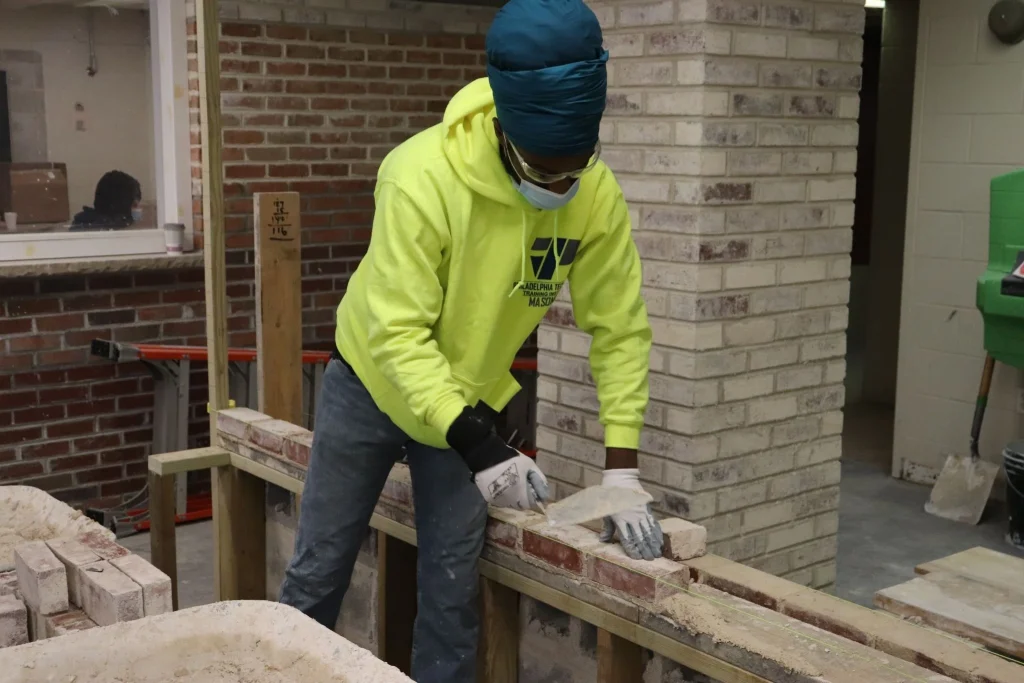
A bricklayer, also called a brickmason, builds and repairs structures using brick, concrete block, and sometimes stone, bound together with mortar. A bricklayer constructs walls, partitions, chimneys, fireplaces, facades, and decorative features, reading blueprints and using levels and lines to keep every course straight, plumb, and properly spaced.
Compared with concrete work, bricklaying is more deliberate and craftsmanship-focused. The worker mixes or manages mortar, butters and sets each unit, strikes the joints for strength and appearance, and keeps the structure true as it rises. Precision, patience, and a good eye for detail define a strong bricklayer, since the finished wall is permanent and highly visible. Many also learn block work for foundations and structural walls, which broadens their employability.
Bricklaying appeals to people who enjoy building something lasting and visually impressive, course by course. Of the three options, it carries the strongest “craft” identity and, as the salary data below shows, often the highest median pay.
The quickest way to see how these three paths differ is to compare them directly across the factors that matter most to a new student.
| Factor | Concrete Finisher | Cement Mason | Bricklayer (Brickmason) |
| Primary material | Poured concrete surfaces | Cement and concrete (broad scope) | Brick, block, stone, mortar |
| Core task | Smooth and finish slabs | Form, pour, finish, repair concrete | Lay units into walls and structures |
| Work pace | Fast, time-sensitive | Varied, crew-based | Deliberate, craft-focused |
| Key strength | Speed and finish quality | Versatility and precision | Patience and eye for detail |
| National median pay | ~$54,660 | ~$54,660 | ~$62,120 |
| Projected outlook | Faster than average (~8%) | Faster than average (~8%) | Slower, replacement-driven |
| Best fit for | Results-driven workers | Those wanting the widest concrete scope | Craft-minded builders |
Pay and outlook figures reflect national data from the U.S. Bureau of Labor Statistics; local earnings in the Philadelphia area vary by employer, union status, experience, and overtime. These figures are educational and not a guarantee of any specific wage.
Among these masonry trades, bricklayers tend to earn the most, with a national median wage of about $62,120 per year as of May 2025, compared with roughly $54,660 for cement masons and concrete finishers. Pay varies widely by region, union membership, specialization, and overtime, and top earners in all three roles earn considerably more.
Those national medians are a starting point, not a ceiling. In the Philadelphia market, a strong union building-trades presence and steady commercial construction tend to push concrete and masonry wages toward or above the national figures, and overtime is common on active job sites. Workers who master multiple skills, such as a mason who also does decorative finishing or a bricklayer who handles both brick and structural block, raise their earning potential further.
It is also worth noting that pay is only one factor. Day-to-day enjoyment, physical demands, and long-term goals matter just as much when choosing a direction. The highest-paying option is not automatically the right one if the work itself does not suit you.
The outlook differs by role. The U.S. Bureau of Labor Statistics projects that cement mason and concrete finisher employment will grow about 8% over the decade, faster than the average for all occupations, driven by continued residential, commercial, and infrastructure construction. Bricklaying demand is steadier and grows more slowly, with most openings coming from the need to replace workers who retire or move on.
For a new student, that replacement demand is important to understand. Even in a trade with modest projected growth, a large share of the existing masonry workforce is aging toward retirement, which keeps a steady stream of openings available for trained, job-ready workers. In other words, strong fundamentals support all of the masonry trades, not just the fastest-growing one.
Regionally, Philadelphia and the surrounding tri-state area benefit from ongoing construction across commercial buildings, housing, bridges, and public infrastructure. That diversity of work helps keep all three trades in demand across Pennsylvania, New Jersey, and Delaware, which is part of why local masonry training can pay off relatively quickly.
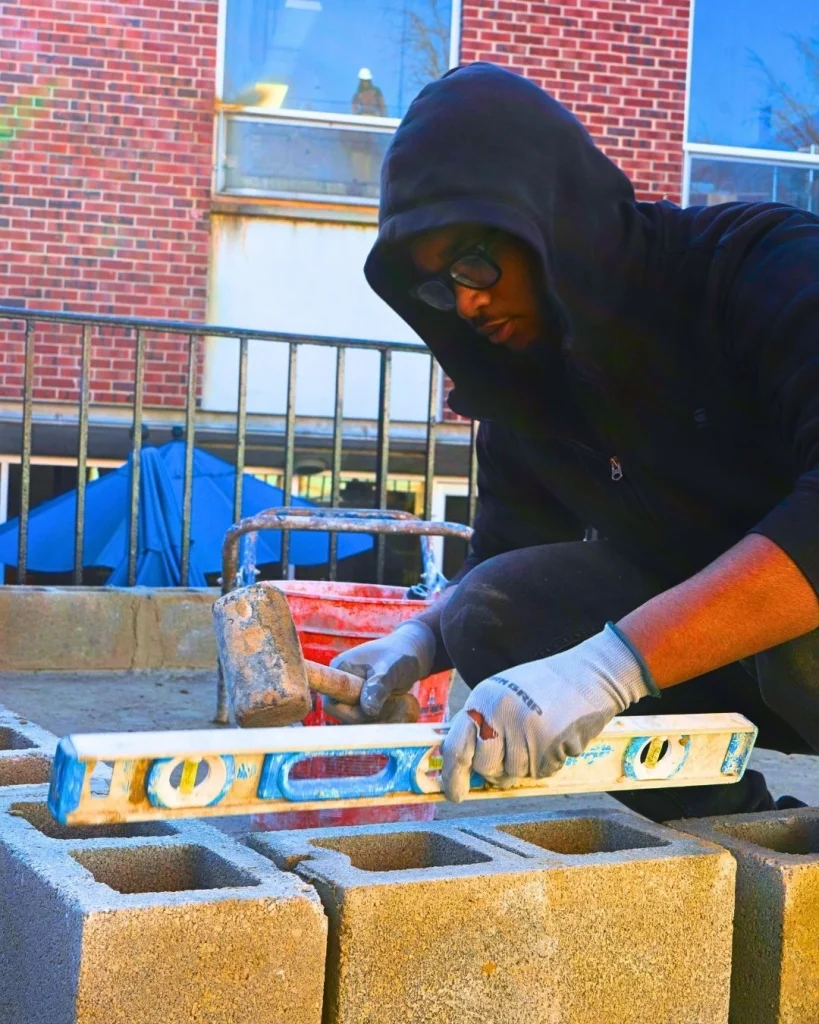
Choose based on the material you enjoy, the work pace that suits you, and your long-term goals. Pick concrete finishing if you like fast, same-day results; choose the cement mason path for the widest concrete scope and a clear route into commercial and union work; select bricklaying if you value craftsmanship and the highest median pay.
Beyond preference, think about how each role matches your strengths. Concrete finishing rewards speed and composure under time pressure. The mason’s role rewards versatility and the willingness to handle everything from forms to finish. Bricklaying rewards patience and a sharp eye for detail that holds up over a full day of precise, repetitive work. There is no single “best” answer across the masonry trades; there is only the best fit for you.
A good way to decide is to try the work. Hands-on exposure to concrete, block, and brick in a training setting reveals quickly which craft clicks. This is one of the biggest advantages of hands-on masonry training rather than guessing from a job description, because practical lab time lets you feel the difference before you commit to a career.
Employers across all three construction crafts consistently value the same core competencies. Mastering these during training makes you a credible candidate on day one, whether you pursue concrete finishing, cement work, or bricklaying.
These are the exact skills a structured masonry program builds through repetition and real job-site-style practice. A curriculum that includes concrete, framing, and blueprint reading prepares you for the realities of the work rather than just the theory, which is what employers in the Philadelphia region expect from entry-level hires.
The fastest, most reliable way to enter any of the masonry trades is hands-on masonry training that puts tools in your hands early. You do not need a four-year degree. Most employers care about whether you can do the work safely and well, which is something a focused program can teach in months rather than years.
Philadelphia is a strong place to train because the local construction market is active and diverse, giving graduates real opportunities across the city’s neighborhoods and the surrounding region. Training here can open doors not only in North, South, and West Philadelphia, but also across nearby communities such as Camden, Pennsauken, Cherry Hill, Lansdowne, Darby, and Drexel Hill, since construction skills travel well across the tri-state area. For adults looking to retrain for a skilled career in under a year, a local, practice-based masonry program is often the most direct route.
When comparing programs, look for genuine hands-on lab time, instructors with real field experience, coverage of concrete and framing together, and training in the blueprint reading and layout skills employers require. If you want to understand the full range of masonry jobs from bricklaying to stonemasonry, prioritize a masonry program that lets you practice on real materials in a job-site-style environment, because that is what turns classroom knowledge into employable skill and shortens the path from enrollment to a paycheck.
The choice between a concrete finisher, cement mason, and bricklayer comes down to the material you enjoy, the pace that fits you, and the career path you want. Concrete finishing rewards speed and clean results, the cement mason route offers the widest concrete scope and a strong path into commercial and union work, and bricklaying rewards craftsmanship with the highest median pay of the three. All are stable, in-demand options within the masonry trades, none requires a four-year degree, and each is reachable through focused, hands-on training.
The best way to decide is to try the work and build real skill with professional instruction. If you are ready to explore these careers in a practice-based setting, explore PTTI’s Concreting, Masonry & Framing program and take the first step toward a skilled construction career in the Philadelphia area.
A concrete finisher smooths and finishes poured concrete surfaces. A cement mason performs a broader range of concrete work, including forming, pouring, finishing, and repair. A bricklayer builds walls and structures from brick, block, and stone using mortar. All three belong to the masonry trades but work with different materials and tasks.
No construction craft is “easy,” but concrete finishing often has the most straightforward entry point because its core task is finishing flatwork. Bricklaying typically takes longer to master because precision and consistency across every course are essential. The right choice depends more on your strengths than on difficulty alone.
Pennsylvania does not require a specific statewide license to work as a concrete finisher, cement mason, or bricklayer, though contractors may need registration and job sites require safety compliance. Employers value demonstrated skill and safety training, which is why hands-on masonry training matters. This is educational information, not legal advice; verify current requirements with Pennsylvania and local authorities.
A focused, hands-on masonry program can prepare you for entry-level work in under a year, far faster than a four-year degree. Because these are skill-based crafts, how quickly you become job-ready depends on how consistently you practice the core techniques during training.
Yes. Steady construction activity, an aging workforce creating replacement openings, and work that is difficult to automate all support the masonry trades. Cement work and concrete finishing are projected to grow faster than average, and bricklayers earn a strong median wage, making masonry a stable choice for 2026 and beyond.