
When people compare a trade to a four-year degree, they usually look at the first paycheck and stop there. That is the wrong comparison. The real story of trade salaries is how quickly they climb once you have training and a few years of hands-on skill behind you. A welder, HVAC technician, or pipefitter who starts in the low-to-mid $40,000s often sees that number rise sharply by year five, and students training at a trade school in Philadelphia are positioned to ride that curve in one of the strongest skilled-trades markets in the Northeast.
This article breaks down first-year versus five-year pay across several skilled trades using current 2026 data. You will see which careers start the fastest, which grow the steepest, what actually drives the increases, and how the picture looks for students in Philadelphia, the surrounding Pennsylvania counties, and South Jersey. The goal is simple: give you an honest, numbers-based look at how trade salaries grow so you can choose a path with your eyes open.
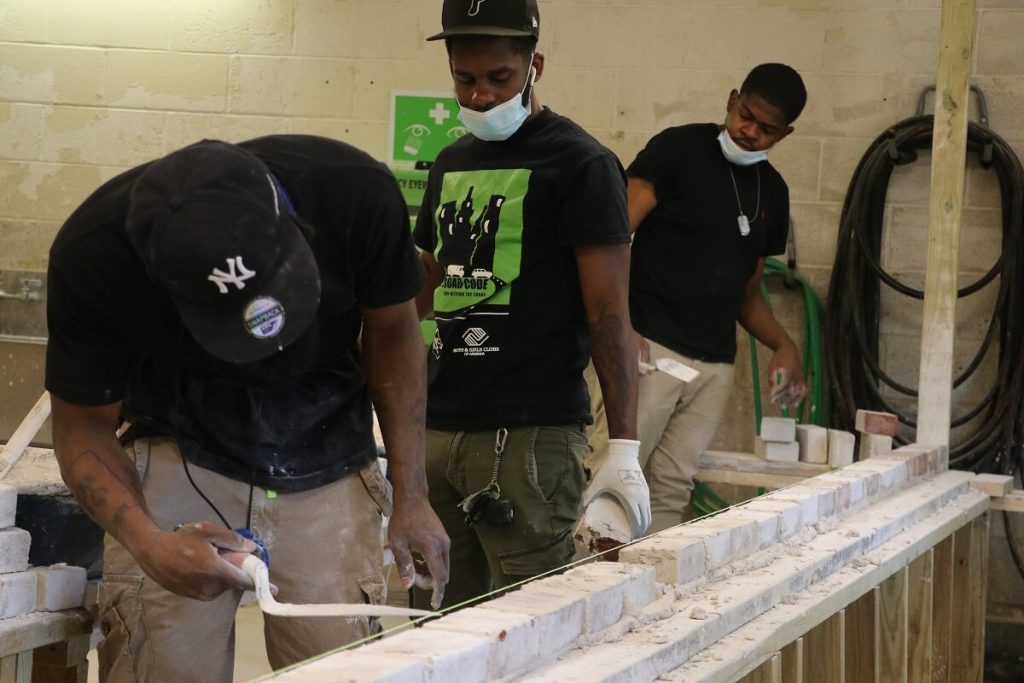
Skilled trade salaries typically grow between 30% and 65% in the first five years. A worker starting near $40,000 can realistically reach the high $50,000s to high $60,000s by year five, driven by certifications, specialization, and experience. Growth is fastest in licensed and union trades like HVAC and pipefitting.
That pace is what makes the trades worth a serious look. In many office careers, early raises are small and incremental. In the skilled trades, the gap between a first-year worker and a five-year veteran is large and measurable, because your value is tied directly to provable skill. Once you can do work that beginners cannot, pay follows quickly. The sections below show exactly how that plays out trade by trade, using 2026 figures from sources like the U.S. Bureau of Labor Statistics, Salary.com, and industry wage data.
A quick note on honesty: these are market ranges, not promises. Actual pay varies by employer, certification, overtime, shift, specialization, and location, which is also why a trade school in Philadelphia can rarely quote one exact number. No school can guarantee a salary, and this article does not. What it can do is show you the realistic shape of salary growth across the trades.
The first year is about getting in the door with enough skill to be useful on a job site or in a shop. Starting salary in the trades is generally lower than the five-year figure, but it is almost always higher than minimum-wage work, and it begins immediately after short training rather than years of coursework. A realistic starting salary is also one of the first questions prospective students ask a trade school in Philadelphia, so it deserves clear numbers. Here is how first-year pay compares across several in-demand skilled trades in the Philadelphia region.
| Trade | Typical First-Year Pay (2026) | Training On-Ramp |
| Sterile Processing | ~$37,000 – $41,000 | Short, focused program |
| Pipefitter / Steamfitter | ~$38,000 – $45,000 | Program + apprenticeship start |
| HVAC | ~$39,000 – $45,000 | Program + entry role |
| Welding | ~$45,000 – $51,000 | Program + weld test |
| Automotive | ~$45,000 – $49,000 | Program + entry tech role |
Two things stand out. First, welding and automotive tend to open with the strongest first-year numbers, because employers can put trained beginners to productive work fast. Second, sterile processing offers one of the quickest on-ramps to a paycheck, since the training is short and hospitals hire steadily. For students who need to start a career-focused trade program and begin earning without a long delay, that fast entry is a real advantage.
By year five, the numbers change meaningfully. This is the point where certifications are in hand, specialization has kicked in, and experienced workers command noticeably higher wages. The table below pairs first-year pay with a realistic five-year figure so you can see the growth directly.
| Trade | First-Year Pay | ~Year-Five Pay | Approx. Growth |
| Sterile Processing | ~$37,000 – $41,000 | ~$46,000 – $51,000+ | ~30–35% |
| Welding | ~$45,000 – $51,000 | ~$55,000 – $65,000+ | ~25–30% |
| Automotive | ~$45,000 – $49,000 | ~$61,000 – $67,000 | ~35–40% |
| HVAC | ~$39,000 – $45,000 | ~$55,000 – $62,000+ | ~35–45% |
| Pipefitter / Steamfitter | ~$38,000 – $45,000 | ~$58,000 – $63,000+ | ~50–65% |
The pattern is clear. The trades with structured licensure and union pathways, especially pipefitting and HVAC, tend to show the steepest salary growth, because each credential and each step up the journeyman ladder unlocks a higher wage tier. Pipefitters and steamfitters who reach journeyman status can push well past the five-year figure, with experienced workers reaching into the $78,000 range and beyond. HVAC technicians who earn a license and move into commercial service follow a similar climb, with experienced technicians in Pennsylvania reaching into the $80,000s.
Welders start strong and grow steadily. A welder in the Philadelphia area generally begins around $45,000 to $51,000 and reaches the high 50,000stomid-60,000s within about five years, with certified and union welders earning more. The biggest driver of welder salary growth is stacking certifications and moving into pipe or specialty welding, where demand and pay are highest. Students exploring welding technology training are entering a trade where provable skill translates almost directly into higher wages.
HVAC pay grows quickly once a technician earns credentials and gains service experience. Pennsylvania HVAC technicians start near $39,000 as apprentices and reach a statewide median around $53,550, while the Philadelphia median runs higher at roughly $62,220, and experienced licensed technicians can earn into the $80,000s. Because heating and cooling systems are essential year-round, HVAC is one of the most stable of the highest paying trades for long-term salary growth.
Automotive technicians see a strong mid-career jump. In Pennsylvania, entry-level techs start around $48,660, rise to roughly $61,388 with three to five years of experience, and reach about $67,160 by the five-to-seven-year mark. The increase is driven by ASE certifications, diagnostic expertise, and brand or EV specialization. As vehicles grow more computerized, technicians who master modern diagnostics become especially valuable, which keeps automotive among the trades with reliable salary growth.

Pipefitting shows some of the fastest salary growth of any trade. Apprentices often start near $38,000, but the median reaches roughly $63,000, and journeymen with six to ten years of experience earn around $78,000, with foremen and traveling journeymen reaching into six figures. This is a trade where union scale and journeyman status reward experience aggressively. The full arc, from pipefitting trainee to union journeyman, is one of the clearest examples of how fast trade salaries can grow.
Sterile processing offers the quickest path to a paycheck with dependable growth. Technicians in Philadelphia often start in the high $30,000s to low $40,000s and climb into the high $40,000s to low $50,000s with certification and experience, with lead and supervisory roles paying more. While the five-year ceiling is lower than the construction trades, the short training and steady hospital demand make it an efficient option. The typical sterile processing career growth path runs from entry-level tech to department lead.
Starting salary tells you where you begin; it says little about where you end up. Several forces push skilled trades pay upward in the first five years, and understanding them helps you plan your own growth.
This is why the trades reward people who keep building skill. The students who grow their trade salaries the fastest are the ones who treat the first job as a starting line, not a destination, and keep adding certifications and specializations across those first five years.
There is a useful distinction between trades that start fast and trades that climb high, and the right answer depends on your goals.
If your priority is to begin earning as quickly as possible, sterile processing and welding are strong choices. Both have short, focused training and clear entry roles, so you move from classroom to paycheck in a compressed timeline. This matters for career changers and adult learners who cannot afford a long gap in income.
If your priority is the steepest long-term salary growth, pipefitting and HVAC lead the way among the highest paying trades. These trades have structured licensure and union pathways that reward each step with a higher wage tier, so the patient worker is paid well for climbing the ladder. Automotive sits in between, with a solid starting salary and a strong mid-career jump for technicians who certify and specialize.
For many students, the smartest move is to pick a trade whose growth curve matches their life. There is no single “best” answer among the highest paying trades, only the one that fits your timeline, your interests, and the kind of work you want to do every day. A good skilled trades program can help you weigh those trade-offs before you commit.
Philadelphia is an unusually good place to ride the trade salary growth curve. The region combines a strong union building-trades presence, active shipbuilding and infrastructure work, ongoing healthcare and commercial construction, and a manufacturing base that still fabricates metal every day. That mix pushes many trade salaries above the statewide median and creates steady demand for new workers across the trades.
Opportunity extends well beyond the city core. Graduates find work across North, South, and West Philadelphia, in neighborhoods from Mantua and Powelton Village to the Spring Garden corridor, and throughout nearby communities such as Yeadon, Lansdowne, Darby, Drexel Hill, and Ardmore. Across the river, demand reaches South Jersey towns including Camden, Pennsauken, Cherry Hill, Collingswood, and Maple Shade. Because skilled trades credentials are portable, training centrally at a trade school in Philadelphia positions you to take the best-paying work in whichever direction it appears, including into Delaware and the wider tri-state market.
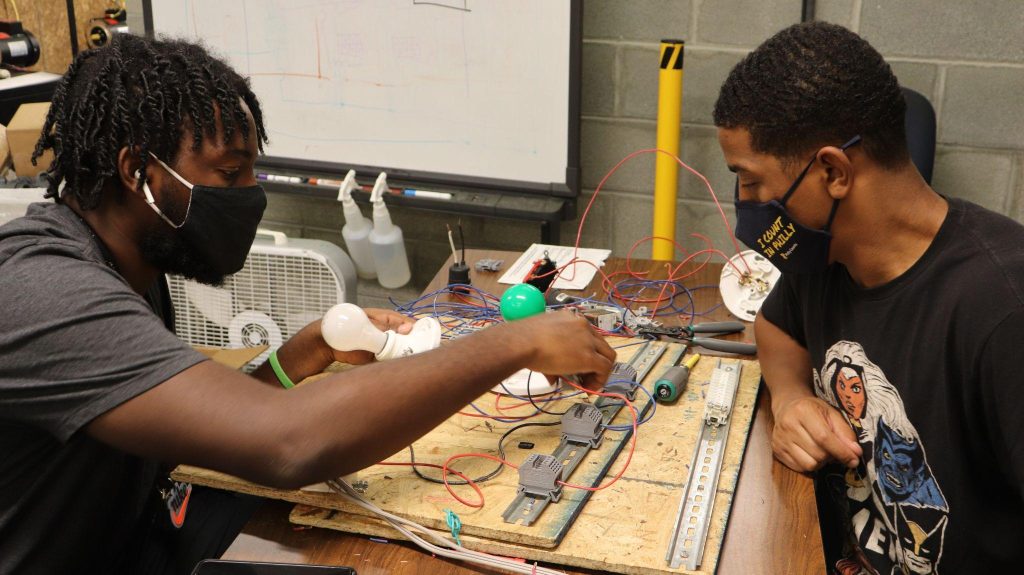
The data shows the potential; your choices determine whether you reach it. A few practical moves separate the workers who grow their trade salaries quickly from those who plateau:
None of this requires a four-year degree or heavy debt. It requires a solid start and the discipline to keep building, which is exactly what a career-focused trade school in Philadelphia is designed to support, whichever of the highest paying trades you choose.
Most skilled trades grow roughly 30% to 65% between year one and year five. A worker starting near $40,000 can realistically reach the high $50,000s to high $60,000s by year five, with licensed and union trades like HVAC and pipefitting showing the steepest salary growth.
Among the trades covered here, welding and automotive tend to offer the highest starting salary in the Philadelphia area, generally in the mid-to-high $40,000s to low $50,000s, because trained beginners can be put to productive work quickly. Sterile processing offers a lower starting salary but the fastest on-ramp to earning.
Pipefitting and HVAC show the fastest long-term salary growth, driven by licensure and union journeyman pathways. Pipefitters can move from roughly $38,000 as apprentices to $78,000 or more as experienced journeymen, making them among the highest paying trades over a full career.
Yes. Every trade in this article is open to high school graduates and career changers without a four-year degree. Skilled trades reward provable ability and certifications rather than academic credentials, which is why trade salaries can grow so quickly once training is complete.
Many focused trade programs prepare students for entry-level work in well under a year, and some, like sterile processing, are shorter still. That short on-ramp is a major reason the trades appeal to adults who need to start earning without a long delay.