
If you want a hands-on trade that pays a strong wage, stays in steady demand, and does not require a four-year degree, becoming a steamfitter deserves a close look. This guide breaks down the full steamfitter job description, what steamfitters actually earn in 2026, and the exact steps to enter the field. It is written for high school students, graduates, career changers, veterans, and adult learners in the Philadelphia area who want practical, job-ready skills instead of student debt.
Steamfitting is one of the more specialized and better-paid corners of the piping trades. A steamfitter works with high-pressure systems that most plumbers never touch, and that specialization is a big part of why the pay is competitive and the work is stable. Below, you will find a clear picture of the role, current salary data, local demand across Philadelphia and Pennsylvania, and how to get started.
A steamfitter installs, assembles, and repairs high-pressure piping systems that carry steam, hot water, gas, and other liquids in industrial and commercial settings. Steamfitters read blueprints, cut and weld pipe, and test systems for safety in power plants, hospitals, refineries, high-rise buildings, and manufacturing plants.
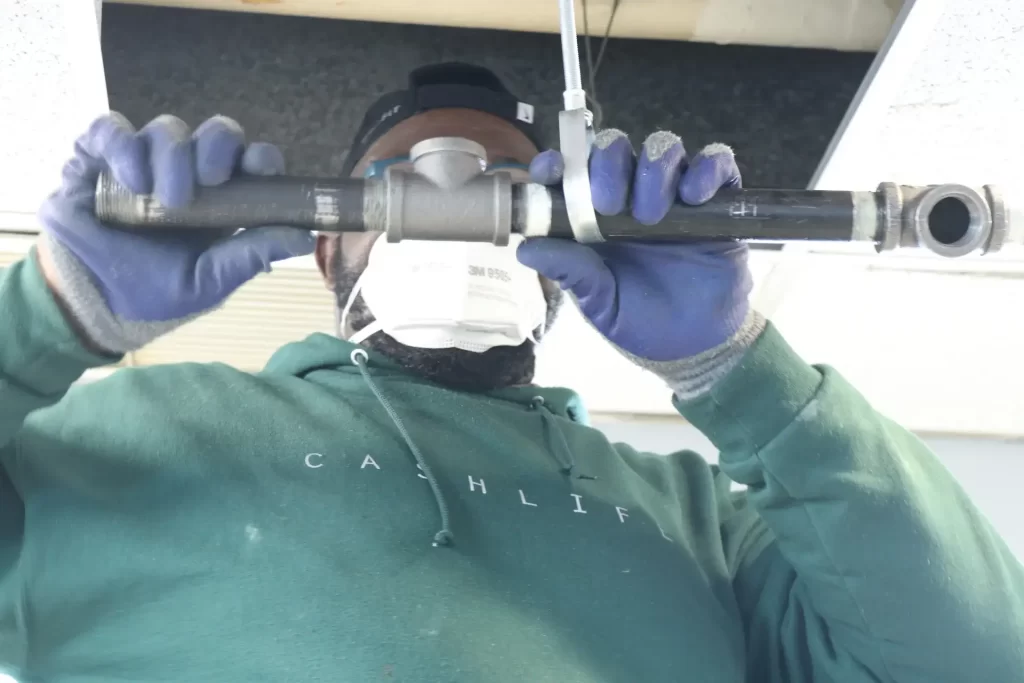
The core steamfitter job description centers on building and maintaining the piping that moves steam and pressurized fluids through large facilities. Unlike a residential plumber, a steamfitter usually works in commercial and industrial environments where the pressure, temperature, and safety stakes are much higher. That is why steamfitting is treated as a skilled specialty within the mechanical trades.
A steamfitter spends the workday laying out systems from drawings, preparing and joining pipe, and making sure every connection can handle heat and pressure without failing. The work is physical and precise. It also rewards problem-solving, because no two job sites are identical.
A typical steamfitter job description includes the following responsibilities:
Because steamfitters handle pressurized systems, precision and safety discipline are not optional. A small mistake on a steam line can be dangerous, so employers value fitters who work carefully and communicate clearly on the job site.
People often use these titles interchangeably, but there are real differences. A plumber typically installs and repairs water and drainage systems in homes and buildings. A pipefitter installs and maintains piping that carries a wide range of liquids and gases in industrial settings. A steamfitter is a specialized pipefitter who focuses specifically on high-pressure systems that move steam and hot fluids.
In practice, the skills overlap heavily. Many professionals train across all three areas, which makes them more employable. That is one reason a program covering steam, sprinkler, and pipe fitting together gives students such flexible career options. If you are weighing the piping trades against each other, our breakdown of the difference between a steamfitter and a pipefitter is a helpful next read.
Steamfitters earn a solid middle-class income, and experienced fitters in strong union markets do very well. According to the U.S. Bureau of Labor Statistics, the median wage for plumbers, pipefitters, and steamfitters is roughly $63,000 per year, or about $30 an hour, with the top ten percent earning more than $105,000. Steamfitting sits at the higher end of that group because of its specialized, high-pressure focus.
The full steamfitter salary picture depends on where you work, your experience, your certifications, and whether you belong to a union. Overtime is common on industrial jobs, which can push annual earnings well above the base figures.
| Career Stage | Approximate Annual Range |
| Apprentice / entry-level steamfitter | $45,000 – $55,000 |
| Journeyman steamfitter | $63,000 – $80,000 |
| Senior / specialized / union steamfitter | $85,000 – $120,000+ |
| National top 10% (all pipe trades) | $105,000+ |
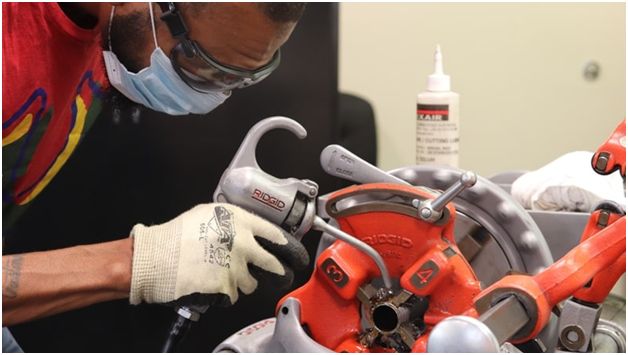
Philadelphia is a strong market for the piping trades, and the local steamfitter salary reflects that. Regional compensation data places the average steamfitter salary in Philadelphia in the low-to-mid $60,000s to mid-$70,000s, with entry-level fitters starting around $53,000 and senior fitters earning well into the $80,000s. Union steamfitters and journeyman pipefitters in the Philadelphia area frequently earn $75,000 to over $100,000 once benefits and overtime are included.
Several factors push Philadelphia pay above the national midpoint: a dense concentration of hospitals, universities, refineries, and commercial buildings that all rely on steam and process piping, plus a well-organized union presence that negotiates strong wage-and-benefit packages. For a career you can start without a bachelor’s degree, that earning power is hard to match.
Not every steamfitter earns the same. The biggest drivers of a higher steamfitter salary are:
Yes. Steamfitters are in steady demand, and that demand is durable. The Bureau of Labor Statistics projects roughly 44,000 openings each year across the plumbing, pipefitting, and steamfitting trades over the coming decade, with a large share driven by the retirement of experienced workers who need to be replaced. Aging infrastructure, industrial maintenance, and new commercial construction all keep the work coming.
Steamfitting is also difficult to automate. The job happens in the field, in tight spaces, on custom systems that require judgment and hands-on skill. A machine cannot climb into a mechanical room and diagnose a failing steam trap. That physical, site-specific nature is exactly what makes the trade resilient and future-proof compared with many office roles.
For Philadelphia specifically, the mix of healthcare campuses, universities, and industrial facilities creates consistent local demand for skilled steamfitters and pipefitters, both for new installations and for ongoing maintenance.
Employers hiring in the piping trades look for a specific blend of technical ability and work-site habits. The steamfitter job description rewards people who bring:
Good news for beginners: these are teachable skills. Structured steamfitter training builds them in a lab setting before you ever step onto a job site, which is why hands-on programs matter so much in this trade.
Here is the straightforward path most people take to enter the field. Becoming a steamfitter does not require years of college, but it does require focused steamfitter training and the willingness to build real skill.

You generally need to be at least 18 with a high school diploma or GED. Physical fitness and comfort working with your hands help, though those grow with practice. A genuine interest in mechanical systems is the best starting point.
Classroom theory alone will not prepare you for pressurized piping. The most effective route is a program that combines instruction with real lab time on industry-standard equipment. Quality steamfitter training teaches pipe fabrication, welding, blueprint reading, system testing, and safety, so you finish job-ready rather than starting from zero. This is where a Philadelphia trade school can move you into the workforce quickly.
Most steamfitters build journeyman-level skill through an apprenticeship, which combines paid on-the-job experience with continued classroom learning. Apprenticeships in the piping trades typically run several years and let you earn while you learn. Finishing a strong training program first can make you a more competitive apprenticeship candidate. If you want to understand the timeline, see our guide on how long a steamfitter apprenticeship program takes.
Welding certifications and process-piping credentials strengthen your résumé and raise your pay ceiling. Licensing requirements vary by state and municipality, and many roles require passing weld tests to recognized codes. A good program prepares you for these exams as part of the curriculum.
Philadelphia is a genuinely good place to launch a career in steamfitting. The region combines a strong union tradition, a large base of hospitals and universities, and industrial facilities that all depend on steam and pressurized piping. That translates into consistent local hiring for both installation and maintenance work, and it is one reason many students choose to train close to home.
Opportunities extend well beyond the city center. Steamfitters trained in Philadelphia find work across nearby communities in Pennsylvania, from Ardmore, Drexel Hill, and Lansdowne to Darby and Yeadon, and across the river into South Jersey towns such as Camden, Cherry Hill, Pennsauken, and Collingswood. Because piping and welding skills are portable, training in a central location like Philadelphia positions you to take work in whichever direction the best opportunity appears.
For anyone comparing the piping trades, it also helps to know that steamfitting, sprinkler fitting, and pipefitting share a large skill base. Learning them together, rather than in isolation, gives you more directions to grow.
Philadelphia Technician Training Institute (PTTI) offers a hands-on Steam, Sprinkler & Pipe Fitting program built around exactly what employers in the region look for. Students train on industry-standard equipment, practice real pipe fabrication and welding, and learn the safety and blueprint-reading skills that the steamfitter job description demands from day one.
The program is designed for practical learners, including career changers, veterans, and high school graduates who want job-ready skills without a four-year degree. Instructors bring real field experience, class sizes stay focused, and the curriculum reflects current workforce demand across Philadelphia and Pennsylvania. Because steamfitters often weld, students also benefit from the school’s broader trades environment, where welding technology training complements the piping skills that make fitters more valuable.
For veterans exploring the trades, PTTI’s veterans education benefits can help fund training, and the admissions team supports every applicant through enrollment and beyond.

A steamfitting career gives you a rare combination: strong pay, steady demand, and a clear path into the workforce that skips years of college debt. The steamfitter job description rewards people who like working with their hands, solving real problems, and building systems that keep hospitals, plants, and buildings running. With focused steamfitter training and the right certifications, you can move from beginner to job-ready and grow your steamfitter salary steadily over your career.
If you are ready to take the next step, explore PTTI’s Steam, Sprinkler & Pipe Fitting program and see how hands-on training in Philadelphia can launch your career in the piping trades.
A steamfitter installs, repairs, and maintains high-pressure piping systems that carry steam, hot water, gas, and other fluids in industrial and commercial buildings. The steamfitter job description includes reading blueprints, cutting and welding pipe, assembling valves and fittings, and testing systems for safety.
Nationally, the median steamfitter salary sits around $63,000 per year, with top earners exceeding $105,000, according to the U.S. Bureau of Labor Statistics. In Philadelphia, experienced and union steamfitters often earn $75,000 to over $100,000 once overtime and benefits are included.
Yes. Steamfitting offers strong pay, steady demand, and long-term stability without requiring a four-year degree. The trade is hard to automate, and roughly 44,000 openings appear each year across the piping trades, making it a reliable path for hands-on workers.
It depends on your path. Focused steamfitter training can prepare you for entry-level work in months, while reaching full journeyman level through an apprenticeship typically takes several years of paid, on-the-job learning combined with classroom instruction.
Many do. Welding is a core skill in the steamfitter job description because high-pressure systems require strong, code-quality joints. Learning to weld well makes a steamfitter significantly more employable and raises earning potential.
A pipefitter installs piping that carries many kinds of liquids and gases in industrial settings, while a steamfitter is a specialized pipefitter who focuses on high-pressure steam and hot-fluid systems. The skills overlap heavily, and many workers train in both.
Requirements vary by state and municipality. Not every steamfitter role requires a formal license, but many require passing weld tests and holding certifications. A quality training program prepares you for the credentials employers expect.
PTTI offers a hands-on Steam, Sprinkler & Pipe Fitting program in Philadelphia that trains students on real equipment and prepares them for entry into the piping trades, serving learners across Pennsylvania and South Jersey.