
Once You finish the program, earn your certificate, and then the big question comes up. What happens next? Sterile processing technician job placement in Philadelphia isn’t a mystery, but nobody explains it well. Hospitals and surgical centers need trained techs every single day. However, the path from certification to your first paycheck has a few key steps. Here’s what graduates can really expect, from the first job search to the first year on the job.
As of now Think of this job as the safety net behind every surgery. Techs clean, inspect, sterilize, and assemble the instruments surgeons use. Additionally, they track everything so nothing goes into an operating room unchecked.
On a normal shift, you might:
It’s detail work, and it matters because it requires alertness and attention to safety and sanitation. One missed step can put a patient at risk. That’s why employers take certification seriously.
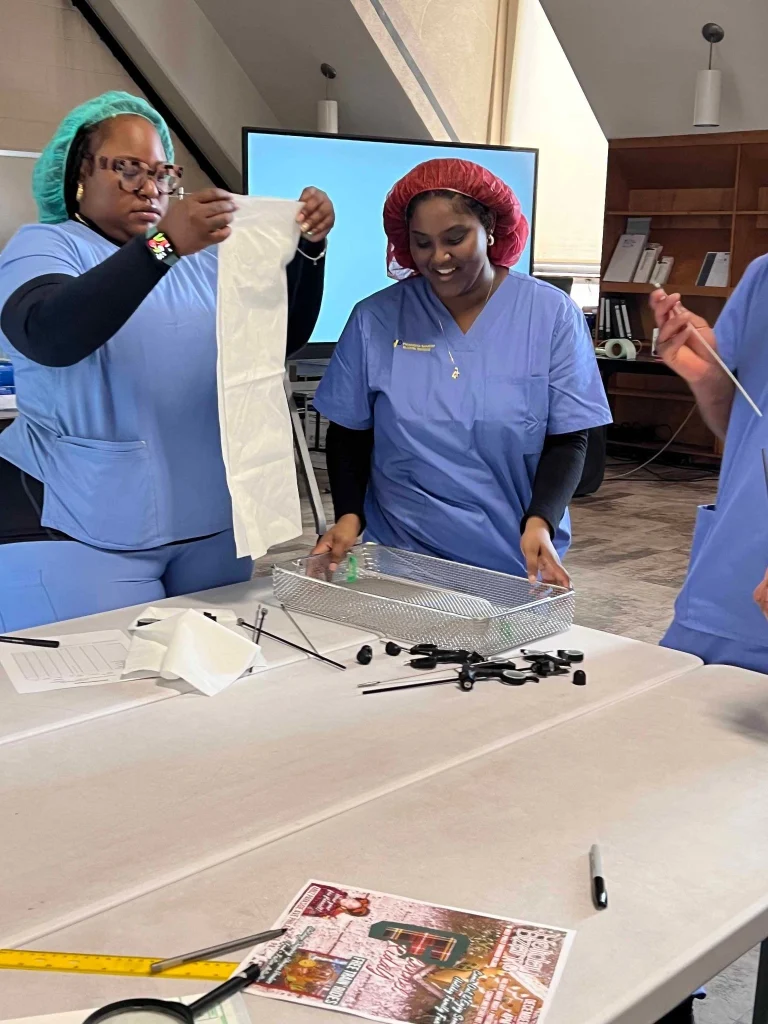
Hospitals want proof you know the standards. Hospitals want students or technicians to show they take sanitation seriously and care deeply about safety. That’s where CRCST certification comes in. It’s one of the most recognized credentials in this field. Many employers also list it as required or strongly preferred.
Here’s why it carries weight:
Always confirm current exam requirements with HSPA and CRCST certification requirements before you plan your timeline. Rules can change.
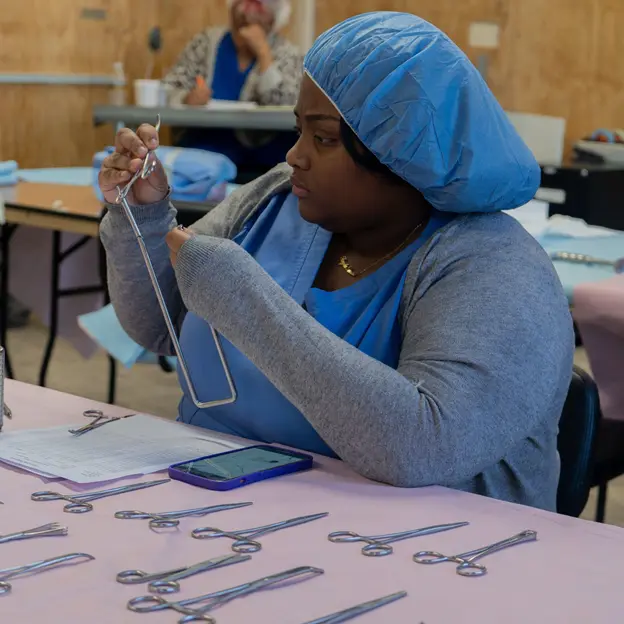
Here’s the usual flow after training wraps up. The time from training completion to receiving certification may vary, so treat this as a general picture.
Step 1: Wrap Up Your Externship
Real hospital or clinic hours give you something a classroom can’t. Because they give actual real-life experience . Supervisors watch you work. Therefore, a strong externship often turns into a job lead, or at least a solid reference.
Step 2: Finish Certification
Once you hold your certification, add it to your resume right away. Later, you can connect with Alumni groups and the career services department,t as they can help you find employer information.
Step 3: Start Applying
Healthcare centers, Hospitals ,surgical centers, outpatient clinics, and dental offices all hire sterile processing technician. Cast a wide net. Moreover, ask your school about employer contacts, since many openings never hit big job boards.
Step 4: Interview Prep
Expect questions about infection control from instruments , the proper safety procedure is also followed. Its important to maintain hygiene; therefore, during the interview it might be asked so be prepared with that knowledge about sanitation processes, attention to detail, and handling pressure. Practice out loud. It feels silly, but it works.
Step 5: The Offer
Most new techs start in entry-level roles. That’s normal. From there, you build experience and work your way up.
Hospitals take the biggest slice. This table shows the percentage hiring expected from these medical industry
| Employer Type | Rough Share | What It Offers |
| Hospitals | ~50% | Larger teams, more room to move up |
| Surgical/Outpatient Centers | ~25% | Steady schedules, smaller crews |
| Specialty Clinics | ~15% | Focused instrument work |
| Other Healthcare Settings | ~10% | Varied roles |
Note: These percentages are illustrative estimates, not official statistics.
Overall, you’ve got options. Don’t stop at the first posting you see.
Sterile processing technician salary in United States. Differ according to state, and city .Pay depends on certification, experience, and employer. Here’s a general picture:
| Experience Level | Hourly Range |
| Entry-Level | $16 – $20 |
| Mid-Career | $21 – $26 |
| Experienced/Certified | $27 – $34+ |
Note: These are general estimates. Check current BLS or local data before publishing.
Many hospital jobs also come with benefits, which matter as much as the hourly rate. Night and weekend shift differentials can also boost your paycheck.
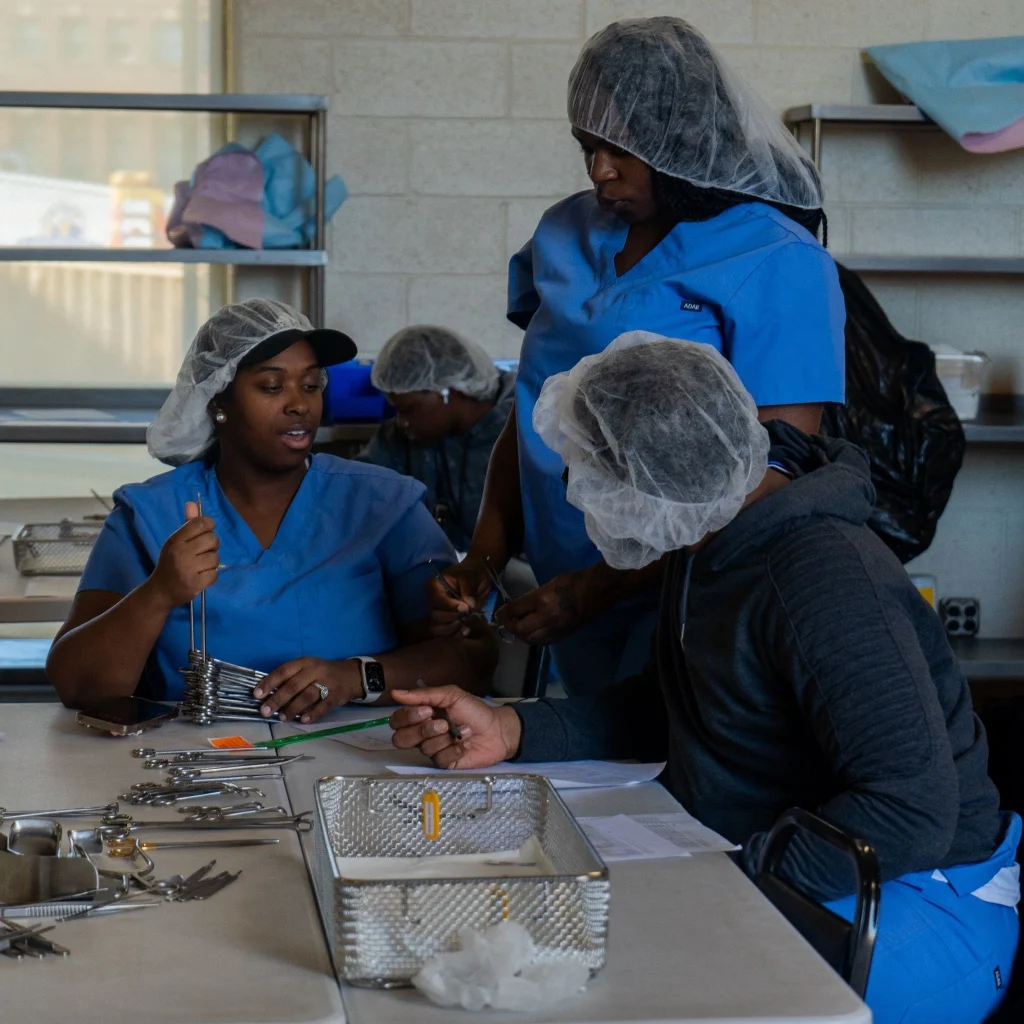
Let’s be honest. The first few months can feel intense. You’ll spend a few weeks learning tools and the basics of sterilization. Instruments, protocols, and schedules all come at you fast. However, it gets easier.
Expect to:
Stay curious about tool usage . Ask questions to your supervisor or manager of your shift. if you find anything confusing or not clear to you . Supervisors respect new hires who double-check instead of guessing.
Sterile processing technician jobs aren’t very easy, as they require ae a lot of concentration, alertness, and quick understanding. You need to keep instruments ready, so that also requires strong coordination with medical assistance. Many techs grow into lead roles, then supervisor or department management positions. Therefore, your first job is a starting line, not a ceiling.
Some paths include:
According to the U.S. Bureau of Labor Statistics, healthcare support occupations are projected to grow steadily over the next decade. So demand won’t disappear anytime soon.
Philadelphia Technician Training Institute (PTTI) the best trade school in philadelphia offers a hybrid Sterile Processing and Central Services program totaling 1,100 hours. That includes 200 hours of online lecture, 500 hours of hands-on lab, and 400 hours of externship. The program also leads to CRCST certification and aligns with HSPA standards.
Here’s how enrollment works:
PTTI reports a placement rate near 92% across its trade programs. Ask your advisor how it’s calculated. A good school will gladly explain.
Placement with PTTI, especially in Sterile Processing Technician job placement in Philadelphia, comes down to three things: Explicit training, real industry-recognized certification, and a strong externship. Placement depends not only on marks but also on soft skills and dedication, and employers. Between steady demand, clear career steps, and a field that actually matters, this path gives graduates something real to build on. Overall, certification is where your job search truly begins.
Ready to see where this career could take you? Call PTTI at 215-381-9403 or email info@ptt.edu to talk with an advisor.
Hiring and getting Timelines vary. Many students start applying during their externship and land offers within a few months.
Yes it matters a lot. Especially at the time of placements Many employers require or prefer it
Mostly hospitals and surgical centers, plus clinics and specialty doctors offices.
Yes. Absoultely It gives employers a firsthand look at your work and often leads to references or offers.
PTTI reports a placement rate near 92% across its trade training programs.
Read More: