
The perfect day depends on how you have spent the previous day. Being a student and being a working professional are different for both of them . It’s 6:45 a.m. The plant is already humming. Robots swing, conveyors roll, and somewhere a sensor is about to throw an error. That’s where you come in. Here’s a real look at a day in the life of an automation and manufacturing technician, minus the sales pitch. It’s part mechanic, part electrician, part detective. Some days are smooth. Others are a scramble. Either way, you keep the machines running.
Factories today run on automated equipment. Robots, programmable controllers, sensors, and cameras all work together. Someone has to install, monitor, and fix all of it. That person also needs to understand both the mechanical and electrical sides.
The automation technician job description usually covers:
So you’re not just pushing buttons. You’re solving problems that cost a company money every minute they sit unfixed.
Here’s what a day might look like in the life of an Automotive technician . Times , depending on the plant and the shift.
| Time | What You’re Doing | Why It Matters |
| 6:45 AM | Check in, read the shift handoff notes | Learn what broke overnight |
| 7:15 AM | Safety walk-through of your area | Catch hazards before they cause trouble |
| 8:00 AM | Preventive maintenance rounds | Fix small issues before they become big ones |
| 10:00 AM | Respond to a line stoppage | Get production moving again fast |
| 12:00 PM | Lunch | You earned it |
| 12:45 PM | Troubleshoot sensor or PLC fault | Find the root cause, not just the symptom |
| 2:30 PM | Test and adjust equipment | Confirm the fix actually holds |
| 3:15 PM | Update logs and write handoff notes | The next shift depends on it |
An automotive technician’s at a machine repair shop roughly splits into a few parts: about 35% troubleshooting and repairs, 30% preventive maintenance, 15% monitoring equipment, 10% documentation, and 10% meetings and training. Troubleshooting takes the biggest slice, but maintenance isn’t far behind.
Most shifts in an automation technician’s life start with checking in and reviewing the day’s appointments, if any. The last tech tells you what happened. They also check: Which machine acted up? What got fixed? Preparing for machine check . Therefore, good notes matter more than people expect.
Then comes the safety walk. You check guards, emergency stops, and warning lights of the vehicles . Observe. You make sure lockout/tagout procedures are being followed. Moreover, you don’t skip this part. Industrial equipment can hurt people, so safe habits become second nature fast.
Around mid-morning, a line stops. Production managers get nervous. Everyone looks at you. This is the part of the job that feels like detective work. The only pressure is to fix that issue ASAP. It’s the midday and if any challenging work appears then the automation technician task is to fix that issues before the day ends .
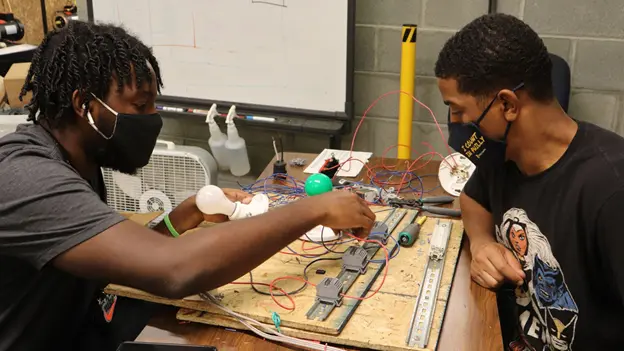
Alt Description: Automation students practise operating technical equipment while developing their understanding of modern manufacturing processes.
A typical troubleshooting flow goes like this:
Sometimes it’s a loose connector. Sometimes it’s a worn part. Sometimes it’s a software setting nobody remembers changing. Additionally, staying calm matters. Panic helps nobody.
You’ll use a mix of hand tools and tech along with machines . Here’s what a toolbox might include:
Moreover, you’ll work with systems like PLC programming platforms, robotic arms, and machine vision cameras. You don’t need to be a coding genius. But comfort with technology helps a lot.
Manufacturing technician skills fall into two buckets. Both matter.
Technical skills
Soft skills
A tech who can fix the problem and explain it simply is worth a lot. That combo gets noticed.
Let’s be fair. This job has real perks.
According to the U.S. Bureau of Labor Statistics, employment for industrial machinery mechanics and maintenance workers is projected to grow steadily over the next decade. So the trade has staying power.

Every job has downsides. Here’s what you should know.
If you like fast-moving, hands-on work, these trade-offs may be worth it. If you want a quiet, predictable desk job, this probably isn’t your lane.
You don’t stay at the starting line forever. Moreover, each step builds on the last.
| Stage | Typical Role | What Changes |
| Starting Out | Entry-Level Technician | Learn the equipment and routines |
| Growing | Skilled Technician | Handle bigger problems on your own |
| Specializing | Robotics, controls, or maintenance specialist | Focus on a specific system |
| Leading | Lead Technician or Supervisor | Guide a team and plan work |
Pay depends on experience, skills, and plant location, as well as the automotive technician’s experience. Check current BLS or local data for hard numbers, since ranges vary a lot by region and employer.
You don’t walk in knowing all this. Training builds yoy by including it step by step. PTTI’s Manufacturing and Automation program runs 26 weeks and 900 hours. It covers PLCs, robotics, machine vision, and electrical panels. Additionally, students earn a diploma upon completion.
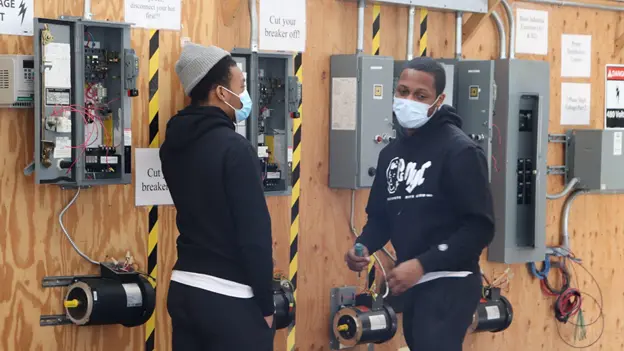
The goal of an automation and manufacturing program is simple. Put real equipment in your hands, teaches you to troubleshoot, and gets you comfortable with the tools you’ll use on the job. That hands-on time makes the first week on the job less scary.
Tuition fees and affordability matter. Especially when you are about to start training. So ask about it during admission consults with the career service team: what is the eligibility? PTTI accepts FAFSA applications and an admissions advisor can walk you through options. Ask for real numbers.
Philadelphia Technician Training Institute (PTTI) builds hands-on lab work and career coursework into its programs. It offers hands-on training with real equipment and also offers Job Application Skills, which covers resumes, interviews, and workplace expectations.
Here’s how to get started:
A day in the life of an automation and manufacturing technician mixes safety checks, problem-solving, and hands-on repair. its challenging ,It’s busy, it’s technical, and it matters. However, it asks a lot too, from shift work to steady learning. If you like figuring out how things work, this career offers real variety and room to grow. Overall, the best way to know if it fits you is to see the equipment up close and talk with people who do the work.
Ready to take a look? Call PTTI at 215-381-9403 or email info@ptt.edu to talk with an advisor.
They monitor and maintain automated equipment, troubleshoot problems, do preventive maintenance, and document their work.
Not at an expert level. Basic comfort with PLC programming and technology helps, and training teaches the rest.
It can be. You’ll stand, bend, climb, and sometimes lift in an industrial setting.
It runs 26 weeks and 900 hours. Confirm the current schedule with admissions.
No school can guarantee a job. PTTI offers career coursework and employer connections, and reports a placement rate near 92%.
Read More.