
Modern manufacturing runs on three kinds of skilled people: the person who keeps automated systems and robots running, the person who programs and operates the machines that cut precision parts, and the person who repairs the equipment when it breaks down. On a factory floor, these roles work side by side, but they are distinct careers with different day-to-day work, different pay, and very different job outlooks heading into 2026.
If you are weighing automation technician vs. CNC machinist vs. industrial maintenance, you are asking exactly the right question. All three sit among the high-paying trade jobs in Philadelphia you can land without a degree, and all three are in demand across the region’s manufacturing base. But they are not interchangeable. Choosing well means understanding what each job actually involves, what it pays, how fast the field is growing, and which one fits how you like to work.
This guide breaks down all three side by side using current federal labor data, then shows how to start in whichever direction fits you best. It is written for high school students, recent graduates, career changers, veterans, and adult learners who want a stable, hands-on career in advanced manufacturing.
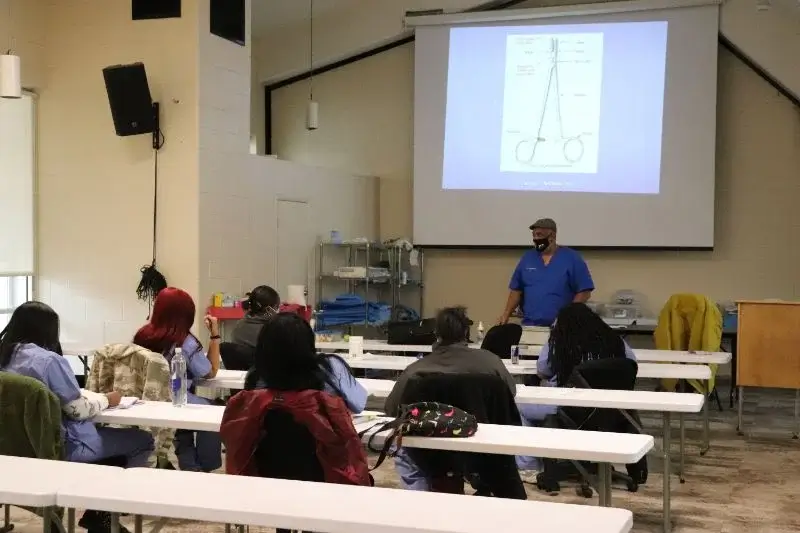
automation technician vs CNC machinist must know the role of Industrial technician as well. Before comparing pay and outlook, of the tech roles it helps to understand what separates these jobs. They overlap on the factory floor, but each has a distinct focus.
An automation technician keeps automated and robotic systems running. This is the person who installs, tests, calibrates, and troubleshoots the programmable logic controllers (PLCs), sensors, motors, conveyors, and robotic arms that power a modern automated line. automation technician training taught at PTTI is the program of around 6-8 Weeks. The work blends electrical, mechanical, and control-system knowledge, which is why it is often called mechatronics.
As factories add more automation, someone has to understand how the electrical and mechanical pieces work together and diagnose problems when a robotic cell stops. Automation technicians are that someone, which is why a closer look at the day-to-day career of an industrial automation technician reads like part electrician, part mechanic, and part software troubleshooter. It is the most technology-forward of the three roles and typically involves the most electronics and controls work.
A CNC (computer numerical control) machinist sets up, programs, and operates the computer-controlled machines that cut and shape precision metal and plastic parts. CNC machinist salary varies as per experience and locations. However, CNC Machinists read blueprints, translate them into machine instructions (G-code and M-code), select tooling, and produce parts to tight tolerances for industries like aerospace, defense, medical devices, and automotive. The automation technician vs CNC machinist are the back bone of any manufacturing unit.
This is a craft-driven role. The difference between an average machinist and a highly paid one comes down to skill: multi-axis programming, tight-tolerance work, and the ability to run complex jobs with minimal scrap. It rewards precision, patience, and a strong spatial sense.
An industrial maintenance technician keeps the entire facility running. When a motor fails, a conveyor jams, a hydraulic system leaks, or a production line goes down, this is the person who diagnoses and fixes it. The industrial maintenance technician career is in high demand in Pennsylvania due to its growing infrastructure projects .The role spans mechanical, electrical, hydraulic, and increasingly automated systems, and it emphasizes preventive maintenance to stop breakdowns before they happen.
Because every factory, warehouse, and processing plant depends on equipment uptime, industrial maintenance is the most broadly needed of the three. It is also the most variety-driven day to day, since no two breakdowns are exactly alike.
Here is how the three careers compare on the factors that matter most when choosing a path. Figures are national medians from the U.S. Bureau of Labor Statistics.
| Factor | Automation Technician | CNC Machinist | Industrial Maintenance Tech |
| BLS occupation | Electro-mechanical & mechatronics techs | Machinists | Industrial machinery mechanics |
| Median pay (2024) | ~$70,760 | ~$56,150 | ~$63,510 |
| Job outlook (2024–2034) | +1% (specialized field) | −2%, but strong replacement demand | +13% (much faster than average) |
| Annual openings (national) | ~1,300 | ~34,200 | ~45,700 |
| Typical entry education | Certificate or associate | HS diploma + training | HS diploma + training |
| Core focus | Controls, robotics, electronics | Precision programming & cutting | Repair & preventive maintenance |
| Best fit for | Tech and electronics lovers | Precision-minded craftspeople | Hands-on problem-solvers |
The industrial maintenance technician career often leads to good pay .The quick read: automation technician leads on median pay but is a smaller, more specialized field; CNC machining offers steady opportunity driven by retirements rather than growth; and industrial maintenance combines strong pay with by far the best growth outlook and the most annual openings.
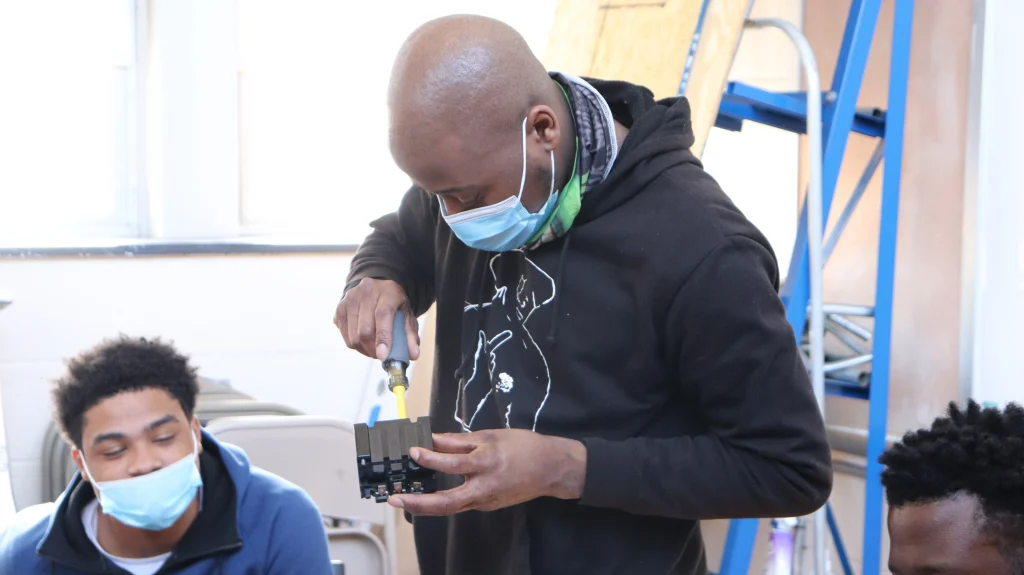
If we talk about automation technician vs CNC machinist vs Industrial technician. All three careers pay well above what many jobs requiring no four-year degree offer, but they differ at the median and at the top end. Manufacturing careers Philadelphia is growing sectors in vocational education. Automation and mechatronics technicians report the highest median (around $70,000+), while industrial maintenance techs and CNC machinists sit in the high-$50,000s to mid-$60,000s, with meaningful room to grow.
| Career | Entry-Level (approx.) | Median | Top Earners (90th percentile) |
| Automation technician | ~$47,000+ | ~$70,000+ | ~$100,000 |
| CNC machinist | ~$39,000+ | ~$56,000–$59,000 | ~$80,000+ |
| Industrial maintenance | ~$40,000+ | ~$63,000–$64,000 | ~$85,000+ |
A few things worth understanding behind these numbers. In CNC machining, pay is tied closely to skill progression: the typical ladder runs from machine operator to machinist to setup/senior machinist to CNC programmer, and experienced programmers in aerospace, defense, or medical-device work can clear $80,000. In industrial maintenance, overtime is common and can push take-home pay well above the base, and specialized skills in automation and controls raise earning power. In automation, the electronics-and-controls depth of the role supports the highest median of the three.
Pay also varies by region, industry, shift, and certifications. The point is that all three belong on any honest list of the highest-paying trade jobs in Philadelphia that don’t require a degree, and each is a legitimate path to a solid middle-class wage without student-loan debt.
Industrial maintenance technician career has the strongest outlook of the three. The Bureau of Labor Statistics projects employment of industrial machinery mechanics to grow about 13% from 2024 to 2034, much faster than the average for all occupations, with roughly 45,700 openings each year. The reason is simple: as facilities add automated equipment, someone has to keep it running.
The other two paths tell a more nuanced story that is easy to misread.
The takeaway for a prospective student: demand across all three is driven heavily by an aging workforce and rising automation. It is one of the clearest reasons manufacturing and automation jobs in Philadelphia are booming in 2026, with skilled, trained people actively recruited in every one of these fields.
One of the biggest advantages of all three paths is that none requires a four-year degree. What they do require is hands-on training and, increasingly, certifications that prove your skills to employers. Automation technician training is the most demanded skilled trade jobs nation wide as growing company needs it.
The core foundation overlaps significantly across the three roles. Whichever direction you choose, employers expect you to understand:
From that shared base, each path adds its own specialization. Automation technicians go deeper into PLCs, robotics, and the automation technologies every manufacturing student should master. Automation technician vs CNC machinist: THE MOST DEMANDED SKILLED TRADE SKILLS IN SKILLED TRADE INDUSTRY.
CNC machinists focus on programming, tooling, and multi-axis machining. Industrial maintenance techs broaden into hydraulics, pneumatics, welding for repairs, and preventive-maintenance planning. Industrial maintenance technician career has the good scope for high schoolers
For beginners, the encouraging part is that this foundation is learnable from zero. There are clear routes to hands-on robotics and manufacturing automation training suited for beginners, so no prior shop experience is required to start.
Certifications strengthen your résumé in all three. Common examples include OSHA safety credentials, NIMS certifications for machining, and manufacturer or industry credentials in PLCs and automation. A quality program such as PTTI’s Manufacturing, Automation & Electrical Technician program prepares you for these credentials as part of the training rather than leaving you to pursue them alone.
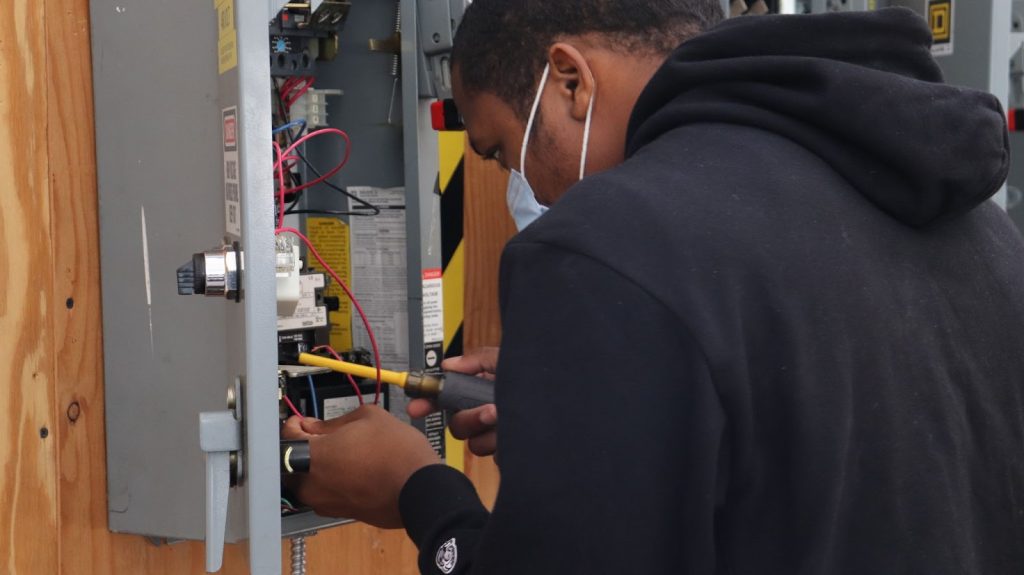
Because pay and outlook are strong across all three, the deciding factor is often fit. Here is an honest way to think about it.
Choose automation technician if you are drawn to electronics, robotics, and control systems, enjoy working with technology, and want the role most aligned with where manufacturing is heading. It tends to reward people who like to understand how complex systems work as a whole. Choose manufacturing careers Philadelphia which can never be replaced by AI infact it add more value to growing tech hub
Choose CNC machining if you are precise, patient, and satisfied by producing something tangible to exact specifications. It rewards craftsmanship and a strong spatial sense, and it offers a clear skill ladder toward high-paying programming work.
Choose industrial maintenance if you like variety, problem-solving, and never doing the same thing twice. If the idea of diagnosing a different breakdown every day energizes you, and you want the strongest growth outlook of the three, this is a natural fit.
Many students discover their preference only once they get hands on real equipment, which is exactly why hands-on training matters so much in this decision. It is also a big part of why manufacturing and automation program graduates often start ahead of their college peers: they enter the workforce with real skills instead of just theory.
The Philadelphia region is a genuine advantage for anyone entering these fields. Manufacturing, food and beverage processing, pharmaceuticals and life sciences, logistics and distribution, and automated warehousing all operate across the area, and every one of them depends on automation techs, machinists, and maintenance workers. If you are starting from scratch, it also helps that there are proven ways to break into trade jobs in Philadelphia with no experience in 2026.
Opportunity extends well beyond the city core. Graduates find work throughout Philadelphia neighborhoods, from North and South Philadelphia to West Philadelphia, Mantua, Powelton Village, and the Spring Garden and Allegheny West corridors, and across the surrounding region: nearby Pennsylvania communities such as Yeadon, Lansdowne, Darby, Drexel Hill, and Ardmore, and South Jersey towns including Camden, Pennsauken, Collingswood, Cherry Hill, Maple Shade, Cinnaminson, Haddonfield, Gloucester City, and Audubon. Because these are portable, credential-driven skills, training centrally in Philadelphia positions you to take the best opportunity in any direction, including into Delaware.
For most students, the smartest first move is not to pick the perfect specialty on day one, but to build the shared foundation these careers stand on and then specialize. That is precisely what hands-on manufacturing and automation training is designed to do.
Philadelphia Technician Training Institute (PTTI) trains students on industry-standard equipment across its manufacturing and automation campus, covering the electrical, mechanical, controls, and safety fundamentals that automation technicians, CNC machinists, and industrial maintenance techs all rely on. The emphasis is on applied, job-site-ready skills: troubleshooting real systems, reading real schematics, and working the way employers expect on day one.
That foundation matters because the manufacturing floor rewards people who can move between systems. A technician who understands controls, mechanical repair, and precision work is more valuable, and more employable, than one who only knows a single narrow task. The most useful next step is often to compare the full range of hands-on technician programs PTTI offersand see which specialization fits your goals, then talk with admissions;”> about start dates and financial aid options
Ready to see it in person? Schedule a campus tour or contact usto walk the labs and meet the instructors.
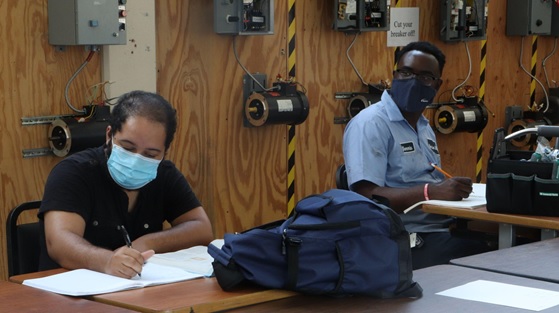
Automation technician, CNC machinist, and industrial maintenance are three strong, well-paying careers that share a common trait: they reward hands-on skill over a four-year degree. Automation technicians lead on median pay, CNC machining offers steady opportunity and a clear ladder to high-paying programming, and industrial maintenance combines strong pay with the best growth outlook of the three. In the Philadelphia region, all three are in real, active demand.
The best way to decide is to build the shared foundation these careers stand on, get hands on real equipment, and specialize toward the work that fits you. Structured, hands-on training is the most direct way to get there, and it can have you job-ready in a fraction of the time and cost of a traditional degree.
Take the next step. Explore the Manufacturing, Automation & Electrical Technician program, contact admissions, or apply now to start your career in advanced manufacturing.
An automation technician maintains and troubleshoots robotic and control systems. A CNC machinist programs and operates computer-controlled machines that cut precision parts. An industrial maintenance technician repairs and maintains all types of factory equipment. They overlap on the floor but focus on different work.
Automation and mechatronics technicians report the highest median pay of the three, around $70,000+, according to the Bureau of Labor Statistics. Industrial maintenance and CNC machining follow, with strong top-end earning potential as you gain skills, certifications, and experience.
Industrial maintenance. BLS projects about 13% growth for industrial machinery mechanics through 2034, much faster than average, with roughly 45,700 openings a year. CNC machining is flatter but still sees about 34,200 annual openings driven by retirements.
No. All three are entered through hands-on training, technical programs, and certifications rather than a four-year degree. Automation roles sometimes favor a certificate or associate credential, while machining and maintenance commonly start with a diploma plus training.
Focused, hands-on programs can prepare you for entry-level work in well under a year, depending on the program and specialization. The key is enough real lab time on industry-standard equipment to be job-ready.
Industrial maintenance and CNC machining commonly start with a high school diploma plus training, making them accessible entry points. Automation technician roles are equally reachable through hands-on training and often build on the same foundation.
Philadelphia Technician Training Institute (PTTI) offers hands-on training through its Manufacturing, Automation & Electrical Technician program on industry-standard equipment, serving students across Philadelphia, the surrounding Pennsylvania counties, and South Jersey.
Automation is changing the work, not eliminating skilled roles. In fact, more automated equipment increases demand for the technicians who install, program, maintain, and repair it, which is a core reason industrial maintenance and automation roles remain in demand.