
When you enroll in trade school programs, you can bypass the stress of studying theoretical concepts. Sitting in a regular classroom staring at abstract equations or heavy textbooks can be exhausting. It’s easy to assume that professional achievement is impossible if you’ve always struggled with regular reading assignments or advanced numbers.
But the truth is just the opposite: traditional institutions are often failing those who learn by doing (not the opposite).
If you start to look at trade school programs, the whole way you learn changes. As a result, you don’t have to memorise theories only to pass a written test, but rather you learn genuine skills to establish a secure existence.
Want to make a lucrative profession out of your inherent talents? Contact Philadelphia Technician Training Institute (PTTI) today.
TL;DR—
Don’t let traditional academic concerns keep you from a wonderful profession. Modern trade school programs swap abstract book learning for practical, concrete work. Vocational or hands-on training employs tools, visual charts, and step-by-step coaching to make maths and reading fully accessible to every single learner.
In other words, if you’re a young person in Philly who wants to start producing your own money soon, you don’t have to have a four-year college degree to do that. There are obvious alternative career paths that prioritize your work ethic and practical skills over your ability to write extensive essays.
To understand why this model works, we first have to consider what a trade school accomplishes. A trade school program is a specialized track. It teaches real-world work skills in months rather than years.
To put it simply, they’re not like regular universities, since they’re all about hands-on training to get you ready to go to work.
Old school:
Abstract Formulas ──> Memorisation ──> Written Exam
Trade School Program Learning:
Real Equipment ──> Visual and Physical Practice ──> Competency to Land the Job
Signing up for these programs offers a direct path to financial independence. It allows Philly youth to avoid significant student debt. The truth is, today’s employment market is suffering from serious worker shortages in the highest-paying trades, including precision welding, computerized manufacturing, and complicated pipefitting.
Data from ABC shows a massive trade labor deficit. The U.S. construction sector alone needs 349,000 net new workers to keep up with project demands.
Because of this massive deficit, local firms are searching for people who know how to use tools properly and get the physical work done right.
Traditional classrooms can be really stressful if you’ve struggled with learning issues like dyslexia or dyscalculia. On the other hand, trade school programs work because they completely shift the learning environment.
In a vocational workplace, maths is not just numbers on a page; it is a physical measurement. You are not memorizing equations. Instead, you are calculating angles to bend pipes or measuring timber for a wall frame. That is, you see the very immediate, real-world effect of your computation, and the ideas are immediately evident and significant.
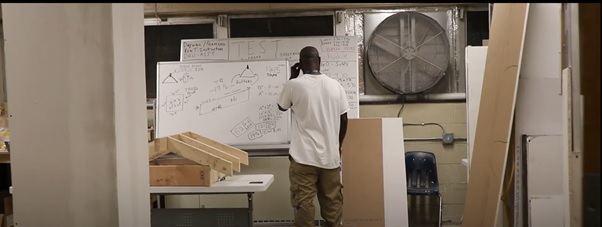
Kinaesthetic learners—people who learn best by using their hands— learn best through activity. They need to have their hands on the physical systems to learn best. For example, instead of reading a handbook with pages of text, you can tear down an engine, solder a bead, or build an intricate mechanical circuit. You can make mistakes in a safe shop environment, figure out the issue, and correct it yourself.
Trade school program designs its entire course of study so that you can learn technical topics without feeling overwhelmed via hands-on training. To help you visualize this, here’s how instructors help you build confidence:
If you’re concerned about the last stages of securing a job, you might be asking yourself: How hard are trade school exams? Trade-specific licensing exams require you to show you have the skills and knowledge, but schools like PTTI ensure that you are fully prepared.
Furthermore, trade school programs and local apprenticeship programs have approved testing accommodations for students with recognized learning challenges.

Earning advance vocational certifications proves your capability. It opens doors to employers offering the highest-paying trades.
There are so many great PTTI programs that you may excel in using your physical skills. If you want to explore your options, here’s a look at some of the most dependable alternative career paths right here in Philly:
Welding relies heavily on muscle memory, steady hands, and spatial awareness. It is a perfect example of a skill that ignores essay writing. You will learn to work with metals for complex projects for structural constructions and custom manufacturing projects. Ultimately, mastering this skill set makes you highly competitive in the local market.
It’s a great field for anyone who likes puzzles and mechanical systems. Pipefitters learn to design and maintain complex commercial piping systems. As a consequence of the technical skills required, this remains one of the highest-paying trades in the industrial sector.
Modern factories are powered by smart machines and robotics. This curriculum will teach you how to set up, service, and repair automated assembly lines, making you a highly sought-after technical resource for local industrial companies. Clearly, these forward-looking programs offer viable alternative career paths for the modern workforce.
Here is a practical approach to transfer into steady employment without a degree if that is your goal:
Step 1: Find Out What You Like To Do
Think about what types of physical work you prefer best. Do you enjoy working on cars,
building things, or fixing equipment?
Step 2: Visit a Philly Training Facility Near You
Visit a local school’s open house and watch the workshops in action. Seeing the equipment in person can help you decide which option seems correct.
Step 3: Enquire About Support Systems
Ask admissions advisors specifically about testing accommodations, small class size, and their tutoring when you speak to them.
Step 4: Finish Your Training and Get Placed
Complete your shop hours and earn your advance vocational certifications. Then, use the school’s network to meet eager local employers.
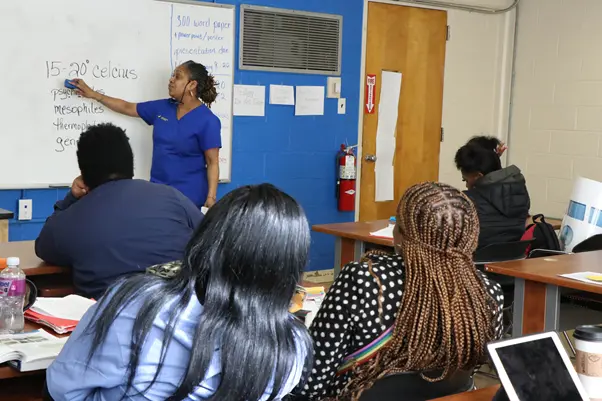
Traditional school performance does not determine your IQ or your future financial success. When you select hands-on training, you select an education that recognises your specific skills, fits your personal learning style, and prepares you for steady employment.
Without a doubt, specialised trade training is your greatest bet if you desire a good job, full independence, and work with your hands.
Next is the easy part. Don’t worry about old-school struggle, but build what you can. To connect with an advisor, explore our current trade school programs list. You can also visit the PTTI campus directly. Take control of your career path today!
Q: Is there a lot of writing involved in trade school programs?
A: No. You’ll be reading equipment manuals, safety regulations, and work orders, but these programs are more about practical application than writing long dissertations or research papers for academia.
Q: Can I acquire a job with dyslexia in alternative career paths?
A: Sure. Many with dyslexia do well in the skilled trades because they have fantastic spatial awareness and 3D problem-solving skills that are very useful on a job site.
Q: How much will I make in the highest-paying trades?
A: In the Philadelphia area, specialised welders, automation specialists and pipefitters can earn great pay, generally starting far above average for entry-level office roles, with substantial opportunity for overtime.
Q: Are advance vocational certifications hard to pass?
A: Not too much. The test is to make sure you’re able to do the work safely and efficiently. By the time you sit your test, the information will be second nature to you, as your daily classroom routine is based on hands-on practice with identical equipment.
Read More