
Yes, pipefitters can make $100K a year. But six figures is the top tier, not the starting point. Nationally, the top 10% of pipefitters earn more than $105,000, while the median sits near $63,000. Reaching that ceiling takes skill, the right specialization, overtime, and often a union path.
This guide answers the real question behind the search. Not just “can pipefitters make 100k,” but how they get there. We will look at honest salary numbers, the paths to a pipefitter six figure salary, and how long it takes. We will also cover what the trade pays in Philadelphia. If you want proof the trade can pay big, here it is, with the fine print included.
Pipefitting rewards people who master a hands-on craft. It does not require a four-year degree or heavy student debt. The Steam, Sprinkler & Pipe Fitting program at PTTI is one starting point for that journey in the Philadelphia region.
Pipefitters can make $100K a year, but it takes the right conditions. According to the U.S. Bureau of Labor Statistics, the top 10% of plumbers, pipefitters, and steamfitters earned more than $105,150 in May 2024. The median was $62,970. So six figures is real, yet it sits at the high end of the trade.
That gap matters. The honest answer to “can pipefitters make 100k” is yes, with effort and the right path. It is not a guarantee for every worker. It rewards those who specialize, work overtime, or reach journeyman and supervisor levels.
The national picture is clear and encouraging. Here is what the BLS reports for the combined trade of plumbers, pipefitters, and steamfitters.
The top earners already clear six figures. That confirms a pipefitter six figure salary is achievable. It also shows most workers sit in the middle. Your goal is to climb from the median toward the top tier.
The pipefitter salary in Philadelphia tracks close to the national picture. Local surveys place the average pipefitter salary in Philadelphia between roughly $60,000 and $63,000. Top local earners report figures in the mid-$70,000s to low $80,000s before overtime. Overtime can add several thousand dollars more each year.
Philadelphia also has a strong union presence. Steamfitters Local 420 has worked on major regional projects for decades. Union total compensation packages, which include benefits and fringe, can approach or exceed $100,000 in value for experienced journeymen. That is a key route to a pipefitter six figure salary in this market.
Here is a simplified view of how pay tends to rise across a pipefitter career path in the Philadelphia area. Figures are regional estimates and vary by employer, overtime, and union status.
| Career Stage | Approximate Annual Range (Philadelphia Area) |
| Apprentice / entry-level | $47,000 – $58,000 |
| Experienced pipefitter | $60,000 – $72,000 |
| Journeyman (union scale) | $75,000 – $90,000+ |
| Specialized / foreman / heavy overtime | $95,000 – $110,000+ |
The pattern is consistent. Pay climbs with skill, certification, and responsibility. High paying pipefitter jobs cluster at the specialized and supervisory end.
Reaching a pipefitter six figure salary follows a few proven paths. Most top earners combine several of them. They join a union, work overtime, travel for premium jobs, or specialize in high-value work. Rarely does one factor alone push pay past $100,000.
Understanding these paths helps you plan early. It also shows why training and certification matter so much. The most in-demand pipefitting skills directly shape your ceiling. Let us break down each route.
Union membership is one of the clearest paths to high pay. Journeyman scale in strong markets like Philadelphia sits well above the trade median. On top of base wages, union packages add health coverage, pension, and other benefits.
When you count that full package, experienced union journeymen can reach or approach six figures in total value. This is why the union route appeals to so many workers. To weigh it fairly, review the pros and cons of union versus independent pipefitting work before you commit.
Overtime is the fastest lever for higher pay. Many pipefitters add thousands each year through extra hours. During plant shutdowns and turnarounds, overtime can spike sharply.
Travel work pays even more. Contractors often add per diem for out-of-town jobs. Workers who travel for shutdowns, refineries, or large industrial projects can earn far above local rates. These high paying pipefitter jobs demand flexibility, but they move you toward six figures quickly.
Specialization raises your value to employers. General pipefitting pays well. Specialized pipefitting pays more. Employers pay premiums for skills that are hard to find and critical to safety.
Certain fields consistently sit at the top of the pay scale. If your goal is a pipefitter six figure salary, aim toward one of these over time.
Each specialization rewards precise, certified work. Explore high-paying pipefitter jobs in demand to see where the market is heading.

Reaching six figures usually takes several years. Most pipefitters start as apprentices or entry-level workers. They build skills, earn certifications, and take on harder jobs. Pay rises steadily with each step. The fastest climbers specialize early and pursue union or travel work.
There is no fixed timeline. Still, a realistic pipefitter career path gives you a clear picture. Training speeds up the early stages. Strong hands-on preparation helps you enter the workforce job-ready.
Here is a common progression. Your own path may move faster or slower based on effort and opportunity.
This roadmap shows why early training matters. A focused program gets you to step one faster. Learn how to start pipefitter training without experience if you are just beginning.
Certifications separate average earners from top earners. Employers pay more for verified, safety-critical skills. Welding certifications are especially valuable for pipefitters. Safety credentials also open doors to industrial work.
Strong skills protect your income too. They make you harder to replace. For a deeper look, see why 2026 is a big year for every pipefitting technician.
The pipefitter job outlook is steady and reliable. Nationally, the BLS projects about 44,000 openings each year through 2034. Much of that demand comes from replacement needs as older workers retire. This keeps opportunities open for new pipefitters.
Philadelphia adds its own strong demand. The region has aging infrastructure, active industry, and ongoing construction. That mix supports consistent hiring across the trade.
Several forces drive pipefitter demand across the Philadelphia area. These trends support a stable pipefitter career path for years to come.
This demand reaches beyond the city itself. Workers find jobs across Pennsylvania, South Jersey, and Delaware. Communities like Camden, Cherry Hill, Drexel Hill, and Lansdowne all feed the same regional labor pool.
Pipefitters in the region work on many project types. They serve commercial buildings, hospitals, plants, and infrastructure. Union contractors handle many of the largest jobs. Independent contractors cover commercial and industrial work too.
Because the pipefitter salary in Philadelphia holds up well, the trade attracts career changers and veterans. If you compare trades, read pipefitter versus welder for 2026 to see which fits you. You can also review union path versus direct employment for a broader view.
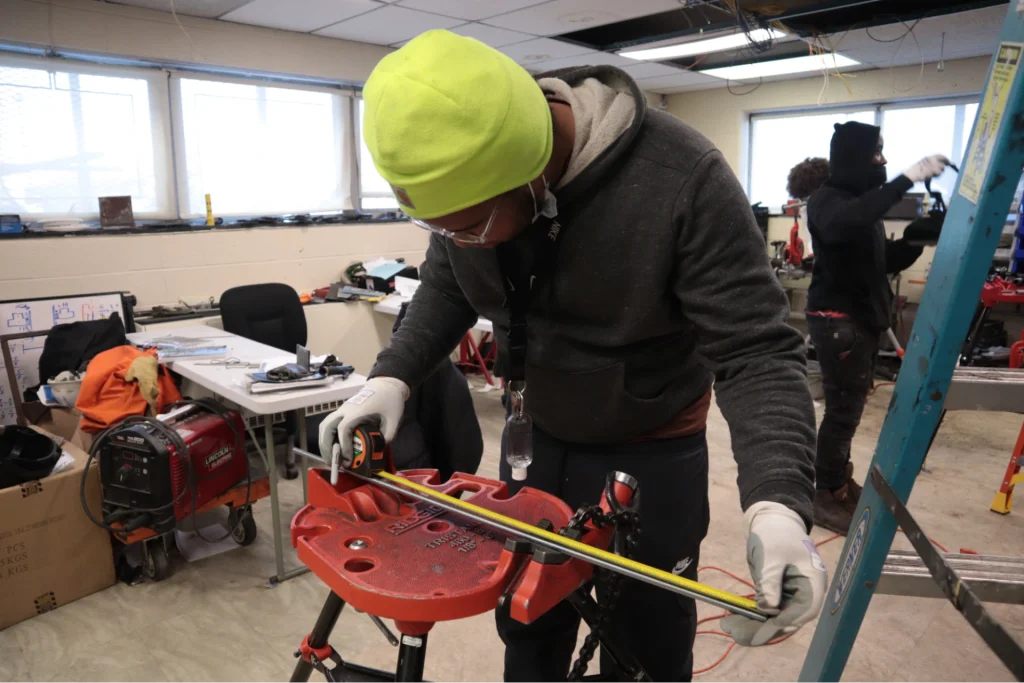
Training is where a strong pipefitter career path begins. PTTI’s approach centers on hands-on learning. Students work with real tools and industry-standard equipment. This applied model builds the skills employers actually test for.
The goal is simple. Graduates should enter the workforce ready to contribute. That readiness shortens the climb toward higher pay. It also helps students qualify for better first jobs.
Hands-on training beats theory-only options for the trades. You cannot learn to fit pipe from a screen alone. Online-only courses and self-teaching miss the practice that matters. Employers know this, so they value applied skill.
A structured program also moves faster than trial and error. It focuses your time on the right skills. It prepares you for certifications too. Compare the routes in steamfitter versus pipefitter if the terms confuse you.
Good training connects directly to work. PTTI supports students from enrollment through career preparation. That includes practical skills, safety habits, and job readiness. You can explore careers and job opportunities to see how that support works.
Cost should not block your start either. Review financial aid options and, for those who served, veterans’ programs. When you are ready, the admissions team can walk you through next steps.
So, can pipefitters make 100k a year? Yes, and now you know the honest path to get there. Six figures rewards skill, specialization, overtime, and often a union route. The climb starts with strong, hands-on training that makes you job-ready fast.
PTTI’s Steam, Sprinkler & Pipe Fitting program is built for that first step. If you want a stable, high-paying trade without heavy debt, this is a smart place to begin. Schedule a campus tour, contact admissions, or learn how to become a pipefitter with no experience to get started today.
Your pipefitter career path can begin this year. The six-figure ceiling is real. Now it is time to start climbing toward it.
Yes, pipefitters can make 100k a year, but it is the top tier. Nationally, the top 10% earn above $105,000. Reaching that level takes journeyman skill, specialization, overtime, or union work. Strong hands-on training, like PTTI’s pipefitting program, helps you start that climb.
The average pipefitter salary in Philadelphia runs roughly $60,000 to $63,000 per year. Experienced and union workers earn more, and overtime adds thousands. Specialized roles push pay higher still. Skilled, certified pipefitters sit at the top of the local range.
Pipefitters reach six figures by combining paths. They earn journeyman or union scale, work overtime, travel for premium jobs, and specialize. Nuclear, marine, and industrial work pay the most. Certifications and foreman roles also raise the ceiling toward a pipefitter six figure salary.
It varies, but hands-on training gets you started quickly. From there, you build skills, earn certifications, and gain experience. Reaching journeyman-level pay usually takes a few years. PTTI’s hands-on pipefitting program helps you enter the trade job-ready.
Yes, pipefitting is a strong career in 2026. Demand stays steady, with about 44,000 openings projected yearly nationwide. The pipefitter job outlook in Philadelphia is especially solid. Pay is competitive, and the skills stay in demand across industries.