
Whenever you here someone says plumber makes 6 figure salary You heard it write the Experienced, licensed plumbers across the United States genuinely earn over $100,000 a year. Some earn significantly more than other daily wage worker working in any store. And the path to get there is shorter than most people think.
In this blog, we break down the real numbers, the factors that drive plumber pay up, and how PTTI’s plumbing trade school in Philadelphia can help you start this career the right way.
Ready to begin PTTIs Pipefitter training program
Whenever you get admitted to any certification program, the first thing that comes to mind is the salary structure. A satisfying paycheck covers your household expenses. The long-term financial goal is achieved with a good paycheck and no debt.
The average pipefitter in the U.S. earns around $69,940 per year. Wow, that’s the salary you can earn by enrolling in a skilled trade training program, with a good paycheck in just 8 months. Salaries can vary widely depending on your plumbing license level, the state or city you work in, and whether you’re self-employed or employed by a real estate company.
Additionally, Entry-level roles typically start at $40,000–$50,000. But experienced plumbers in high-demand areas or with overtime and specialization often earn $90,000–$105,000 or more.
How much plumbers make a year depends heavily on how long they’ve been in the trade and what license level they’ve reached. Here’s a clear salary breakdown of pipefitting careeer salary based on years of experience.
| Apprentice (0–2 years) | $42,000 – $46,000 |
| Tradesman / Journeyman (2–5 years) | $64,000 – $75,800 |
| Senior Plumber (5–8 years) | $75,800 – $90,000 |
| Master Plumber (8+ years) | $80,053 – $129,000+ |
| Self-Employed / Business Owner | $94,000 – $250,000+ |
Well, this is the breakdown of pipefitter earnings as per experience. Master plumbers earn an average of $70,053 per year, or $38.49 per hour. However,If you have qualified from a reputed training institute, that figure will give you full financial security. Self-employment is where the ceiling truly disappears; plumbing business owners at established firms can clear $140,000–$240,000 or more, depending on market size and services. This sprinkler training program will also give you hands-on training on the various plumbing tools.
Location plays a huge role in a plumber’s salary in the United States. Some states pay significantly more than others.
| Illinois | $86,200 – $97,000 |
| Oregon | $87,000 – $92,000 |
| New Jersey | $87,000 – $92,000 |
| Alaska | $80,000+ |
| Massachusetts | $80,000+ |
| Pennsylvania | $52,000 – $75,000+ |
| West Virginia | ~$49,630 |
Top states like Alaska, Massachusetts, and Oregon exceed $80,000 annually — primarily for licensed or union plumbers.
Moreover, Pennsylvania sits in the middle. But here’s the thing — Philadelphia’s market is active, and local demand for trained plumbers and pipefitters stays consistent year-round. That means opportunity is right here, not just in other states.
This is what most people really want to know. Here are the specific factors that move a plumber’s pay into six figures.
Plumbers can make and exceed $100,000 a year. It’s possible to cross the six-figure threshold through experience — typically journeyman level and up — overtime or emergency service work, union roles, and high-paying markets like California and Massachusetts.
Union plumber benefits usually add 15–23% higher earnings through negotiated contracts, overtime premiums, and better hourly rates.
Beyond base pay, unions also offer pension plans, healthcare benefits, and job stability — things that add serious value to your total compensation over a career.
The growing demand for water conservation, in the United States, energy-efficient systems, and eco-friendly installations creates earning opportunities for certified pipefitters and sprinkler technician.
On average, a plumbing business owner’s salary ranges from $84,000 to $110,000 per year and many exceed that significantly, depending on market size and services offered. Research.com
Here’s a simple look at how master plumber earnings grow across a typical career path:
Apprentice [$42K–$46K] ██████░░░░░░░░░░░░░░░░
Journeyman [$64K–$76K] ██████████░░░░░░░░░░░░
Senior Plumber [$76K–$90K] █████████████░░░░░░░░░
Master Plumber [$80K–$129K] ████████████████░░░░░░
Business Owner [$94K–$250K+] ██████████████████████
The growth is real. And it’s consistent. Every step up the license ladder adds thousands to your annual income.
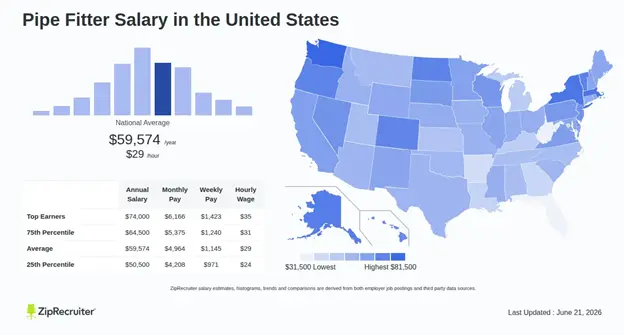
Source Zip Recruiter
PTTI offers a Steam, Sprinkler, and PipeFitting Program that covers the core skills employers need right now. And it takes just 26 weeks to complete.
Here’s what you learn:
Industrial Plumbing and Pipefitting Fundamentals
Students learn the usage and basic concepts of industrial plumbing and pipefitting, including essential tools, skills, and operations. They also learn general safety in the use of various hand and power tools, and understand the diverse career paths they can pursue with this knowledge.
Students learn about pipefitting and plumbing valves including properties, proper use, installation methods, and how to troubleshoot and maintain them. They also learn pipe fabrication, welding, and installation processes, including blueprint reading and shop math.
Pipe Welding and Workplace Safety
Students learn pipe welding basics and equipment safety. They also learn safety precautions for working with ladders, scaffolds, and motorized equipment all of which give graduates a solid and safe working foundation.
If you’re looking at plumbing, it’s also worth understanding the pipefitting career salary. Pipefitters work in industrial environments — power plants, factories, and large commercial buildings — and their earning potential is strong.
Demand for this career is exceptionally high. Not only does it pay a decent salary, but the demand will never run out because people and corporations will always need professionals to fix their plumbing systems.
Many pipefitters also transition into owning their own firms — where income potential grows further, and career control becomes fully their own.
PTTI’s program trains students for both plumbing and pipefitting pathways. So you graduate with options, not just a certificate.
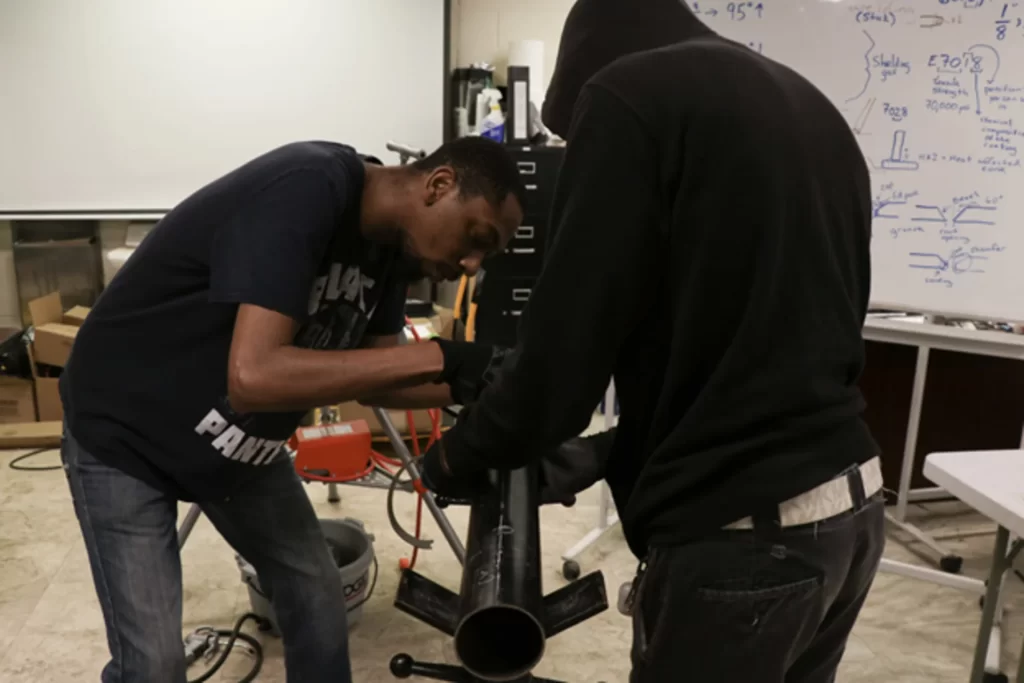
A lot of people still think trade school is a “backup plan.” But the numbers say otherwise.
Persistent labor shortages across the skilled trades force employers to compete for talent, leading to higher base pay, signing bonuses, and better offers. Strong demand from aging infrastructure, emergency repairs, new construction, and retrofits ensures steady work that is largely recession-resistant.
People will always need clean water, functioning drainage, and working steam systems. That means you’ll always have work and the market will always need trained people to do it.
The plumber’s salary in the United States is strong, growing, and directly tied to your training, license, and experience. The sooner you start, the sooner your pay starts growing with you.
PTTI’s plumbing trade school in Philadelphia gives you the hands-on skills, the safety training, the blueprint reading, and the career placement support to step into this trade with confidence in just 26 weeks.
Q1. Do plumbers actually make over $100,000 a year in the United States?
Yes, they do — and it’s not as rare as most people think. Experienced master plumbers, union plumbers inhigh-demand markets, and self-employed plumbing business owners regularly earn $100,000 or more per year..
Q2. How long does it take to become a plumber or pipefitter through PTTI?
PTTI’s Steam, Sprinkler, and PipeFitting Program takes just 26 weeks — about six months. That’s a remarkably fast timeline to gain job-ready skills, earn your certification, and enter a career with strong starting pay and excellent long-term earning potential.
Q3. What is the starting salary for an apprentice plumber?
Entry-level apprentice plumbers in the U.S. typically earn between $42,000 and $46,000 per year. Mentors at PTTI also have very good contact with Local employers . However, this contact will help students to get job placements
Q4. Does PTTI help graduates find plumbing or pipefitting jobs?
Yes. PTTI has a dedicated Career Services department that supports graduates with resume writing, interview preparation, and job placement assistance. Also, mentors will guide to land a good job with the help of alumni places with local employers.
Q5. Is financial aid available for PTTI’s plumbing program?
Yes. PTTI’s programs are approved for federal financial aid through FAFSA (school code: 042213), and grants, federal loans, and institutional financing plans are all available to qualifying students. Veterans’ education benefits are also accepted. Specifically the program takes only six months to complete, students typically enter the workforce and start earning — before most traditional college students reach their sophomore year.
READ MORE BLOGS: