
Most conversations about the skilled trades stop at the starting wage. The more important question for anyone weighing their future is what happens 20, 30, or 40 years down the line: can a trade career actually fund a comfortable retirement, and for the disciplined few, an early one? The short answer is yes, and often with less debt and an earlier start than a traditional college path allows. This guide looks honestly at the numbers behind that answer, from lifetime earnings and union pensions to business ownership and the physical realities of the work. It is written for high school graduates, career changers, veterans, and adult learners across Philadelphia who want more than a paycheck. If you are comparing a four-year degree against hands-on technician training in Philadelphia, understanding the long-term financial picture matters just as much as the first job offer. Below, we break down how the trades build wealth over time, which paths retire comfortably, and what it realistically takes to retire early.
Yes. A trade career can support a comfortable retirement, largely because tradespeople often start earning years earlier than college graduates, carry far less debt, and have access to pensions and retirement plans that reward a full career in the field. The math favors time in the workforce, and the trades give you more of it.
Retirement comfort is not built on one big salary year. It is built on decades of steady income, consistent saving, and employer or union contributions that compound. Because many people enter the trades at 18 to 22 with no four-year tuition bill, they begin that compounding clock early. A college graduate who starts full-time work at 23 with student loans is often playing catch-up on the exact head start a tradesperson already banked.
That head start is one of the most underrated advantages of trades that pay well without a degree. Money saved and invested in your early twenties has decades to grow before retirement, and avoiding tens of thousands in loan repayment frees up income to save instead of service debt.
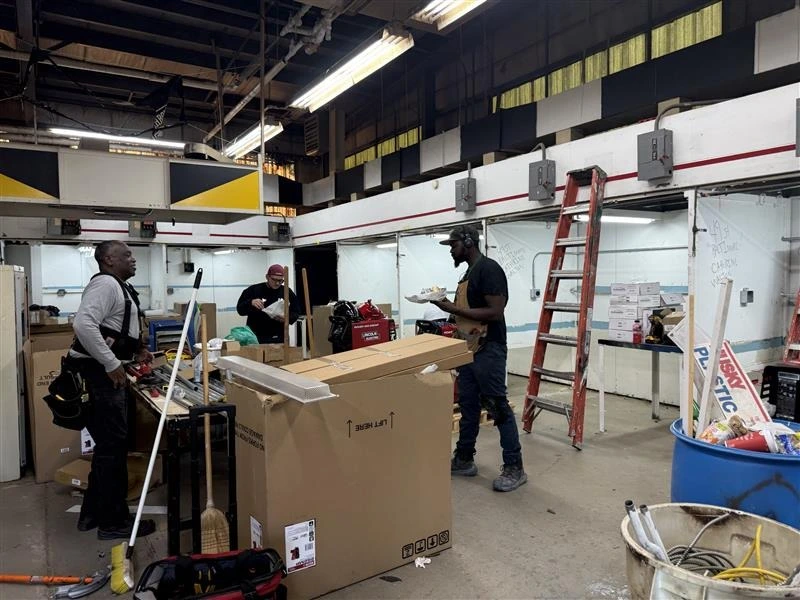
Financial security in the skilled trades comes from several forces working together over time, not a single factor. Here is how the pieces fit.
The first wealth advantage is what you don’t owe. Four-year degrees frequently leave graduates with significant student loan balances, while focused trade training costs a fraction of that and takes a fraction of the time. Starting a career without a large debt load means more of every early paycheck can go toward saving, investing, or qualifying for a mortgage. For many students exploring a trade school in Philadelphia, that difference alone reshapes the long-term math.
High-paying trade jobs rarely start at their peak. Wages climb as you add certifications, master additional processes, move into specialties, and take on supervisory work. Overtime is common across construction and industrial trades and can add meaningfully to annual income. According to the U.S. Bureau of Labor Statistics, many skilled trades pay competitive median wages that rise with experience, and specialized roles command premiums. Over a 30- to 40-year career, that steady climb turns into substantial cumulative earnings. The raw material of any retirement plan. This is why high-paying trade jobs are best judged by their lifetime arc, not their first-year wage.
Here is where the trades hold an advantage most of the modern workforce has lost. Many unionized building trades, such as pipefitters, steamfitters, electricians, and sprinkler fitters, participate in multiemployer (Taft-Hartley) pension funds that provide defined-benefit retirement income, often alongside annuity and 401(k)-style savings funds. Training that leads into these union pathways, like a Steam, Sprinkler & Pipe Fitting program, can connect graduates to apprenticeships where retirement contributions begin early in a career.
Defined-benefit pensions pay a guaranteed monthly amount in retirement based on years of service and contributions, a structure that has nearly vanished from private non-union employers. For a tradesperson who vests in a strong fund and works a full career, that pension can form the backbone of a comfortable retirement, with personal savings and Social Security layered on top.
The highest retirement outcomes in the trades often belong to those who own the work rather than only perform it. A licensed contractor, shop owner, or independent specialist can earn well beyond an hourly wage, build equity in a business, and eventually sell or scale it. Fields like automotive repair, welding, HVAC, and masonry all have clear owner-operator paths. The ability to turn a skill into a business is one reason skilled trades consistently rank among the best options for building wealth without a degree.
Retiring early from the trades is realistic but not automatic. It generally requires three things working together: starting to earn and save young, reaching full pension vesting, and deliberately investing the surplus from high-paying trade jobs rather than letting lifestyle expand to match income.
The trades give early retirement a structural head start because the earning clock starts sooner. Someone who begins an apprenticeship at 19 could reach 30 years of pension-credited service by their late forties or early fifties, an age at which many union pension plans allow retirement with meaningful benefits. Pair that with consistent personal investing, and an early or semi-early exit moves from fantasy to plan.
Workers pursuing the “retire early” path in the trades tend to do a few things consistently: they maximize overtime in their peak physical years, they contribute steadily to annuity and 401(k) funds on top of any pension, and they avoid high-interest consumer debt. None of this is exotic. It is simply the compounding advantage of a skilled trade used on purpose.
That said, honesty matters here more than hype. Early retirement is a possibility the trades make reachable, not a promise. Individual outcomes depend on the specific trade, union status, saving discipline, market conditions, and health.

Any honest discussion of retiring from the trades has to address the body. Trades are physical, and some roles are hard to perform at the same intensity at 60 as at 25. Rather than a drawback, experienced tradespeople treat this as a planning variable and build a “second-half” career on purpose.
As knees and backs age, many skilled workers move into roles that trade physical load for experience. : supervision, project management, estimating, inspection, quality control, safety, sales, or teaching the next generation. These positions often pay as well or better than field work and extend a career comfortably. Especially toward a chosen retirement date. A welder may become a welding inspector; an automotive technician may become a service manager or shop owner; a pipefitter may move into project supervision.
The lesson is simple. A long, financially secure career in the trades is usually a sequence of roles, not one job held unchanged for 40 years. Planning that arc early, including the certifications that unlock the next step, is part of retiring comfortably.
No single trade is “the” retirement winner, but some combine strong pay, pension access, and clear ownership paths especially well. The table below compares general retirement-relevant factors across trades PTTI trains for. Figures and benefits vary widely by employer, union status, region, and specialization.
| Trade | Pension/Union Access | Ownership Path | Retirement-Relevant Strength |
| Steam, Sprinkler & Pipe Fitting | Strong (common union pensions) | Contractor | Pension + high demand + overtime |
| Welding Technology | Moderate to strong | Shop owner / inspector | Specialty premiums, inspection path |
| Manufacturing & Automation | Varies by employer | Supervisor / technician lead | Stable benefits, advancement |
| Automotive Repair | Typically non-union | Shop owner | Strong business-ownership ceiling |
| Concreting, Masonry & Framing | Varies | Contractor | Owner-operator income potential |
| Central Processing & Sterile Services | Employer benefits (healthcare) | Lead / educator | Healthcare benefits, indoor stability |
For students drawn to stable benefits and advancement inside industrial settings, a Manufacturing & Automation program can open roles with solid employer retirement plans and a clear path into lead and supervisory positions over a career.
Comparing a trade career to a four-year degree only by starting salary misses the point. The long-term comparison includes debt, years of earning, and benefits. Here is the fuller picture.
| Factor | Skilled Trades Path | Four-Year College Path |
| Time to first full-time income | Under 1–2 years | ~4 years |
| Typical debt at entry | Low | Often significant |
| Years of earning by age 50 | ~30+ | ~27 |
| Pension availability | Common in union trades | Rare outside public sector |
| Business-ownership path | Clear and common | Varies by field |
The point is not that college is wrong for everyone. It is that trades that pay well without a degree can produce comparable or stronger lifetime financial outcomes once debt and extra earning years are counted, particularly for disciplined savers who use union benefits and ownership opportunities. For many families, the appeal of trades that pay well without a degree is exactly this long-term security, not just the quick start.
Philadelphia is a strong place to build a durable career in the skilled trades. The region’s union building trades, active construction and healthcare sectors. Along with a manufacturing base, ship and infrastructure work create steady demand. Clear apprenticeship pathways, many tied to the pension funds discussed above, support this. These local, high-paying trade jobs make a long, well-funded career realistic. For residents across North, South, and West Philadelphia and nearby communities like Camden, Cherry Hill, Darby, Drexel Hill, and Lansdowne, local training keeps the whole arc, from first job to retirement, close to home.
Because a skilled credential is portable, training in Philadelphia also positions graduates for opportunities throughout Pennsylvania, New Jersey, and Delaware. Strong career and job placement support during training helps connect graduates with employers and apprenticeships where long-term benefits, and the retirement clock, begin.

The trajectory of a trade career, including how comfortably it ends, is heavily shaped at the training stage. Hands-on skill, recognized certifications, and work-readiness determine how fast you enter the workforce. How quickly you advance, and whether you qualify for the apprenticeships and specialties that carry the best benefits.
This is where program choice matters. Choosing a hands-on trade school in Philadelphia built around industry-standard equipment. Certification preparation and real job-site expectations get graduates earning and contributing to retirement sooner. Fields like Welding Technology reward stacked certifications with higher pay. The specialty roles, so the skills you build early directly influence your saving power later.
Cost and debt at the training stage matter too, which is why reviewing financial aid options. For those who qualify, it is part of protecting the debt-light advantage that makes trade retirement math work in the first place.
A trade career is not just a fast way to start earning; it can be a durable way to finish well. Low debt, an early start, union pensions, steady advancement, and the option to own your own business. It give the skilled trades a long-term financial profile that holds up against, and sometimes beyond, traditional college paths. Retiring comfortably is well within reach for a disciplined tradesperson. And retiring early is a genuine possibility for those who plan for it from the first paycheck.
If you are ready to build a career with that kind of staying power, connect with PTTI admissions to explore programs, or schedule a campus visit to see the hands-on training firsthand.
Yes. A career in the skilled trades can fund a comfortable retirement through decades of steady earnings, low starting debt, employer or union retirement contributions, and personal saving.
Many do. Unionized building trades such as pipefitters, steamfitters, electricians, and sprinkler fitters commonly participate in multiemployer pension funds that pay defined-benefit retirement. The income, often alongside annuity and 401(k)-style savings. Non-union employers may offer 401(k) plans and benefits that vary by company.
Earnings vary, but specialized and licensed roles tend to pay the most over time. Pipefitting and steamfitting, specialty and inspection welding, and manufacturing leadership. Owner-operator paths in automotive. HVAC, and masonry also rank among high-paying trade jobs when you factor in experience, certifications, and overtime.
It is possible for disciplined savers. Starting young, reaching full pension vesting, maximizing overtime in peak years, and consistently investing surplus income. can make an early or semi-early retirement realistic. It depends on the specific trade, union status, saving habits, and health, so plan for it, don’t assume it.
It can be, especially once debt and extra earning years are counted
Read More