
Thinking about EV and hybrid vehicle training in Philadelphia? You’re asking the right question at the right time. Electric and hybrid cars aren’t a future trend anymore — they’re already on the road, and they need trained hands to fix them. However, a lot of automotive technicians still aren’t sure where to start. Below, we break down what’s changing, what skills matter most, and how to build a real career around it in 2026.
EV and hybrid cars are important because recent geopolitical issues have arisen all over the world. Many people are switching from Gas to electric cars. It saves fuel and lowers emissions. An environmentally friendly approach is seen as accepted all over the world. More electric and hybrid vehicles hit Philadelphia streets every year. Additionally, dealerships, repair shops, and fleet companies are actively looking for technicians who understand these systems. Therefore, the demand for trained automotive technicians is shifting fast.

Here’s why this EV and Hybrid training matters:
Overall, technicians who adapt now put themselves ahead of the curve.
Working on an electric or hybrid vehicle isn’t the same as working under the hood of a regular gas car. Moreover, these vehicles run on high-voltage systems that require specific safety knowledge and tools.
Here’s what sets EV and hybrid repair apart:
Therefore, technicians need updated training, not just experience with gas engines.
A strong automotive technician training program builds a foundation that carries into EV and hybrid specialization. Here’s a breakdown of the core skill areas:
However, in the PTTI Curriculum, students are taught that about 30% is electrical systems fundamentals, 25% diagnostic and scanning tools, 25% safety protocols for high-voltage systems, and 20% general automotive repair skills. Students are even placed and sent to assist the technician at the body shop . That’s roughly how training time balances across a well-rounded program.
| Electrical Systems | Circuits, wiring, voltage | Foundation for all EV and hybrid work |
| Diagnostics | Computer-based scanning tools | Identifies issues in complex systems |
| High-Voltage Safety | Insulated tools, PPE, lockout procedures | Prevents serious injury on the job |
| General Automotive Repair | Brakes, suspension, engine basics | Still needed for hybrid vehicles |
Overall, EV and hybrid work builds on strong core automotive skills, not instead of them. At the Automotive Workshop, the students are well taught about the smart digital system built into EVs.
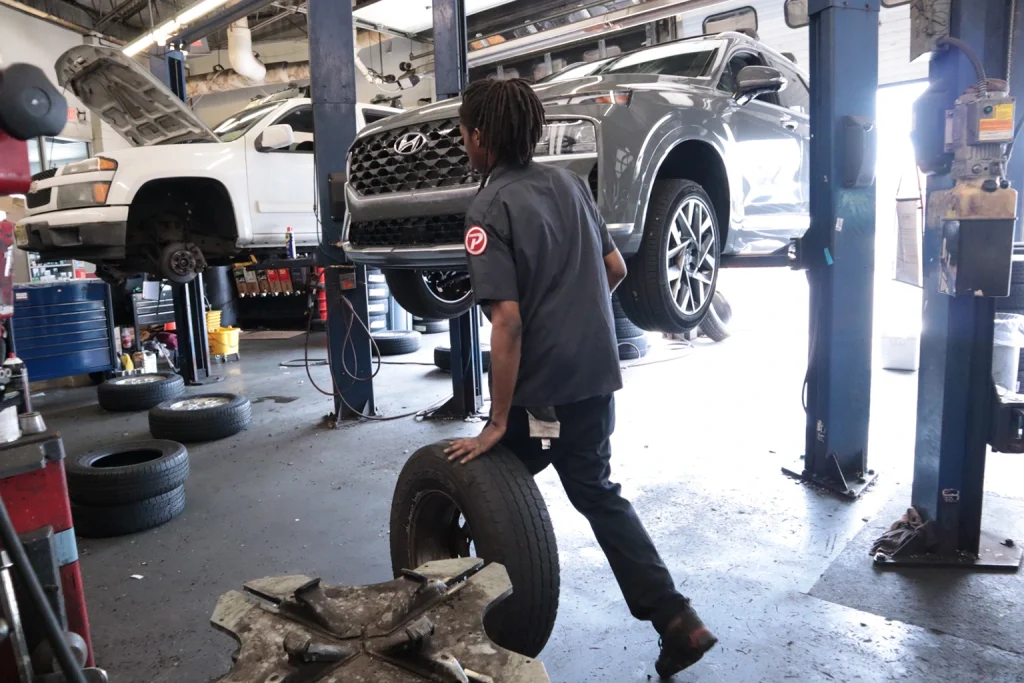
Automotive technician jobs are shifting as more manufacturers roll out electric and hybrid models. Students are more likely to learn about how EVs function. Digital core features are making it more interesting to learn. Learning about Digital tools, thermal imaging, and virtual diagnostics is more in demand. Additionally, many dealerships now require or prefer technicians with electrical systems training, not just traditional mechanical experience.
Here’s how the EV Technician role is evolving:
Since EVs and hybrid cars have increased in demand, salary projections have been seen to increase drastically. According to the U.S. Bureau of Labor Statistics, employment for automotive service technicians and mechanics is projected to grow, with demand tied closely to the increasing complexity of vehicle systems, including electric and hybrid technology.
Here’s a general look at how pay tends to break down by experience level:
| Entry-Level | $17 – $22 |
| Mid-Career | $24 – $32 |
| Experienced/Specialized | $34 – $45+ |
Note: These figures are general estimates — worth verifying against current BLS or state labor data before publishing.
Moreover, technicians with EV and hybrid vehicle training in Philadelphia often move into that higher, specialized pay range faster than those sticking to traditional gas-engine repair alone.
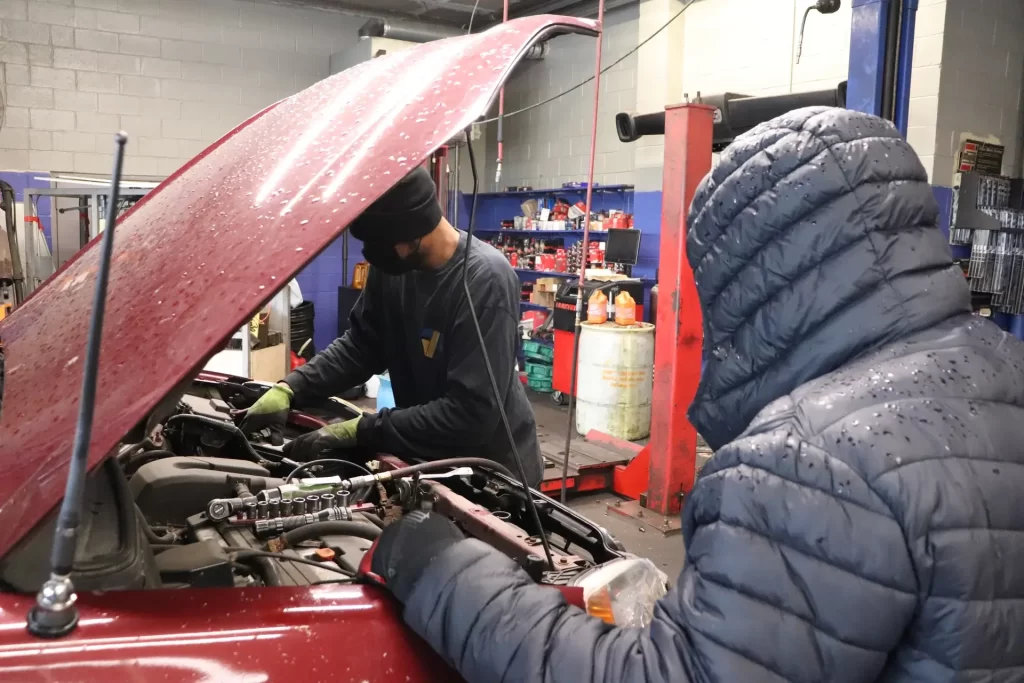
How to Build EV and Hybrid Repair Skills
Getting into this specialization doesn’t require starting from scratch. Here’s a program course update
Therefore, a strong automotive technician training program sets the foundation technicians need before moving into more specialized EV and hybrid work.
Philadelphia Technician Training Institute (PTTI) offers an Automotive Technology and Repair program built to give technicians a strong, well-rounded foundation. The program runs 26 weeks and covers 900 hours of instruction, including ASE certification prep, thermal imaging, suspension, and engine systems, along with digital tools and configuration.
Additionally, the program includes free OSHA 30 certification, covering safety standards that matter across all automotive work, including high-voltage vehicle systems.
Here’s how enrollment works:
Finally, PTTI reports a placement rate near 92%, meaning most graduates actually land jobs in the field.
EV and hybrid vehicle training in Philadelphia isn’t optional anymore for automotive technicians who want to stay competitive. However, it starts with building strong core automotive and electrical skills first. Between growing demand, evolving vehicle technology, and stronger pay for specialized technicians, 2026 is the right time to invest in this path. Overall, technicians who train now position themselves for steady, well-paying work for years to come.
Are you Ready to build your automotive technician career with specialization in EV and Hybrid Cars? Contact PTTI at 215-381-9403 or info@ptt.edu to speak with an advisor.
Obviously yes,These vehicles use high-voltage systems that require specific safety and diagnostic training.
PTTI’s Automotive Technology and Repair program runs 26 weeks and covers 900 hours of instruction.
Yes. A strong foundation in electrical systems and diagnostics makes the transition easier.
Yes, definitely, with proper safety training, protective equipment, and certified procedures.
Yes. PTTI accepts FAFSA applications under school code 042213.
Read More: