
The construction trades are having a defining moment. Across the United States, employers cannot find enough skilled people to build the homes, bridges, data centers, and factories the country needs. That imbalance has created one of the clearest career opportunities of the decade. If you want steady work, strong pay, and a skill no one can take away from you, a career in the construction trades jobs in 2026 deserves your full attention.
This is not the construction industry of a generation ago. Today’s construction trades career blends hands-on craftsmanship with technology, from digital layout tools to advanced materials and building systems. Employers are actively hiring, wages are climbing, and you can enter the field in months rather than years. For high school graduates, career changers, veterans, and adult learners, the math is compelling: less debt, faster earning, and a clear path to advancement.
As construction trades jobs demand continues to rise in 2026, more people are exploring construction trades jobs, pursuing a skilled trades career through construction training in Philadelphia, and choosing high-paying trade jobs while weighing the benefits of trade school vs college for their construction careers in 2026.
Below are the top 10 reasons to start a career in the construction trades in the US in 2026. Each one is grounded in current labor-market data, real employer expectations, and the practical realities of building a career you can rely on. We will also look at how hands-on training close to home, in Philadelphia and the surrounding region, positions you to take advantage of this moment.
Are construction trades in demand in the US? Yes — dramatically so. The Associated Builders and Contractors estimates the industry must attract roughly 349,000 net new workers in 2026 just to keep supply and demand in balance, with that figure projected to climb to about 456,000 in 2027. This is one of the strongest hiring signals in any field today.
The reasons are structural, not temporary. The growing number of construction trades jobs makes 2026 an ideal time to consider a skilled trades career, particularly for people who want practical training, faster workforce entry, and opportunities to advance. The National Center for Construction Education and Research projects that around 41% of the current construction workforce could retire by 2031, and roughly one in five construction workers is already over the age of 55. When that many experienced people leave, employers need a steady stream of trained replacements. Surveys from the Associated General Contractors of America have found that the vast majority of firms hiring craft workers report unfilled openings, and workforce shortages are now a leading cause of project delays. Trade school vs college decision depends on your career goals. College can make sense for careers that require a traditional bachelor’s degree. However, trade school can provide a more focused path for students who prefer hands-on work and want to develop practical skills for a specific occupation.
For someone entering the field, this demand is the whole opportunity. It means real jobs, negotiating leverage, and long-term security. A career in the construction trades in 2026 is not a gamble on a growing field — it is stepping into a field that is already short-handed and searching for people willing to learn.
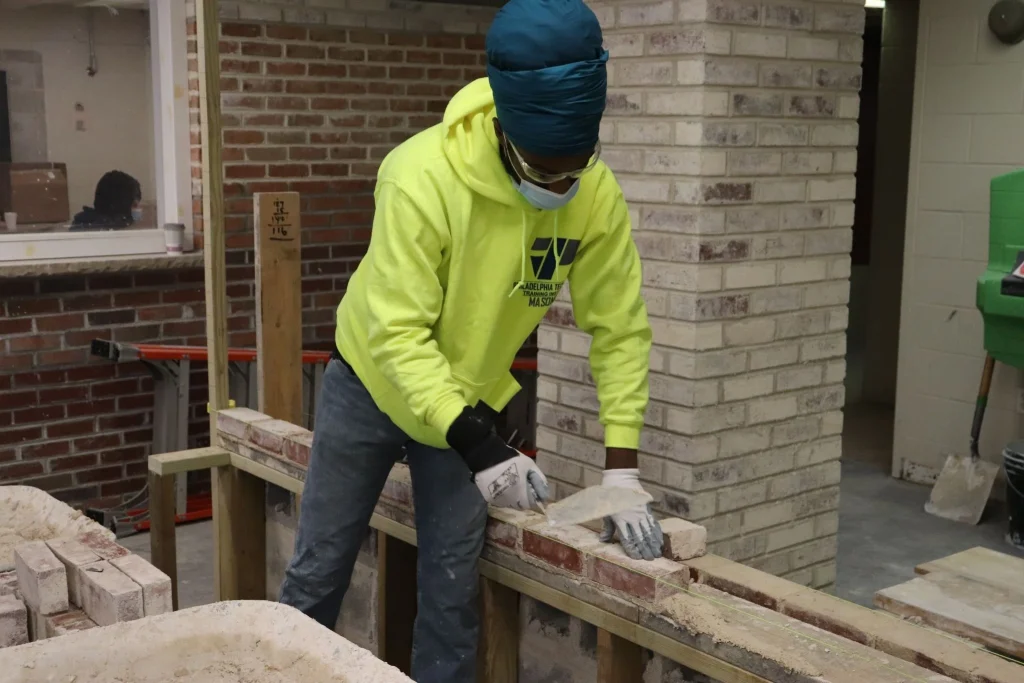
Skilled trades pay above the national average, and you do not need a bachelor’s degree to earn it. According to the U.S. Bureau of Labor Statistics, construction and extraction occupations had a median annual wage of $58,360 in May 2024, compared with $49,500 for all occupations. That is roughly an 18% premium over the typical American job. Rising construction trades demand is creating thousands of opportunities for workers who complete industry-focused training and demonstrate the practical skills employers need.
Individual construction trades push higher still. Recent BLS figures show electricians around $61,590, plumbers, pipefitters, and steamfitters near $61,550, sheet metal workers about $58,780, and drywall installers roughly $55,700, while first-line supervisors of construction trades earn a median near $78,900 and construction managers exceed $106,980. Overtime, certifications, and union membership can raise these numbers meaningfully.
This is why so many people now compare a construction trades career favorably against college. You start earning while others accumulate tuition debt, and your pay grows with skill and experience. For a deeper look at local earning potential, our overview of high-salary trade jobs without a degree breaks down what different paths can pay in the Philadelphia region.
How long does construction trades training take? Far less time than a traditional degree. Focused, hands-on programs prepare you for entry-level construction trade jobs in a matter of months, which means you can begin earning and building experience quickly rather than waiting four years to enter the workforce. For students interested in construction careers 2026, Philadelphia provides access to construction training in Philadelphia and a regional market where construction trades jobs continue to support residential, commercial, infrastructure, and industrial projects.
The trades reward demonstrated ability. Employers want to see that you can safely operate tools, read basic plans, follow safety procedures, and do quality work. Those are skills you build through practice, not lecture halls. That is exactly what applied training is designed to deliver, and it is why career changers and recent graduates alike can transition into a construction trades career without starting from scratch financially.
At PTTI, construction-focused programs such as Concreting, Masonry & Framing and Drywall Framing & Finishing are built around real job-site skills so students graduate ready to work, not just ready to keep studying.
One of the strongest reasons to start a career in the construction trades is financial: you enter a well-paying field without the heavy student debt that often follows a four-year degree. Trade training typically costs a fraction of college tuition, and because you can begin earning quickly, your return on investment arrives sooner.
Consider the contrast. A four-year degree can mean years of tuition and delayed income, with no guarantee of a job in your field. A construction trades career flips that equation: shorter training, lower cost, and immediate demand for your skills. When people ask whether trade school beats college, this is the core of the answer for anyone drawn to hands-on work.
| Factor | Construction Trades Path | Traditional Four-Year Degree |
| Time to enter workforce | Months | About four years |
| Typical cost | Lower, focused tuition | Often significant debt |
| Earning while training | Possible early | Usually delayed |
| Demand for skills | High and rising | Varies widely by major |
| Hands-on preparation | Central to training | Often limited |
If you are weighing your options, our guide comparing trade school and traditional college walks through the trade-offs so you can decide what fits your goals.
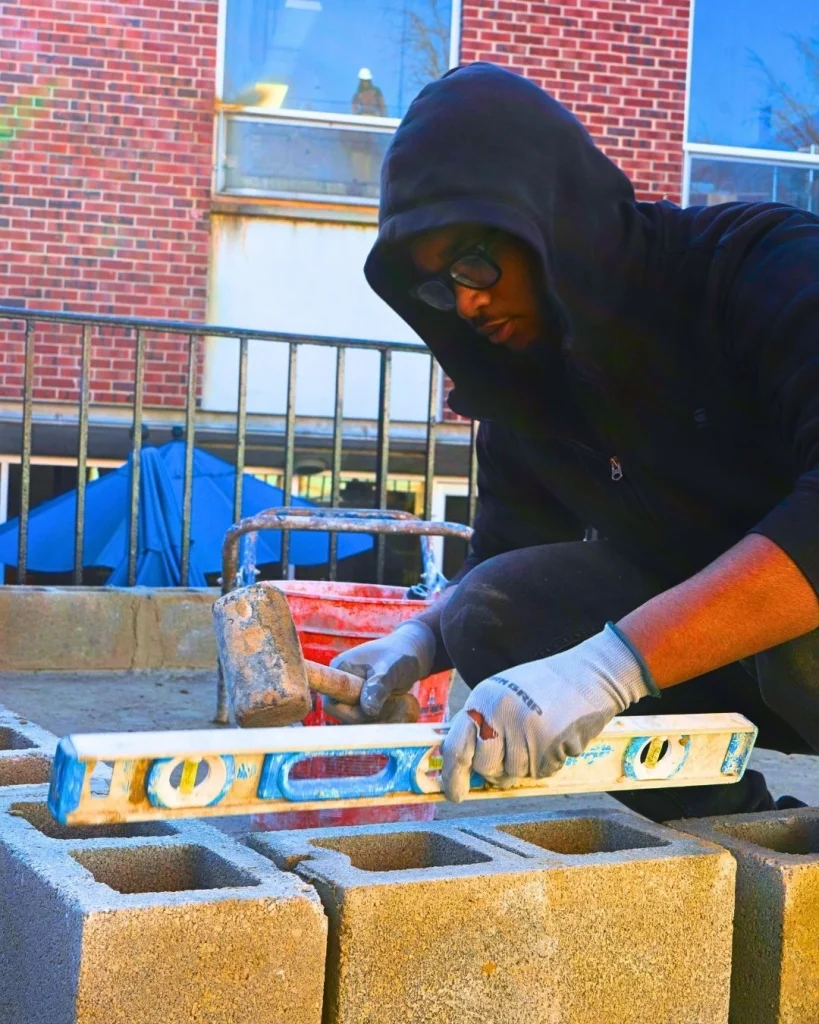
Is a construction trades career recession-proof? No job is fully immune to economic cycles, but the construction trades are unusually durable. The country always needs its infrastructure maintained, its buildings repaired, and its essential systems kept running. That baseline demand does not disappear when the economy slows.Many people also consider the earning potential when choosing a career. High-paying trade jobs can provide competitive wages as workers gain experience, certifications, and specialized skills.
Two forces make this stability especially strong right now. First, the wave of retirements means employers must keep hiring simply to replace departing workers, regardless of the broader economy. Second, much of the work — repairing water and gas systems, maintaining bridges, upgrading commercial buildings — is non-negotiable. A skilled tradesperson with a solid reputation rarely stays out of work for long. For people comparing career options, high-paying trade jobs can provide competitive wages without requiring the cost and time associated with a traditional four-year degree.
This is a major reason skilled trades appeal to people who value security. A career in the construction trades gives you a portable, in-demand skill set that travels with you, rather than a title tied to one company or one economic moment.
A construction trades career is a starting point, not a ceiling. The field offers clear routes to move up, earn more, and eventually run your own show. Many tradespeople advance from entry-level worker to lead, then to foreman, supervisor, estimator, or project manager. Construction managers, for example, earn a median wage above $100,000. The outlook for construction careers 2026 remains promising as infrastructure projects, data centers, manufacturing facilities, and other major developments continue creating demand for trained workers.
Entrepreneurship is another common path. Experienced tradespeople frequently launch their own contracting or specialty businesses, turning a hands-on skill into an ownership opportunity. Because construction is built on relationships, reputation, and reliable work, the people who show up, do quality work, and understand the trade often build thriving businesses of their own.
This upward mobility is one of the most underrated reasons to start a career in the construction trades. You are not locked into a single role. With added certifications and experience, you can keep climbing. Programs like PTTI’s Steam, Sprinkler & Pipe Fitting training build the technical foundation that supports that long-term growth.
As artificial intelligence reshapes office work, many people are asking which careers are genuinely future-proof. The construction trades rank among the safest. The work is physical, site-specific, and constantly changing from one job to the next, which makes it extremely difficult to automate.
Every building is different. Conditions on a job site shift by the hour. A tradesperson has to solve problems in real time, adapt to what they find behind a wall or under a floor, and make judgment calls a machine cannot replicate. Technology is certainly entering construction — digital layout tools, advanced diagnostics, and smart building systems — but these tools assist skilled workers rather than replace them.Quality construction training in Philadelphia can help students develop practical skills in areas such as blueprint reading, tool operation, workplace safety, framing, masonry, and other essential construction techniques.
That is a powerful reassurance for anyone building a long-term plan. A construction trades career means learning a skill that stays relevant precisely because it depends on human hands, judgment, and adaptability. For more on this, our perspective on why a skilled trades career makes sense in 2026 explores how the trades hold up as automation advances.
Beyond replacing retirees, the construction trades are being pulled forward by a wave of large, capital-intensive projects. Construction training in Philadelphia gives students the opportunity to practice essential techniques while learning from instructors who understand real workplace expectations. Data center construction is booming as demand for computing and AI infrastructure surges, and industry surveys show contractors are especially bullish on that sector. Manufacturing plants, energy infrastructure, and public works add even more demand.
The economics reinforce the opportunity. Industry models estimate that every additional $1 billion in construction spending generates demand for roughly 3,450 to 3,550 new jobs. As these mega-projects move forward, they create sustained, well-paying work for skilled trades across the country — electrical, mechanical, concrete, welding, and more.When comparing trade school vs college,skilled tarde career gives students should consider training time, education costs, earning potential, and how quickly they can enter the workforce.
For students, this means the timing is favorable. Entering a construction trades career in 2026 puts you in position to work on the projects defining the next decade of American building. The skills you learn now — reading plans, working safely, and executing quality work — are exactly what these projects require.
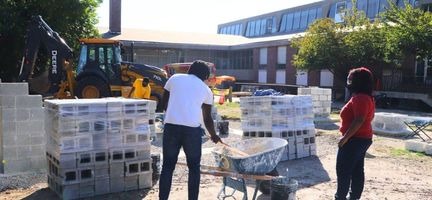
National demand matters, but where you train and work matters too. The Philadelphia region offers deep, ongoing construction activity — commercial and healthcare building, infrastructure maintenance, residential development, and industrial work across Pennsylvania and New Jersey. That means graduates do not have to move far to find an opportunity. Construction trade in demand is widely spread all over the USA. Due to high demand in development infrastructure
A construction trades career trained in Philadelphia positions you for work throughout the city’s neighborhoods, from North Philadelphia and South Philadelphia to West Philadelphia and Southwest Philadelphia, as well as the surrounding counties. Because construction skills are portable, your credentials travel with you across the tri-state area and beyond. Skilled tarde career makes person financially stable for future.
This local relevance is one of the practical reasons to start a career in the construction trades right where you are. Hands-on construction training in Philadelphia connects you to regional employers, local job sites, and a network that helps you move from classroom to career. PTTI’s construction training programs are designed with that regional workforce demand in mind.
Not every reason to join the construction trades is financial. Many tradespeople describe a satisfaction that office work rarely provides: at the end of the day, you can point to something real that you helped build. That sense of pride and accomplishment is a genuine draw for people who want their work to matter and to last. With strong construction trades demand, accessible training, and opportunities for high-paying trade jobs, a skilled trades career can offer a practical alternative to the traditional college path.
Construction is also deeply team-oriented. You work alongside a crew, solve problems together, and take collective pride in finishing a project well. The trades build not just structures but community, mentorship, and a strong professional identity. For people who want purpose along with a paycheck, a career in the construction trades delivers both.
That combination — meaningful work, strong pay, real demand, and room to grow — is why so many young adults, career changers, and veterans are choosing the trades in 2026. It is a career you can build a life around.
Starting a construction trades career is straightforward when you follow a clear path. You confirm the basics, get hands-on training, build safety and technical skills, earn relevant certifications, and step into entry-level work where you keep growing.
Here is the typical route:
If you want to see how this looks locally, our article on how construction training leads to a high-paying career maps out the journey step by step.
Philadelphia Technician Training Institute (PTTI) is built around one goal: preparing students for real careers in the skilled trades through hands-on training. For a construction trades career, that focus makes a meaningful difference. Students learn in applied environments using industry-standard equipment, guided by instructors with real field experience.One of the biggest advantages of entering the industry now is increasing construction trades demand.
PTTI offers construction-relevant programs including Concreting, Masonry & Framing; Drywall Framing & Finishing; Steam, Sprinkler & Pipe Fitting; Welding Technology; and HVAC training. Each emphasizes the workforce-ready skills employers actually look for — safety discipline, technical competency, blueprint reading, teamwork, and troubleshooting. The result is graduates prepared to contribute on day one.
Just as important, PTTI is rooted in the Philadelphia community and connected to regional workforce demand. That local focus, combined with career support and certification preparation, helps students turn training into employment. Ready to explore your options? You can request information or schedule a campus tour to see the labs in person.
The case for starting a career in the construction trades in 2026 is hard to ignore. A national worker shortage, above-average pay, fast training, low debt, strong job stability, real advancement, automation-resistant work, and booming demand all point in the same direction. For anyone who wants a durable, hands-on career with room to grow, the construction trades offer a path that few other fields can match right now. construction careers 2026 can offer strong opportunities for individuals who prepare with the right technical and safety skills.
The best part is how attainable it is. You do not need a four-year degree or years of debt — you need focused, hands-on training and the willingness to learn a real skill. In Philadelphia, that training connects you directly to a region with steady construction demand and employers actively looking for prepared workers.
If you are ready to take the next step, PTTI is here to help you begin. Explore our construction training programs, apply now, or contact admissions to start building a career in the construction trades that can support you for decades. Your future in the trades can start this year.
Because demand is exceptionally strong. The industry needs an estimated 349,000 additional workers in 2026, pay is above the national average, and you can begin a construction trades career in months without a four-year degree. It is one of the clearest opportunities in today’s job market.
Construction and extraction occupations had a median annual wage of $58,360 in May 2024, well above the $49,500 median for all jobs. Specific trades and supervisors often earn more, and certifications, overtime, and experience push wages higher over time.
Yes. Most construction trades require a high school diploma or GED plus hands-on training, not a bachelor’s degree. Employers prioritize demonstrated skill, safety awareness, and reliability, which is why focused trade training is the standard entry point.
Far less time than a traditional degree. Hands-on construction training programs can prepare you for entry-level work in months, allowing you to start earning and gaining experience quickly rather than waiting years.
The construction trades are unusually durable. Constant maintenance and repair needs, plus a wave of retirements, keep demand steady even during economic slowdowns. A skilled, reliable tradesperson rarely stays out of work for long.
Safety credentials such as OSHA training are widely valued, and trade-specific certifications strengthen your résumé further. A quality program prepares you for these certifications as part of your training.
PTTI offers hands-on construction-focused programs in Philadelphia, including Concreting, Masonry & Framing; Drywall Framing & Finishing; pipefitting; welding; and HVAC, serving students across the city and the surrounding Pennsylvania and New Jersey region.