
You do not need four years and a mountain of debt to earn a strong living. Several of the highest paying trade jobs Philadelphia has to offer can be trained for in roughly six months to a year, and they lead to careers that pay competitively from the start and climb quickly with experience and certifications. For anyone who wants to make money fast without spending years in school, this is the most direct path available in the region.
This guide breaks down six skilled trades you can enter through fast-track training, what each one actually pays in the Philadelphia area in 2026, where the local demand is, and how to decide which fits you. It is written for high school graduates, career changers, veterans, and adult learners who want real numbers and a clear route into work, not hype.
Yes. Several skilled trades are performance-based, which means employers hire on proven ability rather than years of degree coursework. With concentrated, hands-on training you can reach entry-level competency in roughly six months to a year and begin earning while many college students are still years from a paycheck. That speed is the core advantage of the trades.
The reason this works comes down to how the trades are evaluated. A welder passes a weld test. An automotive technician diagnoses and repairs a real vehicle. A sterile processing technician demonstrates correct decontamination and instrument handling. None of that requires a bachelor’s degree; it requires focused practice on real equipment until the skill is reliable. That is exactly what quality 6 month trade programs are designed to build.
Fast-track training strips away the unrelated coursework of a traditional degree and concentrates your time on the specific competencies employers test for. You spend your hours in labs and shops, building muscle memory and job-site judgment, which is why graduates of hands-on programs are often workforce-ready in months.
“Job-ready” should mean you can perform the core tasks of the trade unassisted and pass any required certification or skills test. A fast timeline only has value if it produces that outcome, which is why hands-on hours matter more than calendar length.
Philadelphia advantage: Because a trade credential is portable, training in Philadelphia opens doors across Pennsylvania, New Jersey, and Delaware, from Camden and Cherry Hill to Drexel Hill, Lansdowne, and beyond.
The highest paying trade jobs Philadelphia offers to fast-track graduates cluster in welding, pipefitting, manufacturing and automation, automotive repair, sterile processing, and construction trades. Entry pay generally lands in the $40,000s, typical pay reaches $50,000–$70,000, and experienced or certified workers frequently exceed $75,000–$90,000, depending on the trade.
Here is a side-by-side view of 2026 regional earning potential. Figures are Philadelphia-area estimates drawn from current labor-market data and vary by employer, certification, overtime, and union status.
| Trade | Entry-Level (approx.) | Typical (approx.) | Experienced / Certified (approx.) |
| Manufacturing & Automation | $42,000–$51,000 | $60,000–$73,000 | $80,000–$98,000+ |
| Steam, Sprinkler & Pipe Fitting | $45,000–$51,000 | ~$60,000 | $74,000–$82,000+ |
| Automotive Repair Technology | $39,000–$48,000 | $60,000–$67,000 | $78,000–$92,000 |
| Welding Technology | $45,000 | $52,000–$60,000 | $70,000–$80,000+ |
| Central Processing & Sterile Services | $40,000–$44,000 | $50,000–$58,000 | $68,000–$81,000 |
| Concreting, Masonry & Framing | ~$40,000 | $50,000–$60,000 | $65,000–$75,000+ |
These ranges reflect entry, typical, and experienced pay rather than a single average, because your first-year wage and your fifth-year wage can differ substantially. Overtime is common in the trades and can add meaningfully to take-home pay, and certifications reliably push earnings toward the top of each range.
Philadelphia generally pays trade workers above national midpoints, driven by a strong union presence, active shipbuilding and fabrication, healthcare construction, and a manufacturing base that still builds daily. For a broader view of demand, the U.S. Bureau of Labor Statistics tracks these occupations, and its data consistently shows steady, replacement-driven openings as experienced tradespeople retire.
Manufacturing and automation offers the strongest earning ceiling on this list. In the Philadelphia area, industrial maintenance and automation technicians commonly earn in the $60,000–$73,000 range, with experienced professionals reaching $80,000–$98,000 or more. As factories adopt robotics and smart systems, the workers who can install, run, and troubleshoot that equipment are increasingly valuable.
Entry-level technicians typically start in the $42,000–$51,000 range, and pay rises quickly as you add skills in PLCs, robotics, and controls. Because these roles blend mechanical and electrical knowledge, they reward continued learning with some of the highest wages available to a fast-track graduate.
Philadelphia’s manufacturing revival and the broader Pennsylvania industrial base mean these skills travel well across the region. Training through a hands-on Manufacturing & Automation program prepares you for exactly the equipment employers run, and you can explore how automation and manufacturing careers are trending in recent 2026 workforce coverage.
Pipefitting and steamfitting reward skill with strong, stable pay. In Philadelphia, pipefitters commonly earn around $60,000, with entry-level workers starting near $45,000–$51,000 and experienced or union tradespeople reaching $74,000–$82,000 or more. These are mechanical, hands-on careers with consistent demand across commercial and industrial work.
Pay climbs with certification, specialty skills, and union membership. Because pipe and mechanical systems are essential to every large building, the work is steady, and overtime opportunities are common on commercial and industrial projects.
Steam, sprinkler, and pipe systems keep Philadelphia’s buildings running, and skilled fitters are needed across the tri-state area. A focused Steam, Sprinkler & Pipe Fitting program builds the mechanical and safety skills employers expect on day one. If you are also weighing welding, the comparison in pipefitter vs. welder for 2026 is worth reading.
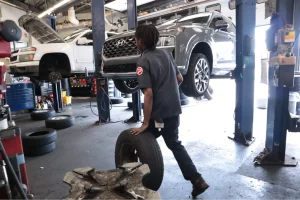
Automotive repair pays better than many people expect, especially in a metro market. In Philadelphia, automotive technicians commonly earn $60,000–$67,000, with entry-level pay starting near $39,000–$48,000 and top earners reaching $78,000–$92,000, particularly with certifications and flat-rate production. Cars are not going away, and skilled technicians remain in demand.
Earnings rise with ASE-aligned certifications, diagnostic skill, and specialization. Flat-rate pay structures reward efficient, experienced technicians, which is why the top of the range sits well above the entry point.
Philadelphia’s dealerships, independent shops, and fleet operators all need trained technicians. Hands-on training through an Automotive Repair program prepares you for both traditional repair and the diagnostics-heavy future of the trade, and you can read how EV and diagnostic skills are reshaping automotive careers.
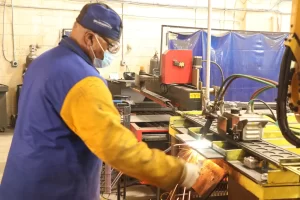
Welding is one of the most recognizable fast-track trades, and for good reason. Welders in the Philadelphia area typically earn $52,000–$60,000, with entry pay near $45,000 and experienced, certified, or union welders frequently exceeding $70,000–$80,000. It is a performance-based skill you can build quickly and carry anywhere.
Certification and specialty work, especially pipe welding, push pay toward the top of the range. Overtime is common, and a portable weld-test credential means your earning power travels across state lines.
Philadelphia’s maritime and fabrication sectors keep welders busy, and demand extends throughout Pennsylvania and South Jersey. A hands-on Welding Technology program builds real booth time and certification readiness, and the broader case for the trade is laid out in this look at why welding remains a strong 2026 career.
Sterile processing is one of the quickest ways into stable healthcare work without a nursing degree. In Philadelphia, sterile processing technicians typically earn $50,000–$58,000, with entry pay near $40,000–$44,000 and experienced, certified technicians reaching $68,000–$81,000. Every surgery depends on this role, which keeps demand consistent.
Pay rises with certification and experience, and lead or management roles push earnings higher. Because hospitals and surgical centers cannot operate without sterile instruments, the work is stable and largely recession-resistant.
The region’s dense concentration of hospitals and life-sciences employers makes this a smart fast-track choice. A Sterile Processing & Central Services program is built around certification readiness, and you can see how sterile processing is changing careers in Philadelphia.

Construction trades reward reliable, skilled workers with solid pay and clear advancement. In the Philadelphia area, concreting, masonry, and framing tradespeople typically earn $50,000–$60,000, with entry pay near $40,000 and experienced tradespeople and foremen reaching $65,000–$75,000 or more. As the region rebuilds, these skills stay in demand.
Pay climbs with experience, certifications, and the move into lead and foreman roles. Overtime and steady project pipelines make construction trades dependable earners for people who like physical, visible work.
Philadelphia’s construction pipeline, from Center City projects to neighborhood revitalization, keeps demand strong. A hands-on Concreting, Masonry & Framing program teaches job-site-ready skills, and the outlook is covered in this piece on concrete and framing demand growth in 2026.
The best-paying trade on paper is not automatically the best trade for you. The right choice balances earning potential with your strengths, your schedule, and the kind of work you actually enjoy. Someone who loves diagnosing problems may thrive in automotive or automation, while someone who likes visible, physical results may prefer welding or masonry.
Hands-on trade training is a different product from the alternatives, and the differences map directly onto how fast you earn and how ready you are.
A four-year degree delays earning and often adds significant debt. Online-only courses cannot deliver the booth time, shop time, and equipment practice the trades require. Self-teaching rarely builds certification readiness or employer connections. Focused, in-person training delivers speed, real skill, and job-readiness in one package, which is why it remains the standard route into these careers.
Not sure where you fit? Take the Program Matchmaker Quiz to match your interests to a fast-track trade, explore financial aid options, or talk with admissions about start dates.
The fastest route to a strong paycheck in this region does not run through four years of college. It runs through focused, hands-on training in a trade that pays. The highest paying trade jobs Philadelphia offers, from automation and pipefitting to welding, automotive, sterile processing, and construction, are all within reach in roughly six months to a year, and they lead to careers with real earning power and steady local demand.
The next step is simple. Take the Program Matchmaker Quiz to find your best-fit fast-track trade, schedule a campus tour to see the labs for yourself, or explore all programs and reach out to career services to understand where graduates get hired. Veterans can review dedicated veterans’ benefits as well. Your high-paying trade career can start this year.
What are the highest paying trade jobs in Philadelphia you can train for fast?
Manufacturing and automation, pipefitting, automotive repair, welding, sterile processing, and construction trades all offer strong pay with fast-track training. Several reach $60,000–$80,000+ with experience and certification, and all are available through hands-on programs like those at PTTI.
Can you really learn a trade in 6 months?
Yes. Because trades are performance-based, focused training can make you job-ready in roughly six months to a year. What matters is hands-on hours and certification readiness, which is exactly what PTTI’s applied, equipment-based programs are built to deliver.
Which trade pays the most without a degree in Philadelphia?
Manufacturing and automation offers the highest ceiling, with experienced Philadelphia technicians reaching $80,000–$98,000+. Pipefitting, welding, and automotive repair also pay well above $70,000 for certified, experienced workers, all without a four-year degree.
Are trade jobs in demand in Philadelphia in 2026?
Yes. Aging infrastructure, shipbuilding, healthcare, and a modernizing manufacturing base drive steady demand across the region. Replacement hiring as experienced workers retire keeps openings consistent, and PTTI trains directly for these local, in-demand roles.
How do I choose the right trade school program?
Look for real hands-on hours on industry-standard equipment, built-in certification preparation, honest cost, and job placement support. PTTI’s programs are designed around these standards, and the Program Matchmaker Quiz can help you find the fast-track trade that fits you.
Read More