
Welding is one of the rare careers where a motivated beginner can go from zero experience to a paying job in under a year—no four-year degree, no crushing student debt. Across Philadelphia, fabrication shops, shipyards, pipefitting contractors, and manufacturers are hiring people who can produce a clean, inspection-ready weld. So if you have been wondering how to become a welder in Philadelphia without spending years in school, the honest answer is straightforward: focused, hands-on welding training is the fastest, most reliable route to a paycheck.
This guide lays out the entire path in plain terms—realistic training timelines, what welders actually earn in the Philadelphia market, which certifications employers reward, the skills hiring managers expect on day one, and where the jobs are across the region. It is written for high school students, recent graduates, career changers, veterans, and adult learners who want a stable, well-paying trade they can begin this year. Quality welding training programs in Philadelphia are built to close the gap between “complete beginner” and “job-ready” as quickly as your skill develops.
Under a year to job-ready: Focused welding training moves you from beginner to employable far faster than a college degree.
Strong local pay: Welder salary in Philadelphia typically runs $52,000–$60,000, with certified and union welders frequently topping $70,000.
No degree required: Welding is performance-based—employers test whether you can weld, not whether you hold a diploma.
Certification raises earnings: An AWS-certified welder credential is portable and consistently linked to higher pay.
Durable demand: The U.S. Bureau of Labor Statistics projects about 45,600 welding openings each year nationally, largely from retirements.
Hands-on wins: Real lab time on industry-standard equipment is exactly what employers hire for.
Clear next step: Enrolling in a structured welding program is the most direct way to start earning this year.
Welding is a smart 2026 career choice because it pays competitively, hires steadily, and resists automation at the skilled level. The trade underpins shipbuilding, infrastructure, manufacturing, and pipefitting—industries that stay active across Philadelphia and the wider tri-state region. For anyone weighing how to become a welder in Philadelphia, that concentration of local demand makes the decision far easier.
What sets welding apart from many career paths is that it rewards skill rather than credentials. You can enter the trade from high school, from another job, or from military service, and your ability—not your résumé—decides how fast you advance. That is a rare and powerful feature in today’s labor market.
A large share of experienced welders are nearing retirement, and that replacement need is the real engine behind steady hiring. The Bureau of Labor Statistics projects roughly 45,600 openings for welders, cutters, solderers, and brazers each year through 2034, with most driven by workers retiring or moving into other occupations. That demand exists whether or not the overall job count grows quickly—which is what makes welding unusually recession-resistant.
Here is why that matters for a new welder entering the Philadelphia market:
Philadelphia carries unusually deep welding demand. The city supports active shipbuilding and ship repair, a strong union building-trades presence, ongoing commercial and healthcare construction, and a metal-fabrication base that turns out work every day. Welders trained here can also follow opportunity outward—into Pennsylvania communities such as Yeadon, Lansdowne, Darby, Drexel Hill, and Ardmore, and across the river into South Jersey towns including Camden, Pennsauken, Cherry Hill, and Maple Shade. If you want a clearer picture of the strongest regional markets, our breakdown of where welding technicians are most in demand maps it out.

You can become a job-ready welder in Philadelphia in less than a year through a focused, hands-on program. Because welding is judged by performance—you make a weld, an inspector checks it—you become hireable as soon as you can produce sound welds consistently, a skill concentrated training builds in months rather than years.
This is the core reason the “earn in under a year” timeline is realistic rather than marketing language. When people research how to become a welder in Philadelphia, they often assume it takes years; in reality, a four-year degree spreads learning across unrelated coursework, while welding training programs in Philadelphia for beginners concentrate every hour on the exact skills employers test for, which is why the fast-track route works.
The fastest way to become a welder in Philadelphia is a structured program that moves you through foundations, core processes, position practice, and test preparation in a deliberate sequence.
| Phase | Approximate Duration | Focus |
| Foundations | First weeks | Safety, PPE, equipment setup, reading welding symbols |
| Core processes | Early–mid program | MIG, TIG, stick (SMAW), and flux-cored fundamentals |
| Position practice | Mid program | Flat, horizontal, vertical, and overhead welds |
| Test & job readiness | Final phase | Weld-test standards, résumé prep, certification readiness |
If speed is your priority, it is worth comparing accelerated options directly; our guide to the fastest welding program in Philadelphia walks through how a compressed timeline still produces job-ready skill.
Some learners reach test-ready faster than others, and that is completely normal. Your pace depends on how consistently you practice, your hand steadiness, and how many welding processes you choose to master before applying for work.
A simple roadmap to move through training efficiently:

No—you do not need a college degree to become a welder. Welding is a performance-based trade, so employers care about whether you can pass a weld test and read a blueprint, not whether you hold a four-year diploma. A high school diploma or GED plus hands-on welding training is the standard entry point.
Certification is a different matter from a degree, and far more useful. It is the credential that unlocks the better-paying work, and understanding the distinction early helps you train with purpose.
The question of whether welding requires a degree comes up constantly, and the answer reassures most prospective students. Welding rewards demonstrated skill. Many successful welders never attended a traditional college; they completed focused training and proved their ability through testing.
There is no single mandatory “welding license” in Philadelphia. What quality employers and structural projects expect instead is a recognized welding certification—proof that an inspector has verified your work to a national standard. In practice, certification functions as your professional passport: it is what separates a hobbyist from a hireable welder on commercial and infrastructure jobs.
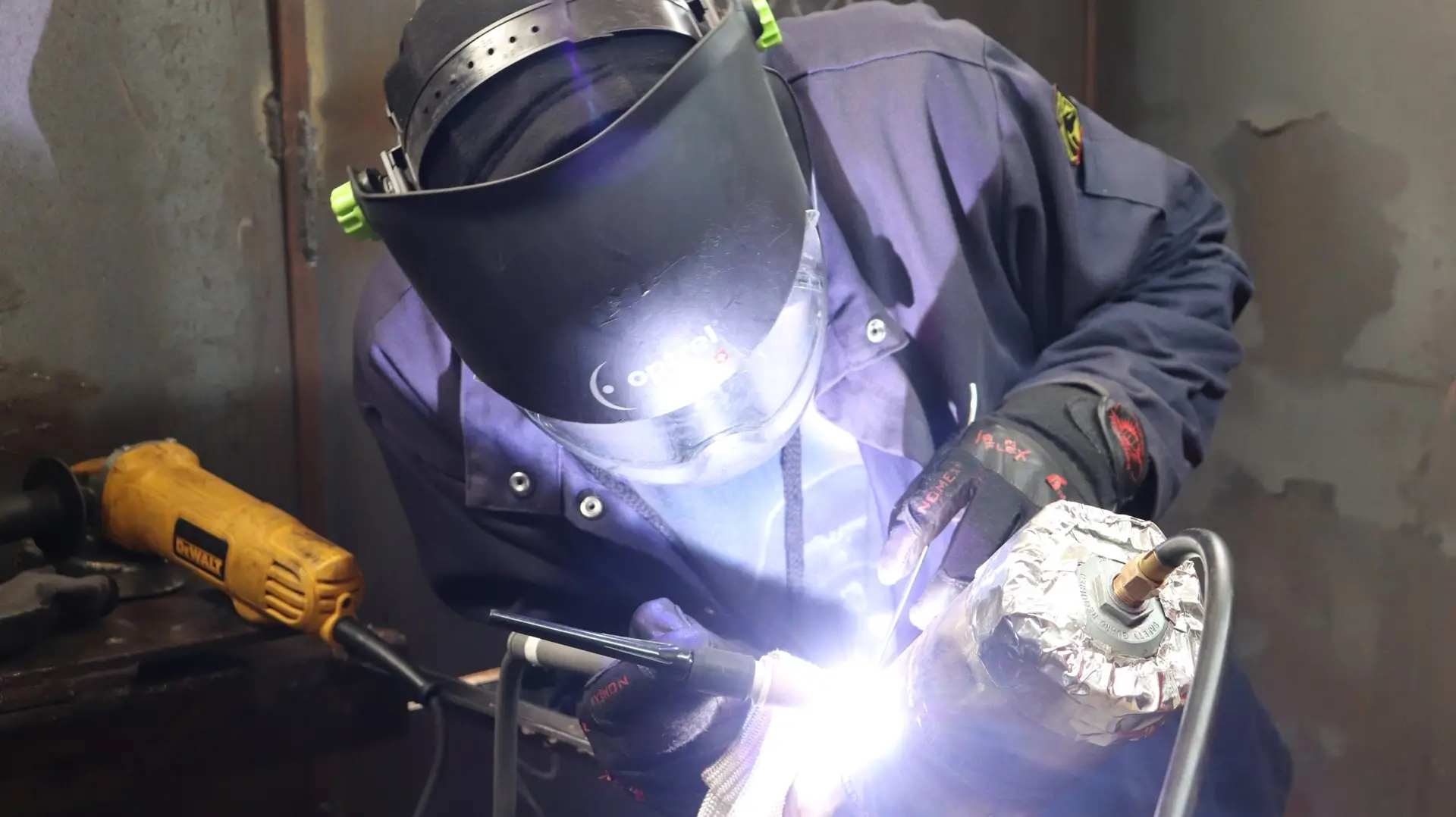
The AWS certified welder credential is performance-based with no prerequisite courses. You schedule a test at an Accredited Test Facility, an AWS Certified Welding Inspector evaluates your weld to a code such as structural steel or pipe, and if it meets the standard you receive a transferable certification. You then maintain it by confirming, every six months, that you are still actively welding to that standard.
Knowing the AWS certified welder requirements in advance lets you train toward a clear target rather than guessing what employers want to see.
A simple path from training to credential:
A welding certification is one of the highest-return steps a new welder can take. Certified welders are favored for structural steel, bridges, pipelines, and defense work—precisely the higher-paying jobs across the Philadelphia region. Because the credential is portable, it follows you wherever demand is strongest, and stacking multiple certifications widens the range of work you can take.
| Certification Factor | What It Means for You |
| No degree prerequisite | Open to motivated beginners |
| Performance-based test | Verified skill is what counts |
| Transferable credential | Works across states and employers |
| Six-month maintenance | Easy to keep active while working |
If you want to plan a credential stack that maximizes earning power, our overview of welding certifications worth pursuing breaks down which ones employers value most.
Welders in Philadelphia generally earn between roughly $52,000 and $60,000 per year, with entry-level pay starting lower and experienced, certified, and union welders frequently exceeding $70,000. Pay varies by process, certification, industry, shift, and overtime—but welder salary Philadelphia figures sit competitively for a career you can begin in under a year.
Several local factors push Philadelphia welder pay above the national midpoint: strong union density, active shipbuilding, steady construction, and specialized pipe and structural work that commands premiums.
When people search welder salary Philadelphia, what they really want is the trajectory—how pay climbs as skill grows.
| Career Stage | Approximate Annual Range (Philadelphia Area) |
| Entry-level welder | $45,000 – $52,000 |
| Experienced welder | $55,000 – $65,000 |
| Certified / specialized / union welder | $68,000 – $80,000+ |
When people ask how much do welders make in Philadelphia, the most honest framing is a range that grows substantially with skill. Overtime is common in welding and can add meaningfully to take-home pay, while specialty skills—pipe welding in particular—push earnings toward the top of the range. For higher earners, the path to six figures is real; we explore exactly how in our look at whether you can earn six figures in welding without a degree.
For context, the Bureau of Labor Statistics places the national welder median wage just under $50,000, while union-influenced markets like Philadelphia trend higher. Put simply, welder salary Philadelphia figures reward skill and certification rather than seniority alone. A welder trained here can carry that earning power across Pennsylvania, New Jersey, and Delaware. If you want to see how local pay stacks up against other markets, our state-by-state welding salary guide provides the wider comparison.
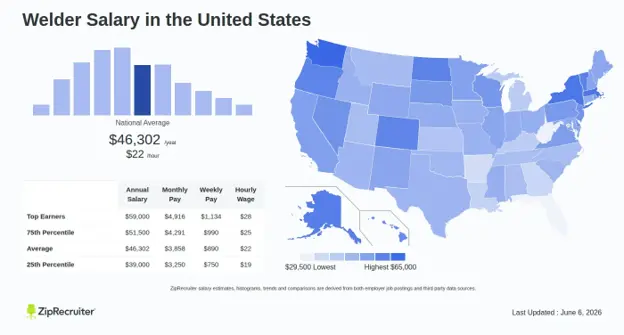
Image Source Credit: Zip recruiter
The job outlook for welders is steady and durable. Nationally, the Bureau of Labor Statistics projects roughly 45,600 welding openings each year through 2034, largely from replacement demand as experienced welders retire. The work is also hard to automate at the skilled level, because so much welding happens in the field, in awkward positions, on infrastructure that machines cannot easily reach.
In Pennsylvania—and Philadelphia specifically—several demand drivers reinforce one another, creating consistent opportunity for new welders entering the trade.
A welder in Philadelphia is not tied to a single employer or industry. When you can weld to standard, you can move between sectors as the work shifts—which is exactly what makes the trade resilient. For career changers and veterans in particular, that stability is a leading reason enrollment in local welding courses keeps climbing.
Hiring managers in the skilled trades are direct about what they need: the ability to lay a clean weld, read a drawing, and work safely as part of a crew. Beyond the arc itself, the welders who get hired and promoted bring a predictable set of competencies—and a strong program builds every one of them on purpose.
These are the skills that turn a certificate into a durable career.
What hands-on training should you develop before you ever apply for a job:
Safety discipline is non-negotiable on any job site. Employers expect consistent PPE use, awareness of fume and heat hazards, and strict adherence to procedure. Equally important are the human skills—reliability, communication, and teamwork. Showing up, working within a crew, and following instructions precisely are what keep welders employed and moving up.
This is where welding training Philadelphia delivered in real labs proves its value. Industry-standard equipment, practiced under instructors with genuine field experience, is what converts classroom theory into job-site readiness. PTTI’s hands-on Welding Technology program is built around that applied environment—booth time, real machines, and a safety culture employers recognize the moment a graduate walks onto a site.
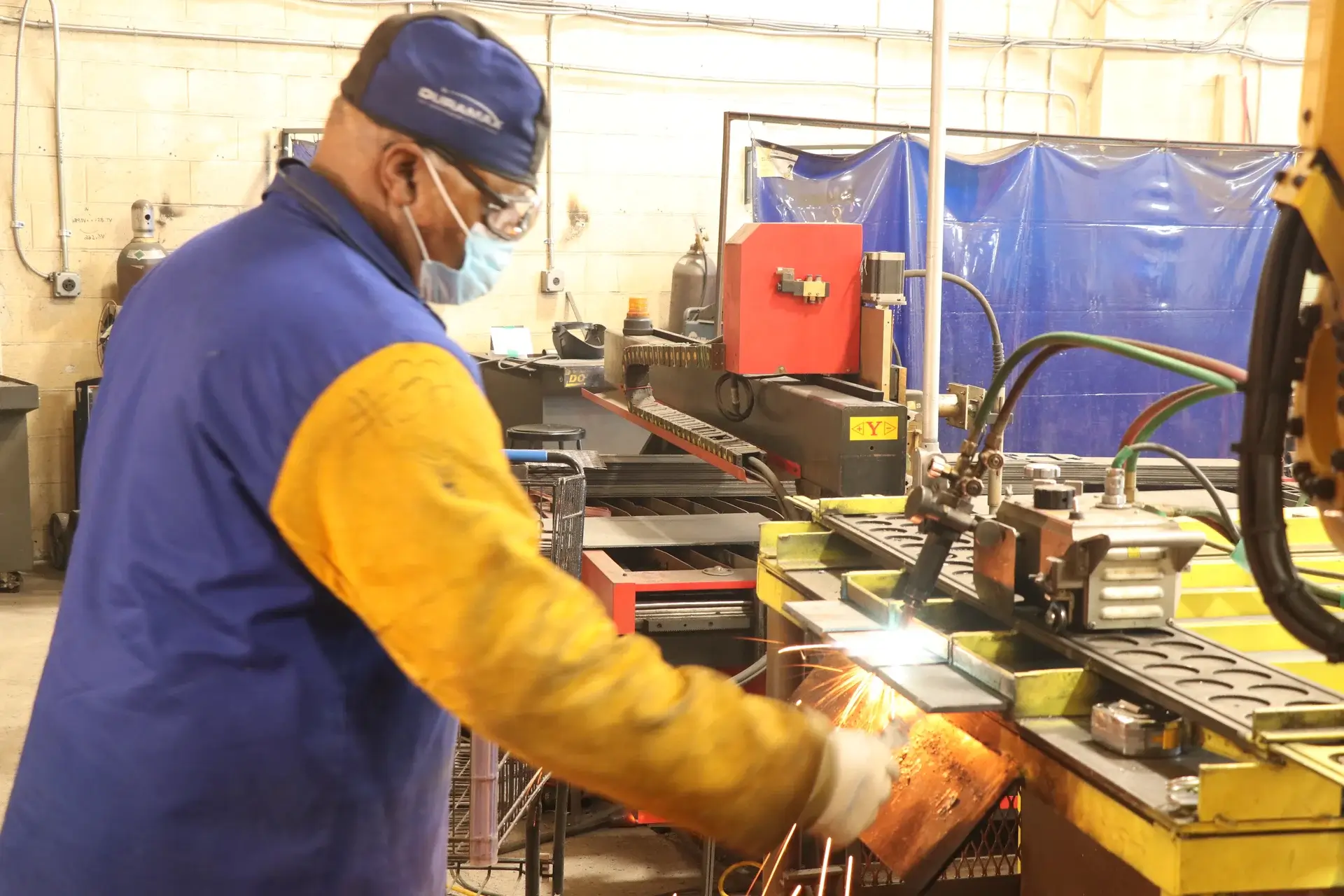
Hands-on welding training differs from college, online courses, and self-teaching in one decisive way: it produces verified, job-ready welding skill in the shortest realistic time. Employers hire welders who can pass a test on day one, and only supervised practice on real equipment builds that ability reliably.
Understanding these differences helps you choose the path that actually leads to a paycheck instead of a dead end.
| Factor | Welding Trade School | Four-Year College |
| Time to earn | Under a year possible | About four years |
| Cost | Lower, focused tuition | Often significant debt |
| Hands-on training | Core of the program | Frequently limited |
| Job-specific skill | Directly employer-aligned | Broader, less applied |
| Path to income | Start earning quickly | Earning typically delayed |
If you are still weighing the two routes, our deeper comparison of trade school vs. traditional college lays out the trade-offs honestly.
You can learn welding theory online, but you cannot pass a weld test through a screen. Self-teaching leaves dangerous gaps in safety and technique, and it rarely prepares you for certification. A welding school in Philadelphia gives you the three things remote study cannot: real equipment, expert correction in the moment, and a structured route to a recognized credential.
Welding suits a wide range of people, which is a big part of its appeal. Because entry depends on trainable skill rather than background, the trade welcomes newcomers from many starting points—and Philadelphia’s demand means there is room for all of them.
If you enjoy working with your hands and want skills that pay, welding deserves a serious look.
Many prospective students worry about tuition, tools, or balancing school with work. These are fair concerns, and they have answers. Financial aid, veterans’ education benefits, and career services exist precisely to make welding training Philadelphia accessible to people from every starting point. Veterans can often offset the cost of welding technician training through their education benefits, while PTTI’s financial aid team helps map total costs—tuition, tools, and fees—honestly before you commit.
Welding and pipefitting overlap, and many Philadelphia employers value workers who can do both. Welders join and fabricate metal; pipefitters install and maintain piping systems, often using welding as one of their core skills. Choosing between them—or combining them—comes down to the work you want to do every day.
For students exploring how to become a welder in Philadelphia, it helps to see how these two trades connect.
Because the skills complement each other, some students learn welding first and add pipe skills later, broadening their earning potential. Philadelphia’s mechanical contracting, steam, and sprinkler work creates steady demand for that combination. If you are torn between the two, our side-by-side look at pipefitter vs. weldercan help, and PTTI’s Steam, Sprinkler & Pipe Fitting program offers a natural path for students who want to add piping expertise.
Learning how to become a welder in Philadelphia comes down to a clear, achievable plan: focused hands-on training, the right welding certification, and the willingness to build a real skill. You do not need a four-year degree or years of debt. With concentrated training, you can move from beginner to job-ready and start earning in less than a year, in a trade where local demand is steady and your credential travels with you across the region.
The fastest, most reliable route is structured training built around what employers actually test for—real booth time, industry-standard equipment, certification readiness, and genuine support moving into the workforce. That is the foundation of PTTI’s welding instruction, and it is why choosing the right welding school in Philadelphia matters so much: graduates walk onto local job sites ready to work.
If you are ready to take the next step, explore the Welding Technology program, schedule a campus tour to see the labs and equipment for yourself, or reach out to the admissions team to start your application. You can also contact us with any questions about timelines, financial aid, or career outcomes—and begin a welding career that pays this year.
Enroll in a hands-on welding program, learn the core processes (MIG, TIG, stick, and flux-cored), practice welding in all positions, prepare for and pass a weld test, then apply for entry-level roles. A structured welding school in Philadelphia can make you job-ready in under a year.
Less than a year is realistic. Because welding is performance-based, you become hireable once you can consistently produce sound welds to standard—a skill a focused, full-time program builds in months rather than years.
Most welders in Philadelphia earn roughly $52,000–$60,000 per year, with entry-level pay lower and certified or union welders frequently earning $70,000 or more. Overtime and specialties like pipe welding push pay higher.
No. Welding does not require a four-year degree. A high school diploma or GED plus hands-on welding training is the standard entry point, because employers verify skill through weld tests rather than transcripts.
The AWS certified welder credential is performance-based with no prerequisite courses. You pass a weld test to a recognized code at an Accredited Test Facility, then maintain certification with a short six-month verification that you are still welding to that standard.
PTTI offers beginner-friendly welding training in Philadelphia on industry-standard equipment, with instruction built around certification readiness and job placement support. The program serves students across Philadelphia and nearby Pennsylvania and South Jersey communities.
Cost varies by program length and tools, but welding school is among the higher-return trade investments because you can start earning quickly. Our breakdown of what welding school costs explains the full picture, including how financial aid offsets it.
Yes. With roughly 45,600 welding openings projected nationally each year, strong regional demand, and work that resists automation, welding remains a stable, in-demand trade you can enter quickly.