
A skilled welder, pipefitter, or auto technician can do flawless work and still get passed over for the best assignments. The difference usually is not talent — it is reputation. Your reputation in the trades is the quiet record that follows you from job to job, and it decides which calls you get, which crews request you by name, and how quickly your pay climbs. For anyone training for a career in the trades in Philadelphia, learning how that reputation is built matters as much as learning to read a blueprint, which is why the hands-on, employer-aligned skilled trades programs at PTTI treat professional habits as part of the craft, not an afterthought.
This guide is practical. You will learn what reputation actually means on a job site, the specific habits that build it, how relationships and referrals open the door to high-paying trade jobs, and why reputation — not certifications alone — separates the tradespeople who stall from the ones who keep moving up. Whether you are a high school graduate, a career changer, or a veteran entering the skilled trades, this is a roadmap you can start using on the first day of training and carry into your first job.
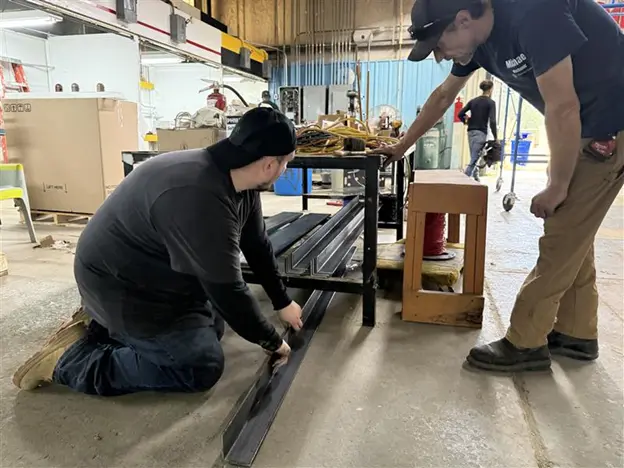
In the trades, work is awarded on trust. Foremen, shop owners, and union dispatchers rarely have time to re-verify a stranger’s ability, so they rely on reputation — their own experience with you, or the word of someone they trust. That is why two people with identical certifications can have very different careers. The one with a stronger reputation gets the overtime, the high-profile projects, and the first call when a better position opens.
Reputation also compounds. Early in a career in the trades, you are proving you can be trusted with basic tasks. A few years in, that same reputation is what gets you considered for lead roles, specialty work, and supervisory positions. Skill gets you hired; reputation gets you promoted. Understanding this early gives Philadelphia students a real advantage over peers who assume technical ability is the only thing that counts.
A reputation in the trades is the shared judgment of your reliability, skill, safety, and professionalism, formed by the people you work with and for. It is not marketing or self-promotion. It is the consistent impression you leave on every job site, every shift, and every interaction — and it travels with you across employers and projects.
Put simply, your reputation answers the questions every employer quietly asks: Will this person show up? Will the work be right the first time? Will they be safe, honest, and easy to work with? When the answer to all four is a dependable “yes,” you become the person crews want and competitors try to hire. In the skilled trades, that reputation is worth more than a polished resume, because it is backed by proof rather than promises.
You build it through four repeated behaviors: reliability, craftsmanship, communication, and safety. None of them require years of experience. They are choices you can make on your first day, and the tradespeople who make them consistently are the ones who rise fastest toward high-paying trade jobs.
Each habit below is simple to understand and hard to fake over time, which is exactly why they carry so much weight with employers.
Reliability is the single most important factor in your early professional reputation. In the trades, crews depend on each person being present and ready, because one missing worker can stall an entire job. Arriving early, staying until the work is done, and being someone the foreman never has to worry about will build your name faster than any advanced technique.
Work ethic is noticed quietly and rewarded loudly. The apprentice who takes initiative, cleans the work area, and asks good questions earns trust that turns into responsibility. This is also why strong training programs, including the hands-on technical training at PTTI, treat punctuality and professionalism as core skills rather than extras.
Consistent, quality work is the proof behind your reputation. Doing a weld, a repair, or an installation correctly once shows skill; doing it correctly every time shows character. Employers in the skilled trades remember who produces work that passes inspection without rework and who does not.
Certifications strengthen this picture by giving third-party proof of competence. Industry credentials — such as AWS welding certifications, EPA 608 for HVAC, or OSHA safety cards — signal that an outside authority has verified your ability. They do not replace a good reputation, but they reinforce it, and they are often required for the better-paying positions. Choosing a program that prepares you for recognized certifications, like the welding technology training offered in Philadelphia, gives your reputation a credible, verifiable foundation.
Technical skill gets undervalued fast when someone is difficult to work with. Communication and teamwork are central to your professional reputation, because job sites are coordinated efforts. The tradesperson who listens, explains problems clearly, and treats others with respect becomes the glue a crew depends on.
This is one reason employers increasingly ask whether a program teaches employability skills, not just technical ones. The ability to take direction, give a clear status update, and resolve friction without drama marks you as someone ready for a long career in the trades — and often for leadership down the line.
Nothing damages a reputation in the trades faster than being seen as unsafe. A single careless shortcut can injure a coworker, shut down a site, and brand you as a liability. On the other hand, a reputation for working safely and following procedure makes you someone employers trust with serious equipment and serious jobs.
Safety discipline also signals maturity. Wearing the right personal protective equipment, respecting lockout procedures, and speaking up about hazards tells everyone that you take the work and the people around you seriously. In the skilled trades, that reputation is one of the most valuable things you can carry.

Most high-paying trade jobs are never posted publicly. They are filled through referrals — a foreman recommending a reliable worker, a classmate vouching for a former lab partner, an instructor connecting a graduate to an employer who called looking for talent. This is why your reputation and your network are really the same asset viewed from two angles.
Relationships built during training often become the first rung of a career ladder. Classmates become coworkers, instructors become references, and the employers who partner with a school become your earliest opportunities. Programs that cultivate strong career and employer connections for students effectively hand graduates a head start on referrals that would otherwise take years to earn. For students exploring a career in the trades, that network can be the difference between waiting for a callback and choosing between offers.
Alumni networks matter too. A graduate who performs well becomes living proof that a program produces reliable workers, which makes the next graduate easier to place. Over time, a good school’s name and your personal reputation reinforce each other, opening doors across Philadelphia, Pennsylvania, New Jersey, and Delaware. This is one of the underrated reasons to choose a well-connected trade school in Philadelphia: you inherit relationships the school has already built with regional employers.
Yes. Reputation directly affects earning potential in the skilled trades, because better jobs, overtime, specialty work, and promotions tend to flow to the workers employers trust most. While exact pay varies by trade, employer, certification, and experience, a strong professional reputation consistently positions you for the higher-paying end of your field.
The underlying demand is real. According to the U.S. Bureau of Labor Statistics, skilled trades face ongoing openings driven largely by an aging workforce and the need to replace retiring workers across construction, manufacturing, and infrastructure. In a market with steady demand, reputation is the tiebreaker: when employers compete for dependable talent, the tradespeople with proven reliability command the best assignments and the strongest offers. Building toward high-paying trade jobs, then, is not only about adding skills — it is about becoming the person those employers specifically want. (This article is educational and not a guarantee of any specific job, wage, or outcome; earnings vary by individual circumstances.
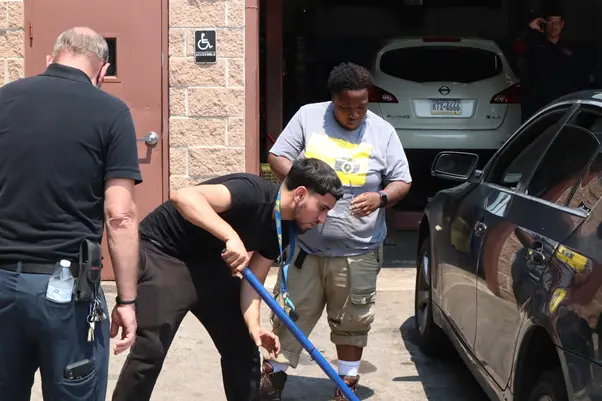
A quality trade school in Philadelphia does more than teach technical skills — it builds the habits and connections that form your reputation before you ever clock in for a paying job. In real labs with industry-standard equipment, students practice the reliability, craftsmanship, and safety that employers notice, and they do it in an environment that mirrors job-site expectations.
Just as importantly, a strong program plugs you into a local network. Career support, employer partnerships, and coaching help translate classroom performance into a professional reputation that hiring managers can verify. Philadelphia Technician Training Institute (PTTI) focuses on this combination, pairing hands-on instruction across welding, automotive, manufacturing, pipefitting, masonry, HVAC, drywall, and sterile processing with the career readiness that helps graduates compete for better roles. Students deciding between options often start by comparing PTTI’s technician-focused programs against general college tracks, because a focused, trade-first path gets them building their reputation sooner.
For students across North, South, and West Philadelphia and the surrounding communities — from Camden and Cherry Hill in New Jersey to Drexel Hill, Lansdowne, and Darby in Pennsylvania — training locally also means building relationships inside the regional job market where they intend to work. That local reputation is one of the most practical advantages a Philadelphia trade school can offer.
Even skilled workers undermine themselves without realizing it. The most common mistakes are rarely dramatic — they are small, repeated behaviors that chip away at trust. Understanding them helps you protect the reputation in the trades you work hard to build.
Avoiding these is not complicated, but it requires self-awareness. The tradespeople who protect their professional reputation treat every job as part of a long career, not a single paycheck.
How do you build a reputation in the trades as a beginner?
Start with reliability. Show up early, do quality work, follow safety procedures, and communicate clearly. These habits build your reputation faster than advanced skills alone, and they signal to employers that you are ready for more responsibility and better jobs.
Does reputation really matter more than certifications?
Both matter, but they do different jobs. Certifications prove you have specific skills, while your reputation proves you can be trusted to use them consistently and safely. The strongest candidates for high-paying trade jobs have both, which is why quality training pairs certification prep with professional habits.
How do tradespeople get referrals for better jobs?
Referrals come from trust built over time. When you are reliable, skilled, and easy to work with, foremen, instructors, and classmates recommend you. Training at a trade school with real career opportunities accelerates this by linking you to a network early in your career in the trades. A well-networked trade school in Philadelphia effectively lends you its relationships while you build your own.
Which trade programs focus on work ethic and teamwork, not just technical skills?
Employer-aligned programs increasingly teach employability skills — punctuality, communication, teamwork, and safety culture — alongside technical training. These are the behaviors that shape your professional reputation on a crew, and they are a key reason hands-on trade schools emphasize job-site readiness from day one.
Can a reputation in the trades lead to higher pay?
It can. Reputation positions you for overtime, specialty work, and promotions, which are where earning potential grows. Pay varies by trade, employer, and experience, but in a field with steady demand for reliable workers, a strong reputation consistently opens the door to the better-paying opportunities.
A reputation in the trades is the most valuable thing you own, because it is the one asset that follows you everywhere and keeps paying you back. It is built the same way for everyone — through reliability, quality work, clear communication, and uncompromising safety — and it grows into the referrals, promotions, and high-paying trade jobs that define a strong career in the trades. The best news is that you can start building it on day one, long before you have decades of experience.
If you are ready to begin that career the right way, explore the hands-on programs at a trade school in Philadelphia built around real job-site readiness and take the first step toward a reputation employers compete for.
Read More