
No, it is not too late to start a trade career after 40. The skilled trades are one of the few fields where life experience, reliability, and work ethic count as much as a diploma, and where you can train in months rather than years. If you are weighing a hands-on trade program against staying in a job that no longer fits, you are not behind the curve. You are stepping into a field that is actively short on workers.
For many adults, the real barrier is not age but uncertainty about how the process works. This guide answers the practical questions: whether a career change at 40 is realistic, which trades suit a second career, how long training takes, what the pay looks like, and how older learners fit into trade school for adults. It is written for career changers, veterans, and anyone in the Philadelphia region who wants honest information before committing. By the end, you will know whether the trades are a smart move for you and what your first step looks like.
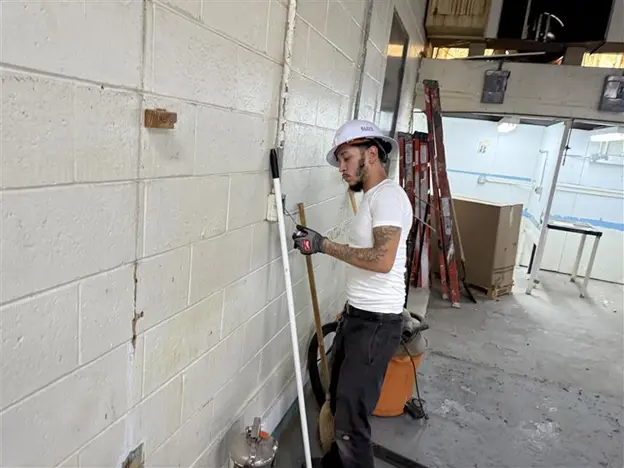
A career change at 40 into the skilled trades is well timed because the workforce is aging and demand is outpacing supply. The median age of construction workers has held around 42, and industry groups have pointed to a workforce gap in the hundreds of thousands. That shortage is the career changer’s opening.
When experienced tradespeople retire, employers need people who can learn the work and show up dependably. Adults in their 40s and 50s tend to bring precisely those qualities. You already know how to manage time, communicate with a team, and take a job seriously, which shortens the distance between training and productive work on a job site.
There is also a financial logic to it. Instead of years of tuition with delayed earnings, skilled trades careers let you train in a focused window and move into paid work. For someone who cannot afford to stop earning for long, that compressed timeline is often the deciding factor in making a mid-life switch.
Finally, the work itself tends to be durable. Much of it is physical, judgment-based, and site-specific, which makes it difficult to offshore or fully automate. That stability matters more, not less, when you are building the second half of a working life.
The best trades for a second career combine short training, steady demand, and room to grow. For most career changers, that points to welding, HVAC, automotive repair, pipefitting, manufacturing and automation, and construction trades like masonry and framing. Each offers a clear entry point without a four-year degree.
Here is how several strong options compare for someone starting later in life.
| Trade | Typical Work | Why It Suits a Second Career |
| Welding | Joining and fabricating metal for construction, manufacturing, and repair | Performance-based; portable certifications; steady regional demand |
| HVAC | Installing and servicing heating, cooling, and ventilation systems | Year-round demand; service work rewards problem-solving maturity |
| Automotive repair | Diagnosing and fixing vehicles, including modern electronics | Diagnostic work values patience and methodical thinking |
| Pipefitting / steam & sprinkler | Installing and maintaining piping and mechanical systems | Strong commercial and union demand in the region |
| Manufacturing & automation | Operating and maintaining modern production equipment | Growing use of automation rewards adaptable learners |
| Masonry, concrete & framing | Building structures and finishing construction projects | Tangible results; consistent construction activity |
The right choice depends on your interests and physical comfort with different environments. Someone who enjoys steady diagnostic puzzles may gravitate toward automotive repair training, while someone who likes building something visible may prefer welding or construction trades. A good program advisor can help you match a trade to your strengths before you enroll.
Yes. Trade school for adults is designed around exactly this situation. These programs concentrate on hands-on skills, safety, and job readiness rather than general academics, which is often a relief for adults who did not love traditional classrooms.
Most programs require only that you are at least 18 and have a high school diploma or GED, so a 40- or 50-year-old meets the entry bar with room to spare. What matters far more is your willingness to practice a skill until you can perform it reliably, which is something life has already taught most adults how to do.
Adult learners also tend to be clearer about why they are there. That focus shows up in the shop and in interviews. When an employer meets a career changer who trained deliberately and can explain why they chose the trade, age reads as seasoning rather than a drawback. Choosing a trade school in Philadelphia that understands adult learners makes that transition smoother from day one.

Most focused trade programs take under a year, and some run only a few months. Because the goal is job-ready skill rather than a broad degree, training time goes toward practicing the exact tasks employers test for. For a career changer, that compressed timeline is a major advantage.
The exact length depends on the trade and the schedule. A single-skill certificate may finish faster than a program covering multiple systems. What stays consistent is the structure: foundational safety and theory first, then supervised hands-on practice, then preparation for certification and work.
Shorter training also limits how long you go without full earnings, which is often the central concern for adults supporting a family. Pursuing a second career in the trades through a concentrated program lets you re-enter the workforce faster than almost any other retraining path.
💡 Not sure which program fits your timeline? Talk with a PTTI advisor about program options and start dates built around working adults.
Yes, and many actively prefer them. Employers in skilled trades careers consistently report that reliability, punctuality, and professionalism are as important as raw technical skill, and those are traits older hires tend to demonstrate from day one.
In practical terms, a hiring manager filling an entry-level technician role is weighing who will show up, follow safety procedures, communicate with customers and crews, and stay with the company. A mature career changer who trained on purpose often answers those questions better than a far younger candidate.
That does not erase the physical realities of trade work, which can involve lifting, standing, and working in awkward positions. But trades vary widely in physical demand, and many roles reward experience and judgment over sheer speed. Matching the trade to your body and interests is part of choosing well, and it is a conversation worth having with admissions and program staff before you commit.
Skilled trades offer competitive starting wages that grow meaningfully with experience, certification, and specialization. While exact figures vary by trade, employer, location, and overtime, many trades in the Philadelphia region pay solid middle-income wages, with experienced and certified workers earning considerably more.
A few principles hold across the trades. Certifications tend to raise pay, because they prove verified skill to employers. Specialty work, such as pipe welding or advanced diagnostics, commands premiums. And overtime is common in many trades, which can lift annual take-home pay above the base rate.
For a career changer, the point is not a single headline number but the trajectory. You can enter at a reasonable wage after short training, then stack credentials and move up. That upward path is one reason a trade career after 40 can outperform staying in a stalled role, even accounting for the time spent retraining. Earnings are never guaranteed and depend on many factors, but the structure of the trades rewards people who keep adding skills.
Educational information only. Wage outcomes vary and are not guaranteed. For current occupational wage data, consult the U.S. Bureau of Labor Statistics.
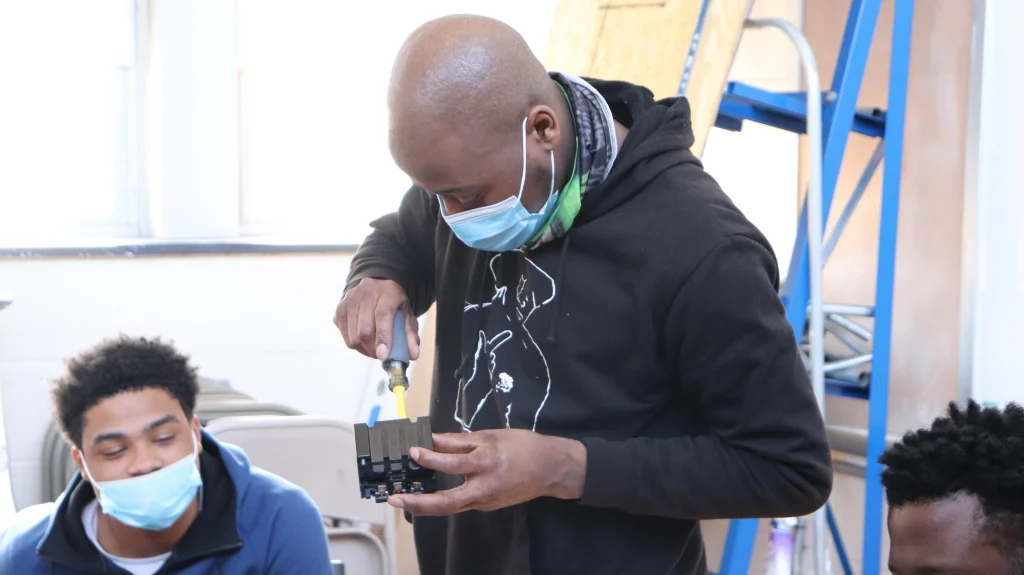
The Philadelphia region is a practical place to begin a second career in the trades because demand is spread across many industries. Manufacturing, construction, building maintenance, automotive service, and mechanical systems all need trained technicians, which means graduates are not tied to a single employer or neighborhood.
Opportunity reaches well beyond Center City. Career changers find work across North, South, and West Philadelphia and in surrounding communities such as Darby, Lansdowne, Drexel Hill, Yeadon, and Ardmore, as well as across the river in South Jersey towns including Camden, Cherry Hill, Pennsauken, Collingswood, and Maple Shade. Because many trade credentials are portable, training centrally positions you to take the best opportunity in any direction, including into Delaware.
Training locally also means learning on equipment and standards that match regional employers’ expectations. A Philadelphia trade school that works closely with local industry helps align what you practice in the lab with what you will actually do on the job.
Making the switch is more manageable when you break it into clear steps. Here is a realistic path for a career change at 40 into the skilled trades.
Each step is ordinary on its own. Taken together, they turn a vague idea about skilled trades careers into a concrete plan with a start date.
No. The skilled trades value reliability, maturity, and willingness to learn, and most programs train you in under a year. A trade career after 40 is realistic, and the current worker shortage means employers are actively hiring career changers across the Philadelphia region.
The best trade depends on your interests and physical comfort, but welding, HVAC, automotive repair, pipefitting, and manufacturing are all strong options with short training and steady demand. Each offers entry without a four-year degree and room to grow through certifications.
Yes. Trade school for adults is built for beginners and career changers. Most programs require only that you are at least 18 with a high school diploma or GED, and they teach hands-on skills from the ground up, so prior experience is not necessary.
Most focused programs take under a year, and some run only a few months. Because training targets the specific skills employers test for, a career change at 40 can move from the classroom to paid work far faster than a traditional degree path.
Yes, and many prefer them. Hiring managers consistently value punctuality, professionalism, and dependability, which mature hires tend to demonstrate. A trained career changer who can explain why they chose the trade is often a strong candidate for entry-level technician roles.