
You do not need a four-year degree to build a career around cars.
If you grew up in Philadelphia, you have probably seen how much people depend on vehicles. Families need reliable cars. Businesses need service vehicles. Repair shops need skilled technicians.
That creates an opportunity.
Automotive technician programs in Philadelphia can give students the practical skills needed to enter this field. Instead of spending years sitting in lecture halls, students can learn by working with tools, equipment, diagnostic systems, and real automotive problems. For young people from lower-income backgrounds, that practical path matters. You want training that connects to real work. You want skills that employers can use. Most importantly, you want a career path that can grow with you.
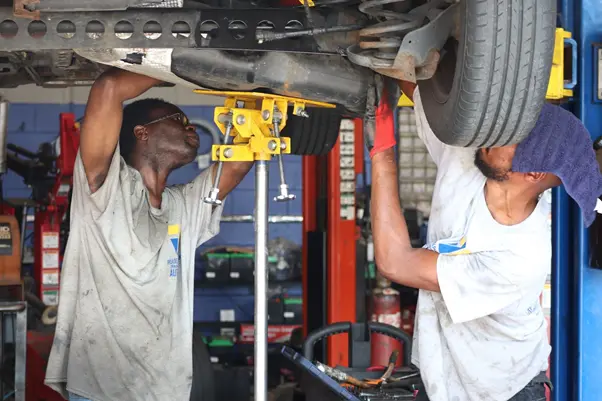
Modern automotive technicians do much more than change oil or replace brake pads. Today’s vehicles combine mechanical systems with electronics, computers, sensors, and diagnostic technology.
Technicians may work with:
The Bureau of Labor Statistics reports that automotive service technicians and mechanics inspect, maintain, and repair cars and light trucks. It also notes that technicians increasingly use computers to identify and diagnose automotive problems.
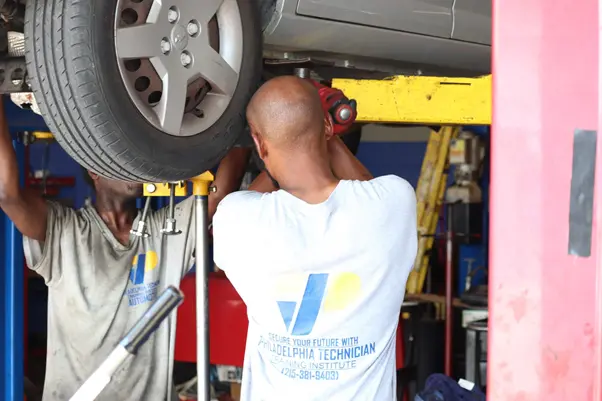
So, if you like solving problems and working with your hands, this career can give you a practical place to use both skills.
Choosing a trade program is your first serious career decision.
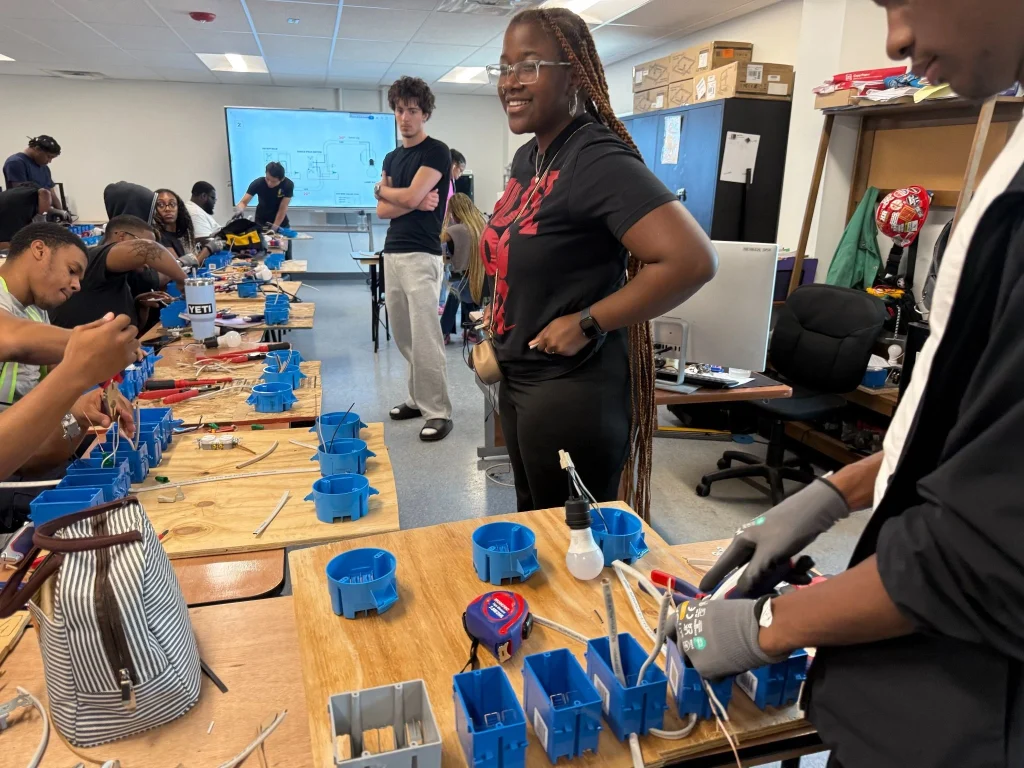
PTTI’s Automotive Repair Technician Program is designed around practical automotive training. The current program information says the program takes 26 weeks and has an 80% hands-on curriculum. That hands-on focus can make a difference for students who learn best by doing.
For many Philadelphia students, cost is a major concern.That should not stop you from researching skilled trade education. PTTI states that financial aid is available for students who qualify. Its current opportunities page also directs students to FAFSA and lists the school’s FAFSA code as 042213. Your eligibility depends on your circumstances. Therefore, talk with the financial aid team before making assumptions about what you can afford.
Ask about:
Nobody starts as an expert.You might walk into your first automotive class knowing how to change a tire. You might know nothing about diagnostics. Both students can learn.Good instruction gives you room to ask questions, make mistakes, practice again, and improve.
That matters for young Philadelphia students who may not have family members working in the automotive industry. A mentor can help turn confusion into confidence.
At PTTI, students can work with instructors while developing technical and workplace skills. The program is designed to provide practical experience rather than relying only on theory.So do not be afraid to ask questions. Your first day is not supposed to look like your last day.
Your training should help you become useful in a real shop. That means learning more than individual repair tasks.
You should develop:
| Skill | Why It Matters |
| Diagnostics | Helps identify vehicle problems |
| Electrical knowledge | Supports modern vehicle repairs |
| Mechanical skills | Builds a foundation for repairs |
| Tool use | Improves accuracy and efficiency |
| Safety | Reduces workplace risks |
| Communication | Helps with customers and coworkers |
| Problem-solving | Helps technicians handle unfamiliar issues |
| Technical reading | Helps interpret repair information |
These skills become your career foundation.
Later, experience and additional certifications can help you move toward more specialized positions.
Certifications can strengthen your professional profile.The National Institute for Automotive Service Excellence, commonly called ASE, offers certifications for automotive professionals. Certification requirements vary by test and situation, so students should check current ASE requirements before planning their credential path.The important lesson is simple:Training gets you started. Continued learning helps you grow.As technology changes, technicians need to keep learning too.
Your first paycheck does not appear simply because you completed a program. You still need to apply, interview, demonstrate your skills, and find an employer that fits your goals.That is why career preparation matters. PTTI’s current automotive program information describes career-oriented training, while its career content highlights support with professional development, resumes, interviews, and financial-management skills.
Let’s talk about money realistically.According to the U.S. Bureau of Labor Statistics, automotive service technicians and mechanics had a median annual wage of $50,620 in May 2025. The lowest 10% earned less than $34,660, while the highest 10% earned more than $81,790. BLS also projects 5% employment growth from 2025 to 2035, with about 66,200 openings per year on average over the decade.
These numbers do not guarantee your first salary. Your pay can depend on experience, employer, location, specialization, certifications, performance, and compensation structure. However, the figures show why automotive technology can be worth considering as a long-term skilled career.
A Simple Career Progression
Training↓
↓
Entry-level automotive position
↓
Experience + certifications
↓
Specialized Automotive technician
↓
Senior technician / diagnostic specialist / shop leadership
The path is not identical for everyone. Still, each stage can help you build more skills and responsibility.
For many young people, career planning can feel disconnected from everyday life.You build your professional reputation. For Black youth in Philadelphia, that opportunity can carry an additional meaning. A skilled career is not only about getting a paycheck.
It can mean becoming the person your younger cousin asks about cars. It can mean helping your family keep a vehicle running. It can mean eventually opening a shop in your own neighborhood. It can mean becoming an instructor, diagnostic specialist, manager, or business owner. And yes, it can mean building greater financial stability over time. That is the bigger picture.
PTTI offers an Automotive Repair Technician Program designed for students who want practical automotive training. The program combines technical instruction with hands-on experience. PTTI also states that financial aid is available to qualifying students.
For a student who feels unsure about the next step, having support can make the process easier. You do not have to figure everything out alone. Start by asking about admission requirements. Then ask about financial aid. For Philadelphia students who want a practical career path, PTTI can provide a place to start building those skills.
You bring the effort. PTTI helps provide the training, guidance, and support. Your next chapter starts with the decision to learn a skill that can take you somewhere.
PTTI currently lists the program as 26 weeks, with an 80% hands-on curriculum.
Qualifying students may be eligible for financial aid; students should contact PTTI’s financial aid team to review their options.
Students develop practical skills related to vehicle systems, diagnostics, repairs, tools, safety, and automotive technology.
Yes, automotive technology offers earning potential that can grow with experience,
although individual earnings vary.
Yes. BLS lists a postsecondary nondegree award as the typical entry-level education for automotive service technicians and mechanics, although some workers enter with a high school diploma and learn on the job.
Read more blogs