
To become a welder in Philadelphia, you enroll in a hands-on welding school. They train the core welding processes, helps earn a welding certification, and move into an entry-level job with placement support. At an accelerated welding trade school like PTTI, the full program takes about 26 weeks.
If you have been searching for a straightforward answer on how to become a welder in Philadelphia. This guide takes the guesswork out. However, it lays out the exact steps, the real cost of welding school. The welding certification you leave with, day-versus-evening scheduling, and what a welder’s salary in Philadelphia actually looks like.
Welding rewards skill, not seat time. That is why learning how to become a welder in Philadelphia is faster than most people expect. Specially focused welding training in Philadelphia can turn a complete beginner into a job-ready, certified welder in a matter of months. Here is the whole path, from your first question to your first paycheck.
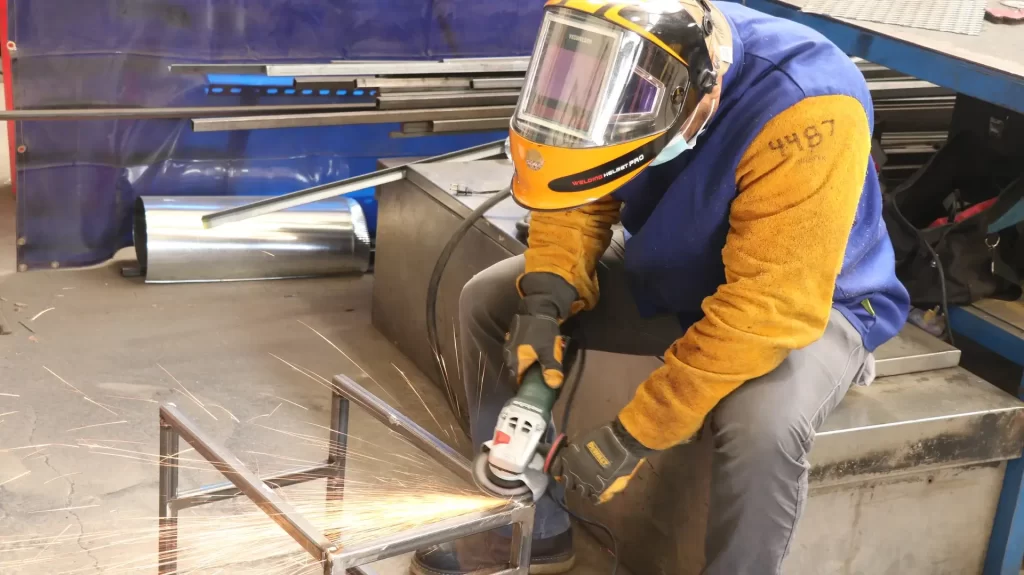
Welding is one of the most dependable ways to build a middle-class income without a bachelor’s degree, and the reason so many people research how to become a welder in Philadelphia is simple: the local market is strong and the barrier to entry is low. The trade sits at the center of construction, manufacturing, shipbuilding, and infrastructure repair, so demand holds up even when one sector slows.
The national data backs this up. According to the U.S. Bureau of Labor Statistics, roughly 45,600 openings for welders, cutters, solderers, and brazers are projected each year through 2034, mostly to replace an aging workforce that is retiring. That steady replacement demand is what makes welding a stable career and what keeps entry level welding jobs in Philadelphia opening up year after year.
Philadelphia has deep, diversified demand for welders. Active shipbuilding and ship repair, a strong union building-trades presence, ongoing commercial and healthcare construction, and a metal-fabrication base all compete for the same trained talent. Graduates of welding programs in Philadelphia find work not only in neighborhoods like Spring Garden, Mantua, Powelton Village, and across North, South, and West Philadelphia, but throughout the surrounding region:
Because a welding certification is portable, completing welding training in Philadelphia positions you to take work in whichever direction the best opportunity appears.
Welding pays competitively for a career you can start in under a year. Entry-level welding jobs in Philadelphia generally start at $45,000 to $52,000, and experienced or certified welders often earn well past $70,000, especially in specialized work like pipe welding. That earning path, combined with short training time, is why so many people weighing how to become a welder in Philadelphia choose a welding trade school over a traditional college route.
Learning how to become a welder in PA follows a clear route: meet the basic requirements, enroll in a hands-on welding school, master the core processes, earn a welding certification, and get placed in your first job. Each step builds on the last, and a structured welding program in Philadelphia keeps the timeline tight.
Below is the full path, broken into the stages every successful welder moves through.
Most employers and welding programs expect you to be at least 18 and to hold a high school diploma or GED. Beyond that, welding rewards steady hands, decent eyesight, comfort with tools, and a willingness to follow safety procedures exactly. None of these need to be perfect on day one; they develop with practice.
A common worry is whether you need a diploma at all, so let’s answer it directly: Do I need a GED to become a welder? In most cases, a high school diploma or GED is the standard requirement for enrolling in a welding technology program and qualifying for financial aid. If you are still asking “do I need a GED to become a welder” for your specific situation, review the eligibility and document requirements and talk with an advisor who can confirm your options—many students who thought a GED would block them find a clear path forward.
Classroom theory alone will not get you hired. The most important decision in this whole process is choosing a welding school in Philadelphia that puts you in a booth on industry-standard equipment early and often. This is where the accelerated timeline is built, because welding is a motor skill you learn by doing under experienced instructors.
When comparing welding programs in Philadelphia, look for:
PTTI’s Welding Technology program is designed around exactly this model of applied welding training in Philadelphia, which is why hands-on quality is the first thing to check in any welding school in Philadelphia.
Employers want versatile welders. During welding training in Philadelphia, you build competence across the major processes, learn to read welding symbols and blueprints, and practice welding in every position.
Each process suits different materials, industries, and job sites, and knowing several makes you far more employable.
Alongside the arc itself, training covers fit-up, joint preparation, and the safety discipline employers treat as non-negotiable.
Certification is what separates a hobbyist from a hireable professional. Welding is performance-based, so you prove your skill by producing a sound weld that an inspector verifies. If you want to know how to become a certified welder in Pennsylvania, the answer is to train to a recognized standard and then pass a performance test at an Accredited Test Facility—no college transcript required.
Training should end with a job, not a certificate that sits in a drawer. Strong programs provide résumé help, interview preparation, and direct connections to employers hiring for entry level welding jobs in Philadelphia.
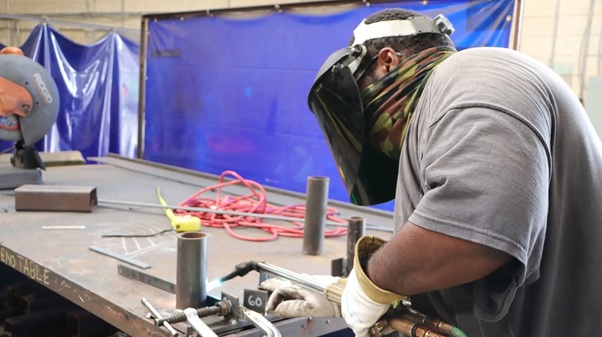
Becoming a job-ready welder takes far less time than most people expect. So how long does it take to become a welder? At an accelerated welding school, focused programs run about 26 weeks—roughly six months—versus the one-to-three years often cited when apprenticeship hours are included. Hireability depends on demonstrated skill, and concentrated practice builds that skill fast.
This is one of the most common questions from people exploring how to become a welder in Philadelphia, and the honest answer to “how long does it take to become a welder?” is that the timeline is measured in months when the training is hands-on and well-structured.
A 26-week welding program in Philadelphia moves through predictable phases:
| Phase | Approximate Timeframe | Focus |
| Foundations | Early weeks | Safety, equipment setup, blueprint, and symbol reading |
| Core processes | Mid-program | MIG, TIG, stick, and flux-cored fundamentals |
| Position practice | Mid-to-late | Flat, horizontal, vertical, and overhead welding |
| Certification and job prep | Final weeks | Welding certification readiness, résumé, and interview support |
Some st26-weekprogress faster than others, and that is normal. What a 26 week welding program in Philadelphia gives you is a fixed, realistic path to the point where you can pass a weld test reliably.
Many students keep working while they train. So, can I work while attending welding school? In most cases, yes—programs that offer both day and evening scheduling make it realistic to earn an income during your 26 weeks. And because you can work while attending welding school on an evening schedule, the trade stays realistic even with a full-time job. If schedule flexibility is a deciding factor, the admissions team can walk you through which options fit before you enroll.
The cost of welding school varies with program length, equipment, and credentials—accelerated career programs generally cost far less than a multi-year degree while getting you into the workforce sooner. So how much does welding training cost in real terms? Less than most people fear once you factor in aid, and the investment tends to pay for itself quickly once you are earning a full-time welder’s wage.
The cost of welding school in Pennsylvania is generally more reasonable than in higher-cost states. But it still varies by school. Rather than quote a figure that may not fit you, the most accurate way to see your real cost of welding school is to use PTTI’s net price calculator and speak with a financial aid advisor about what you would actually pay after aid.
When you ask how much does welding training cost, account for more than tuition alone:
Understanding the full cost of welding school up front is part of choosing a school that is honest with you—and welding school cost in Pennsylvania is generally lower than comparable programs in higher-cost states.
Cost should never be the reason a motivated student walks away from a welding career. A trustworthy welding school in Philadelphia is transparent about the welding school cost in Pennsylvania and helps you find funding rather than pushing loans you cannot afford.
Those who qualify can significantly reduce their out-of-pocket costs. For welding programs with financial aid in Philadelphia. PTTI’s financial aid programs and step-by-step guidance on how to apply for financial aid help prospective students understand grants, loans, and payment options before committing.
Veterans bring discipline and a safety mindset that transfer directly to welding. PTTI’s veterans programs help eligible service members apply education benefits toward welding training in Philadelphia, making the trade an especially strong fit for those leaving the military and watching the cost of welding school closely.
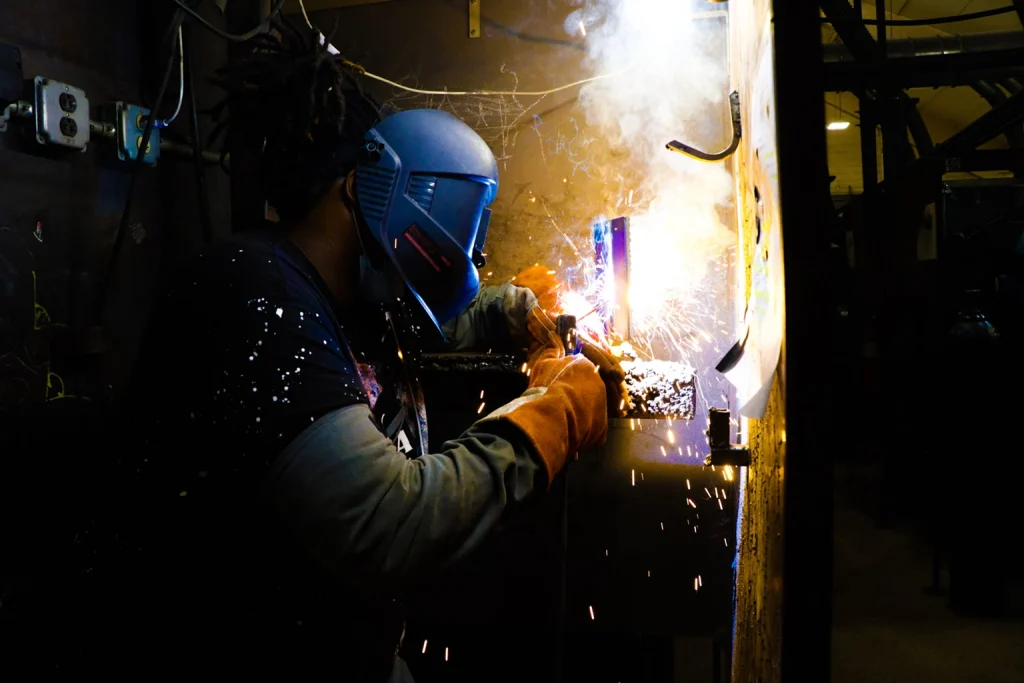
You leave quality welding training in Philadelphia prepared to test for industry-recognized credentials, most notably the AWS Certified Welder certification, which verifies your skill to employers and raises your pay. A welding certification, not a college transcript, is the currency that gets you hired for better work.
The AWS Certified Welder program is performance-based, with no prerequisite courses required. You test at an Accredited Test Facility, an AWS Certified Welding Inspector evaluates your weld, and if it meets the standard, you earn a transferable credential you can carry to any employer or state.
Structural (D1.1), pipe, and sheet-metal welding each have their own recognized standards, and many welders stack multiple credentials over time. Knowing how to become a certified welder in Pennsylvania mostly comes down to training to the right standard—PTTI’s curriculum is built to prepare students for these welding certification tests, which you can explore in this guide to welding certifications that boost your career.
Industry data consistently shows that welders who hold a welding certification out-earn uncertified peers, especially in pipe welding, refineries, defense, and structural steel. For anyone still deciding how to become a certified welder in Pennsylvania, that pay gap is the strongest reason to finish the credential.
Entry level welding jobs in Philadelphia generally start around $45,000 to $52,000 per year, while experienced and certified professionals frequently earn $65,000 to $80,000 or more. The welder salary in Philadelphia is shaped by process, certification, industry, shift, and overtime, but the trade pays a competitive wage for a career you can begin in roughly six months.
The welder salary in Philadelphia climbs meaningfully as you gain experience and add a welding certification:
| Career Stage | Approximate Annual Range (Philadelphia Area) |
| Entry-level welder | $45,000 – $52,000 |
| Experienced welder | $55,000 – $65,000 |
| Certified / specialized / union welder | $68,000 – $80,000+ |
For national context, the BLS places the welder median wage just under $50,000, while Philadelphia’s union presence and industrial base lift the local welder salary higher. Overtime is common and can add meaningfully to take-home pay. For a deeper look, this analysis of a welder’s real salary journey is worth reading.
Because welding skills are portable, welders trained in Philadelphia work across many settings, including pipefitting and mechanical contracting, and manufacturing plants. That range is also why entry-level welding jobs in Philadelphia remain available and why some students broaden their options by pursuing the related steam, sprinkler, and pipe fitting program.
When you compare a welding school in Philadelphia against others, judge it on outcomes, not marketing. Then you compare a welding school in Philadelphia against others, judge them on outcomes, not marketing.
A few practical markers help you spot the best welding trade school in Philadelphia for your goals:
A welding trade school that delivers on all four is what turns the question of how to become a welder in Philadelphia into an actual job offer, and it is the standard the best welding trade school in Philadelphia should be held to.
Welding is a physical skill verified by an inspector, so supervised, hands-on practice produces a hireable welder faster than any four-year degree, online-only course, or self-teaching attempt.
| Factor | Welding Trade School | Four-Year College |
| Time to job-ready | About 26 weeks | About four years |
| Cost | Lower, focused | Often significant debt |
| Time to income | Start earning quickly | Earning typically delayed |
| Hands-on practice | Core of the program | Often limited |
| Employer alignment | Direct | Broad, less applied |
A bachelor’s degree adds little to a welder’s hireability, while a welding certification and demonstrated skill add a great deal—many students confirm this when they read whether you need a degree to become a welder. That is why in-person welding training in Philadelphia consistently produces job-ready graduates faster than any remote alternative, and why a hands-on welding trade school remains the reliable route.
You now have the full picture of how to become a welder in Philadelphia: a clear four-step path, a 26-week welding program. This timeline includes a realistic cost of welding school and access to welding programs . Along with financial aid for the welding certification, however, the flexible scheduling allows you to work while attending welding school.
The most reliable way to get there is structured welding training in Philadelphia built around what employers test for. If you are ready to move from a vague goal to a concrete plan and want the best welding trade school in Philadelphia for your situation, the single best next step is to talk with someone who can map your timeline and cost.
Book an admissions appointment to get your questions answered, or reach out to contact admissions and explore PTTI’s programs to see where welding could take you.
How do I become a welder in PA? To become a welder in PA, meet the basics (typically 18 with a diploma or GED), enroll in a hands-on welding school, train across MIG, TIG, stick, and flux-cored processes, earn a welding certification, and use career support to land an entry-level role. At an accelerated welding trade school, this takes about 26 weeks.
How long does it take to become a welder?
A focused 26 week welding program in Philadelphia can make you job-ready in about six months. Because welding is performance-based, you become hireable once you can consistently produce a sound weld to standard—built through hands-on practice, not years of coursework.
How much does welding training cost?
The cost of welding school varies by program length, equipment, and credentials. However, accelerated programs cost far less than a multi-year degree, and welding school costs in Pennsylvania are generally reasonable. Financial aid, veterans’ benefits, and payment options can lower it further. Use a net price calculator for your actual figure.
Do I need a GED to become a welder?
In most cases, yes—a high school diploma or GED is the standard requirement for enrolling in welding school in Philadelphia and qualifying for financial aid. If you are unsure whether you qualify, an admissions advisor can review your documents and explain your options before you commit.
Can I work while attending welding school?
Yes. Welding programs in Philadelphia that offer work while attending the 26-week program. This flexibility is a major reason working adults and career changers choose a welding trade school over full-time college.
What is the welder salary in Philadelphia?
The welder’s salary in Philadelphia typically ranges from about $45,000 at the entry level to $80,000 or more for certified and specialized welders. Overtime, process, and a welding certification all push earnings higher, and the local union and industrial base keep pay competitive.
You can book an admissions appointment to get started.
Read More