
If you welded, cut, or repaired metal in uniform, you already hold the foundation for one of the most stable trades in the region, and your education benefits can cover the training that turns that experience into a civilian credential. Military welding careers translate almost directly into shipyard, defense, and fabrication work across Philadelphia, and the Post-9/11 GI Bill can pay tuition, housing, and supplies at an approved welding school. This guide explains how the benefits work, how your service maps to civilian welding, and how to move from separation to a paycheck.
Military welding careers transfer to civilian jobs more cleanly than almost any other trade, because the core skill, depositing a sound weld under real conditions, is identical whether you learned it on a ship, a vehicle, or a flight line. What changes in the civilian world is the paperwork: the codes you weld to and the certifications that prove it. Close that gap and you are immediately employable.
Employers in the skilled trades consistently tell workforce trainers the same thing about veterans. They show up, they follow procedures, they respect safety, and they work as part of a crew. Those habits are exactly what a fabrication shop or a shipyard needs, and they are difficult to teach someone with no service background. In the Philadelphia market, where union building trades and maritime employers set a high safety bar, that reliability is a genuine hiring advantage.
If you held a metalworking role in the service, you likely arrive with real transferable ability. Common military welding specialties include:
Even veterans who never held a welding MOS usually bring blueprint familiarity, tool discipline, measurement precision, and comfort working in awkward positions, all of which shorten the learning curve.
The one consistent gap is civilian documentation. Military standards are not automatically recognized by civilian shops, so you generally need a recognized weld test and an updated résumé that translates service work into civilian codes. A structured welding program is built to close exactly that gap. If you are weighing this path, our overview of why welding is a strong career choice offers useful context before you commit benefits.
Trainer’s note: The fastest-hiring veterans are usually the ones who pair hands-on retraining with a civilian certification and a clean, code-specific résumé, not the ones who assume their DD-214 alone will get them on a job site.
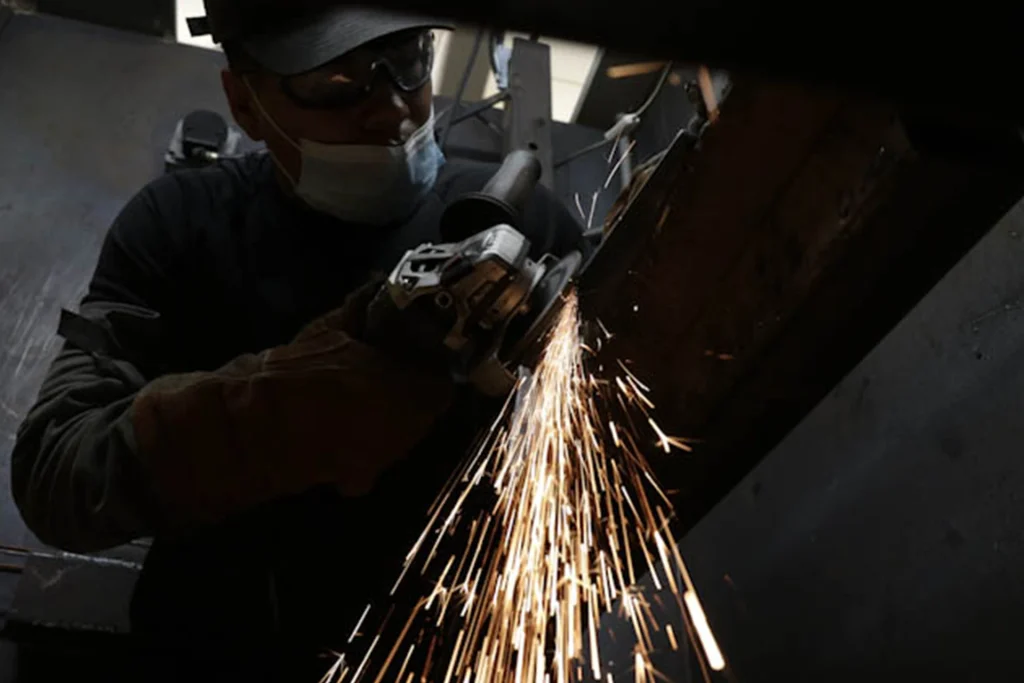
Yes. The GI Bill covers welding school when the program is VA-approved. However, Both the Post-9/11 GI Bill (Chapter 33) and the Montgomery GI Bill (Chapter 30) pay for what the VA classifies as “non-college degree” (NCD) programs, which include vocational welding training. The program must appear in the VA’s approval database, so you verify it before enrolling rather than assuming.
This is the single most common question veterans ask about welding training, and the answer removes the biggest barrier most of them imagine. Skilled-trades programs, including welding, sit squarely within the benefits the law was written to cover, not just four-year degrees. For an accurate, no-cost check, the VA’s GI Bill Comparison Tool lets you search a school and confirm that the specific program, not only the institution, is approved.
For most recent veterans, the Post-9/11 GI Bill is the more valuable option for full-time welding training. At the 100% benefit tier, it generally provides:
| Benefit | What It Covers |
| Tuition and required fees | Paid to the school, up to the annual VA cap for private/non-degree programs |
| Monthly Housing Allowance (MHA) | Based on the school’s ZIP code at the E-5-with-dependents rate for full-time students |
| Books and supplies stipend | Up to roughly $1,000 per academic year |
Because MHA is tied to the school’s location, training at a Philadelphia program means your housing allowance reflects the local area. The “Forever GI Bill” also removed the benefit expiration date for many veterans whose service ended on or after January 1, 2013, so time since separation is less of an obstacle than veterans often assume.
The Montgomery GI Bill pays a monthly rate based on how many clock hours you attend and your length of qualifying service. For some shorter or specific programs, running the numbers on Chapter 30 versus Chapter 33 can matter, since one may net more money for your situation. If you qualify for more than one benefit, you choose one, and that choice generally can’t be reversed, so it is worth confirming with a certifying official first. PTTI’s financial aid team and veterans benefit resources can help you weigh the options against your specific entitlement.
Yes, and often more than the GI Bill alone. Veterans training for welding in Pennsylvania may stack several funding sources, including Veteran Readiness and Employment, the Yellow Ribbon Program, state-level veteran education benefits, and VA reimbursement for licensing and certification tests. The right combination depends on your service record and disability status.
Too many transitioning service members assume a single benefit is all they get and leave real money unclaimed. Understanding the full picture protects your entitlement and can lower or eliminate out-of-pocket cost for welding technology training
If you have a service-connected disability rating, VR&E may cover trade school costs entirely, tuition, tools, books, and a living stipend, independent of your GI Bill entitlement. For eligible veterans this is powerful because using Chapter 31 can preserve your GI Bill months for a future program. Veterans who qualify for both should compare the two carefully rather than defaulting to the GI Bill.
Several additional supports can close gaps:
🧾 Callout: Before you spend a dollar, verify three things: that the welding program is VA-approved, that the school has a School Certifying Official on staff, and which benefit chapter maximizes your funding. PTTI’s admissions team can walk you through all three.
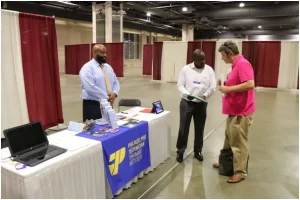
Military skills transfer to welding training in Philadelphia through shared fundamentals, precision, safety discipline, blueprint reading, and steady hand control, so most veterans need retraining on civilian codes and certification rather than starting from zero. A focused program can take a motivated veteran from classroom to job-ready in well under a year, which is why welding is one of the most direct military-to-civilian trade paths.
The reason the timeline is short is that welding is performance-based. Employers and certification bodies don’t ask for a transcript; they ask you to make a weld and inspect it. Once you can produce a sound weld reliably in the positions an employer needs, you are hireable.
Here is the path most veteran welders follow in the Philadelphia region:
Verify your GI Bill tier or VR&E eligibility and confirm the welding program’s VA approval. Therefore, start your document and eligibility review early, since paperwork is the most common cause of delayed start dates.
Choose a program with real booth time on industry-standard equipment. Retrain on the civilian processes, MIG (GMAW), stick (SMAW), TIG (GTAW), and flux-cored, and practice welding in all positions.
Train to a recognized standard so you can pass a weld test at an Accredited Test Facility. Certification is what converts your experience into a credential a civilian employer can trust.
Rewrite service experience into civilian terms: the processes you’re certified in and the type of work you’ve done. Then apply through PTTI’s career services and job placement support.
The most recognized credential is the American Welding Society (AWS) Certified Welder, a performance-based certification with no prerequisite courses. For structural and shipyard work, employers often look for the ability to weld to codes such as AWS D1.1 (structural steel), while pipe and specialty work carries its own standards. Pairing certification with an OSHA safety card makes a veteran immediately competitive. Our guide to welding certifications that advance your career breaks down which credentials to target first.

Shipyards, defense contractors, fabrication shops, and infrastructure employers hire veteran welders, and many actively prefer them. In the Philadelphia region specifically, maritime work at and around the Navy Yard. The structural and pipe fabrication and ongoing infrastructure repair create steady, credential-driven demand for welders who can pass a test and work safely.
National context underscores the opportunity. The U.S. Department of Labor has projected that shipbuilding alone may need hundreds of thousands of additional maritime workers in welding and related occupations over the coming decade. Industry groups have flagged a broad welder shortage as experienced tradespeople retire. Veterans are exactly the disciplined, safety-trained talent pool employers want to fill the gap with.
The Philadelphia area’s maritime sector is a natural landing spot for former Navy Hull Maintenance Technicians and other veteran welders. Ship repair and fabrication demand structural and pipe welding to strict standards, and shipyards nationally give hiring preference to veterans with shipboard experience. Regional fabrication and maritime employers around the Delaware River waterfront routinely recruit welders, and that work often carries premium pay for certified specialists.
Beyond the water, defense-adjacent manufacturing, metal fabrication shops, and infrastructure crews across the region need welders every day. Bridges, rail, water and gas systems, and commercial construction throughout Philadelphia. That is from North and South Philadelphia to West Philadelphia neighborhoods like Mantua, Powelton Village, and the Spring Garden corridor, all of which rely on skilled welding for repair and new work. Because a welding credential is portable, veterans trained in Philadelphia can also pursue opportunities across the tri-state area, including Camden, Pennsauken, and Cherry Hill in New Jersey and Yeadon, Darby, Lansdowne, and Drexel Hill in Pennsylvania.
| Career Stage | Approximate Annual Range (Philadelphia Area) |
| Entry-level welder | $45,000 – $52,000 |
| Experienced welder | $55,000 – $65,000 |
| Certified / specialized / union / maritime welder | $68,000 – $80,000+ |
Overtime is common and can add meaningfully to take-home pay, and specialty skills like pipe and certified structural welding command premiums. For a deeper regional breakdown, see our welding technician salary guide and our look at the highest-employment areas for welders in 2026
⚓ Philadelphia insight: For a veteran targeting maritime work specifically, structural and pipe certifications are worth prioritizing early, since they map directly to the shipyard and waterfront fabrication roles that anchor the local market. Our shipyard welder training overview covers what those roles require.
For welding, hands-on training outperforms college, online courses, and self-teaching because the trade is judged on physical skill, not coursework. That is why a focused, in-person program is the standard route, not a compromise.
This matters even more for veterans using finite education benefits. A focused welding program respects both your time and your benefits.
| Path | Time to Job-Ready | Hands-On Practice | Certification-Aligned | Fit for Veterans |
| Focused welding trade school | Under a year | Core of the program | Yes | Strong |
| Four-year college | ~4 years | Limited | Rarely | Weak for this trade |
| Online-only courses | Varies | None | No weld test | Poor |
| Self-teaching | Unpredictable | Inconsistent | No verified credential | Poor |
However, When you evaluate a welding technology program, prioritize:
PTTI’s welding training for veterans in Philadelphia is built around applied, hands-on learning and workforce readiness. This is exactly the model that serves veterans best. If speed is your priority, our guide on the quickest path to becoming a welder in Philadelphia is a useful companion read.
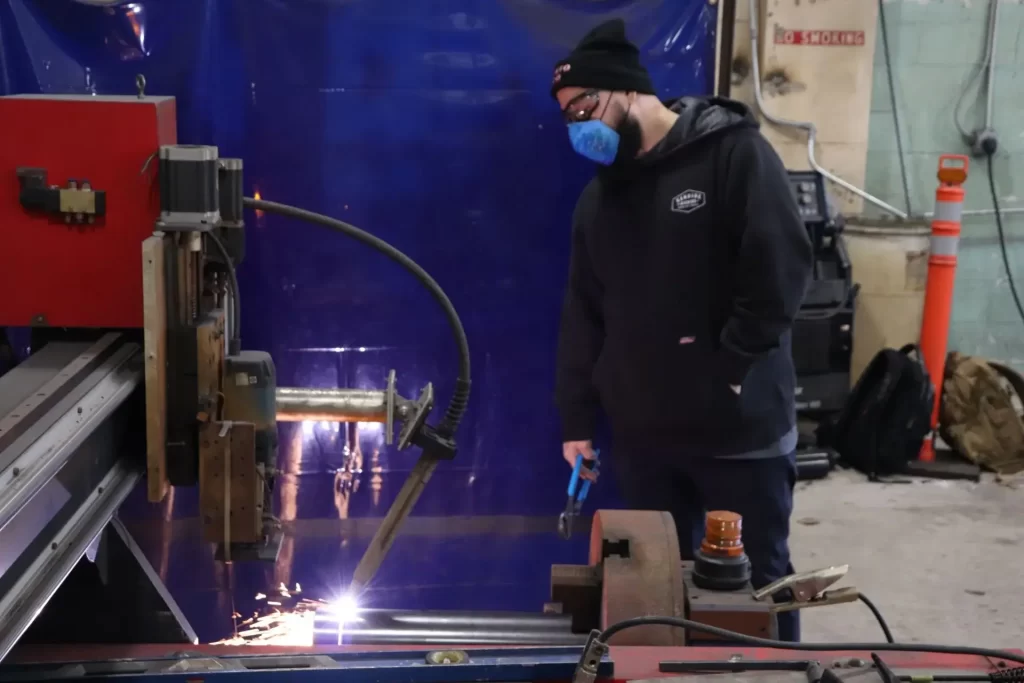
Military welding training for veterans careers give you a head start that few civilians. It can match, and you r education benefits exist precisely to help you convert that experience into a recognized credential. The Post-9/11 GI Bill, VR&E, and related programs can cover the training; a focused, hands-on welding program.It provides the booth time, certification prep, and placement support. And the Philadelphia region’s shipbuilding, defense, and fabrication employers provide the demand. The gap between your service and a stable welding paycheck is usually just training, certification, and a well-translated résumé.
If you served and you’re ready to weld in the civilian world, the responsible first move is simple: confirm exactly which benefits apply to you. Reach out to PTTI Admissions to check your veteran benefit eligibility, explore the Welding Technology program, review your financial aid and veterans options, or schedule a campus visit to see the labs before you commit your benefits.
Yes. Both the Post-9/11 GI Bill and the Montgomery GI Bill cover VA-approved welding programs classified as non-college degree training. The Post-9/11 GI Bill can pay tuition and fees, a monthly housing allowance, and a books stipend. Confirm the specific program’s approval using the VA’s Comparison Tool before enrolling.
Yes. Beyond the GI Bill, Pennsylvania veterans may qualify for Veteran Readiness and Employment (Chapter 31) if they have a service-connected disability, the Yellow Ribbon Program for costs above the cap, state veteran education benefits, and VA reimbursement for approved certification exams. Combining these can significantly reduce out-of-pocket cost.
Military welding and metalworking roles build the exact fundamentals civilian welding requires: precision, safety discipline, blueprint reading, and hand control. Most veterans need retraining on civilian codes and a recognized certification rather than starting over, which is why welding is one of the fastest military-to-civilian trade transitions.
Shipyards, ship-repair firms, defense contractors, metal fabrication shops, and infrastructure and construction employers all hire veteran welders, often with hiring preference. In the Philadelphia region, maritime and structural fabrication work is especially active, and certified pipe and structural welders are in steady demand.
Look for a Philadelphia welding program that is VA-approved, offers hands-on training on industry-standard equipment, prepares you for certification, and provides dedicated veteran benefit support. PTTI’s Welding Technology program is built around applied learning and career readiness; confirm your eligibility directly with Admissions.
With focusedwelding training in Philadelphia many veterans reach job-ready status in well under a year. The pace depends on how quickly you can consistently pass a weld test, complete certification, and translate your experience into a civilian résumé, steps a strong program is designed to accelerate.
Read More