
Ask any shop foreman or hiring manager why one apprentice thrives while another washes out, and the answer is rarely about raw talent. It comes down to character. The skilled trades reward people who show up, pay attention, solve problems, and keep their word, and those habits matter far more than where someone started. If you are weighing a future in welding, automotive repair, pipefitting, or manufacturing, the real question is not whether you were “born for it” but whether you are willing to build the qualities that make tradespeople succeed, something the right hands-on training programs in Philadelphia are designed to develop from day one. This article breaks down the personal qualities that actually drive a successful career in the trades, explains whether those traits are learned or innate, and shows how they translate into steadier work and higher pay. You will also see which trade tends to fit which personality, and how a focused trade school prepares students in Philadelphia and the surrounding region for what employers expect on the job site.

The personal qualities that make someone succeed in the skilled trades are reliability, a strong work ethic, attention to detail, problem-solving ability, safety awareness, and the willingness to keep learning. Technical skill matters, but employers consistently say these habits separate the workers who advance from those who stall.
None of this is accidental. A welder who double-checks a fit-up, an automotive technician who methodically traces a fault, and a pipefitter who follows safety procedures every single time all share the same underlying traits. The tools differ, but the mindset is identical. That is also why someone who struggled in a traditional classroom can excel in the trades: success here is measured by what you can do and how dependably you do it, not by test scores.
Below, we break down each of these qualities, why it matters on the job, and how it shows up in real work.
Nothing builds a reputation in the trades faster than simply being dependable. Crews run on schedules, and a technician who arrives on time, stays focused, and finishes what they start becomes the person a supervisor trusts with bigger jobs. Dependability is the single most cited trait among employers, because skills can be taught but showing up well is a choice a worker makes every day.
This is why serious programs treat punctuality and professionalism as part of the curriculum rather than an afterthought. Students who build a career in the trades learn early that showing up consistently is the foundation everything else rests on. At PTTI, that expectation is reinforced from the first week, so graduates carry the habit directly onto the job site.
Precision is not optional in the trades. A weld that looks fine but fails inspection, a brake job done in a hurry, or a sprinkler line fitted a quarter-inch off can all have serious consequences. The best tradespeople develop an eye for detail and treat safety procedures as non-negotiable, protecting themselves, their coworkers, and the quality of the final product.
A safety mindset is also what employers screen for most carefully. Job sites are governed by strict standards, and a worker who respects them is an asset, while one who cuts corners is a liability. This is one of the clearest areas where hands-on training pays off, because repetition in a supervised lab turns careful habits into instinct.
Modern trades are diagnostic work. An automotive technician reads sensor data to isolate a fault, a manufacturing technician troubleshoots a line that has stopped, and an electrician traces a circuit that is not behaving. People who enjoy figuring out why something is broken and how to fix it tend to flourish. If you are the type who likes puzzles and takes satisfaction in a solved problem, the skilled trades will reward that instinct.
Some people absorb information best by reading; many absorb it best by doing. The trades are built for the second group. If you learn faster with a tool in your hand than with a textbook open, that is a genuine strength, not a weakness. Programs that emphasize real equipment and applied practice let these learners shine, which is why so many students who felt out of place in lecture halls find their footing in a shop.
This is exactly the environment a quality automotive repair training program creates, pairing classroom fundamentals with the kind of practice that builds true competence. For learners who think with their hands, that structure converts aptitude into skill quickly.
The image of the solitary tradesperson is mostly a myth. Most trade work happens on crews, and the ability to communicate clearly, take direction, and coordinate with others directly affects how smoothly a job goes. These soft skills, often underrated by people new to the field, are frequently what earns someone a promotion to lead or foreman. A technician who can explain a problem to a customer or a teammate is worth more than one who cannot, regardless of technical ability.
Trade work is physical, and a certain level of stamina helps. Just as important is resilience, the willingness to work through a frustrating diagnosis, a tough weld, or a long day without losing composure. Resilience is a quality that grows with experience, and most people develop far more of it than they expect once they are in an environment that challenges them productively.
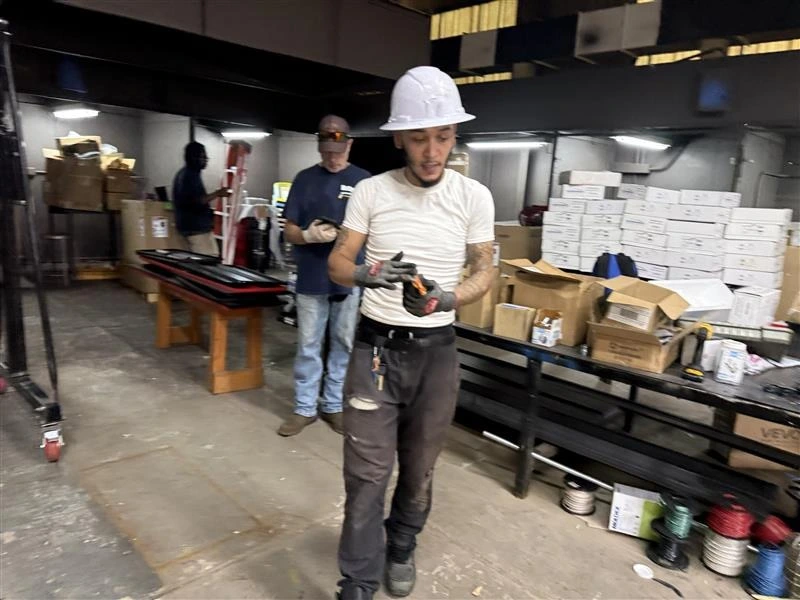
You do not need natural talent to succeed in the skilled trades. Nearly every quality that matters, including a strong work ethic, attention to detail, problem-solving, and professionalism, can be developed through practice and hands-on training. Natural aptitude can give someone a head start, but habits win over the long run.
This is encouraging news for career changers, veterans, and adult learners who worry they have “missed their window.” The trades are unusually forgiving of where you start, because they measure growth by demonstrated ability. Someone transitioning from retail, warehouse work, or the military often already has the discipline and reliability employers want; they simply need the technical foundation to launch a career in the trades. A good program meets students where they are and builds both the hard and the people skills in parallel, which is far faster than trying to piece it together on your own.
In the trades, soft skills are not a “nice to have,” they are a direct lever on income. Two welders may run an equally clean bead, but the one who communicates well, shows up reliably, and can coordinate a crew is the one who gets moved into a lead role, and lead roles pay more. Employers promote the people who make their lives easier, and professionalism is what does that.
This connection between everyday habits and earnings is something experienced tradespeople understand well, and it is covered in depth in PTTI’s guide on how tradespeople actually raise their income. The pattern is consistent: technical certification opens the door, but reliability, communication, and a willingness to take on responsibility are what move someone up the pay scale over a career in the trades.
While the core qualities overlap across every trade, certain personalities tend to fit certain fields especially well. Use the table below as a starting point rather than a rulebook, because many people thrive in more than one.
| If you are… | You may thrive in… | Because the work rewards… |
| Detail-obsessed and patient | Welding, sterile processing | Precision, consistency, and steady focus |
| A natural problem-solver | Automotive repair, manufacturing & automation | Diagnostics, logic, and troubleshooting |
| Systems-minded and hands-on | Steam, sprinkler & pipe fitting | Reading plans and building functional systems |
| Builder-at-heart, likes visible results | Concreting, masonry & framing | Physical construction and tangible progress |
| Calm under pressure, process-driven | Central processing & sterile services | Protocols, safety, and reliability |
If precision and focus describe you, a program like welding technology channels those traits into a credential employers recognize. Naming your strengths honestly tends to make the choice clearer than any quiz could. And if you are more of a systems thinker who likes seeing how things connect, the steam, sprinkler, and pipe fitting pathway may be the stronger fit. The point is not to box yourself in, but to notice where your natural tendencies already point.
A good trade school does more than teach technique; it deliberately develops the habits that make a career in the trades sustainable. Structured attendance policies build reliability. Supervised labs build a safety mindset. Team projects build communication. And repeated, graded practice turns shaky beginners into confident technicians.
This is where hands-on training earns its reputation. In a real shop environment with industry-standard equipment, students make mistakes safely, get immediate feedback, and build muscle memory, the exact process that converts personal potential into professional skill. For learners who do better by doing than by reading, that environment is transformative, and it is a core reason many choose a technical program over a traditional classroom. Students can explore the full range of skilled trades programs to see which path aligns with their strengths.
Programs that explicitly combine technical instruction with employability skills, communication, teamwork, punctuality, and professionalism, produce graduates who are ready for the job site, not just the exam. That blend of hard and soft skills is precisely what Philadelphia employers ask for.
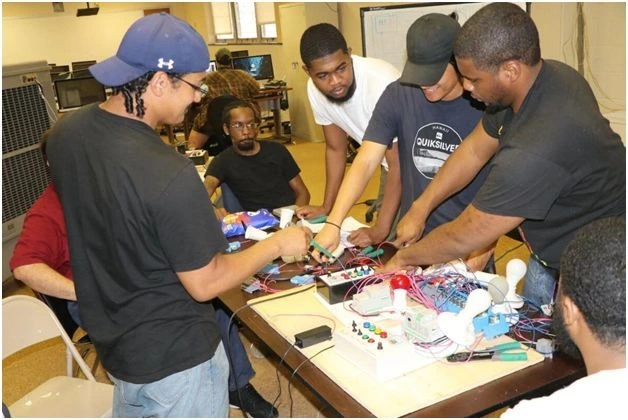
Philadelphia’s employers in construction, manufacturing, shipbuilding, and healthcare facilities are not only hiring for technical ability. They are hiring for dependability and attitude. Across North Philadelphia, South Philadelphia, and the surrounding counties into Delaware County and South Jersey communities like Camden and Cherry Hill, hiring managers repeat the same wish list: show up, stay safe, communicate, and keep learning.
That regional demand is real and spread across trades, which is why the right preparation travels well. A technician trained with the right habits can find opportunity throughout Pennsylvania, New Jersey, and Delaware, carrying both certification and reputation with them. For students mapping out next steps, PTTI’s careers and job opportunities resources outline how training connects to local hiring. According to the U.S. Bureau of Labor Statistics, skilled trade occupations continue to see steady openings driven largely by the need to replace retiring workers, which keeps demand for job-ready technicians strong.
Success in the trades is built, not inherited. The people who thrive are the ones who show up, pay attention, solve problems, work safely, and keep growing, and a rewarding career in the trades is within reach for anyone willing to develop those qualities. Whether you are a recent high school graduate, a veteran, or someone ready to change careers, you likely already have more of what it takes than you realize; the missing piece is usually structured training that turns those habits into employable skill.
If you are ready to find out which path fits your strengths, explore PTTI’s programs and schedule a campus visit to see the hands-on training environment for yourself and talk with our team about your goals.
Reliability, a strong work ethic, attention to detail, problem-solving ability, a safety mindset, and clear communication are the qualities that most predict success. Technical skill matters, but these habits are what employers reward with trust, responsibility, and higher pay over time.
No. Natural aptitude can help, but the qualities that matter most are learned. Work ethic, precision, and professionalism are built through practice and hands-on training, which is why career changers and adult learners regularly succeed in the trades.
Yes. Strong programs treat punctuality, teamwork, and communication as part of the curriculum, reinforcing them through attendance standards, supervised labs, and team projects. These soft skills become habits that graduates carry directly onto the job site.
Notice how you prefer to work. Detail-focused people often thrive in welding or sterile processing, problem-solvers in automotive or manufacturing, and systems thinkers in pipefitting. Exploring programs and talking with an admissions advisor at a trade school in Philadelphia can help you match your strengths to a path.
Often, yes. The trades measure demonstrated ability rather than test scores, so people who learn best by doing frequently excel. A career in the trades rewards persistence and craftsmanship, which many students discover are their real strengths.