
A sterile processing career in Philadelphia offers something rare: stable healthcare work you can start in months, without a four-year degree. Sterile processing technicians clean, inspect, and sterilize the surgical instruments every operation depends on. Hospitals cannot run without them. That makes the role steady, in demand, and a smart entry point into healthcare for career changers, veterans, high school graduates, and adult learners across the region.
This guide explains the role, why it holds up in any economy, what it pays locally, the certification that matters, and how to start. If you want a dependable healthcare job without years of school, read on.
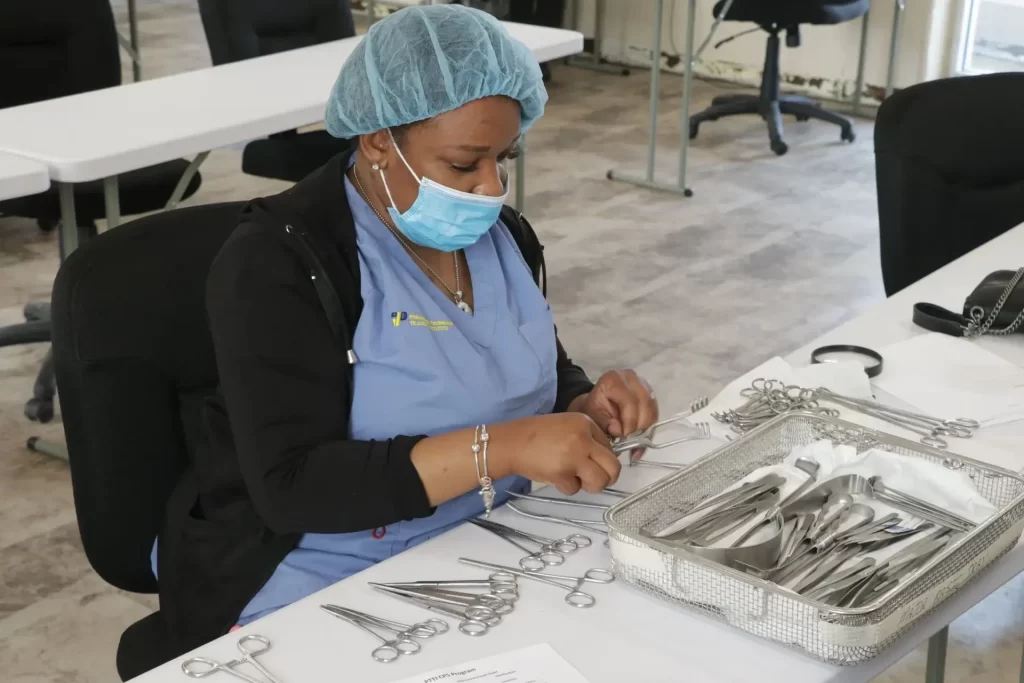
A sterile processing technician cleans, inspects, assembles, and sterilizes the surgical instruments and medical equipment used in patient care. The role is also called a central service technician or medical equipment preparer. These workers keep operating rooms supplied with safe, sterile tools. Without them, surgeries stop.
The work is precise and process-driven. Technicians decontaminate used instruments, inspect them for damage, assemble them into trays, run sterilization equipment, and track everything carefully. Attention to detail is not optional. A single missed step can affect patient safety, so accuracy and discipline define the job.
Sterile processing technicians work in the central sterile department, often called “SPD.” They rarely interact with patients directly. Instead, they support the surgical teams that do. Think of them as the quiet backbone of the operating room.
Daily duties usually include:
This structured, technical work rewards people who like clear processes and take pride in doing things right. It is a strong fit for detail-oriented learners who want purpose without a patient-facing role.
Most sterile processing technicians work in hospitals. Others work in outpatient surgery centers, dental and specialty clinics, and equipment suppliers. Hospitals typically pay the most and hire the most.
Philadelphia is an unusually strong market for this. The region hosts a dense network of major health systems, including large employers like Penn Medicine, Jefferson Health, and Tower Health. Surgical centers and specialty clinics across the city and nearby communities add even more demand. For someone training here, that concentration means real, local opportunity rather than a distant statistic.
Sterile processing is recession-proof because surgery does not stop when the economy slows. People still need operations, and every operation needs sterile instruments. That constant demand shields the role from the layoffs that hit many other industries. Among recession-proof healthcare jobs, it stands out for its fast entry and steady need.
Healthcare, in general, holds up well during downturns. But sterile processing is especially durable. The work cannot be sent overseas. It cannot be skipped. And it cannot be fully automated, because inspection and assembly still require trained human judgment. That combination makes a sterile processing career in Philadelphia genuinely stable.
Every surgical procedure creates used instruments that must be cleaned and sterilized before the next patient. This cycle never ends. As long as hospitals perform surgery, they need sterile processing technicians on staff.
This is why the role belongs on any list of dependable hospital jobs no degree required. The demand is built into how hospitals operate. It does not depend on trends, funding cycles, or consumer spending.
Demand for qualified technicians is rising faster than the supply of trained workers. Several forces drive this trend:
The U.S. Bureau of Labor Statistics projects continued employment growth for medical equipment preparers through 2034, according to its Occupational Outlook Handbook. In a market like Philadelphia, with its large hospital footprint, that demand translates into consistent hiring. To see how the field is evolving, PTTI’s overview of why sterile processing is a strong career choice in 2026 offers a helpful, current perspective.
Sterile processing technicians earn competitive pay for a role you can start in months. Nationally, the BLS median for medical equipment preparers sits around $47,000 per year. In the Philadelphia market, pay is generally strong, and certified technicians in hospital settings often earn toward the higher end.
Pay varies by experience, certification, and facility type. Entry-level technicians start lower. Certified technicians in busy hospital departments earn more. Overtime and shift differentials can add to take-home pay as well.
Your earnings grow as you gain experience and credentials. Here is a realistic view of how pay typically progresses in the region.
| Career Stage | Approximate Annual Range (Philadelphia Area) |
| Entry-level (new, uncertified) | $38,000 – $45,000 |
| Certified technician | $45,000 – $55,000 |
| Experienced / lead / specialty | $55,000 – $65,000+ |
These figures reflect regional context and vary by employer. Complex settings pay more. Level I trauma centers, transplant programs, and robotic surgery departments often reward technicians who manage advanced instrument trays. For a broader breakdown, PTTI’s sterile processing salary and training guide puts the numbers in context.
Two factors lift sterile processing technician salary the most: certification and hospital employment. Certified technicians qualify for roles that uncertified applicants cannot. Hospitals also tend to pay more than commercial equipment suppliers for the same work.
To increase your pay over time, focus on:
To become a sterile processing technician in Philadelphia, complete a focused training program, prepare for CRCST certification, and apply for entry-level hospital or surgery-center roles. You need only a high school diploma or GED to start. The full path can take just months, not years.
This speed is a major reason people choose the field. You gain a real healthcare credential quickly and start earning far sooner than a traditional degree would allow.
The entry bar is refreshingly low. Most programs and employers require a high school diploma or GED. You do not need a four-year degree. You do not need prior healthcare experience. What you need is training, attention to detail, and a willingness to follow strict procedures.
This makes sterile processing one of the most accessible hospital jobs no degree holders can pursue. It is a genuine door into healthcare for people who want stable work without heavy student debt.
Certification is the credential that opens the best doors. The most recognized option is the CRCST, the Certified Registered Central Service Technician credential, offered through the Healthcare Sterile Processing Association. Many Philadelphia hospitals require or strongly prefer it.
A structured program prepares you to pass the certification exam with confidence. PTTI’s Sterile Processing and Central Services Technician program is built around this goal, and its guide to earning CRCST certification walks through exactly what the credential involves.
Here is the practical route from beginner to hired:
You can often begin a sterile processing career in Philadelphia in a matter of months. Focused programs concentrate on the specific skills employers need, so you reach job readiness quickly. That fast timeline is exactly why many career changers choose this route. PTTI explains this accelerated healthcare path in its look at how students enter healthcare in six months through central processing training.
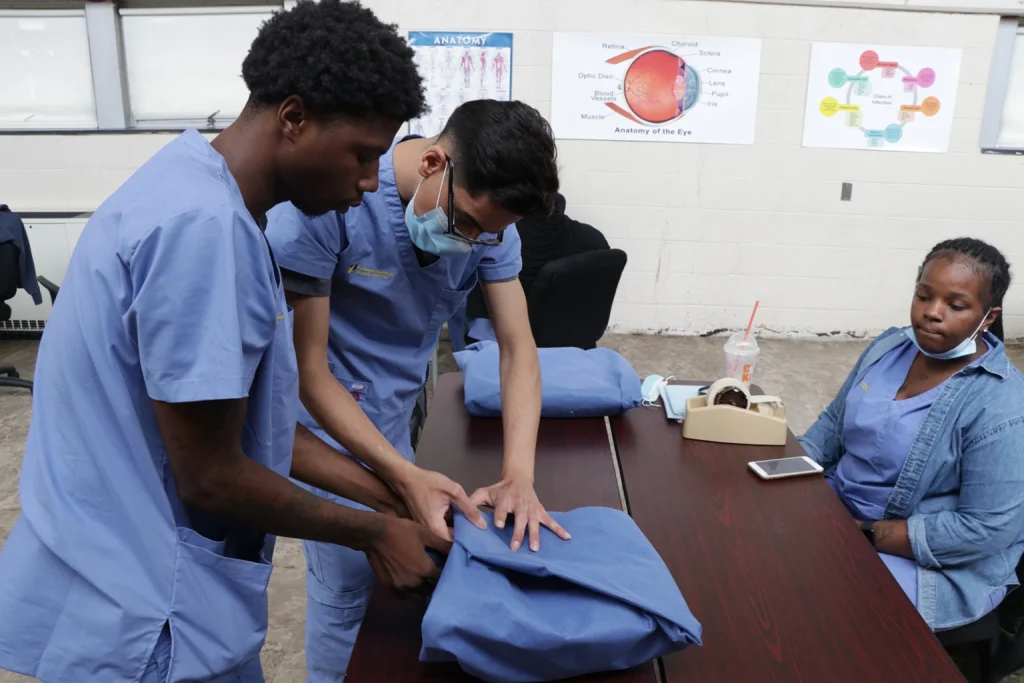
Employers hire sterile processing technicians who can follow strict protocols without cutting corners. The role demands precision, consistency, attention to detail, and a strong safety mindset every single day. Training should build these habits from day one by using real equipment in a realistic clinical setting. As a result, students gain confidence while learning the correct procedures before entering the workplace. Classroom theory alone does not prepare you for the job. Hospitals expect technicians who have handled the tools, run the machines, and practised the process under realistic conditions. That is why hands-on training remains the industry standard for this field.
Successful technicians master a clear set of competencies. These are the skills that make you employable and keep patients safe.
These competencies sit at the center of quality sterile processing training in Philadelphia. PTTI’s overview of what its sterile processing program covers shows how applied practice builds each one.
Hands-on training prepares you for real hospital expectations in a way that online-only study cannot. You cannot learn to decontaminate instruments or run a sterilizer through a screen alone. The muscle memory and judgment come from practice.
This is where a structured, in-person program differs from the alternatives:
A focused program built around real labs and certification prep delivers speed, career readiness, and employer-aligned skills together. That combination is what gets you hired. You can compare healthcare paths in PTTI’s breakdown of nursing versus sterile processing careers.
Sterile processing is a starting point, not a ceiling. Technicians who build skills and credentials can move into higher-paying, higher-responsibility roles. The field rewards people who treat it as a career path, not just a job.
Advancement often comes faster here than people expect. Because the work is essential and specialized, experienced technicians become valuable quickly. That value opens doors within the surgical services world.
With experience and certification, sterile processing technicians can grow into roles such as:
Some technicians also use the role as a stepping stone into other surgical services careers. To understand where the field is heading, PTTI’s look at the future of sterile processing jobs in 2026 is a useful read, and its guide on why certification matters explains how credentials drive that growth.
Sterile processing compares well with other quick-entry healthcare jobs. It offers stable, behind-the-scenes work with a clear advancement path and no direct patient care. For people who prefer technical, process-focused roles over bedside care, it is an ideal fit.
Compared with many entry healthcare roles, sterile processing tends to offer:
For a look at how the role fits Philadelphia’s healthcare landscape, PTTI covers how sterile processing programs are changing local careers.
A sterile processing career in Philadelphia is one of the smartest ways to enter healthcare fast. You get stable, recession-proof work, a clear certification path, and real advancement potential, all without a four-year degree. In a city built on world-class hospitals, the demand is steady and local.
If you are ready to take the next step, explore the Sterile Processing and Central Services Technician program, review careers and job opportunities in the field, and schedule a campus tour to see the training environment for yourself. You can also contact admissions or review financial aid options to plan your start.
Stable healthcare work is within reach. This year, you can begin.
Yes. Surgery continues in any economy, and every surgery needs sterile instruments. That constant demand keeps sterile processing technicians employed when other fields cut jobs. It is one of the more dependable recession-proof healthcare jobs you can enter quickly, especially in a hospital-dense city like Philadelphia.
Yes. Philadelphia’s large network of hospitals and surgery centers hires sterile processing technicians regularly. Major systems and specialty clinics across the region need trained, certified staff. Training locally through a program like PTTI’s positions you for these openings and prepares you for the CRCST credential many employers prefer.
Yes. You need only a high school diploma or GED to start. Sterile processing is one of the most accessible hospital jobs no degree holders can pursue. With short, focused training and CRCST certification, you gain a real healthcare credential and a stable career without years of college or heavy debt.
Quickly. Focused programs prepare you for entry-level work in a matter of months, not years. Because training targets the exact skills employers test for, you reach job readiness fast. PTTI’s central processing training is designed to move motivated students into healthcare roles on an accelerated timeline.
Pay is competitive for a fast-entry role. The national median sits around $47,000, and certified technicians in Philadelphia hospitals often earn toward the higher end. Certification and hospital employment raise your sterile processing technician salary the most over time.
Most employers prefer the CRCST credential from the Healthcare Sterile Processing Association. It signals verified skill and often unlocks higher-paying hospital roles. A structured program prepares you to pass the exam, which is why certification-focused training matters for any central service technician job.