
Every shop has technicians who do oil changes, brakes, and tire rotations. Those jobs matter. But they sit at the bottom of the pay scale. The technicians who earn the most do something different. They open engines. They diagnose failures other people cannot find. They rebuild what most shops would rather replace.
That gap is not about luck. It is about skill depth. Engine work is the clearest line between an entry-level position and a career with a real ceiling. This guide explains what engine repair and rebuild work actually involves. It covers why the skill commands higher pay, what you practice in a working shop, and how engine repair training Philadelphia students complete fits into a focused automotive program.
If you want the high-pay skills instead of the routine ones, this is where to start.
Engine repair means diagnosing, servicing, and restoring the core of the vehicle. A rebuild goes further. You disassemble the engine, measure every critical component, replace what has failed, and reassemble it to factory specification. The work demands precision, patience, and real mechanical understanding.
This is not guesswork. It is measurement-driven work. A technician who rebuilds engines reads specifications, uses precision instruments, and accepts no tolerance drift. That discipline is exactly what employers pay for.
Engine work covers several connected systems. Each one has its own failure patterns and diagnostic logic. A strong auto mechanic engine training program teaches you all of them together, because real failures rarely stay in one system.
Good technicians do not tear down an engine to find the problem. They diagnose first. They read the symptoms, run compression and leak-down tests, and interpret the data. Only then do they open the engine.

That order matters commercially. Unnecessary teardown costs the shop money and the customer trust. Employers notice technicians who diagnose accurately before they touch a wrench.
Engine repair pays more because fewer technicians can do it well. Routine maintenance is high volume and low complexity. Many people can learn it quickly. Engine work is different. It takes longer to master, and mistakes are expensive, so shops pay a premium for technicians they trust with it.
The U.S. Bureau of Labor Statistics reports a median annual wage of $49,670 for automotive service technicians and mechanics as of May 2024. Treat that number as a midpoint, not a target. Technicians who handle engine diagnosis, rebuilds, and complex driveability problems typically sit well above it.
Shops bill engine work at higher labor rates. A rebuild takes many hours and requires a skilled technician the whole time. Routine service does not. That difference flows directly into what a shop can pay.
Three factors drive the gap:
Compensation in this trade tracks capability. As you add diagnostic ability and engine competence, your value rises. The table below shows how responsibility typically expands across a technician’s career.
| Stage | Typical Work | Earning Position |
| Entry technician | Oil changes, tires, basic inspection | Lowest of the range |
| General service technician | Brakes, suspension, routine repair | Below to near median |
| Diagnostic technician | Driveability, electrical, engine faults | Above median |
| Engine and rebuild specialist | Teardown, machining coordination, rebuilds | Upper range |
| Master technician or shop lead | Complex diagnosis, mentoring, quality control | Highest range |
Every step upward depends on skill, not seniority. That is why engine repair training Philadelphia employers respect matters so early in a career.
You do not need years in the industry to start climbing. You need structured training on real engines. Career changers who commit to engine work often move past long-tenured maintenance technicians, because capability drives pay in this trade.
Many PTTI students arrive from retail, warehouse, or delivery roles. What they share is a willingness to learn precise, technical work. If you are weighing options, our guide to highest-paying automotive jobs in Philly breaks down where the money actually sits.
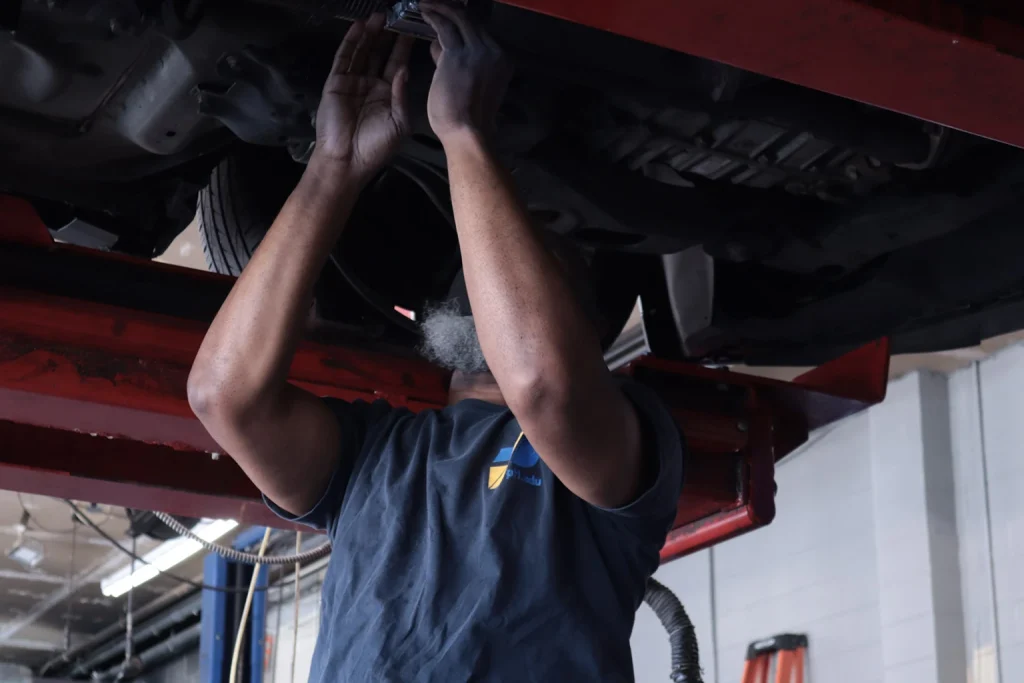
To learn engine repair, you need structured instruction plus repeated practice on real engines. Start with a hands-on automotive program that includes shop time. Learn diagnosis first, then teardown, measurement, and reassembly. Build toward ASE certification. Then keep specializing on the job.
That sequence works because engine skill is physical and procedural. You cannot absorb it by watching. You have to measure clearances, torque fasteners in sequence, and feel when something is wrong.
Here is the path most successful technicians follow. It answers the question of how to learn engine repair without prior experience.
No. Most students begin with no professional background. Interest in how engines work matters more than a résumé. What you need is consistent shop practice and instructors who correct your technique early.
PTTI’s Automotive Training and Repair program is built for exactly this starting point. Students learn the fundamentals first, then progress into diagnosis and engine work.
Structured programs balance instruction with shop application. A typical rhythm looks like this:
That loop repeats. Repetition is what turns instruction into competence.
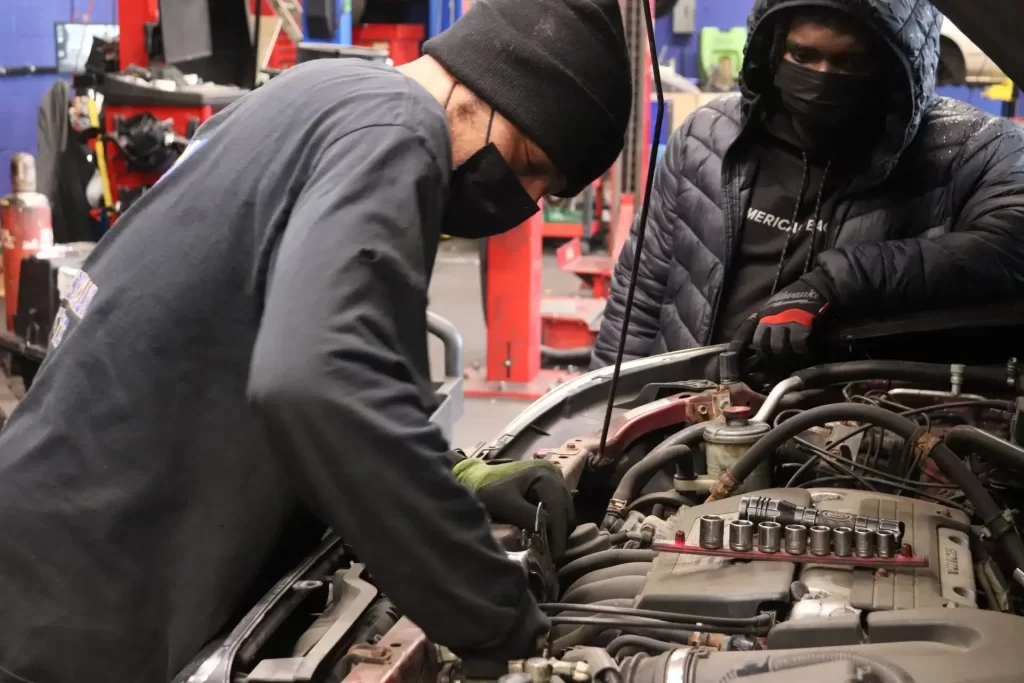
A quality automotive program teaches engine work in a functioning shop, not a lecture room. You should expect vehicle lifts, engine stands, precision measuring tools, diagnostic scanners, and real engines to work on. If a program cannot show you that equipment, it cannot teach rebuilds.
This is the single most useful question to ask any school. Ask to see the shop. Then watch whether students are actually working in it.
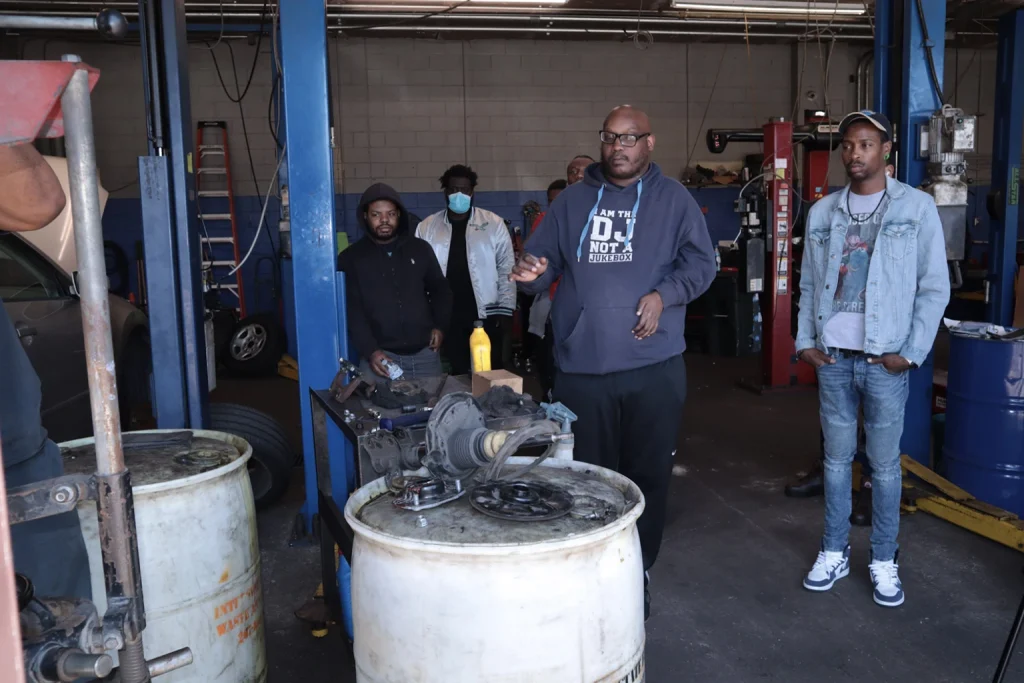
PTTI runs its automotive training in a real shop environment at the Ogontz Avenue auto repair campus. Students work with industry-standard equipment on actual vehicles and engines. That setting matters because employers hire for demonstrated ability.
In the shop, students build competence in areas such as:
Online training can explain theory. It cannot build hand skill. You learn engine repair by doing it, repeatedly, with someone correcting you.
Consider what a rebuild requires physically. You measure bore wear to the thousandth of an inch. You check bearing clearance with plastigage. You follow a torque sequence in stages. None of that transfers from a video.
Each path has a different return. The comparison below reflects what hiring managers in this trade actually weigh.
| Path | Time to Job-Ready | Hands-On Depth | Employer Recognition |
| Hands-on trade program | Months | High, daily shop practice | Strong, skill is demonstrable |
| Four-year college | Years | Limited for this trade | Not aligned to shop hiring |
| Online-only course | Varies | Minimal, no real engines | Weak without shop proof |
| Self-teaching | Unpredictable | Inconsistent, no correction | Difficult to verify |
The pattern is clear. For automotive work, applied training wins because the job itself is applied. Our breakdown of in-demand auto repair skills employers want reinforces the same point from the employer side.
ASE certification is the recognized standard for automotive technician competency in the United States. Engine Repair is the A1 test in the automobile series. It covers general engine diagnosis, cylinder head and valve train service, the engine block, and lubrication and cooling systems.
Certification is voluntary, not a license. Still, most quality shops expect it. It gives employers third-party proof that you know the work.
The automobile series runs A1 through A8. Passing all eight earns ASE Master Automobile Technician status. A1 Engine Repair is the natural starting point, because engine knowledge underpins so much else.
ASE also requires relevant hands-on work experience. Graduating from an accredited training program can count toward part of that requirement. Certifications remain valid for five years, then require recertification.
Certified technicians are generally paid more than uncertified peers. Many shops also pay per-certification incentives. More importantly, certification opens doors to the complex, better-paying work.
You can review the full test structure through ASE, the National Institute for Automotive Service Excellence. For a deeper look at why this credential carries weight with employers, see our article on why an automotive tech certification matters.
Engine repair is not a separate course you take later. In a well-designed program, it is built into the progression. You learn safety and fundamentals, move into systems and diagnosis, then apply that knowledge to engine work in the shop.
PTTI’s automotive training is structured as a focused, roughly 26-week pathway rather than a multi-year degree. That compression is deliberate. It removes unrelated coursework and concentrates your time on the skills shops hire for.
A short program is only valuable if “job-ready” means something real. Before enrolling anywhere, confirm three things about the finish line.
If the answer to all three is yes, a fast timeline is a genuine advantage. If not, speed just means shallow training.
Training is the first half. Getting hired is the second. PTTI supports that transition through careers and job opportunities services, including preparation for the hiring process itself.
Cost should never be a mystery either. Prospective students can review financial aid options before committing, and veterans can check veterans’ program eligibility directly.
Philadelphia supports a broad automotive employment base. Independent repair shops, dealership service departments, fleet operations, and specialty performance shops all need technicians. The ones that struggle to hire are usually looking for diagnostic and engine capability.
Nationally, BLS projects about 70,000 automotive technician openings each year through 2034, with growth of roughly 4 percent over the decade. Much of that demand comes from replacement as experienced technicians retire.
The regional market extends well beyond one neighborhood. Shops hire across North Philadelphia, West Philadelphia, South Philadelphia, and the Northeast. Opportunities also reach nearby communities including Yeadon, Lansdowne, Darby, Drexel Hill, and Ardmore.
Across the river, South Jersey adds more employers in Camden, Pennsauken, Cherry Hill, Collingswood, Maple Shade, and Cinnaminson. Because automotive skill travels, training centrally in Philadelphia positions you for the whole tri-state market.
Modern engines are computer-managed systems. Diagnosis now blends mechanical knowledge with data interpretation. Hybrid and electric vehicles are also reshaping shop demand, which is why we cover EV battery repair skills separately.
Engine work is not going away. Millions of internal combustion vehicles remain on the road, and they age. Technicians who understand both the mechanical and electronic sides will hold the strongest position in this market.
Hiring managers look past the résumé to capability. The following consistently separate strong candidates.
The difference between a maintenance job and a career is skill depth. Engine repair is where that depth begins. Learn to diagnose accurately, measure precisely, and rebuild correctly, and you stop competing for entry-level work.
You cannot build that skill from a screen. You build it in a shop, on real engines, with someone experienced watching your technique. That is exactly what quality engine repair training Philadelphia students need looks like.
See it for yourself. Schedule a campus tour of the automotive shop and watch a class in progress. Not sure which trade fits you? Take the Program Matchmaker Quiz. Ready to move? Contact admissions or start your application today.
Enroll in a hands-on automotive program with a working shop. Learn fundamentals and diagnosis first, then practice teardown, measurement, and reassembly on real engines. PTTI’s automotive training builds this progression in a real shop, so you graduate able to perform the work.
A quality program does, provided it has real engines, stands, and precision tools. Ask to see the shop before enrolling. PTTI teaches engine work in a functioning shop at the Ogontz Avenue campus, using industry-standard equipment on actual vehicles.
Engine diagnosis, rebuild work, and advanced driveability troubleshooting pay the most, because they require the deepest skill. Routine maintenance sits at the bottom of the range. Building engine competence early is the fastest way to raise your earning ceiling.
Yes. PTTI’s automotive program runs in a real working shop environment at the Ogontz Avenue campus. Students train on actual vehicles with professional equipment. You can schedule a campus tour and see the bays, lifts, and engines in person.
PTTI’s automotive program is structured as a focused pathway of roughly 26 weeks rather than a multi-year degree. Confirm current start dates and schedule details with admissions, since what matters most is graduating genuinely job-ready.